Why do artists go broke in the music industry? Streaming platforms like Spotify now dominate the music business. Social media apps like TikTok and Instagram are changing the playing field. And some artists are moving away from traditional record deals and revenue sources in favor of independence. The FT’s Don Newkirk asks some of the world’s biggest music companies, record labels, and producers how they are adapting to this fast-changing industry. And he follows an up-and-coming hip-hop artist struggling to make his fair share as the coronavirus pandemic hits.
11 years after one of Europe’s biggest banking scandals, 13 executives have been sentenced and financial penalties of $175 million have been dealt. Bloomberg investigates how Deutsche Bank and Monte Dei Paschi cooked their books to make a half billion dollar loss disappear. Reporting by Elisa Martinuzzi for Bloomberg.
Meet Bob Wells and the rest of the real life nomads who inspired ‘Nomadland.’ Driven out of their homes by the economic crisis and the retirement crunch, thousands of older Americans have traded the suburbs for the open road. Learn about this growing subculture and the realties they face finding work, staying connected and living a #VanLife.
The FT explains how the vaccine market works – including the cost of a vaccine and the vaccine development process – and the impact of the Covid-19 pandemic. This short documentary features global experts including Bill Gates, the CEOs of Moderna and Gavi, and the lead scientist behind the Oxford/AstraZeneca vaccine.
More and more entrepreneurs are thinking beyond their own personal wealth. In what is known as the “Purpose Movement,” company bosses aim to put profits to good use, while rethinking the idea of corporate ownership. This film explores how the movement is rethinking capitalism. The founders and CEOs involved in the global Purpose Movement believe in transforming society: Their ownership model ensures that a company’s shareholders cannot withdraw profits, the company cannot be sold and its purpose cannot be changed. Christian Kroll founded search engine Ecosia in 2009. The profits are used to plant trees to combat climate change. Advertising revenue has so far financed the planting of more than a hundred million trees. Kroll could have sold Ecosia for many millions of euros long ago, but the founder wanted to protect his company from speculators. The trees were more important to him than his bank balance. That’s why he used a foundation model to transfer ownership of Ecosia in 2018, effectively cutting himself out. The model makes it impossible to sell Ecosia for profit, to withdraw company capital, or to change the company’s purpose, which is planting trees. Armin Steuernagel advises entrepreneurs who also want to “give away” their companies. His Purpose Foundation advises start-ups wanting to establish themselves as “purpose companies,” like Hamburg’s Wildplastic, which produces garbage bags from recycled material. Steuernagel wants us to rethink capitalism. As a political lobbyist, he is working to create a legal framework to help facilitate the shift to “purpose companies.” Michael Hetzer ran the German family-owned company Elobau, which manufactures sensors and other parts for agricultural machinery. Instead of deciding to leave the business to one of his sons, he transferred the company to a foundation model. He wanted to take the burden off his sons’ shoulders. And for him, the purpose of his company is important.
We gave up our privacy to fight Covid-19, can we get it back? An FT film starring Lydia West and Arthur Darvill in collaboration with Sonia Friedman Productions and supported by Luminate. An interrogation scene explores how Covid-19 has exposed the tension between the need for data to track and trace, and the right to privacy and justice.
The story of Greensill Capital’s rise and fall has everything: investment banks, opaque finance, private jets, trophy mansions and the biggest British lobbying scandal in a generation, involving former prime minister David Cameron. The Financial Times charts the rise of Lex Greensill and Sanjeev Gupta and examines where it all went wrong.
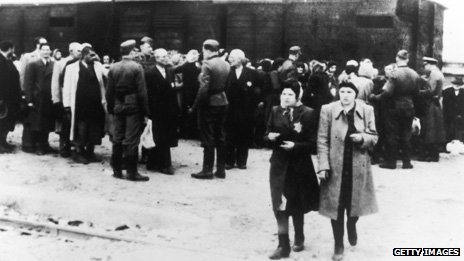
On 19 April 1943, a train carrying 1,631 Jews set off from a Nazi detention camp in Belgium for the gas chambers of Auschwitz. But resistance fighters stopped the train. One boy who jumped to freedom that night retains vivid memories, 70 years later.
In February 1943, 11-year-old Simon Gronowski was sitting down for breakfast with his mother and sister in their Brussels hiding place when two Gestapo agents burst in.
They were taken to the Nazis’ notorious headquarters on the prestigious Avenue Louise, used as a prison for Jews and torture chamber for members of the resistance. Read more here
On June 2, 2020, the National Committee hosted a virtual discussion on the history of anti-Chinese/Asian racism in the United States, the impact of coronavirus-related racism, and the importance of uniting across our communities to stand up against all forms of discrimination. The featured speakers were Jennifer Ho, professor of ethnic studies at University of Colorado and president of the Association for Asian American Studies, and John Pomfret, former Washington Post correspondent and author of, “The Beautiful Country and the Middle Kingdom: America and China, 1776 to the Present” (2016). The webinar was moderated by NCUSCR Senior Director of Development Yong Lu.
Haphazard urbanization and political wrangling are seriously affecting people’s ability to realize their right to water in Nepal’s capital city. According to the Nepalese government’s Central Bureau of Statistics, one in every five Kathmandu households has no access to a domestic water source and two-thirds of its urban households live with an inadequate water supply.
Estimates show that the city of 4 million has a severe water deficit. The demand is triple the current supply of 106m liters a day , which further reduces to 75m liters a day during the dry season [PDF] . Despite growing demand, little has been done to increase supply. Read the full article at the Guardian.
National Conference of State Legislatures has a list of how states provide information about their registered voters. Look up your state if you live in the US.
This page provides 50-state information on access to voter lists. States have varied requirements on who is eligible to request a list of voters, what information the list contains, what information is kept confidential, and how information contained in voter lists may be used. Many states also have specific programs to keep all voter information confidential for certain classes of voters.



 RichardbBrunner