Tags
Dr. Katherine Williams, Director of Stanford’s Women’s Wellness Clinic, addresses Women’s Health Forum attendees on mood disorders in women.

06 Monday Jan 2020
Posted in Mental Health, Psychoeducation, Research, YouTube
≈ Comments Off on Stanford Medicine: Mood Disorders Across the Lifespan
Tags
Dr. Katherine Williams, Director of Stanford’s Women’s Wellness Clinic, addresses Women’s Health Forum attendees on mood disorders in women.
31 Tuesday Dec 2019
By placing dogs in an MRI scanner, researchers from Hungary found that the canine brain reacts to voices in the same way that the human brain does. Emotionally charged sounds, such as crying or laughter, also prompted similar responses, perhaps explaining why dogs are attuned to human emotions.

The work is published in the journal Current Biology. The full article is @ BBC.
Eleven pet dogs took part in the study; training them took some time. “We used positive reinforcement strategies – lots of praise,” said Dr Andics. “There were 12 sessions of preparatory training, then seven sessions in the scanner room, then these dogs were able to lie motionless for as long as eight minutes. Once they were trained, they were so happy, I wouldn’t have believed it if I didn’t see it.”
25 Monday Nov 2019
Posted in Addiction, Research, Social Media
≈ Comments Off on Addictive Social Media Behavior
Plenty of research has demonstrated that the addictive quality of social media is very real. And according to a new study, heavy social media use may also contribute to a different type of addiction.
Psychologists at the University of Albany found that not only is social media (particularly Facebook) itself potentially addictive, those who use it may also be at greater risk for impulse-control issues like substance abuse.
The researchers surveyed 253 undergraduate students, asking questions about their social media use, Internet addiction, emotion regulation and alcohol use. They found that roughly 10 percent of users experience “disordered social media use,” meaning that they exhibit addictive behaviors in the way they use platforms like Twitter, Facebook and Instagram. To assess disordered social media use, the researchers included questions that reflected modified diagnostic criteria for alcohol dependence, such as, “How good does Facebook make you feel?” and “Do you check Facebook first thing when you wake up in the morning?”
Those who were struggling with social media addiction were more likely to report Internet addiction (as measured by scores on the Young Internet Addiction Test), challenges with emotion regulation (such as poor impulse control), and drinking problems.
Psychologist Julia Hormes, who led the study, said that Facebook was found to have especially addictive properties. The respondents spent an average of one-third of their online browsing time on Facebook, and 67 percent received Facebook push notifications on their phones.
“New notifications or the latest content on your newsfeed acts as a reward. Not being able to predict when new content is posted encourages us to check back frequently,”Hormes said in a statement. “This uncertainty about when a new reward is available is known as a ‘variable interval schedule of reinforcement’ and is highly effective in establishing habitual behaviors that are resistant to extinction. Facebook is also making it easy for users to continuously be connected to its platform, for example by offering push notifications to mobile devices.”
The researchers hypothesize that disordered social media use is likely a symptom of poor emotion regulation skills, which heightens susceptibility to a variety of types of addiction.
“Our findings suggest that disordered online social networking may arise as part of a cluster of risk factors that increase susceptibility to both substance and non-substance addictions,” Hormes said.
The new findings join a growing body of research investigating the addictive potential of Internet social media use. MRI data has shown that the brains of compulsive Internet users to exhibit similar changes to those seen in people with alcohol and drug addictions. Harvard research conducted in 2012 provided some insight into why using Facebook in particular seems to be so highly addictive. Disclosing information about ourselves, the researchers found, is intrinsically rewarding. It activates the Nucleas Accumbens, a brain area that also lights up when cocaine or other drugs are ingested. But it’s not just posting on Facebook that’s addictive — it’s also receiving all those likes and comments. Another study found that receiving positive feedback about ourselves also activates the brain’s reward centers.
However, Hormes’ and other research can’t be taken as conclusive evidence that disordered social media use constitutes a full-blown addiction.
“The question of whether or not disordered online social networking use can be considered a ‘true’ addiction is a tough one,” Hormes said in an email to the Huffington Post. “I think the answer really depends on your definition of ‘addiction.’ Many people think of addictions as involving ingested substances. However, if we think about addiction more broadly as involving some kind of reward then it is easier to see how behaviors may be addictive.”
The new findings were published in the December issue of the journal Addiction.
22 Friday Nov 2019
Happiness is the meaning and the purpose of life, the whole aim and end of human existence,” the ancient Greek philosopher Aristotle once said. But how does one reach this goal? According to a new study by researchers from Japan, a person’s happiness may depend on the size of a specific brain region.
Researchers found people who were happier had larger gray matter volume in the precuneus region of the brain.
Study leader Dr. Wataru Sato, of Kyoto University in Japan, and colleagues publish their findings in the journal Scientific Reports.
The definition of happiness has been debated for centuries. In recent years, psychologists have suggested that happiness is a combination of life satisfaction and the experience of more positive than negative emotions – collectively deemed “subjective well-being.”
But according to Dr. Sato and his colleagues, the neurological mechanisms behind a person’s happiness were unclear.
“To date, no structural magnetic resonance imaging (MRI) investigation of the construct has been conducted,” they note.
“Identification of the neural substrates underlying subjective happiness may provide a complementary objective measure for this subjective construct and insight into its information-processing mechanism.”
Meditation may boost happiness by targeting precuneus brain region
To address this research gap, the team used MRI to scan the brains of 51 study participants.
After the scans, subjects were asked to complete three short questionnaires that asked them how satisfied they are with their lives, how happy they are and how intensely they feel positive and negative emotions.
 The researchers found that individuals who had higher happiness scores had larger gray matter volume in the precuneus of the brain – a region in the medial parietal lobe that plays a role in self-reflection and certain aspects of consciousness – than their unhappy counterparts.
What is more, the researchers found that one’s happiness may be driven by a combination of greater life satisfaction and intensity of positive emotion – supporting the theory of subjective well-being.
“These results indicate that the widely accepted psychological model postulating emotional and cognitive components of subjective happiness may be applicable at the level of neural structure,” they add.
These findings, the researchers say, indicate that individuals may be able to boost their happiness through practices that target the precuneus, such as meditation:
“Previous structural neuroimaging studies have shown that training in psychological activities, such as meditation, changed the structure of the precuneus gray matter.
Together with these findings, our results suggest that psychological training that effectively increases gray matter volume in the precuneus may enhance subjective happiness.”
Dr. Sato adds that, while further research is required, these current findings may be useful for developing psychological programs that boost a person’s happiness
16 Wednesday Oct 2019
Posted in Meditation, Research
≈ Comments Off on Meditation can change your brain in 8 weeks
Participants in the study spent close to a half-hour every day meditating or practicing some other mindfulness exercise (notable because most people associate meditation with sitting and thinking quietly, and that’s not the only type of exercise done in the study) for about eight weeks. They got MRIs of their brains before and after the eight week exercise, and when the study was over, many of the study’s 16 participants showed significant changes in the areas of the brain associated with behavior, memory, and stress. For more click the link below.
http://lifehacker.com/5989078/how-meditating-for-eight-weeks-can-boost-your-brain

23 Friday Aug 2019
Posted in Pain, Prescriptions, Research, Wellness
≈ Comments Off on Strong placebo response thwarts painkiller trials
Tags
Interesting article, placebo’s as effective as meds.
Drug companies have a problem: they are finding it ever harder to get painkillers through clinical trials. But this isn’t necessarily because the drugs are getting worse. An extensive analysis of trial data1 has found that responses to sham treatments have become stronger over time, making it harder to prove a drug’s advantage over placebo.
The change in response to placebo treatments for pain, discovered by researchers in Canada, holds true only for US clinical trials. “We were absolutely floored when we found out,” says Jeffrey Mogil, who directs the pain-genetics lab at McGill University in Montreal and led the analysis. Simply being in a US trial and receiving sham treatment now seems to relieve pain almost as effectively as many promising new drugs. Mogil thinks that as US trials get longer, larger and more expensive, they may be enhancing participants’ expectations of their effectiveness.
See the entire article here: http://www.nature.com/news/strong-placebo-response-thwarts-painkiller-trials-1.18511?%3Fftcamp=crm%2Femail%2F%2Fnbe%2FFirstFTEurope%2Fproduct
16 Friday Aug 2019
Posted in creative arts therapy, Education, Research, Substance use
≈ Comments Off on MSU study finds surprises about drug use
Tags
Conducting an economic analysis of drug use is a particularly difficult endeavor, but for Michigan State University professor and economist Siddharth Chandra, it just meant taking a look at the history books.
“You can’t simply go to Wal-Mart and look at the sticker price, and people don’t want to talk to you because drugs are illegal and they think they’ll get in trouble, ” Chandra said. “Our study is the first time the subject of how populations of consumers switch between drugs is being studied with data considered reliable.”
To find reliable economic data on drug use, Chandra, also the director of the Asian Studies Center at MSU, had to look back to early 20th century India, when the region was still part of the British Empire.
“One hundred years ago these products were legal. In British India the government was actually selling these things to the public, and they kept meticulous records,” Chandra said.
In his study – the first of its kind – Chandra pored through stacks of 100-year-old ledgers, called Excise Administration Reports, kept by the governments of the various provinces of India. Interpreting these data, he found surprising results about the economics of drug use behaviors. Despite the stark differences in the effects of opium vs. cannabis on the human body, the study shows that users would switch between the two drugs when the price of one went up – in economics, a phenomenon called substitution.
“The time, place and context are different, but the phenomenon is there. You might think consumers would treat them differently,” Chandra said. “But just because the two drugs used are very different, doesn’t mean people won’t switch.”
Opium, used legally to make the pain medicine morphine and illegally to make the drug heroin, is a highly addictive and potent depressant with potentially lethal side effects. Cannabis, also known as marijuana, is a less potent drug that produces a sense of relaxation and euphoria when used, usually through smoking or ingestion. These differences only came into consideration when analyzing cannabis in its weakest form, a drug called bhang, which consumers would not substitute for the more potent opium.
“There are many policy implications for these results,” Chandra said. “Targeting a particular drug with policies and enforcement might backfire.”
Chandra pointed to the epidemic of heroin, a product of opium that is relatively inexpensive and is devastating some communities in the United States.
“Many people know someone who has been affected by heroin – it is a very dangerous drug,” Chandra said. “But prohibiting harmful drugs selectively can be ineffective. Consumers may switch.”
12 Monday Aug 2019
New NIDA-funded research shows that heavy marijuana use (at least four times per week over the past six months) is linked to adverse changes in the function and structure of brain areas associated with reward, decision making, and motivation. Heavy marijuana use can also enhance some brain circuits – possibly to compensate for reduced function in specific brain regions. This effect was more pronounced in those who started using at a young age, indicating that developing brains are particularly vulnerable to marijuana’s effects.

Although further long-term studies are needed to determine whether marijuana caused these effects, these scientific findings add to the growing literature showing that heavy marijuana use may harm the brain.
For a copy of the abstract (published online November 10), go to www.pnas.org/content/early/2014/11/05/1415297111.abstract.
06 Tuesday Aug 2019
Posted in Psychology, Research, Wellness
≈ Comments Off on What we know about habits is #wrong
Tags
DESPITE the our intentions the reality is that often our gym memberships will lapse, chocolate will replace carrots and Candy Crush will edge out Moby Dick.
It’s not (only) that we’re undisciplined slugs. It’s that much of what we know — or think we know — about habits is wrong. Here’s a primer that might help keep you off the couch and on the treadmill.
MYTH 1 We fail to change our habits — or start good new ones — because we lack willpower.
Not really, said Wendy Wood, a professor of psychology and business at the University of Southern California. Willpower, she said, is more about looking at those yummy chocolate chip cookies and refusing them. A good habit ensures you’re rarely around those chocolate chip cookies in the first place.
To create or change a habit, you have to think much more about altering your environment and patterns of living than work on steeling your mind, Professor Wood said, because “behavior is very much a product of environment.”
Habits — at least good ones — exist so we don’t have to resist temptation all the time. Imagine if every morning you had a debate with yourself about eating cake or cereal for breakfast. Instead, most of us form the habit of eating something relatively healthy for breakfast, which bypasses the lure of the cake altogether.
That’s why it’s sometimes easiest to start or break a habit during a major transition. This may sound counterintuitive, but a new house, job or relationship breaks old patterns, said Gretchen Rubin, author of the forthcoming book, “Better Than Before: Mastering the Habits of Our Everyday Lives.”
“People say wait a few days to get settled, but don’t,” she said. “Start right away.”
MYTH 2 We fall back on bad habits when stressed. In fact, good habits persist even in times of high anxiety, Professor Wood said. A study of which Professor Wood was one of the co-authors found that students who already had unhealthy diets would eat junk food when stressed, but those who already had the habit of eating well — or of reading a newspaper or of going  to the gym — were just as likely to do that.
MYTH 3 It takes about 21 days to break or make a habit.
That number seems to have cropped up in the 1960s and somehow became “fact” with no real proof. But in 2009, researchers in Britain decided to take a deeper look by studying how long it took participants to learn new habits, such as eating fruit daily or going jogging. The average was 66 days.
But individuals’ times varied greatly, from 18 days to 245 days, depending on temperament and, of course, the task involved. It will most likely take far less time to get into the habit of eating an apple every afternoon than of practicing the piano for an hour a day.
MYTH 4 You need positive thinking to break or make a habit.
“We find positive fantasy is not helpful and may even be hurtful when trying to reach a desired future or fulfill a wish,” said Gabriele Oettingen, a professor of psychology at New York University and the University of Hamburg.
Over years of research, she discovered that people need to pair optimistic daydreams about the future with identifying and imagining the obstacles that prevent them from reaching that goal — something she calls mental contrasting.
Say you want to stop being a procrastinator. The first step is easy. Imagine how it will feel if your work is completed with plenty of time to spare, if you can sleep instead of pulling an all-nighter, said Professor Oettingen, author of “Rethinking Positive Thinking.”
But don’t just resolve to stop procrastinating. The second step is to identify what holds you back from changing yourself. Is it fear that you won’t succeed? Is it the adrenaline rush of frantically working at the last minute? Is it because of negative feelings toward a boss or teacher?
The mental contrasting needs to be in the right order. It’s important to “experience our dreams, then switch gears and mentally face reality,” Professor Oettingen said.
Doing it the opposite way — imagining the obstacles and then fantasizing about changing habits — doesn’t seem to work as well, research shows.
MYTH 5 Doing things by rote, or habit, isn’t good in most cases. It’s better to be mindful of everything we do.
Research shows that most people repeat about 40 percent of their activities almost every day.
“We only have so much room in our brain,” said Ian Newby-Clark, an associate professor of psychology at the University of Guelph in Canada. “It would be incredibly taxing if we had to mindfully plan every step of our day.” Habits free us up so we can think about other things.
And while some habits are objectively bad — smoking, say, or being consistently late — most are subjective. “Habits are only good or bad to the extent they’re consistent or inconsistent with your goals,” Professor Wood of U.S.C. said. It’s a bad habit when “it starts interfering with other goals you have.”
For example, many people said their resolution this year was to cut down the time they spend online.
But why? Because it’s an inherently bad thing to do? Or is it an obstacle to spending more time reading books or riding a bike or learning to knit?
After thinking about it, you may choose to spend less time on your computer or phone. Or you might decide it’s not so terrible in limited doses and shed the habit of feeling guilty about it.
MYTH 6 Everything in moderation.
“There’s a real difference among people about how easily they adapt to habits,” Ms. Rubin said. Some see habits as liberating; some see them as a trap. Some prefer to make a huge change all at once; others proceed step by step.
“I’m in the small minority that loves habits,” Ms. Rubin said, adding that she tends to find it easier to abstain from certain things altogether. For example, she eats no carbohydrates.
“People said I was doomed to failure, but it’s not true,” she said. But, she noted, “it’s a mistake to think the abstainer is more disciplined. For me it’s easier to be an abstainer than have to deliberate each time whether I can eat something or not. Others would go nuts if they abstain.”
That’s why you shouldn’t listen to people who tell you you’re doing it wrong if it works for you, she said.
Also, people shouldn’t fear that their habit will dissolve if they don’t practice it daily.
“If you lapse once or twice, you’re not ruined,” Professor Wood said. “That’s a misconception.”
And that leads to …
MYTH 7 Shame and guilt keep you on track.
No. People need to be kinder to themselves, showing self-compassion if they lapse, Ms. Rubin said. But it’s a fine balance between treating yourself kindly and making endless rationalizations and excuses.
“I might mindfully make an exception,” she said, such as choosing to eat a traditional Christmas cake every year. “But I’m not making excuses in the moment: I’ll hurt the hostesses’ feelings. You only live once. It’s the holidays.”
One last piece of advice: If you want to be in better shape, get a dog. Professor Wood said studies show dog owners have lower body mass indexes. But here’s the catch: That’s only true if you walk the animal.
26 Friday Jul 2019
Recent research from Brown University could pave the way for new methods of treatment for those recovering from addiction. Researchers identified an exact brain region in rats where the neural steps leading to drug relapse take place, allowing them to block a crucial step in the process that leads to stress-induced relapse.

Prior research has established that acute stress can lead to drug abuse in vulnerable individuals and increase the risk of relapse in recovering addicts. But the exact way that stress triggers the neural processes leading to relapse is still not clearly understood. The Brown study provides new insights on how stress triggers drug abuse, and could lead to more effective treatments for addiction.
According to the study, stress has significant effects on plasticity of the synapses on dopamine neurons in the ventral tegmental area (VTA), the brain region where the neural activities leading to a stress-induced drug relapse take place.
Stress activates kappa opioid receptors (KORs) in the VTA, and the researchers found that by blocking the KORs, they could prevent the rats from relapsing to cocaine use while under stress.
Published this week in the journal Neuron, the study shows blocking these receptors may be a critical step in preventing stress-related drug relapses in humans, as well. The chemical used to block the receptor, “nor-BMI,” may eventually be tested on humans, according to the study’s authors.
“If we understand how kappa opioid receptor antagonists are interfering with the reinstatement of drug seeking we can target that process,” senior study author Julie Kauer said in a statement. “We’re at the point of coming to understand the processes and possible therapeutic targets. Remarkably, this has worked.”
Kauer noted that the study builds upon over a decade of research on how changes in brain synapses relate to behaviors like addiction. The advance is significant, and could accelerate progress towards a medication for those struggling to recover from addiction.
“If we can figure out how not only stress, but the whole system works, then we’ll potentially have a way to tune it down in a person who needs that,” Kauer said.
28 Friday Jun 2019
14 Friday Jun 2019
Tags
From All in the Mind and Australian Broadcasting : Most of us have an intuitive feeling that our pet dogs or cats have thoughts and even feel emotions—but did you know that ants can teach, rats have a sense of humor, chimpanzees can deceive and elephants grieve? Scientists are discovering that animals’ cognitive and emotional processes are far more sophisticated than we once thought. Listen/Download the audio here. 
24 Friday May 2019
Ever wondered what your cat spends its time doing when you’re not around? Where do our purring pets go when they disappear through the cat flap? Armed with GPS tracking devices and micro-cameras, a team from BBC Two’s Horizon programme in collaboration with the Royal Veterinary Collegeset off to a Surrey village to find out. Discover more by clicking this link and selecting a cat. 
21 Tuesday May 2019
Posted in Awareness, creative arts therapy, Dance, Research
≈ Comments Off on Groups in process
When I work with groups I am constantly observing and evaluating. I use evaluations to guide and direct; to ascertain the problems and needs of the group, and program. According to Cruz, Berrol, (2004), “…quantitative methods explore measurable observable phenomena related to human experience, and seeks to explain and predict behavior.”
For instance, in one particular workshop assisting Dr. Rutkowski, I observed a client clench her hands, contract, and stand in a posture that would be difficult to move from whenever she used the phrase, “moving forward.” My hypothesis was she did not truly believe and embrace what she was saying, and had some physical tension around this phrase based on her body language.


I have observed countless times before, the relationship between words and phrases and stances and postures (known behavioral phenomenon). Further, I have witnessed how one could change one part, stances/postures for instance (known variable), which would change the manner of the spoken words/phrases and thus their meaning for the client (predicted state). Based on this data, I suggested the client consciously take a stance/posture that was physically non-contracting (opening), and begin a movement process that was opening and flowing. Her body stance/posture changed and the manner in which she said her words changed as she experienced the concept of ‘moving forward.’
Afterwards, she shared that she began to truly believe both physically and emotionally that she could ‘move forward.’ My assertion that she did not fully embrace what she was saying was confirmed by the client.
In my process of leading groups I rely on my Halprin Method/Motional Processing/Life Art Process knowledge, my experience with many great teachers over the years, my intuition, and how I would want a workshop to be if I were the participant. I observe the dynamics of the individual and group, whether it is elders or preschoolers, and adjust accordingly. For instance, while leading the preschoolers in a creative movement exercise, they got out of control and ran about wildly ignoring my directions. I changed the quality of my voice and directed them to move like wooly worms. Naturally, it’s difficult to move wildly about when you’re lying on the floor wiggling.
Each group presents itself based on not just the dynamic of the individual and the collective, but also on the culture that the group is a part of. With the church group, there seemed to be a polite non-cooperative nature in their response to my direction of movement while reading a psalm. Having them close their eyes and adding more direction to the exercise seemed to open up the movement quality and quantity.
It gives me the giggles when I think of how terrified I was as a child to get up in front of a group and read a book report, or engage in some sort of activity. Today when I teach/lead a group, I actually feel more balanced, whole and in harmony than when I am not teaching/leading.
Cruz, R,F. & Berrol, C.F. (2004). Dance/Movement therapists in action: A working guide to research options. Springfield, Ill.: C.C. Thomas.
Rutkowski, A. (1984). Thesis: Development, definition and demonstration of the Halprin Life/Art Process in Dance Education. Unpublished doctorial dissertation, John F. Kennedy University.
Winter, R. (2001). Handbook for action research in health and social care. New York: Routledge.
Hervey, L.W. (2000). Artistic inquiry in dance/movement therapy:
Creative Research Alternatives. Springfield, Ill: Charles C Thomas.
Reprinted from my unpublished manuscript: Renewal and Rediscovery of the Self in the Life Art Process: 20 years as participant, assistant and facilitator. By Richard Brunner MA, R-DMT. Copy write 2006.
18 Saturday May 2019
Posted in Economics, Environment, History, news, Research
≈ Comments Off on Afghanistan:the Saudi Arabia of lithium
Tags
The New York Times has reported that U.S. officials and American geologists have found an estimated $1 trillion worth of mineral deposits that have yet to be exploited in the country. The paper said a Pentagon report called Afghanistan potentially “the Saudi Arabia of lithium,” a key component in batteries for cellphones, laptop computers and eventually, a plug-in fleet of electric cars.
In December, 2007, China’s state-owned China Metallurgical Group Corp. (MCC) signed a $2.9 billion agreement with the Kabul government to extract copper from the Aynak deposit, one of the world’s largest unexploited copper deposits with an estimated 240 million tons of ore. When MCC entered into negotiations with the government of Afghan President Hamid Karzai, it offered substantial aid for resource development as part of the package.
Of course in order to move the ore Afghanistan needs a rail system. Afghanistan ‘s mining  minister appointed China Metallurgical Group Corp. to carry out technical studies for two proposed rail lines in the country from Kabul to Turkam in the east, and Kabul to Mazar-e-Sharif in the north. The rail lines are seen as essential to help Afghanistan develop a mining industry that could bring in billions of sorely needed dollars to the impoverished nation.
Naturally China really wants gas and oil and once again Afghanistan’s government signed a deal with China’s state-owned National Petroleum Corporation, allowing it to become the first foreign company to exploit the country’s oil and natural gas reserves.The ministry listed the initial value of the project with CNPC as $700 million. But the total could be ten times greater if more reserves are found and developed.
The government of Afghanistan also granted key gold and cooper licenses to a consortium backed by City of London banker Ian Hannam, former BHP Billiton CEO Chip Goodyear and Poland’s multibillionaire Jan Kulczyk. In addiation Afghan Gold and Minerals, Afghan Minerals Group, and Turkish-Afghan Mining Co. had been picked from a shortlist of 25 bidders to explore and start developing the Balkhab, Shaida and Badakhshan projects respectively. Afghan Gold and Minerals (owned by Sadat Mansoor Naderi) will have copper explorations rights over the Balkhab, northwest of the capital Kabul. Not sure who owns the Turkish-Afghan Mining Co. Also, Afghan Minerals Group was granted Thursday a license to explore the Shaida copper deposit, in the province of Herat, in western Afghanistan.
Meanwhile, Turkish-Afghan Mining obtained the license for the Badakhshan gold and copper deposit, in the Badakhshan province, in north-eastern Afghanistan.
Afghanistan’s government granted an Indian steel company the right to exploit the Hajigak iron ore deposit which is considered one of the largest iron deposits in the world at 1.8 billion tonnes. The Indian company wants to ship the ore through Pakistan to India, which might seem a bit of a problem but the amount of money to be make by trucking firm and Government fee’s means that the green light will be given.
They are a lot of other businesses (and NGO’s) looking to profit from the Afganie war as well.
China, Not U.S., Likely to Benefit from Afghanistan’s Mineral Riches
China mining giant tapped for Afghan rail project
04 Saturday May 2019
They have been told as bedtime stories by generations of parents, but fairy tales such as Little Red Riding Hood may be even older than was previously thought.

Dr Jamie Tehrani, a cultural anthropologist at Durham University, studied 35 versions of Little Red Riding Hood from around the world
A study by anthropologists has explored the origins of folk tales and traced the relationship between varients of the stories recounted by cultures around the world.
The researchers adopted techniques used by biologists to create the taxonomic tree of life, which shows how every species comes from a common ancestor.
Dr Jamie Tehrani, a cultural anthropologist at Durham University, studied 35 versions of Little Red Riding Hood from around the world.
Whilst the European version tells the story of a little girl who is tricked by a wolf masquerading as her grandmother, in the Chinese version a tiger replaces the wolf.
In Iran, where it would be considered odd for a young girl to roam alone, the story features a little boy.
Contrary to the view that the tale originated in France shortly before Charles Perrault produced the first written version in the 17th century, Dr Tehrani found that the varients shared a common ancestor dating back more than 2,600 years.
He said: “Over time these folk tales have been subtly changed and have evolved just like an biological organism. Because many of them were not written down until much later, they have been misremembered or reinvented through hundreds of generations.
“By looking at how these folk tales have spread and changed it tells us something about human psychology and what sort of things we find memorable.
“The oldest tale we found was an Aesopic fable that dated from about the sixth century BC, so the last common ancestor of all these tales certainly predated this. We are looking at a very ancient tale that evolved over time.”
Dr Tehrani, who will present his work on Tuesday at the British Science Festival in Guildford, Surrey, identified 70 variables in plot and characters between different versions of Little Red Riding Hood.
He found that the stories could be grouped into distinct families according to how they evolved over time.

The original ancestor is thought to be similar to another tale, The Wolf and the Kids, in which a wolf pretends to be a nanny goat to gain entry to a house full of young goats.
Stories in Africa are closely related to this original tale, whilst stories from Japan, Korea, China and Burma form a sister group. Tales told in Iran and Nigeria were the closest relations of the modern European version.
Perrault’s French version was retold by the Brothers Grimm in the 19th century. Dr Tehrani said: “We don’t know very much about the processes of transmission of these stories from culture to culture, but it is possible that they may being passed along trade routes or with the movement of people.”
Professor Jack Zipes, a retired professor of German at the University of Minnesota who is an expert on fairy tales and their origins, described the work as “exciting”. He believes folk tales may have helped people to pass on tips for survival to new generations.
He said: “Little Red Riding Hood is about violation or rape, and I suspect that humans were just as violent in 600BC as they are today, so they will have exchanged tales about all types of violent acts.
“I have tried to show that tales relevant to our adaptation to the environment and survival are stored in our brains and we consistently use them for all kinds of reference points.”
20 Saturday Apr 2019
Tags
A robot sent out to travel across Canada by hitch-hiking has completed its 6,000km (3,728-mile) trip – apparently in one piece.
HitchBOT reached Canada’s Pacific coast at Victoria, British Columbia nearly three weeks after leaving Halifax in Nova Scotia, far away on the Atlantic coast, the Canadian Broadcasting Corporation reports. “I’m on a boat,” one of HitchBOT’s last tweets says. “Well, a ferry to be exact. Victoria, I’m on my way.” An arrival event is due to be held on Thursday. Read more at the BBC

10 Wednesday Apr 2019
Tags
Nice article from the Times of India, citing research using Yoga Asanas: Among the many clinical researches being conducted at Nimhans , one involved patients of an old-age home who were exposed to six months of yoga therapy. MRI scans taken before and after showed an increase in the size of the hippocampus, the brain’s memory index. “It was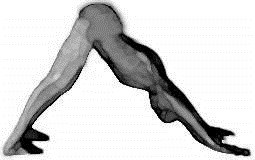 larger than before because the grey matter had increased. The results will be published in a scientific journal shortly ,” adds Gangadhar. The hippocampus is vulnerable to stress and atrophy is seen in patients of schizophrenia, post-traumatic stress disorder (PTSD) and severe depression. “Yoga acts as an antidepressant ,” he says. Read the entire article here.
03 Wednesday Apr 2019
Posted in Meditation, mindfulness, pain management, Relaxation, Research
≈ Comments Off on Meditation and Pain management
Tags
According to a new study, mindfulness meditation exhibited even stronger physical pain reductions than morphine, says the study’s lead investigator
Open any magazine and you’ll find that mindfulness has gone mainstream. You’ll also notice there are studies that purport to show meditation’s benefits on just about everything, from kids’ math scores and migraine length to HIV management and bouncing back after a crisis. Now, an elaborate new forthcoming study looks at how the brains of meditators respond to pain, to be published in the Journal of Neuroscience.
 Dr. Fadel Zeidan, assistant professor of neurobiology and anatomy at Wake Forest Baptist Medical Center, has studied mindfulness for 15 years and has observed improved health outcomes as a result. “But what if this is all just a placebo?” he wondered. “What if people are reporting improvements in health and reductions in pain just because of meditation’s reputation as a health-promoting practice?” He wanted to find out, so he designed a trials that included a placebo group.
Zeidan recruited 75 healthy, pain-free people and scanned their brains using an MRI while they experienced painful heat with a 120-degree thermal probe. Then, the researchers sorted them into four groups and gave them four days of training. Everyone thought they were getting the real intervention, but most of them were getting a sham treatment.
“I want to be restrained about the efficacy of mindfulness, and the way to be restrained about it is by making it harder and harder to demonstrate its effectiveness,” Zeidan says.
First, there was a placebo cream group that participants were told reduces pain over time, Zeidan says (it was really just petroleum jelly). For four days, they rubbed it on the back of their leg and tested it against that painfully hot thermal probe. Little did they know, the researchers cranked down the heat each day; the participants thought the cream was working.
Another group was taught a kind of fake mindfulness meditation—they were told to breathe deeply for 20 minutes but were given no instructions on how to do it mindfully. The control group was subjected to 20 minutes of a very boring book on tape: The Natural History and Antiquities of Selborne.
For the real intervention, people sat for 20 minutes with straight posture, closed their eyes and listened to specific instructions about where to focus one’s attention and how to let thoughts and emotions pass without judgment. “Our subjects are taught to focus on the changing sensations of breath and to follow the breath with the mind’s eye as it goes down the chest and abdomen,” Zeidan says.
After four days, everyone re-entered the MRI machine and endured the same pain from the 120-degree probe. They were told to use their training—breathing deeply, mindfully meditating or the cream. They used a lever to indicate the physical intensity and emotional unpleasantness of the pain.
They found that people in all of the groups had greater pain reductions than the control group. The placebo cream reduced the sensation of pain by an average of 11% and emotional unpleasantness of pain by 13%. For the sham mindfulness group, those numbers were 9% and 24% respectively. But mindfulness meditation outperformed them all. In this group, pain intensity was cut by 27% and emotional pain reduced by 44%.
That shocked Zeidan. Past research has indicated that the opioid morphine reduces physical pain by 22%—and mindfulness had surpassed even that. But the MRI results, which showed how pain was registering in their brains, surprised him even more. People who had practiced mindfulness meditation seemed to be using different brain regions than the other groups to reduce pain.
“There was something more active, we believe, going on with the genuine mindfulness meditation group,” Zeidan says. This group had increased activation in higher-order brain regions associated with attention control and enhanced cognitive control, he says, while exhibiting a deactivation of the thalamus—a structure that acts as the gatekeeper for pain to enter the brain, he explains. “We haven’t seen that with any other technique before.”
It’s an important preliminary study, Zeidan says, but exactly who will benefit from meditation’s impact on pain is still unknown. “We’re now at the stage, at least in my lab, where we have enough evidence that meditation reduces pain and it does it in a really unique fashion, different from any other technique we’ve seen,” he says.
And as for the questions left unanswered? “We don’t have the studies yet,” he says, “but we’re getting there.”
16 Saturday Mar 2019
 I read this article a few years ago and it keeps popping up. From the SMU News, Southern Methodist University in Dallas Texas, USA.
DALLAS (SMUNews) — Researchers from Southern Methodist University have described two seismic events that they believe may offer the first evidence of a previously undetected form of matter passing through the earth.
This form of matter — known as “strange quark matter” — is so dense that a ton-sized nugget would be about the size of a red blood cell. Physicists have suspected since 1984 that this very heavy form of matter might exist, but no one has yet found evidence of it.
In 1984, Harvard physicist and Nobel Laureate Sheldon L. Glashow suggested that one way such matter might be found would be if a physicist teamed up with a seismologist to search for traces of the matter that might have passed through the earth at supersonic speed. In 1993, SMU physicist Vidgor Teplitz asked Eugene Herrin, a seismologist in the Department of Geological Sciences in SMU’s Dedman College, to collaborate with him on the project. The two were assisted by David Anderson, a senior systems analyst in the Department of Geological Sciences, and Ileana Tibuleac, then a Ph.D. student in the Department of Geological Sciences.
In a paper submitted to the Bulletin of the Seismological Society of America and published online at http://xxx.lanl.gov/ (subject area: astrophysics), the SMU researchers describe how they found evidence of strange quark matter by searching through more than a million records of seismic events collected by the U.S. Geological Survey from 1990 to 1993 that were not associated with traditional seismic events such as earthquakes. These records of so-called “unassociated events” were collected from seismic stations set up around the world to monitor earthquakes and nuclear testing.
In a paper previously published in 1995 (available online at http://cornell.mirror.aps.org/abstract/PRD/v53/i12/p6762_1), Herrin and Teplitz had determined that it would be feasible to search for seismic events that might indicate passage of strange quark matter (also known as nuclearites) through the earth because such events would have a distinct seismic signal — a straight line. This would be caused by the large ratio of speed to the speed of sound in the earth. Herrin estimates that strange quark matter might pass through the earth at 250 miles per second, 40 times the speed of seismic waves. The team also determined that the minimum requirement for detection of a nuclearite would be detection of its signal by seven monitoring stations.
In their new paper, the SMU researchers describe two seismic events with the linear pattern they were looking for. One event occurred on Oct. 22, 1993, when something entered the Earth off Antarctica and left it south of India .73 of a second later. The other occurred on Nov. 24, 1993, when an object entered south of Australia and exited the Earth near Antarctica .15 of a second later. The first event was recorded at seven monitoring stations in India, Australia, Bolivia and Turkey, and the second event was recorded at nine monitoring stations in Australia and Bolivia.
“We can’t prove that this was strange quark matter, but that is the only explanation that has been offered so far,” Herrin said.
The SMU team is now trying to determine where the heavy quark matter may have come from. In April 2002, two different teams of scientists reported that they had identified collapsed stars that might be composed of ultradense strange quark matter. Scientists believe that chunks of strange quark matter might be created when stars made of strange quark matter collide.
Unfortunately, Herrin notes, seismologists may not be able to find any more events that suggest the passage of strange quark matter through the Earth. In 1993 the U.S. Geological Survey stopped collecting data from “unassociated events” such as those that the SMU team used in its research.
Related materials:

 RichardbBrunner