-
Drug addiction is complex
We’re told studies have proven that drugs like heroin and cocaine instantly hook a user. But it isn’t that simple – little-known experiments over 30 years ago tell a very different tale.
Drugs are scary. The words “heroin” and “cocaine” make people flinch. It’s not just the associations with crime and harmful health effects, but also the notion that these substances can undermine the identities of those who take them. One try, we’re told, is enough to get us hooked. This, it would seem, is confirmed by animal experiments.

Many studies have shown rats and monkeys will neglect food and drink in favour of pressing levers to obtain morphine (the lab form of heroin). With the right experimental set up, some rats will self-administer drugs until they die. At first glance it looks like a simple case of the laboratory animals losing control of their actions to the drugs they need. It’s easy to see in this a frightening scientific fable about the power of these drugs to rob us of our free will.
But there is more to the real scientific story, even if it isn’t widely talked about. The results of a set of little-known experiments carried out more than 30 years ago paint a very different picture, and illustrate how easy it is for neuroscience to be twisted to pander to popular anxieties. The vital missing evidence is a series of studies carried out in the late 1970s in what has become known as “Rat Park”. Canadian psychologist Bruce Alexander, at the Simon Fraser University in British Columbia, Canada, suspected that the preference of rats to morphine over water in previous experiments might be affected by their housing conditions.
To test his hypothesis he built an enclosure measuring 95 square feet (8.8 square metres) for a colony of rats of both sexes. Not only was this around 200 times the area of standard rodent cages, but Rat Park had decorated walls, running wheels and nesting areas. Inhabitants had access to a plentiful supply of food, perhaps most importantly the rats lived in it together.
Rats are smart, social creatures. Living in a small cage on their own is a form of sensory deprivation. Rat Park was what neuroscientists would call an enriched environment, or – if you prefer to look at it this way – a non-deprived one. In Alexander’s tests, rats reared in cages drank as much as 20 times more morphine than those brought up in Rat Park.
Inhabitants of Rat Park could be induced to drink more of the morphine if it was mixed with sugar, but a control experiment suggested that this was because they liked the sugar, rather than because the sugar allowed them to ignore the bitter taste of the morphine long enough to get addicted. When naloxone, which blocks the effects of morphine, was added to the morphine-sugar mix, the rats’ consumption didn’t drop. In fact, their consumption increased, suggesting they were actively trying to avoid the effects of morphine, but would put up with it in order to get sugar.
‘Woefully incomplete’
The results are catastrophic for the simplistic idea that one use of a drug inevitably hooks the user by rewiring their brain. When Alexander’s rats were given something better to do than sit in a bare cage they turned their noses up at morphine because they preferred playing with their friends and exploring their surroundings to getting high.
Further support for his emphasis on living conditions came from another set of tests his team carried out in which rats brought up in ordinary cages were forced to consume morphine for 57 days in a row. If anything should create the conditions for chemical rewiring of their brains, this should be it. But once these rats were moved to Rat Park they chose water over morphine when given the choice, although they did exhibit some minor withdrawal symptoms.
You can read more about Rat Park in the original scientific report. A good summary is in this comic by Stuart McMillen. The results aren’t widely cited in the scientific literature, and the studies were discontinued after a few years because they couldn’t attract funding. There have been criticisms of the study’s design and the few attempts that have been made to replicate the results have been mixed.
Nonetheless the research does demonstrate that the standard “exposure model” of addiction is woefully incomplete. It takes far more than the simple experience of a drug – even drugs as powerful as cocaine and heroin – to make you an addict. The alternatives you have to drug use, which will be influenced by your social and physical environment, play important roles as well as the brute pleasure delivered via the chemical assault on your reward circuits
It suggests that even addictions can be thought of using the same theories we use to think about other choices, there isn’t a special exception for drug-related choices. Rat Park also suggests that when stories about the effects of drugs on the brain are promoted to the neglect of the discussion of the personal and social contexts of addiction, science is servicing our collective anxieties rather than informing us
-
Popular Nationalism in a Rising China
Is nationalism in China rising? If so, how does it influence Beijing’s external behavior? As tensions with the US increase, will nationalism become an important force shaping Chinese policymaking? Please join Freeman Chair in China Studies Jude Blanchette for a discussion on the role of Chinese nationalism in the 21st century with Jessica Chen Weiss, Associate Professor of Government at Cornell University and Senior Associate (Non-resident) at the Freeman Chair.
-
Top songs I have listened too in 2019: The Big Moon – Your Light
The Big Moon are a London four-piece band formed in 2014 by Juliette Jackson. Their debut album, Love in the 4th Dimension, was released on 6 April 2017, containing a number of singles previously released on their EP, The Road. The album was shortlisted for the prestigious Mercury Prize in 2017. The band is signed to Fiction Records and have toured internationally.
I have a 16,000 plus digital audio collection and I use Media Monkey to manage my files. One feature of Media Monkey is you can sort your collection based on the number of times played. This playlist is based on the top music and/or music video files I played/listened/streamed from my server in 2019. Complete 2019 Playlist HERE
-
the real miracle
“People usually consider walking on water or in thin air a miracle. But I think the real miracle is not to walk either on water or in thin air, but to walk on earth. Every day we are engaged in a miracle which we don’t even recognize: a blue sky, white clouds, green leaves, the black, curious eyes of a child — our own two eyes. All is a miracle.” Thich Nhat Hanh

-
Yellow flowers

-
sitting
We sit, with our breath.
-
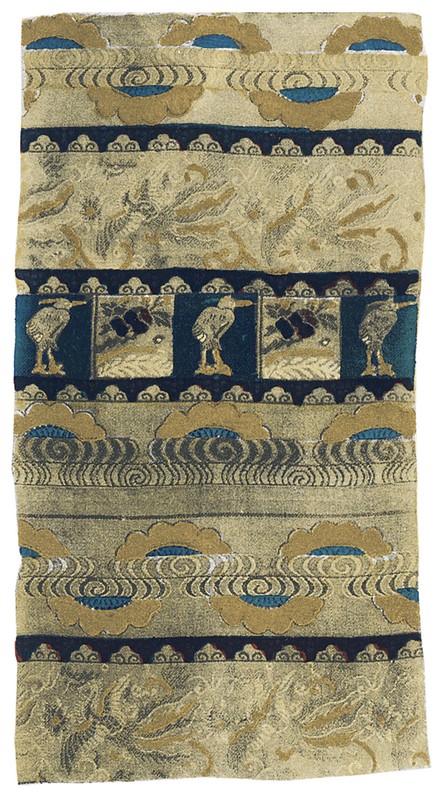
Japanese Textile Designs 107
-
Creativity
Creativity is allowing yourself to make mistakes. Art is knowing which ones to keep.
Scott Adams

-
What is Mindfulness ?
Mindfulness is a concentrated state of awareness that can help us see and respond to situations with clarity and without getting carried away by emotions or the constant chatter in our heads. Mindfulness enables us to:
· Better manage tension and stress
· Enhance objectivity, mental focus
· Communicate and make decisions more effectively
· Improve productivity
· Quiet’s noise in the mind
Meditation

Meditation is the tool we use to cultivate mindfulness. With meditation, you intentionally pay attention to a particular object as a way to strengthen concentration. There are thousands of meditative techniques: Tai Chi, yoga, focusing on the breath and using a mantra are all examples. People often think that meditating “correctly” means clearing all thought from the mind. This is a myth. The mind never stops thinking – it’s when we get caught up in our thoughts that we lose mindfulness. By witnessing thoughts, allowing them to pass, and returning to your chosen object of focus, you can actually build the muscle of concentration. Think of meditation as a fitness routine for the mind.
Are there other benefits to mindfulness?
In addition to boosting brain power, numerous research studies have shown significant physical benefits including:
· Reduced blood pressure
· Lowered cholesterol levels
· Enhanced immune function
· Reduced headache, migraine, back pain
· Improved respiratory function
Mindfulness does not require a particular set of beliefs in order to learn and practice – it is a quality of mind, accessible and available to all.
Mindfulness allows us to live every moment fully without the filters of bias, judgment or emotional reaction.
Mindfulness helps the body cope with physical challenges such as headaches, back pain and even heart disease.
Mindfulness keeps us from reacting too quickly – it helps increase the gap between impulse and action.
-
Addiction: Is Love All You Need?
If anything deserves to be called “the establishment view,” it is what Johann Hari — in his new book on addiction and the war on drugs, Chasing the Scream: The First and Last Days of the War on Drugs — calls the pharmaceutical model of addiction.
The pharmaceutical model says that addiction is about chemicals. Addiction is a chronic incurable disease of the brain. The brain’s pleasure centers are hijacked.
The pharmaceutical model may be the conventional wisdom, but it is certainly not without controversy. Researchers such as Gene Heyman and Bruce K. Alexander have long questioned whether the data support this picture.
As Hari reminds us, heroin use was rampant among U.S. soldiers stationed in Vietnam during that conflict. According to one study he cites, 20 percent of these American servicemen were heroin users. Over 85 percent of these users gave up heroin when they got home, the book says; they simply stopped taking the drug.
How do we reconcile this fact with the idea that the drug hijacks the brain and takes over? If that’s true, you wouldn’t expect a change of scenery (coming home from Vietnam) all by itself to break the neuro-chemical stranglehold. Alternatively, you might speculate that perhaps these heroin users were not really addicted. That the fact that they stopped proves this. But then we face a new problem: If the addiction is a chemical effect of the drug, then why weren’t they addicted?
Indeed, as Heyman claims in his book, there is good evidence that most addicts in the general population, as a matter of fact, eventually stop using drugs. They stop because they get to a point where they want or need or find that they are able to stop. They decide to stop. Now, this doesn’t fit very well with the conventional wisdom. You can’t simply decide to give up other diseases like diabetes or heart disease!
Or consider the fact that, as Hari explains, actual chemical dependence seems to be only a small part of drug addiction. If addiction were just about chemicals, then you would expect that the availability of nicotine patches — which can deliver smokers every bit of the nicotine they would get from a cigarette — would, in one fell swoop, eliminate the feeling that one needs to smoke. But not so. Only 17.7 percent of smokers using nicotine patches, according to Hari, break their addiction to smoking.
Hari also describes a fascinating reverse case. At some point in the 70s, heroin interdiction in Vancouver was so effective that there was virtually no heroin on the streets. This didn’t stop dealers from selling white powder and calling it heroin, and it didn’t stop addicts from hustling to get their hands on this powder so that they could shoot up. If it is the chemical itself that drives addiction and controls the addict, then you would have expected that Vancouver’s junkies, deprived of real heroin, would have been weened of their dependence.
That this didn’t happen is striking evidence — assuming the anecdote, originally reported by Alexander, is true — that not only is the chemical itself not sufficient to explain addiction, it isn’t even necessary.
Data like these suggest that addictions, although they no doubt interact with neural chemistry, can’t adequately be understood alone in neuro-chemical terms. And this is because it is people, not brains, that get hooked. To understand the actions of addicts, you need to look at their lives as a whole. When doctors claim, as they do, that addiction is a disease of the brain, they are saying something that is either trivially true (that the brain plays a role in addiction) or something entirely false (that the brain is the whole story).
It is true, as the old commercial made vivid, that a rat in a cage will forego water to self-administer morphine every time — and will continue to do so until it is dead. But, maybe, it’s not the morphine that best explains this but, rather, the fact that the sorry rat is locked up exposed, in complete isolation from its fellows, in an otherwise empty cage.
This observation led Alexander to wonder: Would a rat in a richer environment — one including not only water and morphine, but also other rats and good food and interesting landscapes — take the same self-destructive course of action? Or, rather, would this other rat find itself so totally dominated by the rewards that the drug alone provides? To investigate this, Alexander designed “rat parks” that were much larger, interesting and hospitable environments in which communities of rats were placed. He found that happy rats in happy rat parks behaved more like casual human drinkers than liked crazed addicts, in that they limited themselves to small amounts of morphine.
This result is striking — and it certainly corresponds to my own personal experience of addiction. I have known addicts, but I have known many more drug users who were not addicted.
Now, Hari is convinced that Alexander has unlocked the true essence of addiction. Addiction is caused by isolation. And the cure for addiction, it follows, is love. We need to give the addict back his or her feeling of connection to others.
This is a beautiful idea — and I like beautiful ideas. I also think that it gets something right. Addicts are disconnected and isolated. But we need to be careful in drawing a too-speedy conclusion. The fact that being isolated is a cause of addiction doesn’t yet clarify how sociality, love, friendship, isolation, etc., function in the lives of addicts. In particular, it doesn’t mean that you can fix addiction with love.
One reason love might not be all you need is that it could be that the wounds that lead us to turn to drugs, to really give ourselves over to drugs, might have their roots in our early lives. It’s hard to simply “get over” early childhood trauma. (Hari also celebrates the work of Mate Gabor, a clinician who argues, in ways that some thinkers worry might be a bit reductive, that the sources of addiction lie in trauma.)
But there is a deeper reason to worry that love couldn’t suffice. Whatever its causes, addiction would seem to be — something like this is Heyman’s view — a disorder of one’s ability to connect to others and value the things that human beings tend usually to value (such as food, exercise, sex, family, work). The remarkable and striking thing about many addicts is that they opt for self-medication over encounter — they turn inward and shut out the world.
It might be right, as Hari claims, that we would fix addiction if we could restore in the addict a sense of connection with the world around him or her, and with other people. But that’s not a prescription as much as it is a statement of the problem. Addicts are shut off.



 RichardbBrunner