-
sailing stones of Death Valley
The sailing stones of the Racetrack Playa, a dry lakebed in Death Valley, have been the subject of a mystery since the 1940s. The playa is dotted with stones, some as large as 700 pounds (320kg), with long tracks behind them, as though they have been performing a synchronised dance.
Although there have been many theories about how the rocks might be moving on their own — including dust devils, hurricane-force winds, films of slippery algae or thick sheets of ice — none had ever been confirmed, nor had any human seen the rocks actually moving.
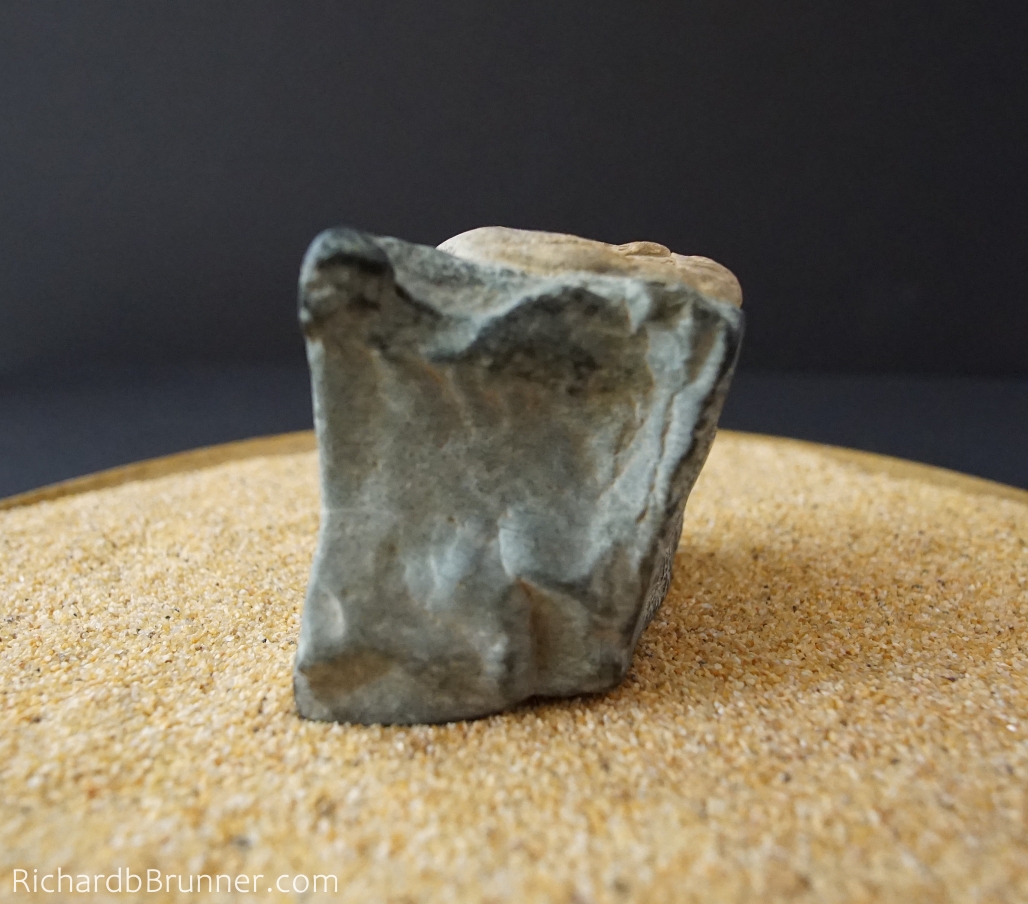
Until now, that is. A team of researchers from the Scripps Institution of Oceanography at UC San Diego decided they were going to solve the mystery once and for all. In the winter of 2011, they brought in a high-resolution weather station to measure wind at one-second intervals, and brought in 15 rocks fitted with GPS devices (since the National Parks Service would not allow them to use the native rocks).
-
Self-Control Can Drain Your Memory
The human body has a finite amount of resources, and scientists are always discovering more about how these resources are shared, depleted, and replenished. Now a new study suggests that the areas in your brain responsible for self-control and forming memories are closely linked – in other words, if you’re concentrating hard on staying disciplined, you’re probably becoming less adept at remembering what’s happening.
Researchers Yu-Chin Chiu and Tobias Egner from Duke University in the US asked a group of volunteers to recognise a series of faces, both with and without the inclusion of a self-control test in the middle. They found that having to exercise self-control had a negative impact on the participants’ ability to recall which pictures they’d previously seen. The same experiment was then repeated with a new set of volunteers and brain-scanning fMRI (functional magnetic resonance imaging) equipment on hand.
The pair discovered that one area of the brain – the ventrolateral prefrontal cortex – was activated frequently during the self-control test and predicted the strength of the volunteers’ memory later on. The findings suggest that self-control and memory compete for the same resources inside the brain, and support the theory that inhibiting ourselves can also cause us to forget more easily.
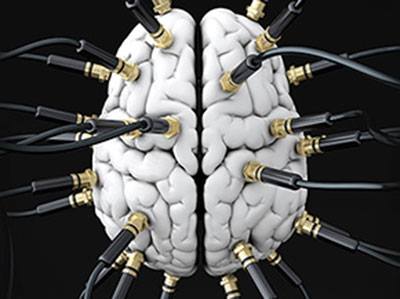
“The control demands of response inhibition divert attention away from stimulus encoding, thereby weakening memory traces for inhibitory cues,” the researchers conclude in The Journal of Neurosience. “These findings shed new light on the relation between the control process of response inhibition and the cognitive domains of perception, attention, and memory.”
The self-control test used was a traditional Go/No-Go task: these tasks work by asking participants to view a series of items and push a button only when certain criteria are met – in the case of this experiment, when the face shown is male rather than female. The theory is that those who are able to hold back from a button push when necessary are those with the strongest self-control (or “response inhibition”, as neuroscientists like to call it). The participants were not told in advance that they would need to remember the faces they were shown.
“The scans revealed that responding to a cue and inhibiting a response produced overlapping activation patterns in brain regions within the right frontal and parietal lobes, a network that has previously been implicated in response inhibition,” Mo Costrandi reports for The Guardian. “Crucially, ‘no-go’ trials produced greater activation of this network than ‘Go’ trials, and activity in one specific brain region (the ventrolateral prefrontal cortex) predicted the strength of the participants’ memory, such that the greater the observed network activation, the more likely the participants were to forget that face later on.”
The researchers admit their theory is still “speculative” for now, but if further study confirms the link, they believe their discovery could be used to treat people who have problems with self-control: those suffering from ADHD (Attention Deficit Hyperactivity Disorder), for example, or some form of addiction.
One scenario put forward by the pair is having to suddenly cancel a lane change on the motorway because a car is already in the spot you want to move into. If they’re right, the act of having to control and inhibit your actions would make it less likely that you would remember the details of the incident – such as the make and model of the car that was blocking your path.
-
U.S.-China Investment: 2020 Report Launch
A deteriorating bilateral relationship and growing regulatory scrutiny have changed the trajectory of capital flows between the United States and China over the past three years. The COVID-19 pandemic threatens to further disrupt two-way investment, as weak Chinese consumption and supply chain risks make U.S. companies re-think their China footprint, and Chinese investors face continued headwinds from domestic restrictions on outbound capital flows and U.S. regulators wary of opportunistic foreign buyers. The National Committee held a virtual event with report authors Thilo Hanemann and Daniel Rosen, both of Rhodium Group; Ker Gibbs, president, AmCham Shanghai; Rebecca Fannin, founder/editor, Silicon Dragon Ventures; and National Committee President Stephen Orlins to launch our new Two-Way Street: 2020 Update report and discuss the latest two-way investment data and analysis on May 11, 2020.
-
Top songs I have listened too in 2019: The Roots – The Seed (2.0)
The Roots – The Seed (2.0)
The Roots are an American hip hop band, formed in 1987 by Tariq “Black Thought” Trotter and Ahmir “Questlove” Thompson in Philadelphia, Pennsylvania, United States. The Roots currently serve as the house band on NBC’s The Tonight Show.
I have a 16,000 plus digital audio collection and I use Media Monkey to manage my files. One feature of Media Monkey is you can sort your collection based on the number of times played. This playlist is based on the top music and/or music video files I played/listened/streamed from my server in 2019. Complete 2019 Playlist HERE
-
Gulf Fritillary Coloring Page

-
Purple flower

-
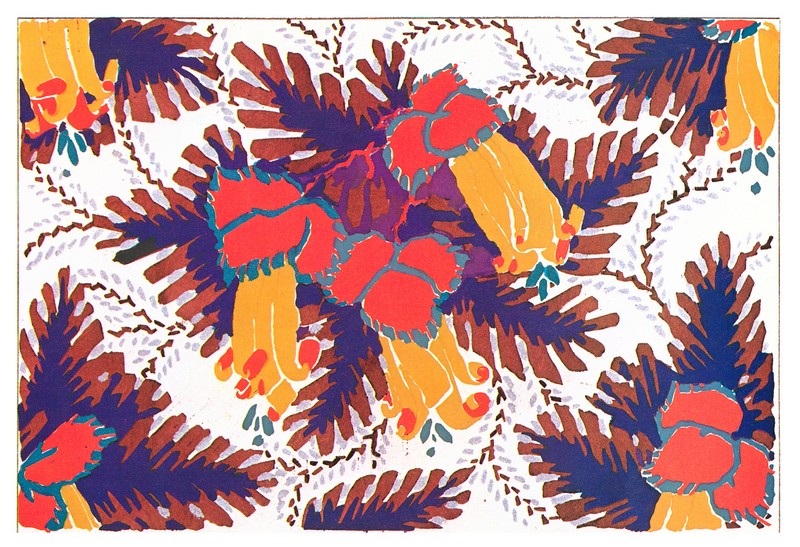
Seguy Art Deco Designs 105
-
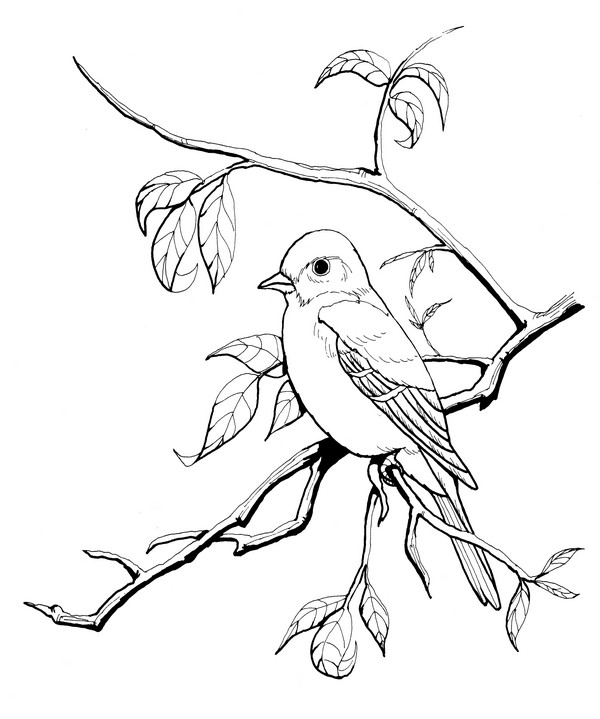
Eastern Wood Pewee Coloring Page
-
The U.S. Economy: Paul Krugman
-
Images from NYPL
 Want to do some research or just stumble across something interesting? Come and browse the digital stacks of one the worlds premier libraries. Here you will find a large image database which you can search and/or browse by subject or name.
The New York Public Library Digital Library Gallery-see it for yourself – online.


 RichardbBrunner