-
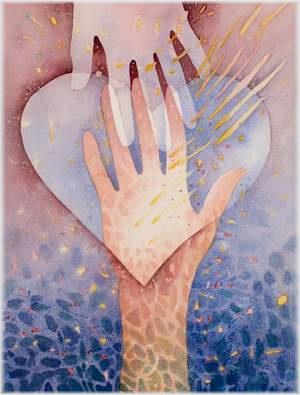
heart
In prayer it is better to have a heart without words than words without a heart. Mahatma Gandhi
-
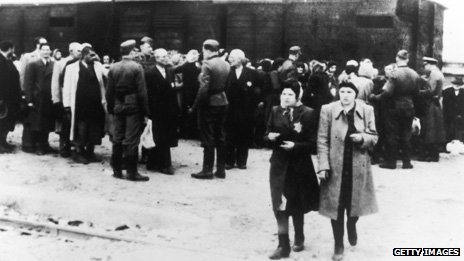
Escaping the train to Auschwitz
On 19 April 1943, a train carrying 1,631 Jews set off from a Nazi detention camp in Belgium for the gas chambers of Auschwitz. But resistance fighters stopped
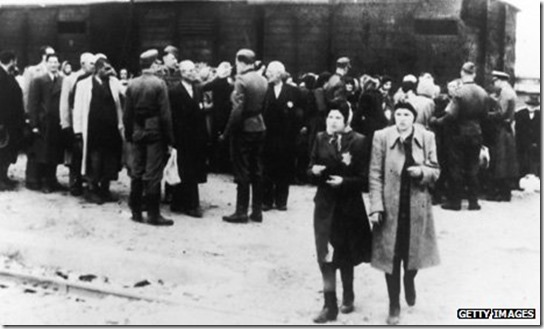 the train. One boy who jumped to freedom that night retains vivid memories, 70 years later.
In February 1943, 11-year-old Simon Gronowski was sitting down for breakfast with his mother and sister in their Brussels hiding place when two Gestapo agents burst in.
They were taken to the Nazis’ notorious headquarters on the prestigious Avenue Louise, used as a prison for Jews and torture chamber for members of the resistance. Read more here
-
Creativity
Creativity is piercing the mundane to find the marvelous. Bill Moyers

-
Pablo’s Poesía
Por Pablo Neruda
Looking inside
deep down-tongue-less
I stumbled on Pablo
sitting-writing-scratching like a chicken in the dirt
every once in a while a tear would fall
making mud on the floor
sticking to our shoes-making tracks everywhere we wentI asked Pablo for some paper…”and perhaps a pen….?”
He looked up …” No habla ingles “…. he sighed. “Habla en español”I looked up
way up
and saw my tongue-trying to speak the language of his childhoodJuly 2006
-
Self-control and Success
 Most of us believe that a certain amount of self-control is crucial for success. In order to succeed in the modern world, you need expertise in some area. Gaining that expertise requires work and practice. The discipline to work or practice at something means that you have to give up things that might be fun right now in order to engage in actions that will be rewarding in the future.
Research by Walter Mischel, Yuichi Shoda, and their colleagues supports this link.
They looked at the relationship between the delay of gratification task developed by Walter Mischel in the 1960s and later performance.
See more at: http://www.creativitypost.com/psychology/self_control_and_success -
courage
Life shrinks or expands in proportion to one’s courage. Anaïs Nin

-
Meditation and Pain management
According to a new study, mindfulness meditation exhibited even stronger physical pain reductions than morphine, says the study’s lead investigatorOpen any magazine and you’ll find that mindfulness has gone mainstream. You’ll also notice there are studies that purport to show meditation’s benefits on just about everything, from kids’ math scores and migraine length to HIV management and bouncing back after a crisis. Now, an elaborate new forthcoming study looks at how the brains of meditators respond to pain, to be published in the Journal of Neuroscience. Dr. Fadel Zeidan, assistant professor of neurobiology and anatomy at Wake Forest Baptist Medical Center, has studied mindfulness for 15 years and has observed improved health outcomes as a result. “But what if this is all just a placebo?” he wondered. “What if people are reporting improvements in health and reductions in pain just because of meditation’s reputation as a health-promoting practice?” He wanted to find out, so he designed a trials that included a placebo group.Zeidan recruited 75 healthy, pain-free people and scanned their brains using an MRI while they experienced painful heat with a 120-degree thermal probe. Then, the researchers sorted them into four groups and gave them four days of training. Everyone thought they were getting the real intervention, but most of them were getting a sham treatment.“I want to be restrained about the efficacy of mindfulness, and the way to be restrained about it is by making it harder and harder to demonstrate its effectiveness,” Zeidan says.First, there was a placebo cream group that participants were told reduces pain over time, Zeidan says (it was really just petroleum jelly). For four days, they rubbed it on the back of their leg and tested it against that painfully hot thermal probe. Little did they know, the researchers cranked down the heat each day; the participants thought the cream was working.Another group was taught a kind of fake mindfulness meditation—they were told to breathe deeply for 20 minutes but were given no instructions on how to do it mindfully. The control group was subjected to 20 minutes of a very boring book on tape: The Natural History and Antiquities of Selborne.
 For the real intervention, people sat for 20 minutes with straight posture, closed their eyes and listened to specific instructions about where to focus one’s attention and how to let thoughts and emotions pass without judgment. “Our subjects are taught to focus on the changing sensations of breath and to follow the breath with the mind’s eye as it goes down the chest and abdomen,” Zeidan says.After four days, everyone re-entered the MRI machine and endured the same pain from the 120-degree probe. They were told to use their training—breathing deeply, mindfully meditating or the cream. They used a lever to indicate the physical intensity and emotional unpleasantness of the pain.They found that people in all of the groups had greater pain reductions than the control group. The placebo cream reduced the sensation of pain by an average of 11% and emotional unpleasantness of pain by 13%. For the sham mindfulness group, those numbers were 9% and 24% respectively. But mindfulness meditation outperformed them all. In this group, pain intensity was cut by 27% and emotional pain reduced by 44%.That shocked Zeidan. Past research has indicated that the opioid morphine reduces physical pain by 22%—and mindfulness had surpassed even that. But the MRI results, which showed how pain was registering in their brains, surprised him even more. People who had practiced mindfulness meditation seemed to be using different brain regions than the other groups to reduce pain.“There was something more active, we believe, going on with the genuine mindfulness meditation group,” Zeidan says. This group had increased activation in higher-order brain regions associated with attention control and enhanced cognitive control, he says, while exhibiting a deactivation of the thalamus—a structure that acts as the gatekeeper for pain to enter the brain, he explains. “We haven’t seen that with any other technique before.”
 It’s an important preliminary study, Zeidan says, but exactly who will benefit from meditation’s impact on pain is still unknown. “We’re now at the stage, at least in my lab, where we have enough evidence that meditation reduces pain and it does it in a really unique fashion, different from any other technique we’ve seen,” he says.And as for the questions left unanswered? “We don’t have the studies yet,” he says, “but we’re getting there.”
 -
Advice on how to get out of a rut
1. “Get out of the studio… far away from the computer and look for the fabulous in the mundane. Mini road trips to antique malls and thrift shops provide some of the most amazing juxtapositions of function, color, shape and materials, as well as time to ponder them. Not to mention, the drive itself forces an unplugged brain cleanse that makes space for the new ideas to get in.” — Bob Faust, Principal/Designer,Faust Ltd.2. “I like to have several things going at once. That way, if one’s not coming I can work on something else. If none of them have any life to ’em, the best thing to do is to just take a break. There’s nothing worse than trying to force it and the world doesn’t need any more bad art; there’s already plenty of that.” — Dmitry Samarov, Painter and Writer 3. “I make a cup of coffee instead of miming one. I stop ripping out my hair in large tufts and watch it grow in. I take a walk and get a life. The rut will pass. Not creating with a gun to your head works, too.” — Susan Messing, Improvisor, Messing With A Friend4. “I always reach out to my mom to get inspiration if I’m in a rut. Childhood memories are big part of our restaurants. At Urbanbelly, menu item number #15 “Rice Cake” is from a street vendor when I was growing up in Seoul, Korea. So my mom reminds me about certain dishes or even tells me a recipe that she has used.” — Bill Kim bellyQ , Urbanbelly, and bellyshack.5. “After attending a great play, or great musical concert, I tend to become creatively inspired. After listening to someone like Stevie Wonder in concert for 2 hours, it’s kind of hard not to.” — Billy Branch, Three-time Grammy Award Nominee6. “The most difficult thing for me is to get started on a big creative project. I have many ideas, but putting them into clear form is a true challenge! In those cases, I need to clear my mind of all other life concerns, and I give myself the time to take a nice walk or do some meditation so that my mind is clear of all the little stresses that get in the way. Then, I reserve a good chunk of uninterrupted time to work, as the big creative projects require intense focus to be formulated.” — George Lepauw, President and Artistic Director of the International Beethoven Project7. “To dig my way out of a creative rut, I close the door to my hayloft studio…and hit the closets to play “Keep & Toss.” Once everything is bagged & tagged for donation, I pour a red beverage and turn off my brain in front of an old movie;Mommy Dearest paved the way for Spring ’13!” — Peach Carr, Project RunwaySeason 8 & All Star8. “In order to come up with new dishes, I fast and go for long runs. Being very hungry brings clarity to exactly what I crave and want to eat. Refinements of these ideas often end up on my menus.” — Gray McNally, Tortoise Club9. “I lock myself in a dance studio, put on good music and improvise. Without setting any rules, I simply dance, allowing myself the space to move free of judgment. Removing the pressure of creating on a deadline or for a specific reason, frees me up, resulting in more spontaneous and rich movement.” — Stephanie Paul, Be the Groove, Co-Founder/Artistic Director10. “Sometimes when I find myself in a creative rut, I look to my cookbook collection. I more often than not go to the books that I bought when I started cooking, like Alfred Portale’s 12 Seasons, Alain Ducasse’s Grand Livre de Cuisineor even recent publications like anything from Stephane Raynaud. Sometimes just a glimpse at a picture can start the creative juices flowing, and get me back on track.” — Sean Pharr, Chef de Cuisine NoMI Kitchen11. “When I’m in a creative rut, it is frustrating and tortuous because it can lead to self-doubt and the thought, ‘has my artistic well run dry?’ When it happens, I step away from my work, clear my mind through meditation and have a good laugh watching Modern Family.” — Stacy Bowie, Painter12. “I believe creative ruts are often related to overtiredness and being overloaded. Rest, breath, laughter and nature for rejuvenation are my go-to solutions, and I often spend time with kids playing because it cleanses my mind and starts me at a free, playful, creative place. Taking quiet time with my animals also puts me in a place to start any creative process, and then I trust.” — Melissa Veal, Wig and Make-up Designer, Chicago Shakespeare Theater13. “It’s easy to get into a rut when you are conceiving and designing shows a lot, back to back. The nature of commercial theatre dictates that you think really far ahead and sometimes that is very limiting. For me, the final creative answers can’t come until you are in the room, so it’s a matter of balancing the practical with the creative.” — Rachel Rockwell, Director/Choreographer14. “I spend some time outdoors hiking, foraging, camping or fishing. Nature puts me back on track!” — Paul Virant, Chef/owner Vie Restaurant, Chef/partnerPerennial Virant15. “Navigating out of a creative ‘rut’ means taking an afternoon away from my studio to sit in a hotel lobby and sketch people. I can immerse myself in seeing a variety of fascinating subjects, interesting fashion looks, all while madly capturing them with pencil on paper. Afterwards, I feel creatively refreshed-ready to tackle new fashionable opportunities.” — Rosemary Fanti, Fashion Illustrator16. “I take a shower. There is something about the rote activity of washing your hair that frees up your mind.” — Jared Van Camp, Executive Chef Nellcote17. “When I feel stuck creatively, it’s generally because I’ve been at it for too long. When that happens, I delve into another art form for awhile (i.e., if I’m stuck on a painting or drawing, I might go and write a poem or short story, immerse myself in cooking a wonderful meal, or meditate for a bit.) Switching it up really helps. A fresh look is invaluable when you return, and you come back with renewed perspective.” — Lyn Pusztai Co-owner / Co-designer of Roulette 18 jewelry and Freelance Painter/Illustrator18. “Distraction works best. When I’m out on the road I crave the quiet of the painting studio and vice versa. Making art is my job and mostly I don’t have time to get to all the nonsense bubbling in my skull.” — Jon Langford, Artist and Musician19. “When I am in a creative rut, I go to art museums and art shows, and look at other people’s art. I also look at books with pictures in them to get the visual part of my mind working and activated. Going out in nature always stimulates my senses and my mind, so I do that to find inspiration, as well, and I usually come back with some new ideas. Also, going to lectures, movies, taking a walk in the city, and listening to some music seems to help free my mind a bit, so that some inspiration can float in when I am diverted and not trying so hard. I am the most creative when I am relaxed and not trying.” — Victoria Fuller, Artist/Musician20. “One way that I get out of a creative rut is to sit down with super forward-thinking books, as well as ones from cooking school (the fundamentals). It helps me find my center. Usually hyper-focusing on an upcoming season like Spring and Google-searching images helps create a positive flow of thoughts.” — Pat Sheerin, Executive Chef/Partner, Trenchermen21. “After dinner, I head to the studio for ‘concepting time.’ When I feel the creative rut creeping in, I put on Chicago Tonight and break out a sketch book. That show always provides a variety of intellectual stimulation to get my mind and imagination warmed up. If after an hour my sketches are lame, at least I saw/heard an excellent show!” — Jeff Zimmermann, Artist22. “I read poetry… Rumi, Neruda, Rilke, and my own poetry, to remind myself of my own art. The words help me to see shapes, colors, form, which then inspire me to write, paint and create.” — Arica Hilton, Poet/Artist23. “Usually, when I need inspiration, I get more collaborative, working with all members of the team can help spark some initial burst of creativity. Or, I’ll cook something with my wife and children to help drown out all of the noise (budgets, P&L statements, deadlines, etc) that fills my head and I can focus on what I enjoy the most. My kids have amazing palates, too – they let me know if anything is off balance in a dish, so I really focus on clean, simple, well prepared items.” — James O’Donnell, Michael Jordan’s Steak House24. “If I get into a creative rut, I take a long bath, light a candle, and listen to soft music followed by a nice long slumber. After a restful night’s sleep, I often wake to a morning of refreshing ideas!” — Dee Alexander, vocalist25. “I choose to spend my time with brilliant people, who excel in many different areas, and this helps me get out of my creative rut. From restauranteurs to investment bankers and from musicians to engineers, the people with whom I surround myself inspire me to create new pieces and come up with ideas that meld different types of art.” — Josephine Lee, President and Artistic Director of Chicago Children’s Choir26. “To get inspired I love going to some of my favorite Italian restaurants like Balena or Piccolo Sogno and when I can, I also love going to New York to visit my Italian favorites like Lupa, Keste or Il Buco. Going back to my favorite cookbooks, like Babbo and A16, also helps me get new thoughts and inspiration.” — Chris Macchia, The Florentine27. “I destress. I take the pressure off of creating just for creation purposes. At times, we can focus on the business aspect or the productivity of our craft so much that it sucks the passion out of us. I go have fun and stop thinking so hard. I let life take it’s course and fill me with experiences that shape my art. Also, our competitive nature can block creativity. I remind myself that I’m not competing to win a contest. I remind myself that this is what I love and how and why I fell in love with it.” — Marco The Poet, Poet, co-founder of Speak Life Movement28. “On the rare occasion that I’m uninspired about a piece I’m practicing, I play something else, and return to the original piece feeling more refreshed. I love talking about music, but can find it challenging to write essays or articles on the subject. My solution is to just write something, anything, and once I get going, I find it usually isn’t so bad after all!” — Rachel Barton Pine, international violin soloist29. “I go to the movies, go see live theater or music. I find that experiencing the creativity of others is most inspiring.” — Lynne Jordan, vocalist
 -
Philippine rehab uses Art therapy
MANILA, Sept 14 — A group in Manila are using art therapy to help addicts overcome drug addictions and show Philippine President Rodrigo Duterte that bloody retribution is not the only solution to drugs.
The Centre for Christian Recovery, a religious organisation which manages a small private rehabilitation facility west of Manila, has incorporated drawing into its daily sessions as a way for addicts to express their feelings.
“These drug dependents are not used to saying what they feel,” said Davis Dakis, the programme director.

“They do not know how to express their emotions. So now, through art, they can express whatever they feel.”
The art sessions at the centre, which caters for 40 addicts, comes amid a bloody campaign against drugs since Duterte took office in June.
More than 2,500 people have been killed in the war on drugs, with about 900 deaths a result of police operations, police say.
Owie, a drug user undergoing rehabilitation, said he was afraid of going back on the streets despite his attempts at reformation.
“I hope our president will take a different action. I don’t want it to be like this. It’s as if he wants to just kill all of us addicts,” he said.
“There is still hope for us, it’s not too late to change.” — Reuters
-
Claire Diterzi-L’avantage avec les animaux c’est qu’ils t’aiment sans poser de questions
L’avantage avec les animaux c’est qu’ils t’aiment sans poser de questions = The advantage with animals is that they love you no questions asked



 RichardbBrunner