-
The Hidden Dog
Dogs were the first non-human members of the human group. They are our original companions. The first animals we domesticated, they share a 40,000 year history with humans. To them humanity owes its very survival and evolution through enhanced meat acquisition dogs made possible via hunting, as a consequence of which humans grew physically and intellectually.
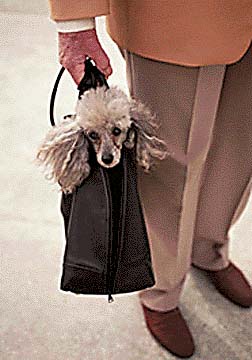
It was co-evolution of both species which shows up in the parent-child relationship between dog and human, as psychological research has recently uncovered. Only after the agrarian revolution when the importance of the dog to food acquisition declined did we see a loss of status of the dog.
-
Not everything
Not everything that is faced can be changed, but nothing can be changed until it is faced. James Baldwin

-
When Meds Fail: A Case for Music Therapy: Tim Ringgold at TEDxYouth@BommerCanyon
-
The Ten Rules For Being Human
1. You will receive a body.2. You will be presented with lessons.3. There are no mistakes, only lessons.4. Lessons are repeated until learned.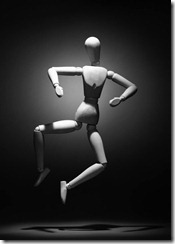 5. Learning does not end.6. “There” is no better than “here.”7. Others are only mirrors of you.8. What you make of your life is up to you.9. All the answers lie inside of you.10. You will forget all of this at birth.
 -
Dance Movement Therapy and Children
Dance Movement Therapist (DMT) practice in a wide variety of settings. One example is DMT’s who work with children and their care givers (such as parents) in a safe, structured and creative environment. In this type of setting DMT’s observe interactions such as how and when a child moves toward and away from their care giver. A DMT might use the Kestenberg Movement Profile (KMP) to observe the natural developmental based rhythms, attunements and clashes of the child and care giver as they play and interact. For instance, a child may have a gradual rhythm and moves slowly into activities and the care giver may have a more aggressive/biting rhythm. A cash of rhythms occurs when the care giver pushes the child into activities at the care giver’s rhythm and not the child’s. The result is the child will often resist the care giver and the more the care giver pushes the more the child resists.
One successful outcome of this situation is to teach the care giver how to attune to the natural physical, mental and emotional rhythms of the child. When the care giver attunes to the child, the child begins to attune to the care giver and instead if resisting each other’s rhythms they begin to “move” together.
-
Creative Play for Kids Art and Drama Therapy for Children – Coping with Trauma
For more visit:
American Art Therapy
Drama Therapy
Dance/Movement Therapy
Play Therapy -
Ibeyi-River
-
body
Take care of your body. It’s the only place you have to live. ~Jim Rohn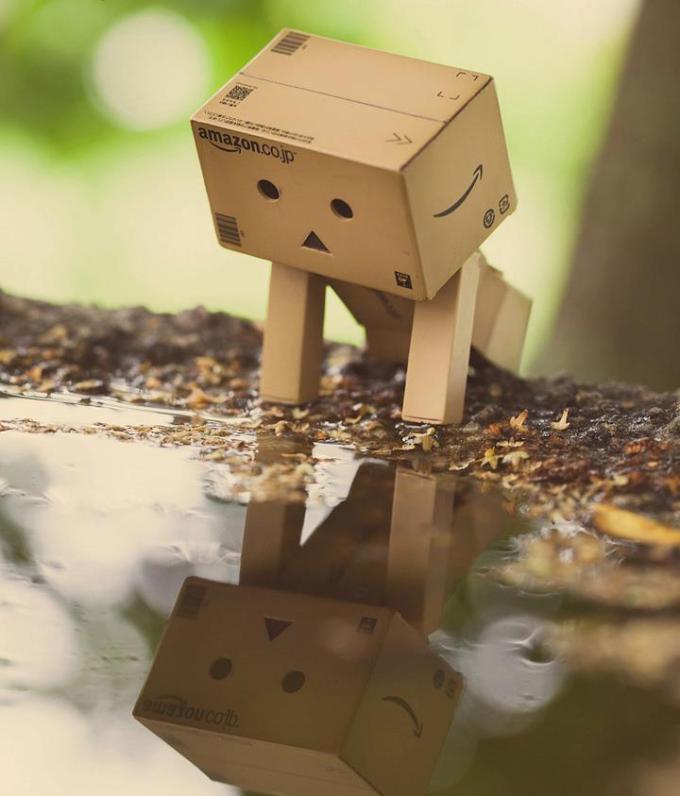
-
Frozen leaf

-
treemail
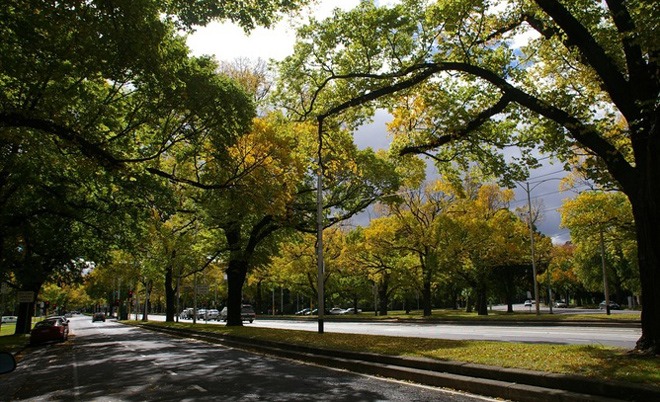
Some people talk to their plants. In Melbourne, they email the trees. This became possible thanks to a decision to map every tree in the city and give it a unique ID number.
About 3,000 emails have been sent to individual trees in the last two years. This didn’t start out as an exercise in sentiment, but a hard-headed attempt by Melbourne city council to manage an urban forest in decline – as a result of drought, by 2009 40% of the 77,000 trees in Australia’s “garden city” were struggling or dying
Pasted from <http://www.bbc.com/news/magazine-33560182>

Selected treemail Below (July 2015)
Weeping Myrtle, Tree ID 1494392
5 July 2015
Hello Weeping Myrtle,
I’m sitting inside near you and I noticed on the urban tree map you don’t have many friends nearby. I think that’s sad so I want you to know I’m thinking of you. I also want to thank you for providing oxygen for us to breath in the hustle and bustle of the city.
Best Regards, N
Gum, Tree ID 1032002
11 July 2015
Dear Gum,
Apologies if that’s not the form of address you prefer. I wanted very much to tell you how much I miss your family. I’ve lived in Texas for two and a half years now, and I so fervently miss the heady scent of your cologne as the morning sun warms you.
I miss your gentle swish swish as the wind tousles your leaves playfully. I miss your strong white trunk, rising majestically from the earth, striking up towards the clouds. I miss the dappled shade you so generously provide.
The sound of magpies, harbouring in your foliage, does not grace my ears. The silver green of your long, lithe leaves does not appear in my current surrounds.
I miss you, Gum. I miss all that you represent for me. Stand tall and strong, and know that my heart reaches out to you across the seas.
With immense fondness, A
Golden Elm Tree ID 1040779
11 July 2015
Dearest Golden Elm Tree, I finally found you! As in I see you everyday on my way to uni, but I had no idea of what kind of tree you are. You are the most beautiful tree in the city and I love you ^_^ It always makes me so happy to see you standing there minding your own business. I have to say, you have the most beautiful canopy and I love how the light green leaves on your branches contrast with the darkness of your trunk. We really should have more trees of your kind in our city.
Stay awesome.
Hugs! A
Variegated Elm, Tree ID 1033102
13 July 2015
Dear Elm, I was delighted to find you alive and flourishing, because a lot of your family used to live in the UK, but they all caught a terrible infection and died. Do be very careful, and if you notice any unfamiliar insects e-mail an arboriculturist at once. I miss your characteristic silhouettes and beautifully shaped branches – used to be one of the glories of the English landscape – more than I can say. Melbourne must be a beautiful city.
Sincere good wishes, D
Pasted from <http://www.bbc.com/news/magazine-33560182>


 RichardbBrunner