-
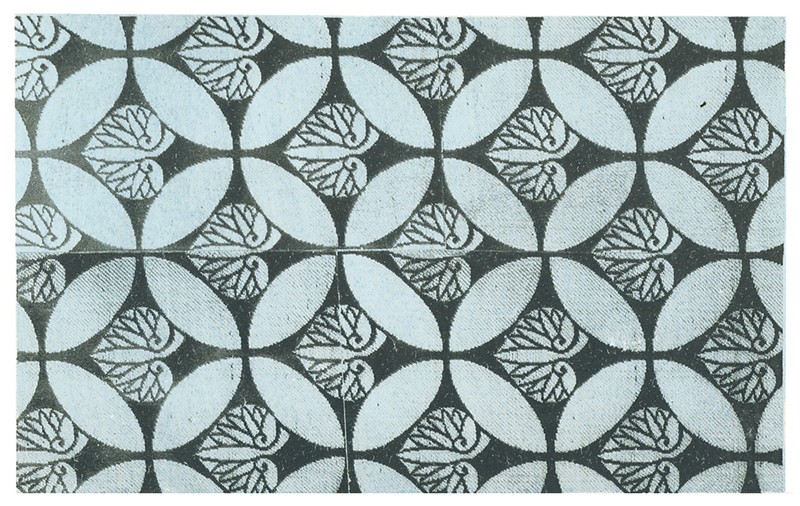
Japanese Textile Designs 30
-
How to Check if Your Home Address Shows Up Online – CNET
As a victim (?), survivor (?) of identity theft I’ve been using dark web monitoring services for years. Dark web monitoring is a proactive security service that scans hidden, non-indexed internet sites, forums, and marketplaces to detect stolen, leaked, or sold personal and corporate data. It provides real-time alerts about compromised credentials, financial info, or personal identifiers (PII), allowing for rapid mitigation to prevent identity theft or, for businesses, data breaches. I would recommend that you use known companies for monitoring. Like VPN’s, don’t use the free ones unless it’s from Google, Apple, Microsoft, Transunion, ect. These will provide basic info and basic removal for you.
“Your home address is connected to many important personal details about your life, which is one reason why a large industry behind buying and selling that information exists. This is also why you get so much junk mail and why it could make it easier for thieves to steal your identity.”
Cnet is a known tech media source that I’ve been reading for many years.
https://www.cnet.com/home/security/how-to-check-if-your-home-address-shows-up-online/

-
This Is Your Brain on Metaphors
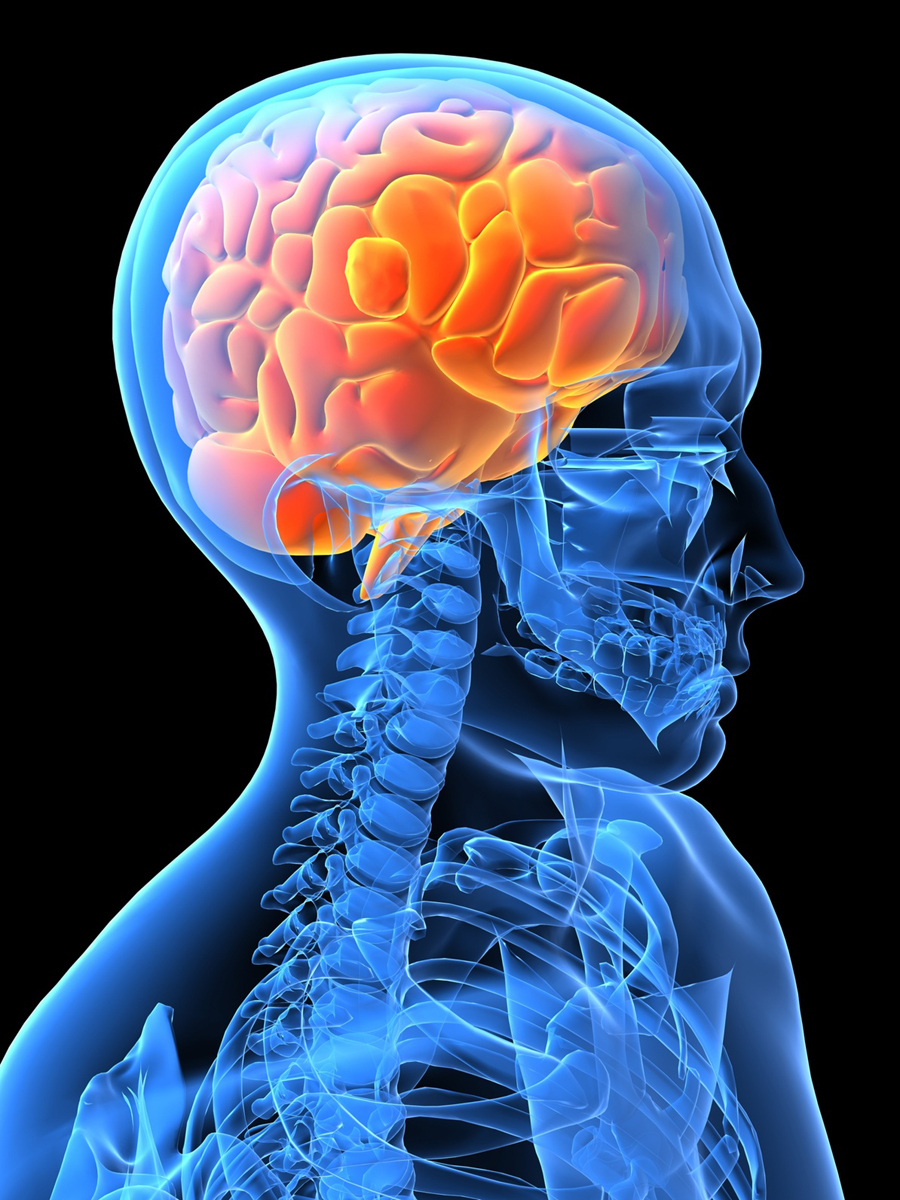
From the NYT…..”Jonathan Haidt, of the University of Virginia, has shown how viscera and emotion often drive our decisionmaking, with conscious cognition mopping up afterward, trying to come up with rationalizations for that gut decision.” Read more here.
-
TravelTuesday Archives: Crossing Mascoma Lake and some ice fog
-
MusicMonday: Lou Doillon – Too Much
-
Seguy Art Deco Designs 1

-
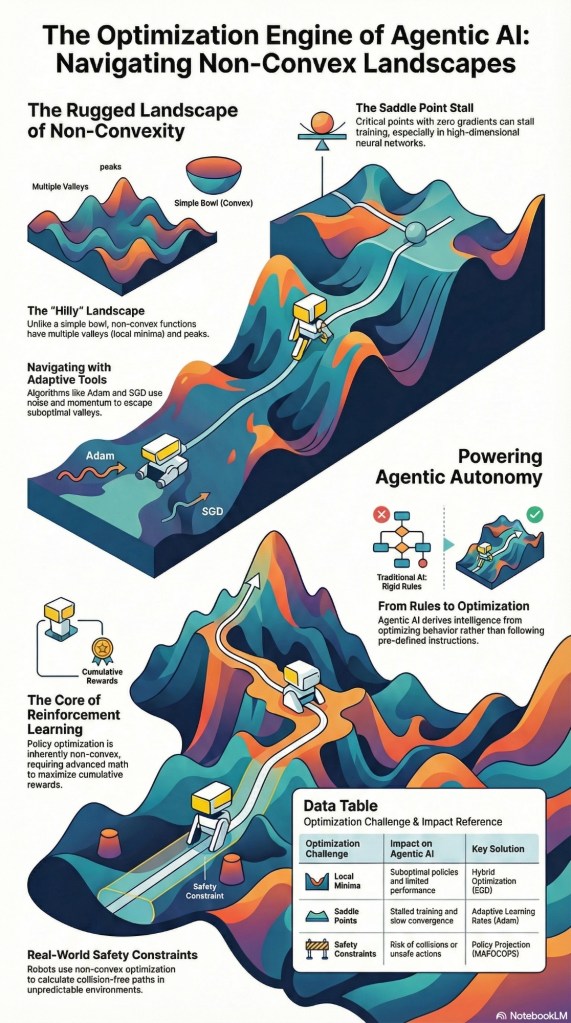
Contextual awareness, agentic AI, and non-convex optimization
As an official nerd I enjoy examining the critical relationship between contextual awareness, agentic AI, and the mathematical field of non-convex optimization.
While contextual awareness defines an AI’s ability to interpret situational cues like user history and environment, non-convex optimization is the technical tool used to train the complex models that enable these behaviors. The image below highlights the modern AI landscapes are “hilly” and filled with multiple suboptimal valleys, making it difficult for algorithms to find the absolute best solution. To overcome these challenges, researchers employ advanced strategies such as stochastic gradient descent, evolutionary algorithms, and meta-learning to navigate high-dimensional data. This optimization is particularly vital in robotics and multi-agent systems, where autonomous entities must make real-time decisions in unpredictable, non-linear environments. Ultimately, the advancement of truly autonomous, intelligent agents is fundamentally dependent on our ability to master these complex mathematical landscapes.
-
Dancer and Therapy
I stumbled across this fun article from the Austin Chronicle about dancer Rhoda Winter Russell. Rhoda trained with Mary Wigman, as well as various other teachers and attended the University of Wisconsin dance program home of Mable Elsworth Todd author of one of one favorite body/movement books; “The thinking Body” .
Russell commented on her early days in the article stating; “There’s Picasso in art, and there’s Stravinsky in music, and there is Wigman in dance”. Russell recalled that when Wigman instructed her class, “It was a lot of emotional feeling, not that you should bend this way and turn that way. And let the group feel each other, and create out of that. Basically you had to get out of yourself, and you had to sense not only your body but the others.”
Like others in the beginnings of the Dance Movement Therapy field Russell volunteered at a psychiatric hospital where as she began leading movement therapy sessions; “I worked with very severely disturbed patients, because in the Fifties, they were just beginning to use the psychotropic drugs”.
This was a great article to read and I only provided a few highlights here to see more click the link below.
-
TravelTuesday upcoming journey
A short time after I posted about my upcoming trip awhile back I made a decision that I have been seriously considering for quite sometime: Travel sans – auto.
Instead of a slow drive across America, it will be a slow train across America. I have taken Amtrak about a dozen times, usually the Vermonter from Philly to Mountpelier. This time I will be going west, north, east and south. The intention is the same: visit people, places, and communities. And as I do, pray and meditate when and wherever I am. Suggestions, thoughts, and feelings are always welcome.🙏

Railroad Museum of Pennsylvania There is no single “Tri-State Area” in the United States; the term refers to numerous regional, metropolitan, or geographical areas where three states meet. There are at least 24 distinct, commonly referenced regional tri-state areas.
Commonly Cited Tri-State Areas:
New York Metropolitan Area: New York, New Jersey, Connecticut (NY/NJ/CT).
Philadelphia Area: Pennsylvania, New Jersey, Delaware (PA/NJ/DE).
Cincinnati Area: Ohio, Kentucky, Indiana (OH/KY/IN), though sometimes WV.
Chicago Area: Illinois, Indiana, Wisconsin or sometimes IA/IL/WI.
Delmarva Peninsula: Delaware, Maryland, Virginia (DE/MD/VA).
Memphis Area: Tennessee, Mississippi, Arkansas (TN/MS/AR).
Spokane Area: Washington, Idaho, Montana (WA/ID/MT).
Boston Area: Massachusetts, Rhode Island, New Hampshire (MA/RI/NH).
Railroad Museum of Pennsylvania See:
TravelTuesday
Excited to begin trip planning
-
MusicMonday: Noga Erez – Come Back Home “ Against The Machine “ [Live]

 RichardbBrunner