Marshall the Miracle Dog Becomes a Movie Star

Tags

,

“From a horrid life with an animal hoarder, this sweet three-legged dog has made a remarkable journey. Marshall was rescued, nursed back to health, adopted, and made the subject of a book called Marshall the Miracle Dog, written by his new owner, Cyndi Willenbrock. Then Hollywood came calling…” St Louis Magazine

Marshall the Miracle Dog

https://www.stlmag.com/news/marshall-the-miracle-dog/

Men and Depression

Tags

, ,

In my years of facilitating groups I have on occasion facilitated men only groups. One issue that comes up is depression. We all have bouts of sadness now and then and when those bouts of sadness interfere with our daily lives than we need to take a step in the direction of change. Below is part of a handout I often use, particularly with dual diagnosed men.  

Symptoms of Depression

Not everyone who is depressed or manic experiences every symptom. Some people experience only a few; some people suffer many. The severity of symptoms varies among individuals and also over time.

· Persistent sad, anxious, or “empty” mood.

· Feelings of hopelessness or pessimism.

· Feelings of guilt, worthlessness, or helplessness.

· Loss of interest or pleasure in hobbies and activities that were once enjoyable

· Decreased energy, fatigue; feeling “slowed down.”

· Difficulty concentrating, remembering, or making decisions.

· Trouble sleeping, early-morning awakening, or oversleeping.

· Changes in appetite and/or weight.

· Thoughts of death or suicide, or suicide attempts.

· Restlessness or irritability.

· Persistent physical symptoms, such as headaches, digestive disorders, and chronic pain that do not respond to routine treatment.

Co-Occurrence of Depression with Other Illnesses

Depression can coexist with other illnesses. In such cases, it is important that the depression and each co-occurring illness be appropriately diagnosed and treated. Research has shown that anxiety disorders which include post-traumatic stress disorder (PTSD), obsessive-compulsive disorder, panic disorder, social phobia, and generalized anxiety disorder commonly accompany depression.

Substance use disorders (abuse or dependence) also frequently co-occur with depressive disorders. Research has revealed that people with drug and/or alcohol addiction are almost twice as likely to experience depression.

Depression has been found to occur at a higher rate among people who have other serious illnesses such as heart disease, stroke, cancer, HIV, diabetes, and Parkinson’s.

Causes of Depression

Very often, a combination of cognitive, genetic, and environmental factors is involved in the onset of depression. Modern brain-imaging technologies reveal that, in depression, neural circuits responsible for the regulation of moods, thinking, sleep, appetite, and behavior fail to function properly.

In some families, depressive disorders seem to occur generation after generation; however, they can also occur in people with no family history of these illnesses. Genetics research indicates that risk for depression results from the influence of specific multiple genes acting together with non-genetic factors.

Environmental factors such as trauma, loss of a loved one, a difficult relationship, financial problem, or any stressful change in life patterns, whether the change is unwelcome or desired, can trigger a depressive episode in vulnerable individuals. Once someone experiences a bout of depression later episodes of depression may occur without an obvious cause.

Men and Depression

Men are more likely than women to report alcohol and drug abuse or dependence in their lifetime; however, there is debate among researchers as to whether substance use is a “symptom” of underlying depression in men or a co-occurring condition that more commonly develops in men. Nevertheless, substance use can mask depression, making it harder to recognize depression as a separate illness that needs treatment.

Instead of acknowledging their feelings, asking for help, or seeking appropriate treatment, men may turn to alcohol or drugs when they are depressed, or become frustrated, discouraged, angry, irritable, and, sometimes, violently abusive. Some men deal with depression by throwing themselves compulsively into their work, attempting to hide their depression from themselves, family, and friends. Other men may respond to depression by engaging in reckless behavior, taking risks, and putting themselves in harm’s way.

Kestenberg Movement Profile: Tension Flow Rhythms

Tags

, ,

KMP Movement Analysis is the comprehensive system for identifying psychological, developmental, emotional, cognitive and global health/imbalance through movement observation, notation and interpretation.
If the mind, emotions, and body are a closely integrated , mutually interacting system, then it is reasonable that we should be able to gain information about the mind by observing the body. The body and its manner of moving not only reveals aspects of current feelings and emotions, but can give us insight into an individual’s past. As Loman and Foley wrote in 1996, “…experiences get stored in the body and are reflected in body movement.” A person who feels rejected may develop a hollow, narrowed body attitude which expresses and reinforces such feelings throughout life. Because both physical and emotional experiences leave long term traces upon the way people hold themselves and move, the study of movement opens a door to the study of patterns of early development, coping strategies and personality configurations.

Meditation can change you| Big Think

Tags

,

There are a lot of misconceptions when it comes to what mindfulness is and what meditation can do for those who practice it. In this video, professors, neuroscientists, psychologists, composers, authors, and a former Buddhist monk share their experiences, explain the science behind meditation, and discuss the benefits of learning to be in the moment. “Mindfulness allows us to shift our relationship to our experience,” explains psychologist Daniel Goleman. The science shows that long-term meditators have higher levels of gamma waves in their brains even when they are not meditating. The effect of this altered response is yet unknown, though it shows that there are lasting cognitive effects. “I think we’re looking at meditation as the next big public health revolution,” says ABC News anchor Dan Harris. “Meditation is going to join the pantheon of no-brainers like exercise, brushing your teeth and taking the meds that your doctor prescribes to you.” Closing out the video is a guided meditation experience led by author Damien Echols that can be practiced anywhere and repeated as many times as you’d like.

Gratitude

Tags

, ,

52 weeks of Gratitude posts …. starting 3 weeks early …. 55 weeks of Gratitude posts.

This week I am grateful for Prayer. I have been practicing beautiful and powerful forms of prayer since I was a tween. Centering prayer, zikr, chant, sung, danced, and more.

Praying Hands

Brain Scan May Help Decide Treatment for Depression

Tags

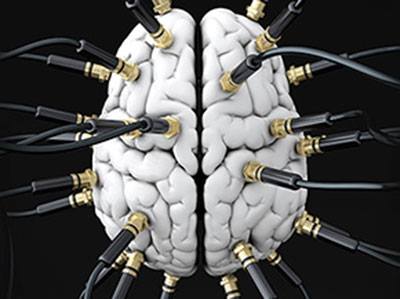
New research from Emory University in Atlanta has found that specific patterns of activity on brain scans may help clinicians identify whether psychotherapy or antidepressant medication is more likely to help individual patients recover from depression.

The study, called PReDICT, randomly assigned patients to 12 weeks of treatment with one of two antidepressant medications or with cognitive behavioral therapy (CBT).

At the start of the study, patients underwent a functional MRI brain scan, which was then analyzed to see whether the outcome from CBT or medication depended on the state of the brain prior to starting treatment.

The MRI scans identified that the degree of functional connectivity between an important emotion processing center — the subcallosal cingulate cortex — and three other areas of the brain was associated with the treatment outcomes, according to the researchers.

Specifically, patients with positive connectivity between the brain regions were significantly more likely to achieve remission with CBT, while patients with negative or absent connectivity were more likely to benefit from antidepressant medication.

“All depressions are not equal and like different types of cancer, different types of depression will require specific treatments. Using these scans, we may be able to match a patient to the treatment that is most likely to help them, while avoiding treatments unlikely to provide benefit,” said Helen Mayberg, M.D., a professor of psychiatry, neurology and radiology at Emory University School of Medicine.

Mayberg and her co-investigators, Boadie Dunlop, M.D., director of the Emory Mood and Anxiety Disorders Program, and W. Edward Craighead, Ph.D., a professor of psychiatry and behavioral sciences, sought to develop methods for a more personalized approach to treating depression.

Current treatment guidelines for major depression recommend that a patient’s preference for psychotherapy or medication be considered in selecting the initial treatment approach. However, in the PReDICT study, patients’ preferences were only weakly associated with outcomes — preferences predicted treatment drop-out, but not improvement, the study found.

These results are consistent with prior studies, suggesting that achieving personalized treatment for depressed patients will depend more on identifying specific biological characteristics in patients rather than relying on their symptoms or treatment preferences, the researchers noted.

The results from PReDICT suggest that brain scans may offer the best approach for personalizing treatment going forward, they add.

The researchers recruited 344 patients for the study from across the metro Atlanta area. Researchers note they were able to convene a more diverse group of patients than other previous studies, with roughly half of the participants self-identified as African American or Hispanic.

“Our diverse sample demonstrated that the evidence-based psychotherapy and medication treatments recommended as first-line treatments for depression can be extended with confidence beyond a white, non-Hispanic population,” said Dunlop.

“Ultimately our studies show that clinical characteristics, such as age, gender, etc., and even patients’ preferences regarding treatment, are not as good at identifying likely treatment outcomes as the brain measurement,” concluded Mayberg.

The study results were published in the American Journal of Psychiatry.

The Ten Rules For Being Human

Tags

, , ,

1. You will receive a body.

2. You will be presented with lessons.

3. There are no mistakes, only lessons.

Dog with glasses using laptop computer

4. Lessons are repeated until learned.

5. Learning does not end.

6. “There” is no better than “here.”

7. Others are only mirrors of you.

8. What you make of your life is up to you.

9. All the answers lie inside of you.

10. You will forget all of this at birth.