Tags

19 Friday Feb 2021
Tags
17 Wednesday Feb 2021
Posted in creative arts therapy, dance, Dance Movement Therapy, YouTube
≈ Comments Off on Kinesthetic Empathy: The Keystone of Dance/Movement Therapy
16 Tuesday Feb 2021
Posted in self-defense, Uncategorized
≈ Comments Off on self-defense
Tags

People do not choose rebellion; it is forced upon them. Revolution is an act of self-defense. C.T. Vivian
15 Monday Feb 2021
Posted in Music
≈ Comments Off on Top Songs I listened to in 2020: Hikaru Utada – Darenimo Iwanai
14 Sunday Feb 2021
Tags
Romance is dead. It was acquired in a hostile takeover by Hallmark and Disney, homogenized, and sold off piece by piece. Matt Groening

13 Saturday Feb 2021
Posted in quote
≈ Comments Off on is a
13 Saturday Feb 2021

Posted by RichardB | Filed under Japanese Textile Designs
≈ Comments Off on Japanese Textile Designs 136
12 Friday Feb 2021
10 Wednesday Feb 2021
Posted in creative arts therapy, Dance Movement Therapy, Psychotherapy, Therapy
≈ Comments Off on What is Dance Movement Therapy?
Tags
According to the American Dance Therapy Association (ADTA): Based on the understanding that the body and mind are interrelated, dance/movement therapy (D/MT) is defined as the psychotherapeutic use of movement to further the emotional, cognitive, physical, and social integration of the individual. Dance/movement therapy is practiced in mental health, rehabilitation, medical, educational, and forensic settings, and in nursing homes, day care centers, disease prevention, and health promotion programs. The dance/movement therapist focuses on movement behavior as it emerges in the  therapeutic relationship. Expressive, communicative, and adaptive behaviors are all considered for both group and individual treatment. Body movement as the core component of dance simultaneously provides the means of assessment and the mode of intervention for dance/movement therapy.
I often define D/MT to clients as psychotherapy that is not limited to talking but encompasses the full range of human expression, including movement such as gestures and or postures, drawing, writing, drama, music and other expressions that can have a therapeutic benefit for the client(s).
Dance Movement Therapy is a creative arts therapy rooted in the expressive nature of dance. Since dance/movement comes from the body it is considered the most fundamental of the arts and is a direct expression (and experience) of the self. Dance/movement is a basic form of authentic communication, and as such it is an especially effective medium for therapy.
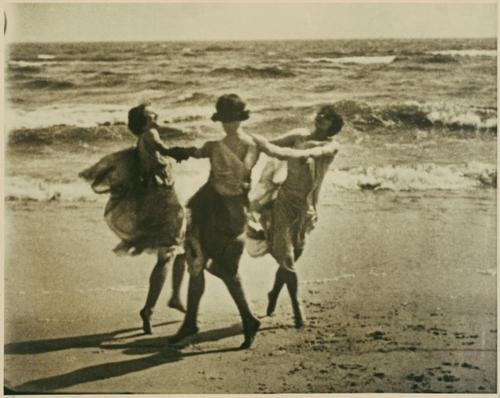 Dance/movement therapists (R-DMT or BC-DMT) work with individuals of all ages, groups and families in a wide variety of settings. They focus on helping their clients improve self-esteem and body image, develop effective communication skills and relationships, expand their movement vocabulary, gain insight into patterns of behavior, as well as create new options for coping with problems. Movement is the primary medium DMT’s use for observation, assessment, research, therapeutic interaction, and interventions.
DMT’s work in settings that include psychiatric and rehabilitation facilities, schools, nursing homes, drug treatment centers, counseling centers, medical facilities, crisis centers, and wellness and alternative health care centers.
09 Tuesday Feb 2021
Posted in Quiet
≈ Comments Off on Quiet
08 Monday Feb 2021
07 Sunday Feb 2021
06 Saturday Feb 2021
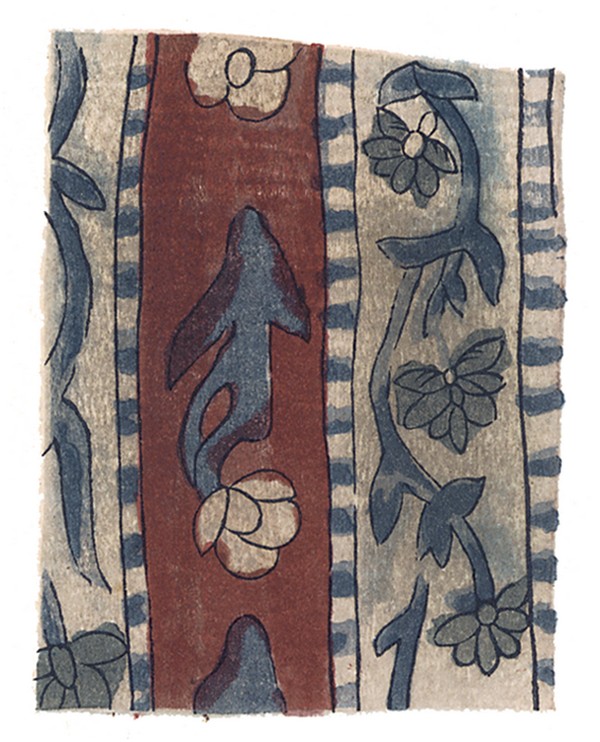
Posted by RichardB | Filed under Japanese Textile Designs
≈ Comments Off on Japanese Textile Designs 137
05 Friday Feb 2021
Posted in boundaries, Handout, Uncategorized
≈ Comments Off on Setting boundaries
Setting boundaries is an essential skill in life, especially for people in recovery. Addicts often grow up in dysfunctional homes, where boundaries were either too rigid (leading to suppressed emotions or distant relationships) or too enmeshed (depriving them of a sense of personal identity). Later in life, their interpersonal relationships may continue to be defined by old roles and patterns, increasing the risk of depression, anxiety and addictive or compulsive behaviors. 
As part of recovery, addicts learn how to set boundaries and to respect other people’s boundaries in return. In the addiction field, treatment providers often refer to this process as embracing the authentic self. While it may sound like psychobabble, it is really a process of discovering who you want to be, how you want to interact with other people, and taking responsibility for the consequences of your choices.
Why are boundaries important? They keep you safe from being manipulated, abused or taken advantage of, while also protecting other people from harm you may consciously or unconsciously inflict. They prevent both parties in a relationship from blurring the lines between self and others, which can lead to enmeshment and codependency. With healthy boundaries in place, you can begin to tune in to your inner voice and trust your own thoughts and feelings, and then communicate those to other people.
Distinguishing Healthy and Unhealthy Boundaries
Without a healthy role model, it can be difficult to know what healthy boundaries look like. First, let’s cover what healthy boundaries are not. They are not threats or attempts to control or manipulate others into doing what you want. They are not rigid rules or “walls” designed to keep people out or shield you from expressing your emotions.
Healthy boundaries are simply a delineation of what type of treatment is acceptable to you, and what consequences will result from violating a boundary. People with healthy boundaries share their thoughts and feelings, take care of their own needs, and are able to say no when necessary.
 By contrast, people with weak boundaries often:
• Sacrifice their personal values, plans or goals to please others
• Allow others to define who they are and make decisions for them
• Expect others to fulfill all their needs
• Feel guilty when they say no
• Hesitate to share their opinions or assert themselves if they are being treated unfairly
• Frequently feel used, threatened, victimized or mistreated by others
• Frequently offer unsolicited advice, or feel pressured to follow someone else’s advice
• Take responsibility for other people’s feelings
• Tell others how to think, feel or act
A Boundary-Setting Roadmap
Every individual is called upon to set their own boundaries. What works for some may seem either too intrusive or too distant to others. When laying out your boundaries, work through the following steps:
Create a Personal Bill of Rights. Before you can start setting boundaries, you have to recognize your right to have your own feelings, values and beliefs and to express to others how you want to be treated. For some, this requires a colossal leap in self-worth.
Identify Your Emotions. Our parents always admonish us to “think before you act.” When you have a strong response, take a time-out to identify the underlying emotion and figure out what you want to convey. Doing so allows you to interact with other people in an honest, direct way rather than blaming or lashing out.
Set Limits. Once you have a few guidelines in place for how you expect to be treated, practice setting limits with people in a clear, direct way. Examples of healthy boundaries are: “I choose to be around sober people” or “I’ll be happy to talk with you when your voice is calm.”
Assert Your Needs. If you feel that your boundaries are being violated, speak up. This doesn’t mean lashing out or blaming others, but rather assertively communicating your needs. Ask for what you want and say no, politely yet firmly, if something isn’t right for you.
Listen to Your Instincts. If a situation feels uncomfortable or inappropriate, chances are a boundary is being pushed. By tuning into your instincts, you’re more likely to respond in ways that are true to your authentic self.
Defend Your Boundaries. Once you set boundaries, expect that they will be tested. Before this happens, set consequences that you are willing and able to enforce (e.g., “If you continue this behavior, I will…”). Know that by setting limits, you may disappoint the other person, especially if they have weak boundaries themselves. While you should always act with dignity and respect, you can’t control other people’s feelings and behaviors.
If someone continually violates your boundaries, you may need to minimize contact with them, or if they are toxic to your recovery, cut ties altogether. By choosing not to let people violate your boundaries, you stop being the victim, stop blaming others and start reclaiming responsibility for your own life.
Respect Other People’s Boundaries. Just as important as honoring your own boundaries is respecting other people’s, even if they are different from yours. If they don’t have defined boundaries, show them the respect you know they deserve anyway.
03 Wednesday Feb 2021
Posted in Research
≈ Comments Off on Particle Accelerator used to Peek Inside Fossilized Poop
Tags
Scientists study every inch of an animal—from the tip of their nose right down to their, well, poop. And the same goes for ancient creatures. But until now, only a limited amount could be learned from from studying fossilized feces, also known as coprolites. As Ryan F. Mandlebaum reports for Gizmodo, scientists recently turned to a synchrotron particle-accelerator for help discerning every morsel of data locked inside the prehistoric poop.
Their study, published this week in the journal Scientific Reports, documents a new method to examine the treasures hidden within the coprolite without destroying the samples. These ancient turds are actually troves of information. Due to their phosphate-rich chemistry, poop can actually preserve many delicate specimens, such as muscle, soft tissue, hair and parasites. READ MORE HERE
/https://public-media.smithsonianmag.com/filer/64/e7/64e78e5e-eac5-4269-9111-c5352ed1ffa2/coprolite.jpg)
02 Tuesday Feb 2021
01 Monday Feb 2021
Tags
31 Sunday Jan 2021
Posted in My Photos
≈ Comments Off on Winter sun in branches
Tags

30 Saturday Jan 2021
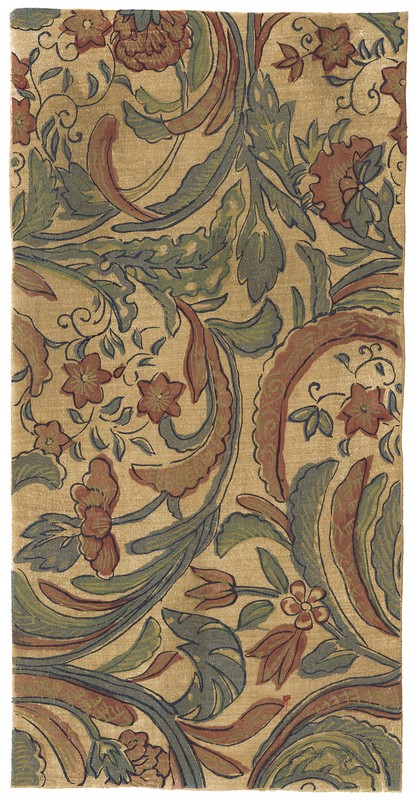
Posted by RichardB | Filed under Japanese Textile Designs
≈ Comments Off on Japanese Textile Designs 138
29 Friday Jan 2021
Posted in Mental Health, mental health, Wellness
≈ Comments Off on Pandemic Mental Health Crisis
The U.S. Centers for Disease Control and Prevention reported in August that symptoms of anxiety had tripled and depression symptoms had quadrupled among a group of 5,470 adults as compared with a survey sample from 2019. Meanwhile mental health services have been stretched worldwide. One reason is that mental health personnel and the facilities they work in have been reassigned to COVID-related tasks during the crisis.
All of us need to sustain and enhance our psychological resilience to weather the daily toll of activity restrictions, rising case numbers, hospitalizations and deaths. A set of simple measures known as psychological first aid or mental health first aid can enable people to help family, friends and others in their communities who experience psychological distress from pandemic fatigue, COVID convalescence, or the loss of a friend or relative. Read the entire article at Scientific American




 RichardbBrunner