Learn to be quiet enough to hear the genuine within yourself so that you can hear it in others. Marian Wright Edelman

09 Tuesday Feb 2021
Posted in Quiet
≈ Comments Off on Quiet
08 Monday Feb 2021
07 Sunday Feb 2021
06 Saturday Feb 2021
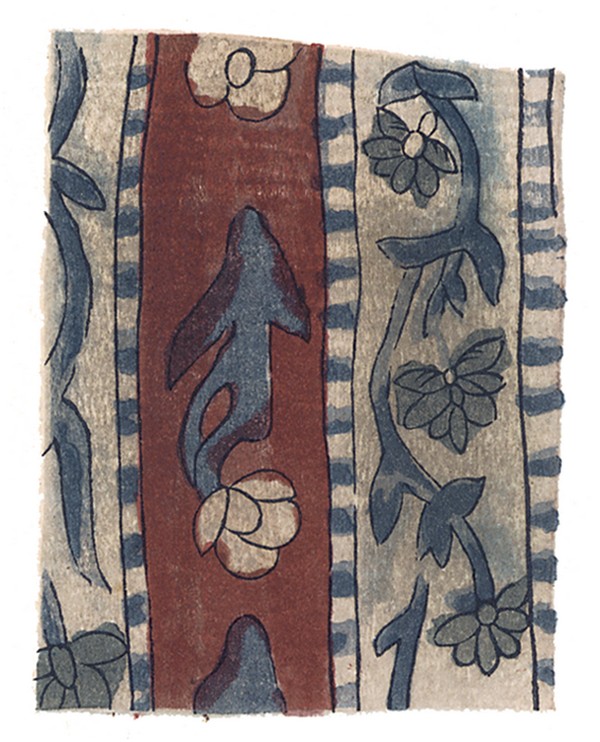
Posted by RichardB | Filed under Japanese Textile Designs
≈ Comments Off on Japanese Textile Designs 137
05 Friday Feb 2021
Posted in boundaries, Handout, Uncategorized
≈ Comments Off on Setting boundaries
Setting boundaries is an essential skill in life, especially for people in recovery. Addicts often grow up in dysfunctional homes, where boundaries were either too rigid (leading to suppressed emotions or distant relationships) or too enmeshed (depriving them of a sense of personal identity). Later in life, their interpersonal relationships may continue to be defined by old roles and patterns, increasing the risk of depression, anxiety and addictive or compulsive behaviors. 
As part of recovery, addicts learn how to set boundaries and to respect other people’s boundaries in return. In the addiction field, treatment providers often refer to this process as embracing the authentic self. While it may sound like psychobabble, it is really a process of discovering who you want to be, how you want to interact with other people, and taking responsibility for the consequences of your choices.
Why are boundaries important? They keep you safe from being manipulated, abused or taken advantage of, while also protecting other people from harm you may consciously or unconsciously inflict. They prevent both parties in a relationship from blurring the lines between self and others, which can lead to enmeshment and codependency. With healthy boundaries in place, you can begin to tune in to your inner voice and trust your own thoughts and feelings, and then communicate those to other people.
Distinguishing Healthy and Unhealthy Boundaries
Without a healthy role model, it can be difficult to know what healthy boundaries look like. First, let’s cover what healthy boundaries are not. They are not threats or attempts to control or manipulate others into doing what you want. They are not rigid rules or “walls” designed to keep people out or shield you from expressing your emotions.
Healthy boundaries are simply a delineation of what type of treatment is acceptable to you, and what consequences will result from violating a boundary. People with healthy boundaries share their thoughts and feelings, take care of their own needs, and are able to say no when necessary.
 By contrast, people with weak boundaries often:
• Sacrifice their personal values, plans or goals to please others
• Allow others to define who they are and make decisions for them
• Expect others to fulfill all their needs
• Feel guilty when they say no
• Hesitate to share their opinions or assert themselves if they are being treated unfairly
• Frequently feel used, threatened, victimized or mistreated by others
• Frequently offer unsolicited advice, or feel pressured to follow someone else’s advice
• Take responsibility for other people’s feelings
• Tell others how to think, feel or act
A Boundary-Setting Roadmap
Every individual is called upon to set their own boundaries. What works for some may seem either too intrusive or too distant to others. When laying out your boundaries, work through the following steps:
Create a Personal Bill of Rights. Before you can start setting boundaries, you have to recognize your right to have your own feelings, values and beliefs and to express to others how you want to be treated. For some, this requires a colossal leap in self-worth.
Identify Your Emotions. Our parents always admonish us to “think before you act.” When you have a strong response, take a time-out to identify the underlying emotion and figure out what you want to convey. Doing so allows you to interact with other people in an honest, direct way rather than blaming or lashing out.
Set Limits. Once you have a few guidelines in place for how you expect to be treated, practice setting limits with people in a clear, direct way. Examples of healthy boundaries are: “I choose to be around sober people” or “I’ll be happy to talk with you when your voice is calm.”
Assert Your Needs. If you feel that your boundaries are being violated, speak up. This doesn’t mean lashing out or blaming others, but rather assertively communicating your needs. Ask for what you want and say no, politely yet firmly, if something isn’t right for you.
Listen to Your Instincts. If a situation feels uncomfortable or inappropriate, chances are a boundary is being pushed. By tuning into your instincts, you’re more likely to respond in ways that are true to your authentic self.
Defend Your Boundaries. Once you set boundaries, expect that they will be tested. Before this happens, set consequences that you are willing and able to enforce (e.g., “If you continue this behavior, I will…”). Know that by setting limits, you may disappoint the other person, especially if they have weak boundaries themselves. While you should always act with dignity and respect, you can’t control other people’s feelings and behaviors.
If someone continually violates your boundaries, you may need to minimize contact with them, or if they are toxic to your recovery, cut ties altogether. By choosing not to let people violate your boundaries, you stop being the victim, stop blaming others and start reclaiming responsibility for your own life.
Respect Other People’s Boundaries. Just as important as honoring your own boundaries is respecting other people’s, even if they are different from yours. If they don’t have defined boundaries, show them the respect you know they deserve anyway.
03 Wednesday Feb 2021
Posted in Research
≈ Comments Off on Particle Accelerator used to Peek Inside Fossilized Poop
Tags
Scientists study every inch of an animal—from the tip of their nose right down to their, well, poop. And the same goes for ancient creatures. But until now, only a limited amount could be learned from from studying fossilized feces, also known as coprolites. As Ryan F. Mandlebaum reports for Gizmodo, scientists recently turned to a synchrotron particle-accelerator for help discerning every morsel of data locked inside the prehistoric poop.
Their study, published this week in the journal Scientific Reports, documents a new method to examine the treasures hidden within the coprolite without destroying the samples. These ancient turds are actually troves of information. Due to their phosphate-rich chemistry, poop can actually preserve many delicate specimens, such as muscle, soft tissue, hair and parasites. READ MORE HERE
/https://public-media.smithsonianmag.com/filer/64/e7/64e78e5e-eac5-4269-9111-c5352ed1ffa2/coprolite.jpg)
02 Tuesday Feb 2021
01 Monday Feb 2021
Tags
31 Sunday Jan 2021
Posted in My Photos
≈ Comments Off on Winter sun in branches
Tags

30 Saturday Jan 2021
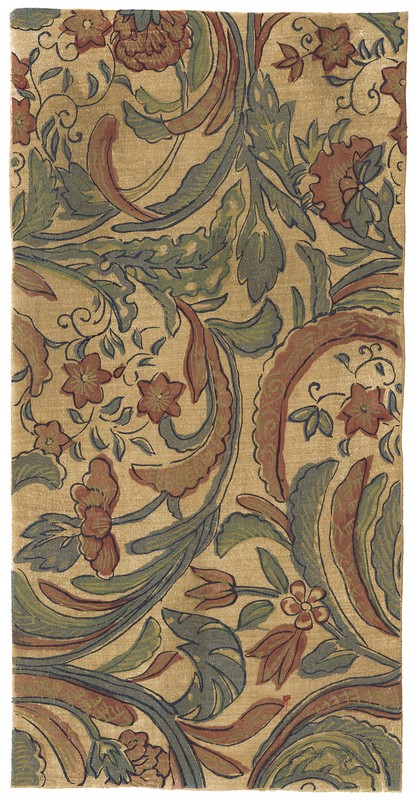
Posted by RichardB | Filed under Japanese Textile Designs
≈ Comments Off on Japanese Textile Designs 138
29 Friday Jan 2021
Posted in Mental Health, mental health, Wellness
≈ Comments Off on Pandemic Mental Health Crisis
The U.S. Centers for Disease Control and Prevention reported in August that symptoms of anxiety had tripled and depression symptoms had quadrupled among a group of 5,470 adults as compared with a survey sample from 2019. Meanwhile mental health services have been stretched worldwide. One reason is that mental health personnel and the facilities they work in have been reassigned to COVID-related tasks during the crisis.
All of us need to sustain and enhance our psychological resilience to weather the daily toll of activity restrictions, rising case numbers, hospitalizations and deaths. A set of simple measures known as psychological first aid or mental health first aid can enable people to help family, friends and others in their communities who experience psychological distress from pandemic fatigue, COVID convalescence, or the loss of a friend or relative. Read the entire article at Scientific American

28 Thursday Jan 2021
Posted in culture, discovery, Science, Uncategorized
≈ Comments Off on Fairy tales started long ago
They have been told as bedtime stories by generations of parents, but fairy tales such as Little Red Riding Hood may be even older than was previously thought.
A study by anthropologists has explored the origins of folk tales and traced the relationship between varients of the stories recounted by cultures around the world.
The researchers adopted techniques used by biologists to create the taxonomic tree of life, which shows how every species comes from a common ancestor.
Dr Jamie Tehrani, a cultural anthropologist at Durham University, studied 35 versions of Little Red Riding Hood from around the world.
Whilst the European version tells the story of a little girl who is tricked by a wolf masquerading as her grandmother, in the Chinese version a tiger replaces the wolf.
Contrary to the view that the tale originated in France shortly before Charles Perrault produced the first written version in the 17th century, Dr Tehrani found that the varients shared a common ancestor dating back more than 2,600 years.
He said: “Over time these folk tales have been subtly changed and have evolved just like an biological organism. Because many of them were not written down until much later, they have been misremembered or reinvented through hundreds of generations.
“By looking at how these folk tales have spread and changed it tells us something about human psychology and what sort of things we find memorable.
“The oldest tale we found was an Aesopic fable that dated from about the sixth century BC, so the last common ancestor of all these tales certainly predated this. We are looking at a very ancient tale that evolved over time.”
Dr Tehrani, who will present his work on Tuesday at the British Science Festival in Guildford, Surrey, identified 70 variables in plot and characters between different versions of Little Red Riding Hood.
He found that the stories could be grouped into distinct families according to how they evolved over time.
The original ancestor is thought to be similar to another tale, The Wolf and the Kids, in which a wolf pretends to be a nanny goat to gain entry to a house full of young goats.
Stories in Africa are closely related to this original tale, whilst stories from Japan, Korea, China and Burma form a sister group. Tales told in Iran and Nigeria were the closest relations of the modern European version.
Perrault’s French version was retold by the Brothers Grimm in the 19th century. Dr Tehrani said: “We don’t know very much about the processes of transmission of these stories from culture to culture, but it is possible that they may being passed along trade routes or with the movement of people.”
Professor Jack Zipes, a retired professor of German at the University of Minnesota who is an expert on fairy tales and their origins, described the work as “exciting”. He believes folk tales may have helped people to pass on tips for survival to new generations.
He said: “Little Red Riding Hood is about violation or rape, and I suspect that humans were just as violent in 600BC as they are today, so they will have exchanged tales about all types of violent acts.
“I have tried to show that tales relevant to our adaptation to the environment and survival are stored in our brains and we consistently use them for all kinds of reference points.”
27 Wednesday Jan 2021
Posted in Holocaust
≈ Comments Off on children of the Holocaust
Following the end of the World War Two, the BBC began a series of special radio appeals on behalf of a group of children who had survived the Holocaust but were now stranded as orphans in post-war Europe. A recording of one of these moving broadcasts still exists in the BBC archives. Seventy years on, Alex Last set out to find out what had happened to the 12 children named in this recording. They had been in many camps, including Auschwitz, Muhldorf, Kauferng, Theresienstadt, Belsen, and Dachau, and the modern-day search took him to Germany, Israel and the United States.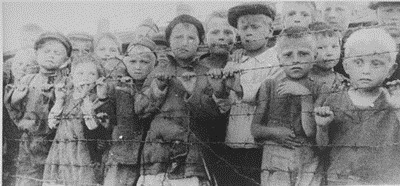
Five of the Holocaust survivors are still alive today, and four of them were well enough to speak to Alex, who was able to piece together their stories of courage and humanity.
26 Tuesday Jan 2021
Posted in Music
≈ Comments Off on Top Songs I listened to in 2020: Cultura Profética – Somos Muchos
Tags
24 Sunday Jan 2021
Posted in My Photos
≈ Comments Off on Winter Sun Set Pattern
Tags

23 Saturday Jan 2021
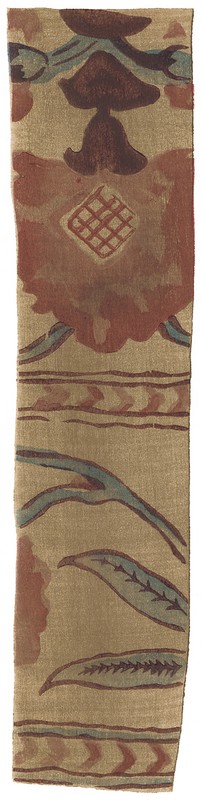
Posted by RichardB | Filed under Japanese Textile Designs
≈ Comments Off on Japanese Textile Designs 139
21 Thursday Jan 2021
Posted in George Eliot, Uncategorized
≈ Comments Off on agreeable friends
20 Wednesday Jan 2021
Tags
19 Tuesday Jan 2021
Posted in My Photos
≈ Comments Off on Winter Sun Set
18 Monday Jan 2021