Movement and opening chanels

Tags

,

Heidi Fledderjohn MA, BC-DMT is a Board Certified Dance/movement Therapist with 20 years of experience supporting peoples’ desire to learn deeply, grow and feel good. Using play, movement and meditation Fledderjohn generates a solid, soulful and vibrant method for approaching life, change and the self.

Patterns of Self Talk

Tags

, , ,

Patterns of negative or positive self-talk often start in childhood. Usually, the self-talk habit is one that’s colored our thinking for years, and can affect us in many ways, influencing the experience of stress to our lives. However, any time can be a good time to change it! Here are some ways you can stop yourself from using negative self-talk and use your mind to boost your productivity and self-esteem, and relieve stress.
Notice Your Patterns:
The first step toward change is to become more aware of the problem. You probably don’twriting (940x752) realize how often you say negative things in your head, or how much it affects your experience. Here are two strategies that can help you become more conscious of your internal dialogue and its content.

Journal Writing: Whether you carry a journal around with you and jot down negative comments when you think them, write a general summary of your thoughts at the end of the day, or just start writing about your feelings on a certain topic and later go back to analyze it for content, journaling can be an effective tool for examining your inner process.

Thought-Stopping: As you notice yourself saying something negative in your mind, you can stop your thought mid-stream my saying to yourself “Stop”. Saying this aloud will be more powerful, and having to say it aloud will make you more aware of how many times you are stopping negative thoughts, and where.

Doggie MRI

Tags

, ,

By placing dogs in an MRI scanner, researchers from Hungary found that the canine brain reacts to voices in the same way that the human brain does. Emotionally charged sounds, such as crying or laughter, also prompted similar responses, perhaps explaining why dogs are attuned to human emotions.

clip_image001

The work is published in the journal Current Biology. The full article is @ BBC.

Eleven pet dogs took part in the study; training them took some time. “We used positive reinforcement strategies – lots of praise,” said Dr Andics. “There were 12 sessions of preparatory training, then seven sessions in the scanner room, then these dogs were able to lie motionless for as long as eight minutes. Once they were trained, they were so happy, I wouldn’t have believed it if I didn’t see it.”

Thinking influences

Tags

, ,

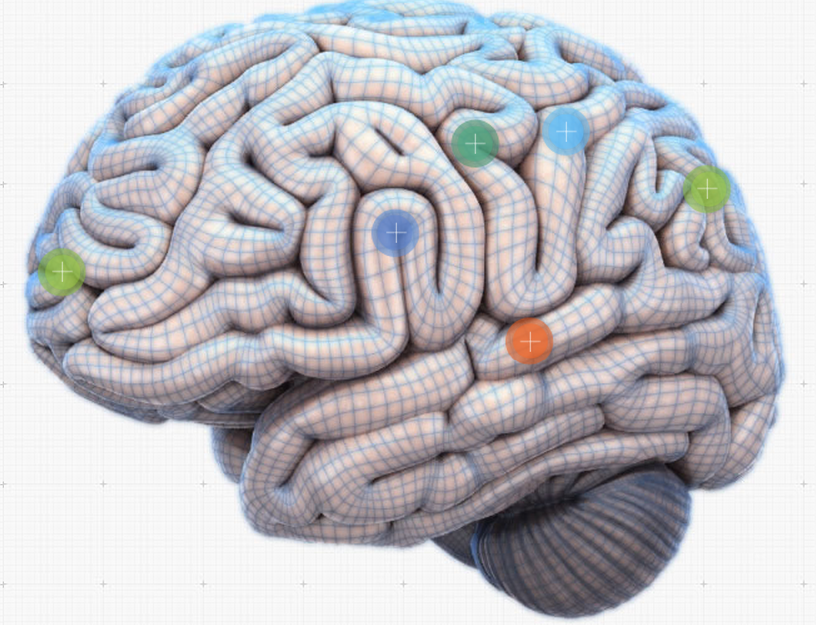
Thinking influences our feelings through the things that we say to ourselves. Unhelpful thoughts can add fuel to the fire and play a large role in keeping anger going after the event has passed. However, using helpful self-statements (or ‘cooling thoughts’) can be a good way to manage our anger and guide our behavior. brainmpExamples of these include:

  • Chill out
  • Calm down
  • Breathe away the anger
  • Don’t yell
  • Don’t give them the satisfaction of seeing you angry
  • It’s not worth it
  • Give them a chance to have a say

 To use this strategy we need to break anger into several stages:

  • Getting ready for provocation: when we know we are going to face something that will make us angry.
  • During the event: early signs of anger are cues to use coping strategies.
  • Coping with stress: early attempts at anger management may not be successful.
  • Reflecting on provocation: time to evaluate the effect of the experience on you, continue coping or give self praise.

feelings-07.jpg

Preparing for a provoking situations

  • This is going to upset me but I know how to deal with it
  • What is it that I have to do?
  • Stick to the issues and don’t take it personally
  • Try not to take this too seriously
  • Time for a few deep breaths of relaxation
  • Easy does it, remember to keep your sense of humor

During the event

  • Stay calm, just continue to relax
  • Think of what you want to get out of this
  • There is no point in getting mad
  • It’s really a shame that she has to act like this
  • If I start to get mad I’ll just be banging my head against the wall
  • What he says doesn’t matter. I’m on top of this situation and it’s under control

Coping with stress

  • My muscles are starting to feel tight, time to relax and slow things down
  • It’s just not worth it to get so angry
  • Time to take a deep breath
  • Try to reason it out. Treat each other with respect
  • He’d probably like me to get really angry. Well I’m going to disappoint him Leaving the anger and looking back
  • Try to shake it off. Don’t let it interfere with your job
  • Remember relaxation, it’s a lot better than anger
  • I handled that pretty well. It worked!
  • It could have been a lot worse
  • My pride can sure get me into trouble, but when I don’t take things too seriously, I’m better off

How meditation can change your life and mind | Sam Harris, Jon Kabat-Zinn & more | Big Think

Tags

,

There are a lot of misconceptions when it comes to what mindfulness is and what meditation can do for those who practice it. In this video, professors, neuroscientists, psychologists, composers, authors, and a former Buddhist monk share their experiences, explain the science behind meditation, and discuss the benefits of learning to be in the moment. “Mindfulness allows us to shift our relationship to our experience,” explains psychologist Daniel Goleman. The science shows that long-term meditators have higher levels of gamma waves in their brains even when they are not meditating. The effect of this altered response is yet unknown, though it shows that there are lasting cognitive effects. “I think we’re looking at meditation as the next big public health revolution,” says ABC News anchor Dan Harris. “Meditation is going to join the pantheon of no-brainers like exercise, brushing your teeth and taking the meds that your doctor prescribes to you.” Closing out the video is a guided meditation experience led by author Damien Echols that can be practiced anywhere and repeated as many times as you’d like.

Yoga may boost your brain power

Tags

, ,

Yogis may be enjoying a surprising benefit when they unroll their mats and strike a pose. A new study finds that just 20 minutes of hatha yoga stimulates brain function.

Researchers from the University of Illinois at Urbana-Champaign enlisted 30 subjects to take tests of working memory and inhibitory control, two measures of brain function associated with the ability to focus, retain, and use new information, the researchers said.

Subjects who took a single, 20-minute yoga session were significantly faster and more accurate on their tests than subjects who walked or jogged on a treadmill for 20 minutes.
Participants on the treadmill exercised with the goal of maintaining 60 to 70 percent of their maximum heart rate throughout the exercise session. “This range was chosen to replicate previous findings that have shown improved cognitive performance in response to this intensity,” the researchers said.yoga1

“Yoga is an ancient Indian science and way of life that includes not only physical movements and postures but also regulated breathing and meditation,” said study lead Neha Gothe. “The practice involves an active attentional or mindfulness component but its potential benefits have not been thoroughly explored.”

Subjects who practiced yoga performed a 20-minute sequence of seated, standing, and supine yoga postures, with the class ending in a meditative posture and deep breathing.

“It appears that following yoga practice, the participants were better able to focus their mental resources, process information quickly, more accurately and also learn, hold and update pieces of information more effectively than after performing an aerobic exercise bout,” Gothe said.

“The breathing and meditative exercises aim at calming the mind and body and keeping distracting thoughts away while you focus on your body, posture or breath,” she said. “Maybe these processes translate beyond yoga practice when you try to perform mental tasks or day-to-day activities.”

Findings, announced June 5, appear in the Journal of Physical Activity and Health.
A separate study published last month finds that twice-weekly yoga sessions can reduce high blood pressure. In the study, researchers led by Dr. Debbie Cohen of the University of Pennsylvania tracked 58 women and men, aged 38 to 62, for 24 weeks.

Another study published earlier this year in the journal Frontiers in Psychiatry found that the practice may soothe depression and help sleep problems.

Read more:A 20-minute yoga session may boost your brain power – The Denver Posthttp://www.denverpost.com/breakingnews/ci_23413802/20-minute-yoga-session-may-boost-your-brain#ixzz2VoCOdrUU