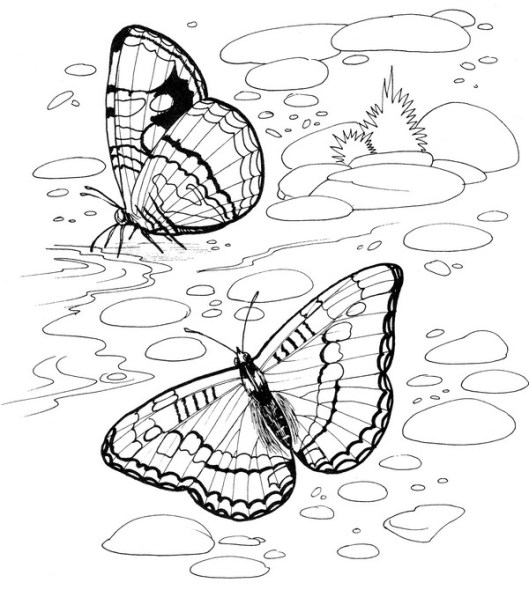
Posted by RichardB | Filed under Coloring Pages
≈ Comments Off on California Sister Coloring Page

18 Saturday Apr 2020
Posted by RichardB | Filed under Coloring Pages
≈ Comments Off on California Sister Coloring Page
18 Saturday Apr 2020
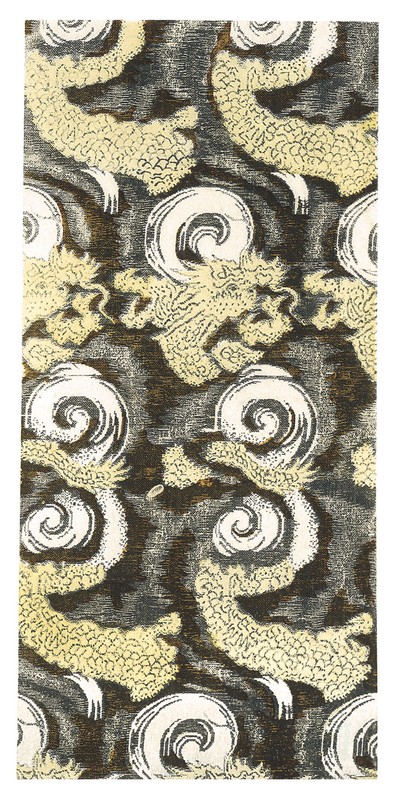
Posted by RichardB | Filed under Japanese Textile Designs
≈ Comments Off on Japanese Textile Designs 115
17 Friday Apr 2020
“It’s not just the elusive vaccine that will defeat Covid-19, scientists are looking at all sorts of methods to contain the pandemic. One of the more unusual could be in recruiting man’s best friend. Scientists at the London School of Hygiene and Tropical Medicine believe that they can train dogs with a particularly keen sense of smell to diagnose people with the illness, even if they are displaying no symptoms.”
16 Thursday Apr 2020
Posted in Anxiety, Psychoeducation, Therapy, Wellness, youtube
≈ Comments Off on How Your Brain Can Turn Anxiety into Calmness
16 Thursday Apr 2020
Posted in Handout, Health, Psychoeducation
≈ Comments Off on The Ten Rules For Being Human
1. You will receive a body.
2. You will be presented with lessons.
3. There are no mistakes, only lessons.
4. Lessons are repeated until learned.
5. Learning does not end.
6. “There” is no better than “here.”
7. Others are only mirrors of you.
8. What you make of your life is up to you.
9. All the answers lie inside of you.
10. You will forget all of this at birth.
15 Wednesday Apr 2020
Posted in Creativity, photo, quote
≈ Comments Off on continual

14 Tuesday Apr 2020
Posted in Self Esteem, Self-Care, Wellness
≈ Comments Off on Five Strengths
I used to think that mentally strong people had superhuman qualities. I thought that they were bestowed with some sort of cybernetic strength that they – and only they – had.
I thought I would never be like that. In fact, I thought most people would never be like that.
But then I tried something. I took on a challenge that to me seemed impossible. And while we all have things that seem impossible – completing a book, starting a business, passing state exams – mine happened to be running a hundred mile race.
It was the hardest thing I have ever done. But when I finished, I also realized something. The ONLY thing that had held me back was my perception. See, I thought the race would be harder than it really was. I thought it would be so hard that I couldn’t do it. And that is EXACTLY what had held me back.
What I realized was that mental toughness isn’t about being superhuman. It’s about cultivating a few strengths consistently.
Here they are:
Gratitude: You may not associate gratitude with mental toughness, but you probably do associate mental toughness with overcoming adversity. That’s where gratitude come in. Gratitude gives us the reserve we need when times get tough. I think of it like an extra energy source that I can reach into when I have nothing left. Because there are ALWAYS things to be grateful for. And sometimes when facing adversity, it is those things we need to find to get through. And mentally strong people know just how to direct this quality to counteract the chain of negative thoughts that we all face when things don’t go our way. It’s then that we need to remember when things did go well, the successes we have had, and the people along the way who have helped us.
Openness: Mentally tough people do not see the world as a set of predictable steps that lead to the promised-land. Life is just not like that, and mentally strong people know that the only thing we know for sure is that things will change. And sometimes, in ways that we don’t like. But the other thing that happens when life puts a roadblock in our path is that we find a new path. And sometimes a better one. What mentally strong people know is every adversity also bring opportunity. But in order to see it, we have to first be willing to change.
A Sense of Personal Strength: The belief that you are strong doesn’t happen because things went your way. Perception of strength is carved out through the setbacks, roadblocks, and difficulties you’ve faced. It happens because you earned it. And while mentally strong people won’t tell you that they enjoy battling adversity, they will say that life without adversity is like life not actualized. Because it’s in adversity that our strengths our realized. And it’s in then that we come to know how strong we really are.
Meaningful Relationships: The truth is no one can go it alone – not even mentally strong people. But mentally strong people also don’t need an entire army cheering for them. What they do need – and what all need – are a few close relationships where we can let ourselves be seen. We can let our guard down, say what we need to say, and be heard. Every person – even the strongest – has a need to be accepted. And not just for their strengths. Because what mentally strong people also know is thatstrength is nothing without the vulnerability to be seen as we are – faults and all. It is only then that we can make peace with our faults. And it is only then that we can also make peace with our losses and find the strength to move forward.
Faith: You don’t have to be a spiritual person. You don’t even have to believe in God. But what mentally strong people know is that in order to get through adversity you do have to have faith. You have to believe that somehow it is possible. It is possible for you to face adversity and make it through. It is possible for you to grow stronger from it. And it is possible for you to be mentally tough. It all starts with faith – in yourself, and in something larger than you. Because the minute you connect your experience to something larger, it isn’t about you anymore. And the adversity you face isn’t personal. Adversity becomes something that we all face – for the purpose of getting stronge
14 Tuesday Apr 2020
Posted in art, creative arts therapy, Therapy
≈ Comments Off on Art and happiness
Type the words “Spring (Fruit Trees in Bloom)” into an online search engine and in less than a second you will be looking at a sparkling vista of trees erupting in a starburst of pale blossom like an exploding firework. The phrase is the title of an Impressionist oil painting by the French master Claude Monet that belongs to the Metropolitan Museum of Art in New York. 
According to the museum’s website, the painting was executed in 1873 in Argenteuil, a village on the River Seine northwest of Paris where the Impressionist artists used to gather. Signed and dated “73 Claude Monet” in the lower left corner, it is almost 40in (1m) wide and 24.5in (62cm) high. In 1903, when it was known as Apple Blossoms, it was bought for $2,100 by the New York art dealership Knoedler & Co. The Met acquired it in 1926.
Concise, sober information like this is typical of the insights that museums commonly provide about artworks in their collections. Dates, dimensions, provenance: these are the bread and butter of scholarship and art history.
But by offering details about pictures in this manner, are museums fundamentally missing the point of what art is all about? One man who believes that they are is the British philosopher Alain de Botton, whose new book, Art as Therapy, co-written with the art theorist John Armstrong, is a polite but provocative demolition of the way that museums and galleries routinely present art to the public.
13 Monday Apr 2020
Talisk are a Scottish folk band composed of Mohsen Amini, Hayley Keenan, and Graeme Armstrong. The band rose to prominence after winning the 2015 BBC Radio 2 Folk Awards’ Young Folk Award and the MG Alba Scots Trad Music Awards’ Folk Band Of The Year award in 2017.
I have a 16,000 plus digital audio collection and I use Media Monkey to manage my files. One feature of Media Monkey is you can sort your collection based on the number of times played. This playlist is based on the top music and/or music video files I played/listened/streamed from my server in 2019. Complete Playlist HERE
12 Sunday Apr 2020
11 Saturday Apr 2020

Posted by RichardB | Filed under Japanese Textile Designs
≈ Comments Off on Japanese Textile Designs 101
11 Saturday Apr 2020

Posted by RichardB | Filed under Coloring Pages
≈ Comments Off on Tiphiid Wasp Coloring Page
10 Friday Apr 2020
Posted in Pets, Uncategorized
≈ Comments Off on Coronavirus and pets
Tags
“Coronaviruses have lived and thrived in animals for thousands of years, but only a handful have been known to cause illness in humans. The coronavirus at the center of the current pandemic, SARS-CoV-2, is incredibly successful at spreading from human to human. As of early April — just four months after it was first detected — the virus had infected over 1 million people and spread to over 180 countries.
It turns out that SARS-CoV-2 can hijack animal cells, too. Scientists believe the disease originated in Chinese horseshoe bats before it jumped into an intermediary animal and, from there, found its way into humans. The virus is able to inject itself into cells by binding to a cell surface protein known as ACE2, which is present in many species of animal.” Read the entire post at CNET

https://www.cnet.com/how-to/coronavirus-and-pets-how-covid-19-affects-cats-and-dogs/
09 Thursday Apr 2020
Posted in Dance Movement Therapy
≈ Comments Off on Dance/Movement Therapy: Embodied Parenting
09 Thursday Apr 2020
Do you know what the attributes of your right and left sides of your brain? Listed below are the common elements of left and right brain hemisphere’s. Plus go here to take the left/right side brain test to see which side may be dominant.
Left Hemisphere – Rational
Responds to verbal instructions
Problem solves by logically and sequentially looking at the parts of things
Looks at differences
Is planned and structured
Prefers established, certain information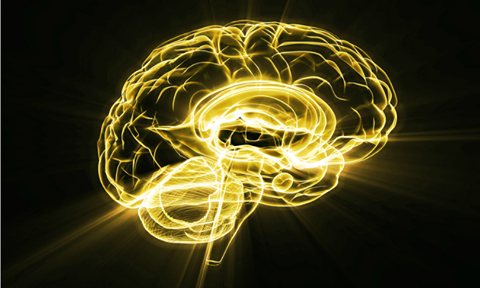
Prefers talking and writing
Prefers multiple choice tests
Controls feelings
Prefers ranked authority structures
Right Hemisphere – Intuitive
Responds to demonstrated instructions
Problem solves with hunches, looking for patterns and configurations
Looks at similarities
Is fluid and spontaneous
Prefers elusive, uncertain information
Prefers drawing and manipulating objects
Prefers open ended questions
Free with feelings
Prefers collegial authority structures
It seems that lots of folks have emailed me about all sorts of other left/right side brain tests/quizzes online. Here are the top 2 tests.
Hemispheric Dominance Inventory Test: This test has 18 questions and you choice between 2 answers. I like the questions they seem interesting and thought provoking.
Right Brain vs Left Brain Creativity Test: This test of 54 questions is multiple choice with 4 choices and all of the questions are on one page like the test above. Some repeating of questions, which is fairly standard in personality type tests.
08 Wednesday Apr 2020
Posted in photo, Uncategorized
≈ Comments Off on Our deeds
Tags
Our deeds determine us, as much as we determine our deeds. George Eliot

07 Tuesday Apr 2020
Posted in healing
≈ Comments Off on Healing with art
 facilitating a monthly program, Art of Possibility, which helps developmentally-disabled participants heal through artistic expression.
07 Tuesday Apr 2020
Posted in grounding, Meditation, mindfulness, pain management, positive, Therapy, Wellness
≈ Comments Off on Meditation can relieve pain
Tags
Meditation can relieve pain, and it does so by activating multiple brain areas, according to an April 2011 study in the Journal of Neuroscience. Fadel Zeidan of Wake Forest University and his colleagues scanned people’s brains as they received uncomfortably hot touches to the leg. When subjects practiced a mindful meditation technique that encourages detachment from experience while focusing on breathing, they reported less pain than when they simply paid attention to their breathing. Likewise, different patterns of brain activity emerged under the two conditions, with mindful meditating resulting in more activity not only in executive centers that evaluate experiences and regulate emotions but also in lower regions that control the signals coming from the body.
The volunteers learned the meditation technique in only four 20-minute sessions, which means this pill-free analgesia could be a feasible way to help real patients suffering from pain. “People can reap some of the benefits of meditation without extensive training,” Zeidan says. 
When I work with patients using mindfulness I start by asking who has experience with any type of meditation, breathing techniques and/or relaxation exercises. We than have a brief explanation and question and answer period and I focus on removing any doubt, fear, or skepticism. I usually than do a 10 to 12 minute body scan moving right into a mindful meditation that focuses on the breath.
With the co-occurring patients I work with this process seems to work the best. The chat in the beginning warms people up, the body scan relaxes which helps the meditators enter into a more meditative state.
06 Monday Apr 2020
Posted in Music, Uncategorized, YouTube
≈ Comments Off on Top songs I have listened too in 2019: IZARO – Invierno a la Vista
IZARO – Invierno a la Vista
Basque songwriter/singer. Izaro Andres Zelaieta (1993, Mallabia).Composer, romantic and dreamy. Light sleeper, but sleepy. Someone who is very clear about what she does not want to be, but not so much what she does want.
I have a 16,000 plus digital audio collection and I use Media Monkey to manage my files. One feature of Media Monkey is you can sort your collection based on the number of times played. This playlist is based on the top music and/or music video files I played/listened/streamed from my server in 2019. Complete Playlist HERE
05 Sunday Apr 2020
Posted in learn
≈ Comments Off on learn
Tags
“You must learn from the mistakes of others. You can’t possibly live long enough to make them all yourself.” Sam Levenson


