As an official nerd I enjoy examining the critical relationship between contextual awareness, agentic AI, and the mathematical field of non-convex optimization.
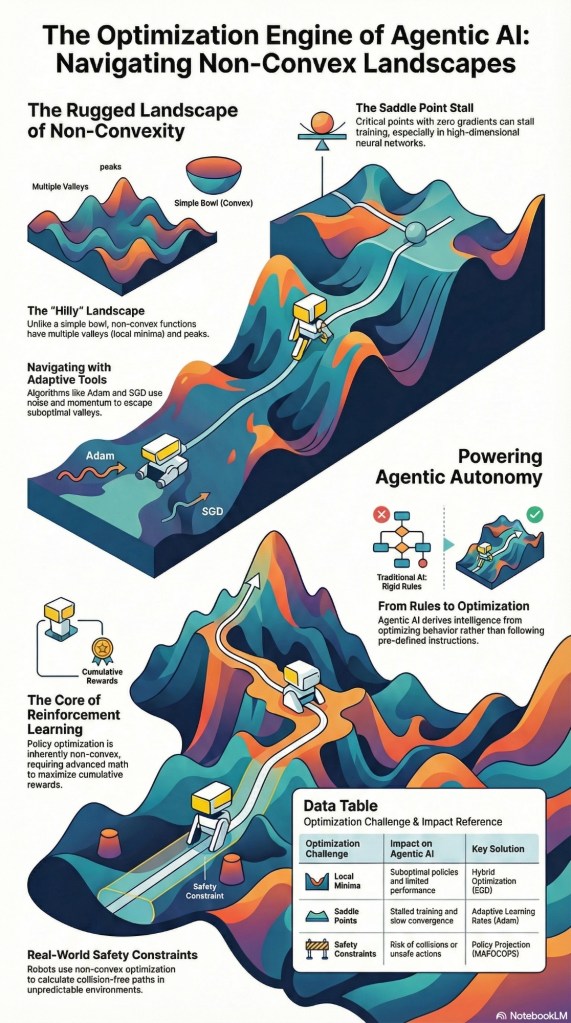
While contextual awareness defines an AI’s ability to interpret situational cues like user history and environment, non-convex optimization is the technical tool used to train the complex models that enable these behaviors. The image below highlights the modern AI landscapes are “hilly” and filled with multiple suboptimal valleys, making it difficult for algorithms to find the absolute best solution. To overcome these challenges, researchers employ advanced strategies such as stochastic gradient descent, evolutionary algorithms, and meta-learning to navigate high-dimensional data. This optimization is particularly vital in robotics and multi-agent systems, where autonomous entities must make real-time decisions in unpredictable, non-linear environments. Ultimately, the advancement of truly autonomous, intelligent agents is fundamentally dependent on our ability to master these complex mathematical landscapes.
I stumbled across this fun article from the Austin Chronicle about dancer Rhoda Winter Russell. Rhoda trained with Mary Wigman, as well as various other teachers and attended the University of Wisconsin dance program home of Mable Elsworth Todd author of one of one favorite body/movement books; “The thinking Body” .
Russell commented on her early days in the article stating; “There’s Picasso in art, and there’s Stravinsky in music, and there is Wigman in dance”. Russell recalled that when Wigman instructed her class, “It was a lot of emotional feeling, not that you should bend this way and turn that way. And let the group feel each other, and create out of that. Basically you had to get out of yourself, and you had to sense not only your body but the others.”
Like others in the beginnings of the Dance Movement Therapy field Russell volunteered at a psychiatric hospital where as she began leading movement therapy sessions; “I worked with very severely disturbed patients, because in the Fifties, they were just beginning to use the psychotropic drugs”.
This was a great article to read and I only provided a few highlights here to see more click the link below.
A short time after I posted about my upcoming trip awhile back I made a decision that I have been seriously considering for quite sometime: Travel sans – auto.
Instead of a slow drive across America, it will be a slow train across America. I have taken Amtrak about a dozen times, usually the Vermonter from Philly to Mountpelier. This time I will be going west, north, east and south. The intention is the same: visit people, places, and communities. And as I do, pray and meditate when and wherever I am. Suggestions, thoughts, and feelings are always welcome.🙏
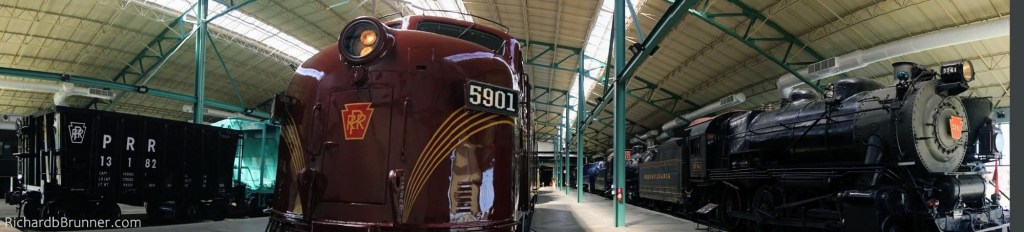
Railroad Museum of Pennsylvania
There is no single “Tri-State Area” in the United States; the term refers to numerous regional, metropolitan, or geographical areas where three states meet. There are at least 24 distinct, commonly referenced regional tri-state areas. Commonly Cited Tri-State Areas: New York Metropolitan Area: New York, New Jersey, Connecticut (NY/NJ/CT). Philadelphia Area: Pennsylvania, New Jersey, Delaware (PA/NJ/DE). Cincinnati Area: Ohio, Kentucky, Indiana (OH/KY/IN), though sometimes WV. Chicago Area: Illinois, Indiana, Wisconsin or sometimes IA/IL/WI. Delmarva Peninsula: Delaware, Maryland, Virginia (DE/MD/VA). Memphis Area: Tennessee, Mississippi, Arkansas (TN/MS/AR). Spokane Area: Washington, Idaho, Montana (WA/ID/MT). Boston Area: Massachusetts, Rhode Island, New Hampshire (MA/RI/NH).
Great article about new research on where and how people become geniuses. It’s the nurturing that makes the nature of things.
From the BBC article: Where do athletic and artistic abilities come from? With phrases like “gifted musician”, “natural athlete” and “innate intelligence”, we have long assumed that talent is a genetic thing some of us have and others don’t.
But new science suggests the source of abilities is much more interesting and improvisational. It turns out that everything we are is a developmental process and this includes what we get from our genes.
A friend asked, “How has a vow of poverty manifested itself?”
For the basics like work, job, and belongings: I decided as a teen to strive to work only for good people who are honest and run a business that would not bring harm to others. As an adult I worked for free in a number of businesses, turned down full time employment resulting in job creations for others, and routinely gave away my belongings.
I studied and worked with a group facilitator from 1981 to 1996, assisting, co-facilitating, and facilitating movement based creative and expressive arts therapy groups. I chose to not get paid thus enabling more folks access to the workshops by keeping the cost lower.
In the mid 1980’s I helped someone I barely knew build his house, and sometimes got gas money but was never paid.
Worked at an antique store for 18 years, which was owned by good and kind people. Not a high paying job, but I was paid in learning a new skill (archival framing) and got to handle and see beautiful antique art work.
Chose to not accept full time employment at two different facilities I worked at thus enabling the hiring of 2 more therapists.
Volunteered at various community organizations over the years and occasionally offered workshops for no cost.
Giving away 4 different working vehicles over the years to folks that needed transport. Giving away my belongings to individuals and the Good Will.
Currently I don’t work. My SS is only a bit less than what I was paid as a senior counselor facilitating in/out patient groups.
These decisions were choices that I made to lend support to how I wanted … and yes …. needed to live. To cultivate and keep in mind , heart and body a focused connection with all around me in a prayerful practical way.
Interesting story from USA-NPR. “A new study suggests that people actually don’t use (those kinds of) extreme facial expressions to judge how a person is feeling. Instead, surprisingly, people rely on body cues.”
This, of course is not a surprise to Dance Movement Therapists. 🙂 We are trained to assess peoples feelings based on among other things, their whole body.
This story reminded me of a quote from W.B. Yeats; ““We only believe those thoughts which have been conceived not in the brain but in the whole body.”
In the context of this story I guess it would be: “We only believe those emotions expressed by the whole body and not just the face” R.B. Brunner
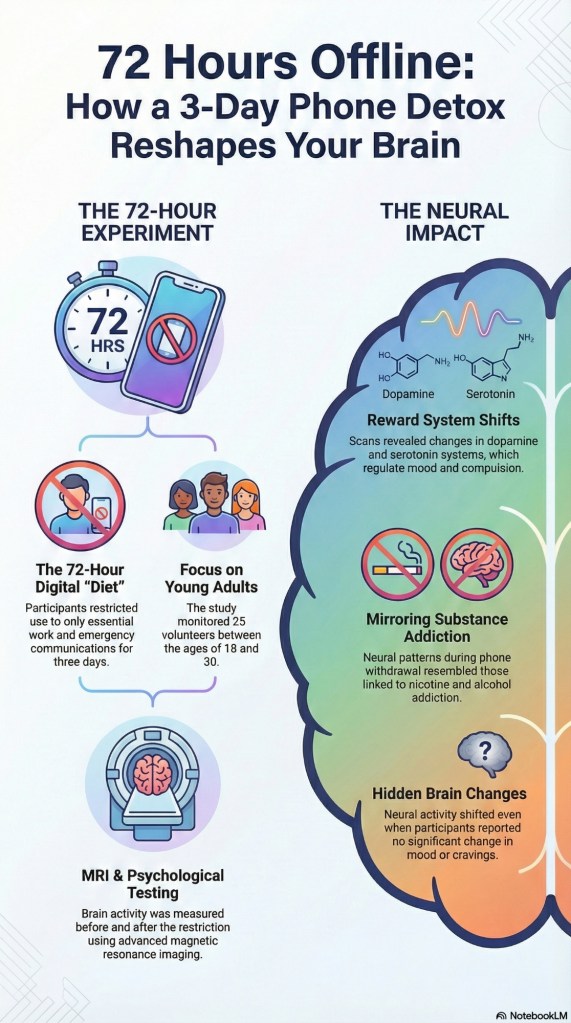
Researchers from German universities investigated 25 young adults who limited their phone use to essential tasks for 72 hours, using MRI scans and psychological tests before and after the restriction period. The core finding was that images of smartphones after the restriction triggered changes in brain regions associated with reward processing and cravings, similar to patterns observed in substance addictions. These neural changes were specifically linked to dopamine and serotonin systems, supporting the hypothesis that excessive smartphone use can be addictive. Although brain activity showed these changes, the psychological tests did not register significant changes in the participants’ mood or reported cravings during the brief period of restriction.
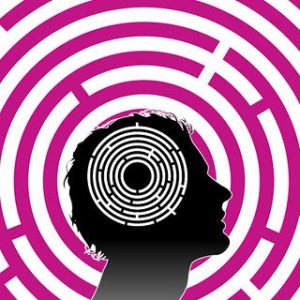
Creativity is akin to insanity, say scientists who have been studying how the mind works. Brain scans reveal striking similarities in the thought pathways of highly creative people and those with schizophrenia. Both groups lack important receptors used to filter and direct thought. It could be this uninhibited processing that allows creative people to "think outside the box", say experts from Sweden’s Karolinska Institute. more here BBC News
In the groups that I helped to co-facilitate in the ’80’s and ’90’s … at the end of a long day of movement and processing, folks would just lay down on the floor very close to each other. That was generally referred to as a puppy pile.