Tags

27 Friday Jan 2023
Posted in creative arts therapy, Uncategorized
≈ Comments Off on Watch: Creativity and the brain: How the arts can shape well-being
Tags
09 Wednesday Nov 2022
Posted in brain
≈ Comments Off on Arts appear to play role in brain development
Brain research in the past several years is just beginning to uncover some startling ideas about how students learn. First came the proof, some years ago, that our brains do not lose brain cells as we get older, but are always capable of growing.
Now neuroscientists are investigating how training students in the arts may change the structure of their brains and the way they think. They are asking: Does putting a violin in the hands of an elementary school student help him to do math better? Will learning to dance or paint improve a child’s spacial ability or ability to learn to read?
Research in those areas, Harvard professor Jerome Kagan said, is “as deserving of a clinical trial as a drug for cancer that has not yet been shown to be effective.”

There aren’t many conclusions yet that can be translated into the classroom, but there is an emerging interdisciplinary field between education and neuroscience. Like Hopkins, Harvard also has created a center to study learning and the brain.
Much of the research into the arts has centered on music and the brain. One researcher studying students who go to an arts high school found a correlation between those who were trained in music and their ability to do geometry. Yet another four-year study, being conducted by Ellen Winner of Boston College and Gottfried Schlaug of Harvard, is looking at the effects playing the piano or the violin has on students who are in elementary school.
Winner said she was quite skeptical of claims that schools that had introduced the arts had seen an increase in test scores and a generally better school climate. She had previously looked at those claims and found they couldn’t be backed up by research.
However, she is in the midst of a four-year study of elementary students that has shown some effects: One group is learning an instrument, and another is not. “It is the first study to demonstrate brain plasticity in young children related to music playing,” Schlaug said.
The study Winner is working on has shown that children who receive a small amount of training — as little as half an hour of lessons a week and 10 minutes of practice a day — do have structural changes in their brains that can be measured. And those students, Winner said, were better at tests that required them to use their fingers with dexterity.
About 15 months after the study began, students who played the instrument were not better at math or reading, although the researchers are questioning whether they have assessments that are sensitive enough to measure the changes. They will continue the study for several more years.
Charles Limb, a Johns Hopkins doctor and a jazz musician, studied jazz musicians by using imaging technology to take pictures of their brains as they improvised. He found that they allowed their creativity to flow by shutting down areas that regulated inhibition and self-control. So are the most creative people able to shut down those areas of the brain?
Most of the new research is focusing on the networks of the brain that are involved in specific tasks, said Michael Posner, a researcher at the University of Oregon. Posner has studied the effects of music on attention. What he found, he said, was that in those students who showed motivation and creativity, training in the arts helped develop their attention and their intelligence. The next great focus in this area, he said, is on proving the connection that most scientists believe exists between the study of music and math ability.
The imaging is now so advanced that scientists can already see the difference in the brain networks of those who study a string instrument and those who study the piano intensely.
The brain research, while moving quickly by some measures, is still painfully slow for educators who would like answers today. Morgan, the Washington County schools chief, said some research did help her support the drive to build the Barbara Ingram School for the Arts in Hagerstown.
Mariale Hardiman, the former principal of Roland Park Elementary/Middle School, was once one of those principals who focused a lot of attention on reading and math scores. But she saw what integrating the arts into classrooms could do for students, she said, and she then began her own research into the subject.
She is now the co-director of the Hopkins Neuro-Education Initiative. She said there are a myriad of questions that could be answered in the research that is just starting, but there are two she would like to see approached: Do children who learn academic content through the arts tend to hold onto that knowledge longer? And are schools squeezing creativity out of children by controlling so much of their school day?
Even without research though, Kagan of Harvard said there is ample evidence of the value of an arts education because so many children who aren’t good at academics can gain self-confidence through the arts.
“The argument for an arts education is based not on sentimentality but on pragmatism,” he said. “If an arts program only helped the 7 million children in the bottom quartile, the dropout rate would drop.”
07 Friday Jun 2019
Tags
23 Saturday Mar 2019
Posted in creative arts therapy
≈ Comments Off on Creative Arts Therapists
Tags
Creative Arts Therapists are human service professionals that help individuals, families, and groups improve their overall physical and mental 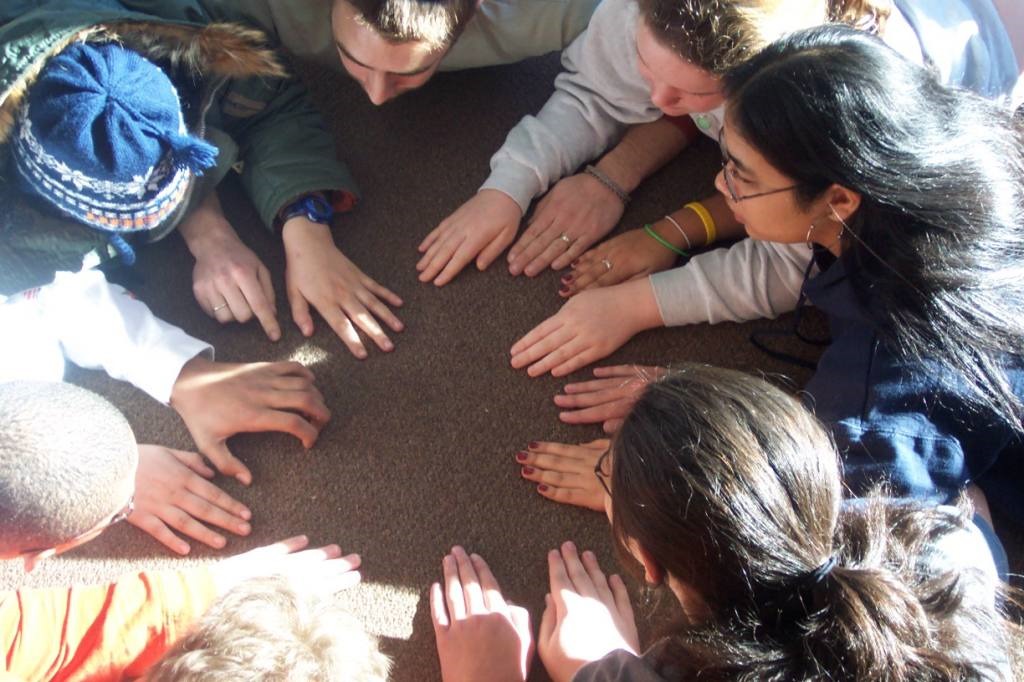 health. They apply the principles and techniques of each art form in an effort to improve communications, allow expression of feelings, improve coordination, and increase cognitive and social function. Creative arts therapists sometimes specialize in a single area such as dance and movement therapy, drama therapy, art therapy, music therapy, or poetry therapy. They begin by interviewing patients and consulting other health professional to determine the psychotherapeutic needs of the patient. They then develop and implement a customized creative arts therapy program. They observe patients and maintain accurate records so they can consult with the rest of the therapeutic team, which may include physicians, psychologists, psychiatrists, nurses, counselors, and teachers. Creative arts therapists work with a variety of patients including those with learning disorders, emotional problems, mental retardation, substance abuse/dependency, and physical disabilities. They may also be called upon to conduct scientific research and teach students and other professionals the latest therapeutic methods.
American Art Therapy Association
American Dance Therapy Association
01 Tuesday Jan 2019
Posted in creative arts therapy, Dance, Dance Movement Therapy, Social Science, YouTube
≈ Comments Off on What is Dance Movement Therapy?
According to the American Dance Therapy Association (ADTA): Based on the understanding that the body and mind are interrelated, dance/movement therapy (D/MT) is defined as the psychotherapeutic use of movement to further the emotional, cognitive, physical, and social integration of the individual. Dance/movement therapy is practiced in mental health, rehabilitation, medical, educational, and forensic settings, and in nursing homes, day care centers, disease prevention, and health promotion programs. The dance/movement therapist focuses on movement behavior as it emerges in the therapeutic relationship. Expressive, communicative, and adaptive behaviors are all considered for both group and individual treatment. Body movement as the core component of dance simultaneously provides the means of assessment and the mode of intervention for dance/movement therapy.

I often define D/MT to clients as psychotherapy that is not limited to talking but encompasses the full range of human expression, including movement such as gestures and or postures, drawing, writing, drama, music and other expressions that can have a therapeutic benefit for the client(s).
See also:
Wikipedia Dance Therapy
ADTA Fact Sheet
 RichardbBrunner