• Home
  • Music
  • About
  • Contact
  • CreativeTherapyTools.com

RichardbBrunner

~ creative arts therapist

RichardbBrunner

Tag Archives: creative arts therapy

Past Talking: Dance Movement Therapy

17 Wednesday Jan 2024

Posted by RichardB in creative arts therapy, Dance Movement Therapy

≈ Comments Off on Past Talking: Dance Movement Therapy

Tags

creative arts therapy, Dance Movement Therapy

Dance/movement therapy, defined by the American Dance Therapy Association (ADTA) as the “psychotherapeutic use of movement to further the emotional, cognitive, physical, and social integration of the individual,” and reflects a core social work value in its emphasis on meeting clients where they are. Everyone can meaningfully participate, regardless of his or her level of physical or cognitive functioning, and it’s not necessary for clients to be able dance to reap the benefits.

“Movement is the medium of dance/movement therapy the way water is the medium for swimming,” says Donna Newman-Bluestein, BC-DMT, adjunct instructor of dance/movement therapy at Lesley University in Cambridge, MA, and official spokesperson for the ADTA. Dance/movement therapists, she says, use dance, expressive movement, and words as the means to engage, interact, and heal. This type of therapy, she says, is healing chiefly because it “engenders a feeling of connectedness to another person; call it bonding or a sense of belonging—this is essential for health and well-being.”

The arts, says Newman-Bluestein, “teach us a great deal about values, about life, about getting along, about balance, and health. The dominant culture has values that I would consider upside-down. Even though no more than 35% of what we express when we speak is verbal, the nonverbal is ignored. For people with cognitive issues, the nonverbal is of the utmost importance. The expressive arts therapies in general are something they can excel at and grow in.”

The entry-level credential, R-DMT (registered dance/movement therapist), is based on completion of a graduate-level dance therapy program approved by the ADTA and 700 hours of supervised clinical fieldwork and internships. Board certification requires an additional two years of paid clinical employment supervised by a licensed/registered mental health professional.

Charlas ADTA – ¿Qué es la Terapia de Danza/Movimiento?

12 Friday Jan 2024

Posted by RichardB in creative arts therapy, Dance Movement Therapy

≈ Comments Off on Charlas ADTA – ¿Qué es la Terapia de Danza/Movimiento?

Tags

creative arts therapy, Dance Movement Therapy

Past Talking: Poetry Therapy

29 Wednesday Nov 2023

Posted by RichardB in creative arts therapy

≈ Comments Off on Past Talking: Poetry Therapy

Tags

creative arts therapy, poetry therapy

Poetry therapy is “the use of language, symbol, and story in therapeutic, educational, and community building capacities.” It’s effective, with a wide range of populations, from children to elders, and with a broad range of problem areas, including family violence, homelessness, death and loss, and suicide. For example, it’s used when therapists employ poetry and creative writing to work on positive youth development with middle school children or when working with veterans and their families. A collaborative poem may be a helpful tool in gerontological work, while a dyadic poem may help facilitate couples/marital therapy.

Poetry therapy, which, according to the National Association for Poetry Therapy (NAPT)—established in 1969 as the Association for Poetry Therapy and formally incorporated as NAPT in 1981—has been a recognized healing art in the United States for more than 200 years, is a means through which individuals—such as those navigating grief or living with depression or cancer—can find voice for their feelings and a medium through which to participate in the therapeutic process.

The reasons poetry therapy may succeed where other traditional therapies may not—is that it is culturally sensitive and nonthreatening and thus able to “break through resistance, validate, and promote interaction.” Through practice and research, there are three major domains of poetry therapy—introducing a poem into the practice session (bibliotherapy tradition), promoting focused expressive writing (well documented health benefits), and utilizing symbolic or ceremonial activities to aid in life transitions. It’s consistent with the strengths perspective but easily adaptable to a wide range of theories, e.g., cognitive-behavioral, narrative, systems, and psychodynamic.

The International Federation for Biblio-Poetry Therapy provides credentials for poetry therapists. Certified poetry therapists and registered poetry therapists are master’s-level credentials obtained after completion of an approved program of didactic training, experience, and supervision.

Past Talking: Art Therapy

22 Wednesday Nov 2023

Posted by RichardB in creative arts therapy

≈ Comments Off on Past Talking: Art Therapy

Tags

Art Therapy, creative arts therapy

Art Therapy
According to the American Art Therapy Association, art therapy is “the therapeutic use of art making, within a professional relationship, by people who experience illness, trauma, or challenges in living, and by people who seek personal development. Through creating art and reflecting on the art products and processes, people can increase awareness of self and others; cope with symptoms, stress, and traumatic experiences; enhance cognitive abilities; and enjoy the life-affirming pleasures of making art.”

Registered art therapists are credentialed by the Art Therapy Credentials Board of the American Art Therapy Association after obtaining a master’s degree in art therapy and gaining supervised postgraduate clinical experience.
There’s no client who can’t be helped by art therapy, Goebl-Parker says—not even the blind. That, she suggests, is because art is felt as well as seen. “Art therapists really can be anywhere; any setting in which it would make sense that there would be a therapist or a counselor is where art therapy can be helpful. For example, it’s increasingly used, she says, in substance abuse, where it can help provide the motivation for treatment.” Goebl-Parker uses it “as a way to crystalize for clients what they can get out of therapy so they can stay committed to something and to help people locate their own impetus for change.”

One of the leading strengths of art therapy rests in its ability to harness the power of the metaphor. “There’s a huge range in how it’s used,” Goebl-Parker says, noting it might be “a metaphor of the material engagement—what it feels like to have your hand in the clay bucket—or the story of the object one makes.” Children in a session may be nonverbal, but in the process of “messing around with materials” they create clear metaphors for what they’re experiencing that can later be discussed. “So people who would have a hard time doing that work verbally can work in metaphor and the materials become an adjunctive way for them to have language, to have a different kind of voice,” Goebl-Parker says.

An offshoot of art therapy that’s increasingly popular is phototherapy. “Photo therapy techniques can be used for most psychotherapy situations, and there are numerous applications for different age populations and diagnostic groups, such as adolescents, people with schizophrenia, abuse survivors, and bereavement groups,” explains Gontarz York, who describes herself as a “lifelong gerontological social worker” who finds photographs to be powerful therapeutic tools.
While phototherapy can be useful with any population, Gontarz York uses it chiefly to elicit memories for reminiscence and life review work with older adults.

“Everyday photographs, found in albums and boxes, framed by the bedside, mounted on walls, posted on mirrors and refrigerators, offer therapists wonderful opportunities to begin conversations, develop relationships, and offer older adults the opportunity to engage in meaningful interactions through reminiscence and life review.” Every photograph, she explains, is a self-portrait, a window into the inner world of the client. “As clients discuss their photographs, we receive a fuller understanding of who that person is and how they perceive their world,” Gontarz York says. “Besides being a lasting memory of lives and actions, photographs document the past and contain valuable information regarding relationships and personal values,” she adds.

Past Talking: Drama Therapy

15 Wednesday Nov 2023

Posted by RichardB in creative arts therapy

≈ Comments Off on Past Talking: Drama Therapy

Tags

creative arts therapy, drama therapy

Drama therapy relies on a range of techniques to meet numerous therapeutic goals and outcomes, including, according to the Drama Therapy Association, the ability of clients to tell their stories, rehearse desired behaviors, practice relationship skills, set goals, improve interpersonal skills, achieve catharsis, appropriately express feelings, and perform the change they wish to be and see in the world.

Among the drama techniques yoked to other methods of therapy to achieve these goals are storytelling, role-playing, improvisation, performance, and the use of puppetry and masks.
Among its many uses, “Drama therapy is spot-on for working with recovering addicts,” Bailey says. “Addicts are afraid of feelings and have been numbing their feelings out for years with their substances of choice. Drama therapy is all about experiencing and expressing feelings, but it tends, especially in the beginning, to be fun, so addicts can work on slowly learning how to feel again, and feel with other people, without becoming stressed and feeling the urge to get high.”

As with other creative arts therapies, an especially powerful aspect of drama therapy rests in its ability to promote relationship building, and its nonthreatening nature encourages participation. “Drama therapy, because it generates strong bonds of trust, helps addicts work on their fears of getting close to others, asking for help, and wanting to give and take in a relationship,” Bailey says.

Another group of clients for whom drama therapy can be particularly helpful are those on the autism spectrum who have difficulty understanding and expressing emotion, Bailey says. “Drama therapy,” she adds, “provides lots of practice on these nonverbal as well as verbal communication skills. It creates trusting relationships and provides training in give and take as well as flexibility—very needed abilities for people on the spectrum.” What’s more, she says, it’s fun, so it’s easy to motivate people to participate.

A registered drama therapist is a master’s-level credential administered by the North American Drama Therapy Association (NADTA) to individuals who have completed courses in psychology and drama therapy as well as two clinically supervised internships and 1,500 hours of work experience coupled with theater experience. Candidates have either attended an accredited drama therapy master’s program or completed the NADTA Alternative Training Program under the mentorship of a board certified trainer.

More than talk

09 Wednesday Aug 2023

Posted by RichardB in creative arts therapy

≈ Comments Off on More than talk

Tags

creative arts therapy

While therapists can draw upon any number of talk therapy techniques to help their clients, there are times when talk isn’t helpful or can’t be summoned. In such cases, the arts can open a back door to the psyche, drawing from individuals that which they cannot yet put into words, thus catalyzing subsequent therapeutic conversations. Creative arts therapies involve the use of the arts—visual art, music, dance and movement, drama, and poetry—to facilitate therapeutic goals.

According to photographer Marianne Gontarz York, MSW, LCSW, “Eighty percent of sensory stimuli enters through our eyes and goes into our brains where it is retained visually, nonverbally. Most of us think, feel, and recall memories not in words but in imagery. These images become a verbal language when we attempt to communicate what is going on in our mind to someone else.” The creative arts, Gontarz York says, “offer our social work clients a nonverbal way of expressing themselves and communicating their needs. These adjunctive therapies are invaluable in allowing people to express themselves when words cannot.”

In addition to facilitating communication, the arts also help clients forge relationships. “Creative arts therapies are wonderful starting grounds for building a verbal and nonverbal trusting relationship between a client and therapist and in group therapy between members of the group,” says Sally Bailey, MFA, MSW, RDT/BCT, a professor and director of the drama therapy program in the School of Music, Theatre and Dance at Kansas State University. “Working together on a project—whether that is a drama game, a mural, a song, or a group poem—creates connections that gently allow clients to reveal parts of themselves to others for a richer interpersonal knowledge.”

While creative arts therapies aren’t necessarily or entirely nonverbal, they recognize that talking isn’t always the best way to communicate, and, as a result, encourage and facilitate self-expression and active participation without depending entirely on a verbal articulation of issues. “The arts therapies provide a complement to traditional ‘talk therapies’ because they can address the full range of human experience—cognitive, behavioral, and affective domains,” says Nicholas F. Mazza, PhD, dean and Patricia V. Vance professor of social work in the College of Social Work at Florida State University. These approaches, he says, are being increasingly used in social work practice because the evidence for their usefulness has grown and been demonstrated by clinical reports and by qualitative and quantitative studies.

Arts therapies are “old human technology that has been used as long as there’s been art,” observes Shelly Goebl-Parker, MSW, LCSW, ATR-BC, program director of the art therapy counseling program in the department of art and design in the College of Arts and Sciences at Southern Illinois University Edwardsville. Indeed, the healing power of the arts was well known in ancient Rome and Greece.
“The arts have a long history in the practice of psychotherpy going back to the settlement house movement in the late 19th century,” Mazza says. “Through the years, the arts have been incorporated as adjunctive techniques in individual, family, group, and community practice.”
Any of the creative arts modalities may be used as a primary form of therapy or an adjunct to other modalities to improve the physical, cognitive, and psychosocial well-being of individuals with psychiatric disorders, developmental disabilities, neurological diseases, physical disabilities, and medical conditions, and may be practiced in the entire spectrum of therapeutic settings.

Child Life Services Make Treatment Less Scary for Girl With Crohn’s Disease. Cleveland Clinic

09 Tuesday May 2023

Posted by RichardB in creative arts therapy

≈ Comments Off on Child Life Services Make Treatment Less Scary for Girl With Crohn’s Disease. Cleveland Clinic

Tags

creative arts therapy, kids, wellness

Preferences for group arts therapies

13 Wednesday Oct 2021

Posted by RichardB in creative arts therapy, Research, Therapy

≈ Comments Off on Preferences for group arts therapies

Tags

creative arts therapy, research, therapy

From BMJ Open:

Abstract

Objectives The arts therapies include music therapy, dance movement therapy, art therapy and dramatherapy. Preferences for art forms may play an important role in engagement with treatment. This survey was an initial exploration of who is interested in group arts therapies, what they would choose and why.
Conclusions Large proportions of the participants expressed an interest in group arts therapies. This may justify the wide provision of arts therapies and the offer of more than one modality to interested patients. It also highlights key considerations for assessment of preferences in the arts therapies as part of shared decision-making.

Read the entire article at BMJ Open.

Dance/Movement Therapy & Dementia

29 Wednesday Sep 2021

Posted by RichardB in creative arts therapy, Dance Movement Therapy, Dementia, Movement, YouTube

≈ Comments Off on Dance/Movement Therapy & Dementia

Tags

creative arts therapy, wellness

Art and happiness

14 Tuesday Apr 2020

Posted by RichardB in art, creative arts therapy, Therapy

≈ Comments Off on Art and happiness

Tags

creative arts therapy, therapy

Type the words “Spring (Fruit Trees in Bloom)” into an online search engine and in less than a second you will be looking at a sparkling vista of trees erupting in a starburst of pale blossom like an exploding firework. The phrase is the title of an Impressionist oil painting by the French master Claude Monet that belongs to the Metropolitan Museum of Art in New York. 10660260_1058052397562426_5178675176490530164_n.jpg

According to the museum’s website, the painting was executed in 1873 in Argenteuil, a village on the River Seine northwest of Paris where the Impressionist artists used to gather. Signed and dated “73 Claude Monet” in the lower left corner, it is almost 40in (1m) wide and 24.5in (62cm) high. In 1903, when it was known as Apple Blossoms, it was bought for $2,100 by the New York art dealership Knoedler & Co. The Met acquired it in 1926.

Concise, sober information like this is typical of the insights that museums commonly provide about artworks in their collections. Dates, dimensions, provenance: these are the bread and butter of scholarship and art history.

But by offering details about pictures in this manner, are museums fundamentally missing the point of what art is all about? One man who believes that they are is the British philosopher Alain de Botton, whose new book, Art as Therapy, co-written with the art theorist John Armstrong, is a polite but provocative demolition of the way that museums and galleries routinely present art to the public.

Read more HERE.

Groups in process

21 Tuesday May 2019

Posted by RichardB in Awareness, creative arts therapy, Dance, Research

≈ Comments Off on Groups in process

Tags

creative arts therapy

When I work with groups I am constantly observing and evaluating. I use evaluations to guide and direct; to ascertain the problems and needs of the group, and program. According to Cruz, Berrol, (2004), “…quantitative methods explore measurable observable phenomena related to human experience, and seeks to explain and predict behavior.”

For instance, in one particular workshop assisting Dr. Rutkowski, I observed a client clench her hands, contract, and stand in a posture that would be difficult to move from whenever she used the phrase, “moving forward.” My hypothesis was she did not truly believe and embrace what she was saying, and had some physical tension around this phrase based on her body language.

vacation-weekend-young-people-company-friends-joy-fun-dance-sea-beach-sun

I have observed countless times before, the relationship between words and phrases and stances and postures (known behavioral phenomenon). Further, I have witnessed how one could change one part, stances/postures for instance (known variable), which would change the manner of the spoken words/phrases and thus their meaning for the client (predicted state). Based on this data, I suggested the client consciously take a stance/posture that was physically non-contracting (opening), and begin a movement process that was opening and flowing. Her body stance/posture changed and the manner in which she said her words changed as she experienced the concept of ‘moving forward.’

Afterwards, she shared that she began to truly believe both physically and emotionally that she could ‘move forward.’ My assertion that she did not fully embrace what she was saying was confirmed by the client.

In my process of leading groups I rely on my Halprin Method/Motional Processing/Life Art Process knowledge, my experience with many great teachers over the years, my intuition, and how I would want a workshop to be if I were the participant. I observe the dynamics of the individual and group, whether it is elders or preschoolers, and adjust accordingly. For instance, while leading the preschoolers in a creative movement exercise, they got out of control and ran about wildly ignoring my directions. I changed the quality of my voice and directed them to move like wooly worms. Naturally, it’s difficult to move wildly about when you’re lying on the floor wiggling.

Each group presents itself based on not just the dynamic of the individual and the collective, but also on the culture that the group is a part of. With the church group, there seemed to be a polite non-cooperative nature in their response to my direction of movement while reading a psalm. Having them close their eyes and adding more direction to the exercise seemed to open up the movement quality and quantity.

It gives me the giggles when I think of how terrified I was as a child to get up in front of a group and read a book report, or engage in some sort of activity. Today when I teach/lead a group, I actually feel more balanced, whole and in harmony than when I am not teaching/leading.

Cruz, R,F. & Berrol, C.F. (2004). Dance/Movement therapists in action: A working guide to research options. Springfield, Ill.: C.C. Thomas.

Rutkowski, A. (1984). Thesis: Development, definition and demonstration of the Halprin Life/Art Process in Dance Education. Unpublished doctorial dissertation, John F. Kennedy University.

Winter, R. (2001). Handbook for action research in health and social care. New York: Routledge.

Hervey, L.W. (2000). Artistic inquiry in dance/movement therapy:

Creative Research Alternatives. Springfield, Ill: Charles C Thomas.

Reprinted from my unpublished manuscript: Renewal and Rediscovery of the Self in the Life Art Process: 20 years as participant, assistant and facilitator. By Richard Brunner MA, R-DMT. Copy write 2006.

Paper making

01 Friday Mar 2019

Posted by RichardB in creative arts therapy, Paper making

≈ Comments Off on Paper making

Tags

creative arts therapy, paper making

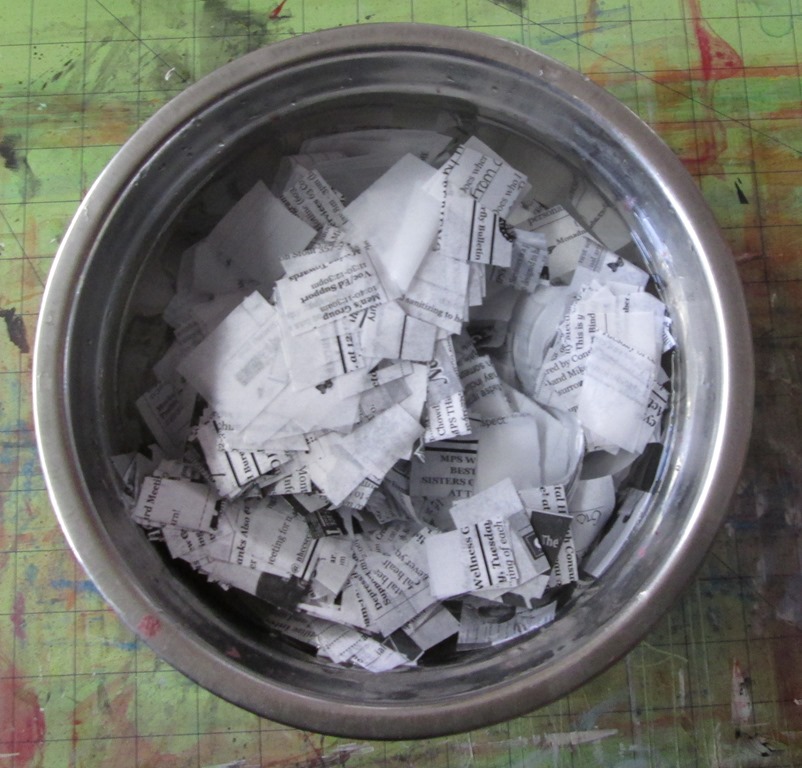
I have been making paper for quite a few years both with therapy groups and for my own enjoyment. This particular batch was made up of 004recycled handouts that I cut and ripped up into roughly 1 x 1 inch pieces. 001

I next decided to soak the ripped paper in a bowl of water for a few hours to help loosen the fibers in the paper


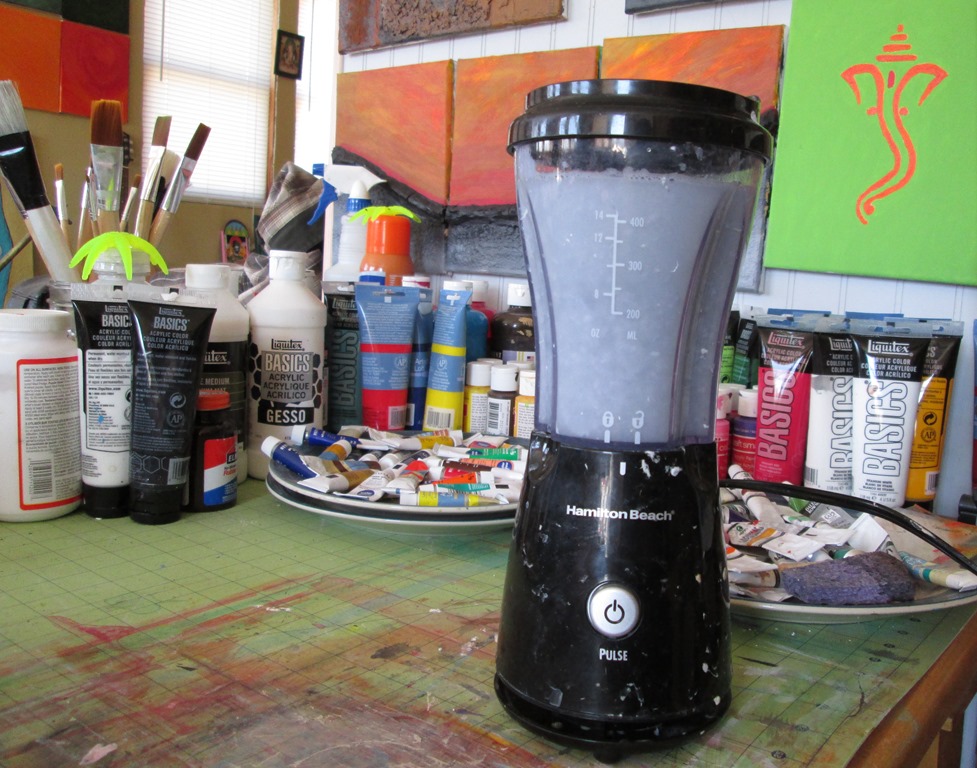
Next011 I used my trusty little blender to chop up the paper and turn it into pulp. Instead of pouring the pulp into a tray of water and using a deckle to ‘fish’ the fibers on to a mold or frame I poured the pulp directly into a strainer, removed most of the water and than ‘sculpted’ the pulp around a cylinder form. The last photo is of some of the finished 1/2 cylinders and some brown craft paper that I also made that day using a regular deckle.

005

Rough Road/Path photos

04 Friday Jan 2019

Posted by RichardB in art, creative arts therapy, groups, photo set, Therapy

≈ Comments Off on Rough Road/Path photos

Tags

creative arts therapy, Creativity, photo, recovery, therapy, wellness

I have been involved in facilitating groups for decades. One of the tools I use for groups of adults, teens, or children are photos. I use photos as a way for folks to become familiar and used to talking and sharing in a group. As a way to indirectly share something of themselves by talking about an image/photo. As a way to begin a conversation about larger issues or deeper issues.

One set of photos I use are Rough Road/Path photos with alcohol addicts and heroin addicts in the beginning of recovery. I spread the photos out on a table and ask the group (usually 10 to 15 men) to pick out one photo that represents their journey in the week or weeks before they came into rehab. Once everyone has chosen a photo I ask them to (one at a time) hold up the photo, describe the photo and why they chose it. The descriptions and stories they tell come from them, their experiences and begin the process of revealing a bit about their

When Meds Fail: A Case for Music Therapy: Tim Ringgold at TEDxYouth@BommerCanyon

07 Friday Sep 2018

Posted by RichardB in creative arts therapy, Mental Health, music therapy

≈ Comments Off on When Meds Fail: A Case for Music Therapy: Tim Ringgold at TEDxYouth@BommerCanyon

Tags

creative arts therapy, mental heath, music therapy

instagram

Follow RichardbBrunner on WordPress.com
  • Tumblr
  • YouTube

Blog at WordPress.com.

Privacy & Cookies: This site uses cookies. By continuing to use this website, you agree to their use.
To find out more, including how to control cookies, see here: Cookie Policy
  • Subscribe Subscribed
    • RichardbBrunner
    • Join 491 other subscribers
    • Already have a WordPress.com account? Log in now.
    • RichardbBrunner
    • Subscribe Subscribed
    • Sign up
    • Log in
    • Report this content
    • View site in Reader
    • Manage subscriptions
    • Collapse this bar
 

Loading Comments...