• Home
  • Music
  • About
  • Contact
  • CreativeTherapyTools.com

RichardbBrunner

~ creative arts therapist

RichardbBrunner

Author Archives: RichardB

American Poverty

27 Friday Nov 2020

Posted by RichardB in america, photos

≈ Comments Off on American Poverty

Tags

american, poverty

During the Great Depression, photographers created riveting images chronicling the desperation of those times. Pictures helped mold the nation’s collective memory and conscience. Seventy years later, the plight and potential of the least fortunate members of our communities is mostly unseen and ignored, and photographers are once again poised to jump-start a national conversation about the issue of poverty.130.jpg

AmericanPoverty.org is a non-profit alliance of photojournalists using visual storytelling to raise awareness about “how the other half lives.” Joining us are renowned American writers, filmmakers and educators, all of whom seek to alleviate poverty and make it a national priority. Together we are working to dispel stereotypes and encourage actions that can create lasting impact in the lives of disadvantaged people.

The photo “Migrant Mother” was one of thousands of pictures Dorothea Lange took on assignment for the federal government, documenting the poverty of the Dust Bowl. Before it had that iconic title, the 1936 photo was captioned “Destitute peapickers in California.” For more about Dorothea Lange and this image check out Studio 360.

Dance Movement Therapy at Mattel Children’s Hospital UCLA

26 Thursday Nov 2020

Posted by RichardB in creative arts therapy, Dance Movement Therapy, YouTube

≈ Comments Off on Dance Movement Therapy at Mattel Children’s Hospital UCLA

Tags

children, health, medical

Great video about what Dance Movement Therapy is and how its done in a Medical setting with children.

Suiseki: Get your Rocks on

25 Wednesday Nov 2020

Posted by RichardB in Collecting, My Photos, rocks

≈ Comments Off on Suiseki: Get your Rocks on

Tags

My Photos, rocks, Suiseki

Over the years as I have moved and changed I have gotten rid of many things and I have kept only 4 things from my younger days; a book of translations of ancient Chinese and Japanese poetry, my bamboo flute, an image of a Bodhisattva, and my collection of rocks. I started collecting rocks with their simplicity, austerity, dignified beauty, and spirit when I was a teen, perhaps influenced by the book of poems I read as a child. The rocks have been gathered from New England, Mid Atlantic states as well as Texas, California, New Mexico and the Dakotas. When I travel for work/training’s I try and take some time to find a rock that expresses something of the place.

See NHK post about:  Suiseki Wikipedia Some of my rocks below.

Assessment and evaluation

24 Tuesday Nov 2020

Posted by RichardB in creative arts therapy, Dance Movement Therapy, Psychology

≈ Comments Off on Assessment and evaluation

Tags

Evaluation

In therapy at some point the counselor will engage in an assessment/evaluation  process that generally involves examining how the therapy sessions are going and hopefully includes feed back from the client/patient. If the counselor is trained as a
dance movement therapist the evaluation/assessment may include many areas such
as verbal sharing, drawings and movement. Movement assessment can include
observing ( which can be considered seeing someone move objectively) and
witnessing (which can be considered seeing someone move subjectively) a person
move. I look at:

  • Space, how does the person
    move in the environment, up/down, do they use space or stay small.
  • Time, do they move fast/slow.
  • Force, what is their muscle
    tension like, are they contracting/expanding, hard/soft, light/heavy.
  • Flow, is the movement
    continuous, unrestrained, restricted.
  • Sound, do they talk, use
    vocal sound, create sound with their body.
  • Congruent, how are the
    movements related to the intention.
  • What do I feel while
    witnessing, what and how do I feel like moving when witnessing .
  • How does this compare to
    other people I have observed, the same/different.

I first learned and applied these techniques while studying the movement based
group creative arts modalities know as the Halprin Method and Motional Process
in the 80’s and early 90’s. If you would like more info I recommend 4 books I found useful:

Dance/Movement Therapists in Action: A Working Guide to Research Options

Artistic Inquiry in Dance/Movement Therapy: Creative Research Alternatives

Meaning of Movement

Dance Therapy and Depth Psychology: The Moving Imagination.

These books helped me to strengthen my assessment techniques and to discover new
methods.

Image

Frozen Ripples

24 Tuesday Nov 2020

Tags

fall, frozen, water

Posted by RichardB | Filed under My Photos

≈ Comments Off on Frozen Ripples

From the Play List Top songs I have listened to in 2010: World Order

23 Monday Nov 2020

Posted by RichardB in Music, YouTube

≈ Comments Off on From the Play List Top songs I have listened to in 2010: World Order

Tags

music, World Order, youtube

DNA shows dogs are mans oldest friend

22 Sunday Nov 2020

Posted by RichardB in dogs, Pets

≈ Comments Off on DNA shows dogs are mans oldest friend

Tags

dogs, pets

A study of dog DNA has shown that our “best friend” in the animal world may also be our oldest one.

The analysis reveals that dog domestication can be traced back 11,000 years, to the end of the last Ice Age. Read the entire article @BBC

Image

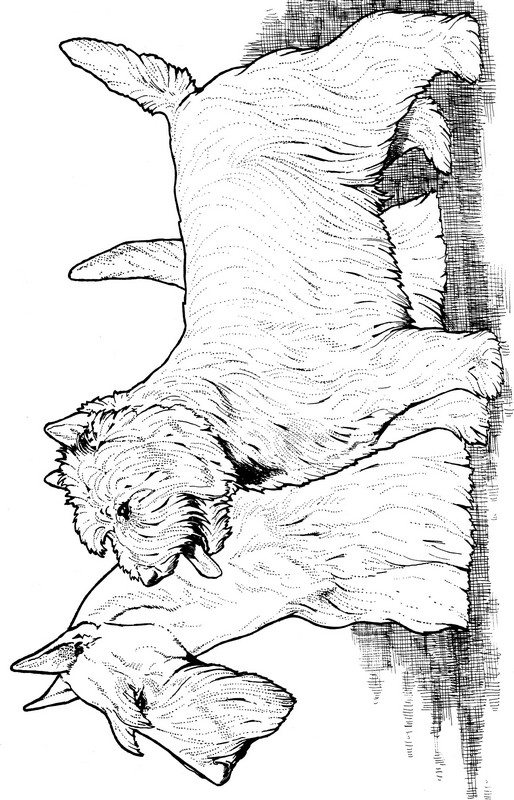
Scotish & West Highland Terrier Coloring Page

21 Saturday Nov 2020

Tags

Coloring Page, Scotish & West Highland Terrier

CPDG-Scotish Terrier & West Highland Terrier-TR.jpg

Posted by RichardB | Filed under Coloring Pages

≈ Comments Off on Scotish & West Highland Terrier Coloring Page

Image

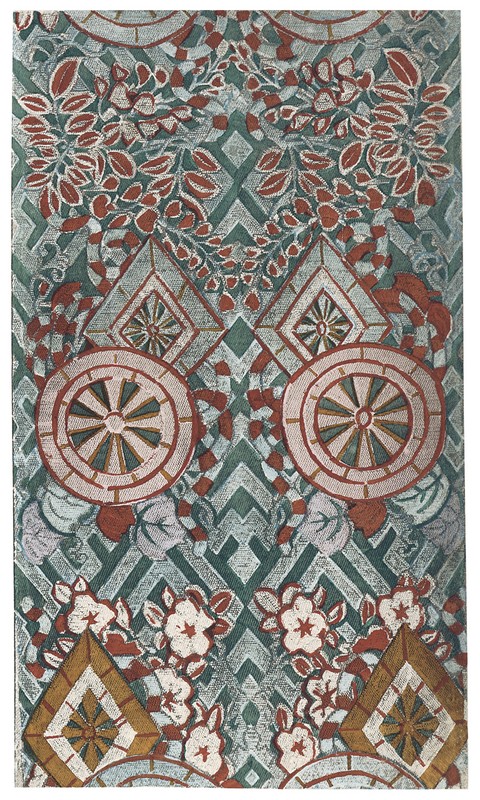
Japanese Textile Designs 98

21 Saturday Nov 2020

JapanTR-098.jpg

Posted by RichardB | Filed under Japanese Textile Designs

≈ Comments Off on Japanese Textile Designs 98

Were French People Born to Speak French?

20 Friday Nov 2020

Posted by RichardB in people, Social Science

≈ Comments Off on Were French People Born to Speak French?

Tags

france, languages, people

No. The belief that people are suited to speak particular languages by biology is widespread—but wrong.

Psychological essentialism is the notion that particular groups of people are different because of some real, meaningful underlying essence that is present deep in their nature, and often biological in origin. So if you think that French speakers are fundamentally different from English speakers because of something about their essential nature or the biology they were born with—rather than the situational or cultural variable of having lived and been exposed to French rather than English—you are using essentialist reasoning. This common but misleading mental habit shapes our thinking in many domains.

Read the entire article here: Scientific American

parislarge

discover

19 Thursday Nov 2020

Posted by RichardB in photos, quote

≈ Comments Off on discover

Tags

discover, photo

You can discover more about a person in an hour of play than in a year of conversation. Plato

Healing from Childhood Trauma

19 Thursday Nov 2020

Posted by RichardB in Dance Movement Therapy

≈ Comments Off on Healing from Childhood Trauma

Studies on neuroplasticity have become increasingly popular in the last several years. It was once thought that our brain was fixed and unchanging once we enter adulthood. Research throughout the last few decades has determined that in fact, our brain has the ability to change and create new neural pathways as well as produce new neurons, a process labeled as neurogenesis (Doidge, 2015). This finding is significant because if the brain has this ability to change, we have the ability to change our way of thinking and possibly improve mood.

Neural pathways in the brain are strengthened with repetition. One way to describe this process is “the neurons that fire together, wire together.” Constant repetition of an experience leads to changes within the brain’s structure and how the neurons process that experience. The more consistent this experience is, the stronger these neurons bond. MORE HERE

Sad Music

18 Wednesday Nov 2020

Posted by RichardB in Music, Research, Sadness

≈ Comments Off on Sad Music

Tags

research, sadness

A team of psychologists from the Free University of Berlin in Germany decided to investigate the science behind the lure of the melancholy tune by analyzing how they make us feel. They gathered data from 772 participants, including 408 from Europe and the rest from Asia, and North America. Each participant was asked to respond to a survey about how often they listen to sad music, what kinds of situations prompted them to do so, and how they feel when they’re listening to it.

Publishing in the journal PLOS One, the researchers found that “a wide range of complex and partially positive emotions, such as nostalgia, peacefulness, tenderness, transcendence, and wonder,” were brought out in the participants by sad music. The data revealed that nostalgia was the most prevalent emotion, brought out in over 76 percent of the participants, while peacefulness came in second place at 57.5 percent.

What do nostalgia, peacefulness, tenderness, transcendence, and wonder all have in common? They’re all healthy, feel-good emotions. “For many individuals, listening to sad music can actually lead to beneficial emotional effects,” the researchers, led by psychologist Liila Taruffi, report. “Music-evoked sadness can be appreciated not only as an aesthetic, abstract reward, but [it] also plays a role in well-being, by providing consolation as well as regulating negative moods and emotions.”

The study also revealed that a high number of participants reported listening to sad music in situations of emotional distress or when they’re feeling lonely, so it could be a form of self-medication. “For most of the people, the engagement with sad music in everyday life is correlated with its potential to regulate negative moods and emotions, as well as to provide consolation,” the researchers add.

These findings appear to have some connection to previous research into sad music that suggests listening to it changes the chemistry in our brains to help us get over our grief. According to David Huron, a professor of music at Ohio University in the US, listening to sad music likely causes a spike in the hormone prolactin in the brain.

“Prolactin is the chemical that is used to help curb grief because it’s also released during basic human activities – like when we eat, when women ovulate or breastfeed and (perhaps most importantly) when we have sex,” says David Taylor Sloan at Mic.com. “So sad music actually activates a chemical that tones down your grief – suggesting that being sad (and listening to sad music to get there) has deep evolutionary benefits.

A team of psychologists from the Free University of Berlin in Germany decided to investigate the science behind the lure of the melancholy tune by analyzinganalysing how they make us feel. They gathered data from 772 participants, including 408 from Europe and the rest from Asia, and North America. Each participant was asked to respond to a survey about how often they listen to sad music, what kinds of situations prompted them to do so, and how they feel when they’re listening to it. Dep1

Image

Frozen apples

17 Tuesday Nov 2020

Tags

apples, fall, My Photos

Posted by RichardB | Filed under My Photos

≈ Comments Off on Frozen apples

Halting Legacies of Trauma | Brian Dias | TEDxEmory

17 Tuesday Nov 2020

Posted by RichardB in Creative Therapy Tools, trauma

≈ Comments Off on Halting Legacies of Trauma | Brian Dias | TEDxEmory

Tags

healing, trauma

Brian Dias is a researcher in the field of neurobiology and an active participant in scientific innovation and education. Dr. Dias grew up in India and received his PhD from the University of Texas at Austin. Over the years, he has investigated the neurobiology underlying depression, anxiety, PTSD, and anti-social behavior. Currently, Dr. Dias and his team are studying how mammalian neurobiology, physiology and reproductive biology are impacted by stress, and how legacies of stress perpetuate across generations. Among other outlets, Dr. Dias’ work has been featured in Nature, on the BBC, in a list of the 10 Most Important Discoveries of 2014 published by La Recherche Magazine. Most recently, Dr. Dias was quoted in articles about the legacy of trauma (BBC) and the neurobiology of family separation (BrainFacts). In 2017, Dr. Dias received a CIFAR Azrieli Global Scholar Award from the Canadian Institute for Advanced Research (CIFAR) and is currently an Associate Fellow in CIFAR’s Child & Brain Development Program. In addition to research, Dr. Dias is interested in scientific innovation and education. This talk was given at a TEDx event using the TED conference format but independently organized by a local community.

From the Playlist Top songs I have listened to in 2019: Raveena: NPR Music Tiny Desk Concert

16 Monday Nov 2020

Posted by RichardB in Music

≈ Comments Off on From the Playlist Top songs I have listened to in 2019: Raveena: NPR Music Tiny Desk Concert

Tags

music, Raveena

Prospective pet owners use Zoom and social media to find/meet new furry friends

15 Sunday Nov 2020

Posted by RichardB in dogs, Pets

≈ Comments Off on Prospective pet owners use Zoom and social media to find/meet new furry friends

Tags

dogs, pets, zoom

When the coronavirus pandemic emptied offices earlier this year, forcing millions of people to begin working remotely at home, some began to feel like they needed a new friend to replace the water cooler banter. Now at home all day and needing a happy distraction from the pressures of the precarious state of the world, they decided it was finally time to act on a long-held goal of adopting a pet. Read the entire article at CNET HERE

Image

Mandala 4 Coloring Page

14 Saturday Nov 2020

Tags

Coloring Page, Mandala

CPMX-TR-206.jpg

Posted by RichardB | Filed under Coloring Pages

≈ Comments Off on Mandala 4 Coloring Page

Image

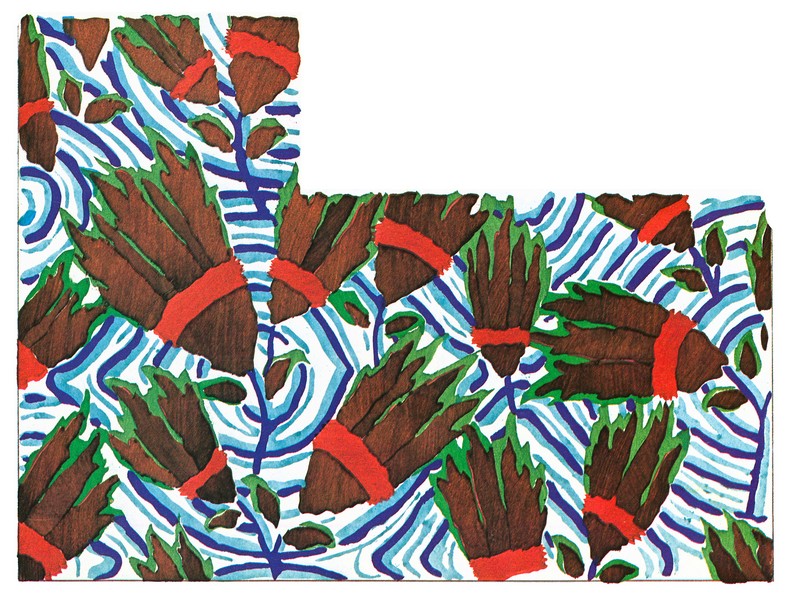
Seguy Art Deco Designs 97

14 Saturday Nov 2020

Tags

Seguy Art Deco Designs

SeguyTR-097.jpg

Posted by RichardB | Filed under Seguy Art Deco Designs

≈ Comments Off on Seguy Art Deco Designs 97

Watching Birds, Trees is Good for Mental Health

13 Friday Nov 2020

Posted by RichardB in Ecopsychology, Environment

≈ Comments Off on Watching Birds, Trees is Good for Mental Health

Tags

Birds, trees, wellness

According to a study led by University of Exeter researcher Daniel Cox, people living in neighborhoods with more birds, shrubs and trees are less likely to suffer from depression, anxiety and stress.

Dr. Cox and his colleagues from the University of Maryland, the University of Queensland in Australia, the British Trust for Ornithology and the University of Exeter in the UK, surveyed mental health in 263 people from different ages, incomes and ethnicities.

SONY DSC

“All the participants lived within the urban limits of the so-called ‘Cranfield triangle,’ a region in southern England, UK, comprising the three adjacent towns of Milton Keynes, Luton, and Bedford,” the researchers said.

They found benefits for mental health of being able to see birds, shrubs and trees around the home, whether people lived in urban or more leafy suburban neighborhoods. They also found that those who spent less time out of doors than usual in the previous week were more likely to report they were anxious or depressed. MORE

← Older posts
Newer posts →

instagram

Follow RichardbBrunner on WordPress.com
  • Tumblr
  • YouTube

Create a free website or blog at WordPress.com.

Privacy & Cookies: This site uses cookies. By continuing to use this website, you agree to their use.
To find out more, including how to control cookies, see here: Cookie Policy
  • Subscribe Subscribed
    RichardbBrunner
    Join 483 other subscribers

    Have a WordPress.com account? Log in now.

  • RichardbBrunner
    View site in Reader
    Manage subscriptionsSign upLog in
    Report this content
    Collapse this bar
Loading Comments...