• Home
  • Music
  • About
  • Contact
  • CreativeTherapyTools.com

RichardbBrunner

~ creative arts therapist

RichardbBrunner

Category Archives: creative arts therapy

Assessment & evaluation

20 Wednesday Oct 2021

Posted by RichardB in creative arts therapy, Dance Movement Therapy, Movement, Psychotherapy

≈ Comments Off on Assessment & evaluation

Tags

Assessment

A friend commented that it might be hard to evaluate someone who could only move their hands/arms. Basically the same principles apply whether the movement is with legs through the space or being still with a posture, or moving the arms.

Arms and especially hands are the most common movement elements, feet and legs are next and of course not everybody can move everything so an assessment/evaluation is made with what you can get from a patient/client.

Of course an assessment is guided by the intention. If I want to know how someone is feeling and they are reluctant to share verbally I might ask them to express with their hands (which I often do at the hospital) if they are unclear how they are feeling and how to express that with their hands I might switch to a simple game with the intention of warming them up.

A warm up involving the hands could be tossing and catching a small stuffed animal and at some point adding words by answering easy questions like; my favorite food is “____”. If the person is nonverbal than you can interact with facial/postural/gestural expressions when tossing the animal and/or mirroring to interact and experience/create a response.

The assessment/evaluation happens when observing/witnessing the force and effort used to toss the cow and/or the facial, posture, gesture. Does the effort change during the session and how is that change related to the activity. For instance people will typically have smaller movements to start out with and as they become more comfortable their movements become larger. This happens whether the person is moving by feet/wheels through the space, or sitting tossing something or making gestures or changing their posture. I look at the whole body and don’t just observe/witness the active bits but also what the rest of the body is doing during the activity. For example is there a slight movement in the foot when tossing and is that from an old injury or a current muscle tightness or is it an emotional based issue.

feelings-53

If something comes up in a session that seems like it needs further exploration I might engage the client/patient in an activity that focuses on that “something”. If the left foot turns I might ask the person to focus on their feet when they toss or to make a sound. Or I might simply mention that I noticed you always turn your foot when you toss the stuffed animal and see what response the client/patient has.

The fun and useful part about being a Dance Movement Therapist is that you get to use verbal counseling skills and body counseling skills. The entire person is given a chance/opportunity to express with all of themselves, body and mind.

Preferences for group arts therapies

13 Wednesday Oct 2021

Posted by RichardB in creative arts therapy, Research, Therapy

≈ Comments Off on Preferences for group arts therapies

Tags

creative arts therapy, research, therapy

From BMJ Open:

Abstract

Objectives The arts therapies include music therapy, dance movement therapy, art therapy and dramatherapy. Preferences for art forms may play an important role in engagement with treatment. This survey was an initial exploration of who is interested in group arts therapies, what they would choose and why.
Conclusions Large proportions of the participants expressed an interest in group arts therapies. This may justify the wide provision of arts therapies and the offer of more than one modality to interested patients. It also highlights key considerations for assessment of preferences in the arts therapies as part of shared decision-making.

Read the entire article at BMJ Open.

Dance/Movement Therapy: Analyzing “Body Language”

06 Wednesday Oct 2021

Posted by RichardB in creative arts therapy, Dance Movement Therapy, Embodied, Evaluation, Movement, Research

≈ Comments Off on Dance/Movement Therapy: Analyzing “Body Language”

Tags

dance, Movement, therapy, youtube

Dance/Movement Therapy & Dementia

29 Wednesday Sep 2021

Posted by RichardB in creative arts therapy, Dance Movement Therapy, Dementia, Movement, YouTube

≈ Comments Off on Dance/Movement Therapy & Dementia

Tags

creative arts therapy, wellness

The Difference Between “Therapeutic” Dance and Dance/Movement Therapy

15 Wednesday Sep 2021

Posted by RichardB in creative arts therapy, Dance Movement Therapy, YouTube

≈ Comments Off on The Difference Between “Therapeutic” Dance and Dance/Movement Therapy

Tags

dance, Therapeutic

Neurology of Dance

08 Wednesday Sep 2021

Posted by RichardB in creative arts therapy, Dance, Dance Movement Therapy, Embodied, Movement, Neuroscience, YouTube

≈ Comments Off on Neurology of Dance

Tags

dance, neurology

The Science of Happiness – Art Therapy

26 Thursday Aug 2021

Posted by RichardB in Art Therapy, creative arts therapy, Wellness, youtube

≈ Comments Off on The Science of Happiness – Art Therapy

Yoga can help girls who suffered childhood trauma

06 Thursday May 2021

Posted by RichardB in creative arts therapy, discovery, Wellness

≈ Comments Off on Yoga can help girls who suffered childhood trauma

Tags

research, trauma, yoga

As a Creative Arts Therapist who specializes in the body and is a former Yoga teacher this article is not at all surprising. Most therapists who have worked with trauma survivors know that people have a tendency to have some level of dissociation with their bodies. Yoga can gently bring a new level of conscious feeling, movement and functionally of the body which can’t be processed with other modalities.

As a teenager, Rocsana Enriquez ran away from home frequently to escape fights with her mother and sexual abuse from her stepfather. She got involved with street gangs and cycled in and out of juvenile detention.

While she was incarcerated in Central California, she started to learn yoga. It became an outlet for her anger and an antidote to the deep insecurity she felt. Before she got into a fight, she reminded herself to take a deep breath. And she loved the way she felt when she stretched into “Warrior II” pose. “It made me feel very strong,” she said.

A new report by the Center on Poverty and Inequality at Georgetown Law School shows that yoga programs can be particularly effective at helping girls who are incarcerated cope with the effects of trauma that many have experienced. Research shows yoga and mindfulness can promote healthier relationships, increase concentration, and improve self esteem and physical health.

Such programs, if offered more broadly, would be a cost-effective way to help one of the country’s most vulnerable groups heal and improve their lives, the report says.

READ MORE HERE

bamboo forest

Kinesthetic Empathy: The Keystone of Dance/Movement Therapy

17 Wednesday Feb 2021

Posted by RichardB in creative arts therapy, dance, Dance Movement Therapy, YouTube

≈ Comments Off on Kinesthetic Empathy: The Keystone of Dance/Movement Therapy

Tags

creative, Dance Movement Therapy

What is Dance Movement Therapy?

10 Wednesday Feb 2021

Posted by RichardB in creative arts therapy, Dance Movement Therapy, Psychotherapy, Therapy

≈ Comments Off on What is Dance Movement Therapy?

Tags

dance, dmt, kids.teens.adults, therapy, wellness

According to the American Dance Therapy Association (ADTA): Based on the understanding that the body and mind are interrelated, dance/movement therapy (D/MT) is defined as the psychotherapeutic use of movement to further the emotional, cognitive, physical, and social integration of the individual. Dance/movement therapy is practiced in mental health, rehabilitation, medical, educational, and forensic settings, and in nursing homes, day care centers, disease prevention, and health promotion programs. The dance/movement therapist focuses on movement behavior as it emerges in the moving2therapeutic relationship. Expressive, communicative, and adaptive behaviors are all considered for both group and individual treatment. Body movement as the core component of dance simultaneously provides the means of assessment and the mode of intervention for dance/movement therapy.

I often define D/MT to clients as psychotherapy that is not limited to talking but encompasses the full range of human expression, including movement such as gestures and or postures, drawing, writing, drama, music and other expressions that can have a therapeutic benefit for the client(s).

Dance Movement Therapy is a creative arts therapy rooted in the expressive nature of dance. Since dance/movement comes from the body it is considered the most fundamental of the arts and is a direct expression (and experience) of the self. Dance/movement is a basic form of authentic communication, and as such it is an especially effective medium for therapy.

isadora%20duncanDance/movement therapists (R-DMT or BC-DMT) work with individuals of all ages, groups and families in a wide variety of settings. They focus on helping their clients improve self-esteem and body image, develop effective communication skills and relationships, expand their movement vocabulary, gain insight into patterns of behavior, as well as create new options for coping with problems. Movement is the primary medium DMT’s use for observation, assessment, research, therapeutic interaction, and interventions.

DMT’s work in settings that include psychiatric and rehabilitation facilities, schools, nursing homes, drug treatment centers, counseling centers, medical facilities, crisis centers, and wellness and alternative health care centers.

Dance Movement Therapy at Mattel Children’s Hospital UCLA

26 Thursday Nov 2020

Posted by RichardB in creative arts therapy, Dance Movement Therapy, YouTube

≈ Comments Off on Dance Movement Therapy at Mattel Children’s Hospital UCLA

Tags

children, health, medical

Great video about what Dance Movement Therapy is and how its done in a Medical setting with children.

Assessment and evaluation

24 Tuesday Nov 2020

Posted by RichardB in creative arts therapy, Dance Movement Therapy, Psychology

≈ Comments Off on Assessment and evaluation

Tags

Evaluation

In therapy at some point the counselor will engage in an assessment/evaluation  process that generally involves examining how the therapy sessions are going and hopefully includes feed back from the client/patient. If the counselor is trained as a
dance movement therapist the evaluation/assessment may include many areas such
as verbal sharing, drawings and movement. Movement assessment can include
observing ( which can be considered seeing someone move objectively) and
witnessing (which can be considered seeing someone move subjectively) a person
move. I look at:

  • Space, how does the person
    move in the environment, up/down, do they use space or stay small.
  • Time, do they move fast/slow.
  • Force, what is their muscle
    tension like, are they contracting/expanding, hard/soft, light/heavy.
  • Flow, is the movement
    continuous, unrestrained, restricted.
  • Sound, do they talk, use
    vocal sound, create sound with their body.
  • Congruent, how are the
    movements related to the intention.
  • What do I feel while
    witnessing, what and how do I feel like moving when witnessing .
  • How does this compare to
    other people I have observed, the same/different.

I first learned and applied these techniques while studying the movement based
group creative arts modalities know as the Halprin Method and Motional Process
in the 80’s and early 90’s. If you would like more info I recommend 4 books I found useful:

Dance/Movement Therapists in Action: A Working Guide to Research Options

Artistic Inquiry in Dance/Movement Therapy: Creative Research Alternatives

Meaning of Movement

Dance Therapy and Depth Psychology: The Moving Imagination.

These books helped me to strengthen my assessment techniques and to discover new
methods.

Movement Therapies May Aid Those with Schizophrenia

12 Thursday Nov 2020

Posted by RichardB in creative arts therapy, Dance Movement Therapy, Mental illness, Movement, Psychology, Psychotherapy

≈ Comments Off on Movement Therapies May Aid Those with Schizophrenia

Tags

schizophrenia

Interesting post from Psych Central:

A study using a procedure called the “rubber hand illusion” has found new evidence that people experiencing schizophrenia have a weakened sense of body ownership.

It has also produced the first documented case of a spontaneous, out-of-body experience in the laboratory.

These findings suggest that movement therapy, which trains people to be focused and centered on their own bodies, including some forms of yoga and dance, could be helpful for many of the 2.2 million people in the United States who suffer from schizophrenia.

Movement Therapies May Aid Those with Schizophrenia

Resiliency

11 Wednesday Nov 2020

Posted by RichardB in creative arts therapy, discovery, Poetry

≈ Comments Off on Resiliency

Tags

Resiliency


What does it mean to be resilient? Bounce back, bounce off of, withstand, remain standing. Is it a part of our hereditary, our inborn temperament? Perhaps it’s a positive self concept.  An ability to remember the past, live in the present, and look to the future.  Could it also involve hitting rock bottom, being aware of limitations, seeking support? Perhaps it’s a mentor, a will to live, a focus on healing.

Could it be that resiliency is a connection with spirituality, a commitment to listen to others, a willingness to be truthful? One thing is certain that resiliency is different for everyone, with some commonality mixed in here and there.

AS a child, I found/rediscovered resiliency outside, often in my favorite tree.


A tree stands alone

1987 Fig 2 Arms Rebound

Wind rustles leaves together 

We sway arm in branch


As an adult, I have found resiliency many places and many ways. Often, in combining the practice of creative movement, tai chi and hatha yoga.

Yoga can help girls who suffered childhood trauma

23 Wednesday Sep 2020

Posted by RichardB in creative arts therapy, discovery, Wellness

≈ Comments Off on Yoga can help girls who suffered childhood trauma

Tags

research, trauma, yoga

As a Creative Arts Therapist who specializes in the body and is a former Yoga teacher this article is not at all surprising. Most therapists who have worked with trauma survivors know that people have a tendency to have some level of dissociation with their bodies. Yoga can gently bring a new level of conscious feeling, movement and functionally of the body which can’t be processed with other modalities.

As a teenager, Rocsana Enriquez ran away from home frequently to escape fights with her mother and sexual abuse from her stepfather. She got involved with street gangs and cycled in and out of juvenile detention.

While she was incarcerated in Central California, she started to learn yoga. It became an outlet for her anger and an antidote to the deep insecurity she felt. Before she got into a fight, she reminded herself to take a deep breath. And she loved the way she felt when she stretched into “Warrior II” pose. “It made me feel very strong,” she said.

A new report by the Center on Poverty and Inequality at Georgetown Law School shows that yoga programs can be particularly effective at helping girls who are incarcerated cope with the effects of trauma that many have experienced. Research shows yoga and mindfulness can promote healthier relationships, increase concentration, and improve self esteem and physical health.

Such programs, if offered more broadly, would be a cost-effective way to help one of the country’s most vulnerable groups heal and improve their lives, the report says.

READ MORE HERE

Or go direct to the Report From Center on Poverty and Inequality

bamboo forest

Art therapy brings comfort to Jordan’s orphans

10 Thursday Sep 2020

Posted by RichardB in Art Therapy, creative arts therapy, kids

≈ Comments Off on Art therapy brings comfort to Jordan’s orphans

Tags

Art Therapy

After a busy art session, the classroom at Amman’s al-Hussain Social Institution buzzed with energy, as children dashed around to clean up supplies, admire their paintings and pose in the decorated masks they designed.

These young artists have come a long way over the past few months. Aged between six and 12, the children recently completed an art therapy programme – the first of its kind – designed to aid Jordan’s orphans. The weekly sessions of painting, gluing and building provided an atmosphere of organised chaos, during which they filled canvases with the anxieties and hopes that might otherwise be difficult to express.creatiggggvity

“It’s like regular therapy, except you use art as a medium,” art therapist and programme founder Shireen Yaish told Al Jazeera. “It’s great for those who find it difficult to verbalise things – it’s about making the unconscious conscious, in a way. My job is to make people understand what they’re making.”

As the weeks progressed, the children participating in this programme run by the Kaynouna Art Therapy Centre came out of their shells and developed great enthusiasm for their artwork, Yaish said. Supported by the al-Aman Fund for the Future of Orphans and the Abdul Hameed Shoman Foundation, the programme also exposed the profound needs of some of Jordan’s most vulnerable children. MORE HERE

Rough Road/Path photos

09 Wednesday Sep 2020

Posted by RichardB in creative arts therapy, photo set, recovery

≈ Comments Off on Rough Road/Path photos

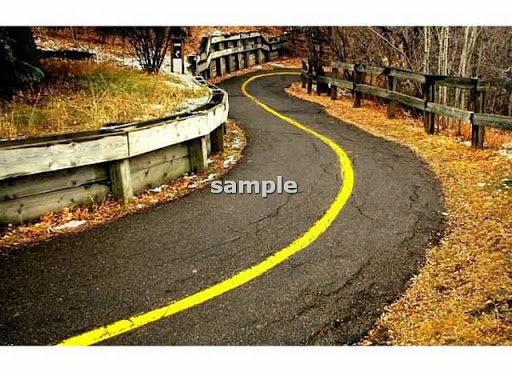
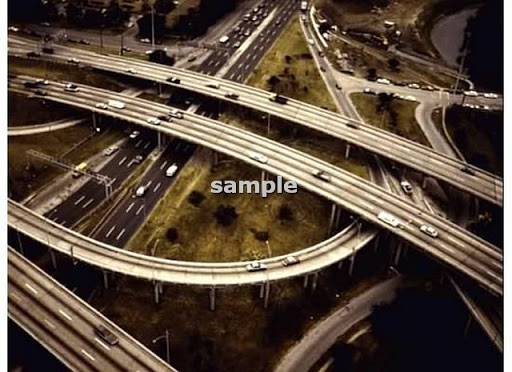
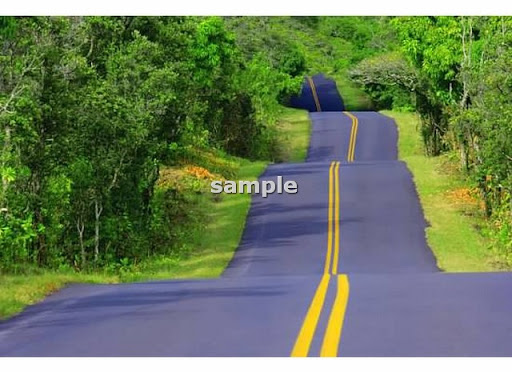
I have been involved in facilitating groups for decades. One of the tools I use for groups of adults, teens, or children are photos. I use photos as a way for folks to become familiar and used to talking and sharing in a group. As a way to indirectly share something of themselves by talking about an image/photo. As a way to begin a conversation about larger issues or deeper issues.
One set of photos I use are Rough Road/Path photos with alcohol addicts and heroin addicts in the beginning of recovery. I spread the photos out on a table and ask the group (usually 10 to 15 men) to pick out one photo that represents their journey in the week or weeks before they came into rehab. Once everyone has chosen a photo I ask them to (one at a time) hold up the photo, describe the photo and why they chose it. The descriptions and stories they tell come from them, their experiences and begin the process of revealing a bit about their lives.

Creativity

07 Friday Aug 2020

Posted by RichardB in creative arts therapy, Creativity, photo, quote

≈ Comments Off on Creativity

Creativity is allowing yourself to make mistakes. Art is knowing which ones to keep.

Scott Adams


people-29_thumb.jpg

Dance/Movement Therapy & Autism: Dances of Relationship

10 Friday Jul 2020

Posted by RichardB in autism, creative arts therapy, Dance Movement Therapy, youtube

≈ Comments Off on Dance/Movement Therapy & Autism: Dances of Relationship

Tags

dance movement therapy, youtube

believe in ourselves

27 Wednesday May 2020

Posted by RichardB in creative arts therapy, photo, quote

≈ Comments Off on believe in ourselves

“We do not believe in ourselves until someone reveals that deep inside us something is valuable, worth listening to, worthy of our trust, sacred to our touch. Once we believe in ourselves we can risk curiosity, wonder, spontaneous delight or any experience that reveals the human spirit.” E.E. Cummings

← Older posts
Newer posts →

instagram

Follow RichardbBrunner on WordPress.com
  • Tumblr
  • YouTube

Blog at WordPress.com.

Privacy & Cookies: This site uses cookies. By continuing to use this website, you agree to their use.
To find out more, including how to control cookies, see here: Cookie Policy
  • Subscribe Subscribed
    • RichardbBrunner
    • Join 491 other subscribers
    • Already have a WordPress.com account? Log in now.
    • RichardbBrunner
    • Subscribe Subscribed
    • Sign up
    • Log in
    • Report this content
    • View site in Reader
    • Manage subscriptions
    • Collapse this bar
 

Loading Comments...