Dance/Movement Therapy & Autism: Dances of Relationship
10 Friday Jul 2020
Posted in autism, creative arts therapy, Dance Movement Therapy, youtube
≈ Comments Off on Dance/Movement Therapy & Autism: Dances of Relationship

10 Friday Jul 2020
Posted in autism, creative arts therapy, Dance Movement Therapy, youtube
≈ Comments Off on Dance/Movement Therapy & Autism: Dances of Relationship
27 Wednesday May 2020
Posted in creative arts therapy, photo, quote
≈ Comments Off on believe in ourselves

07 Thursday May 2020
Posted in creative arts therapy, Dance Movement Therapy, Psychotherapy
≈ Comments Off on What is Dance Movement Therapy?
Tags
According to the American Dance Therapy Association (ADTA): Based on the understanding that the body and mind are interrelated, dance/movement therapy (D/MT) is defined as the psychotherapeutic use of movement to further the emotional, cognitive, physical, and social integration of the individual. Dance/movement therapy is practiced in mental health, rehabilitation, medical, educational, and forensic settings, and in nursing homes, day care centers, disease prevention, and health promotion programs. The dance/movement therapist focuses on movement behavior as it emerges in the therapeutic relationship. Expressive, communicative, and adaptive behaviors are all considered for both group and individual treatment. Body movement as the core component of dance simultaneously provides the means of assessment and the mode of intervention for dance/movement therapy.
I often define D/MT to clients as psychotherapy that is not limited to talking but encompasses the full range of human expression, including movement such as gestures and or postures, drawing, writing, drama, music and other expressions that can have a therapeutic benefit for the client(s).
Dance Movement Therapy is a creative arts therapy rooted in the expressive nature of dance. Since dance/movement comes from the body it is considered the most fundamental of the arts and is a direct expression (and experience) of the self. Dance/movement is a basic form of authentic communication, and as such it is an especially effective medium for therapy.
Dance/movement therapists (R-DMT or BC-DMT) work with individuals of all ages, groups and families in a wide variety of settings. They focus on helping their clients improve self-esteem and body image, develop effective communication skills and relationships, expand their movement vocabulary, gain insight into patterns of behavior, as well as create new options for coping with problems. Movement is the primary medium DMT’s use for observation, assessment, research, therapeutic interaction, and interventions.
DMT’s work in settings that include psychiatric and rehabilitation facilities, schools, nursing homes, drug treatment centers, counseling centers, medical facilities, crisis centers, and wellness and alternative health care centers.
30 Thursday Apr 2020
Posted in creative arts therapy, YouTube
≈ Comments Off on 8 Essentials for Recovery from Addiction
Tags
14 Tuesday Apr 2020
Posted in art, creative arts therapy, Therapy
≈ Comments Off on Art and happiness
Type the words “Spring (Fruit Trees in Bloom)” into an online search engine and in less than a second you will be looking at a sparkling vista of trees erupting in a starburst of pale blossom like an exploding firework. The phrase is the title of an Impressionist oil painting by the French master Claude Monet that belongs to the Metropolitan Museum of Art in New York. 
According to the museum’s website, the painting was executed in 1873 in Argenteuil, a village on the River Seine northwest of Paris where the Impressionist artists used to gather. Signed and dated “73 Claude Monet” in the lower left corner, it is almost 40in (1m) wide and 24.5in (62cm) high. In 1903, when it was known as Apple Blossoms, it was bought for $2,100 by the New York art dealership Knoedler & Co. The Met acquired it in 1926.
Concise, sober information like this is typical of the insights that museums commonly provide about artworks in their collections. Dates, dimensions, provenance: these are the bread and butter of scholarship and art history.
But by offering details about pictures in this manner, are museums fundamentally missing the point of what art is all about? One man who believes that they are is the British philosopher Alain de Botton, whose new book, Art as Therapy, co-written with the art theorist John Armstrong, is a polite but provocative demolition of the way that museums and galleries routinely present art to the public.
17 Tuesday Mar 2020
Posted in creative arts therapy, journal, Mental Health
≈ Comments Off on Journal writing and self talk
Tags
Patterns of negative or positive self-talk often start in childhood. Usually, the self-talk habit is one that’s colored our thinking for years, and can affect us in many ways, influencing the experience of stress to our lives. However, any time can be a good time to change it! Here are some ways you can stop yourself from using negative self-talk and use your mind to boost your productivity and self-esteem, and relieve stress.
Notice Your Patterns:
The first step toward change is to become more aware of the problem. You probably don’t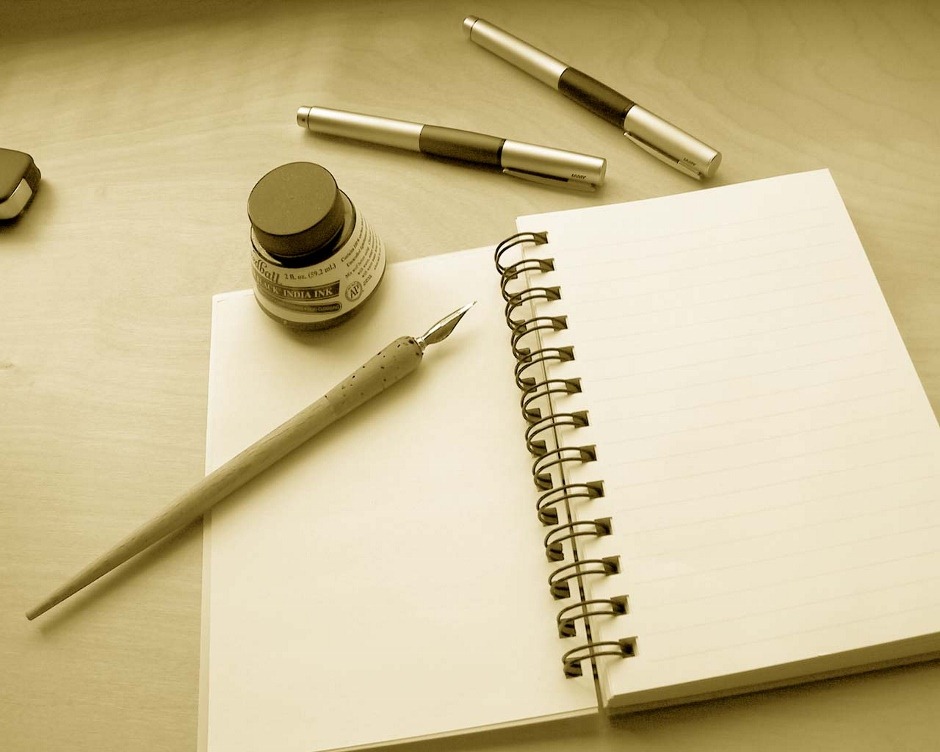 realize how often you say negative things in your head, or how much it affects your experience. Here are two strategies that can help you become more conscious of your internal dialogue and its content.
Journal Writing: Whether you carry a journal around with you and jot down negative comments when you think them, write a general summary of your thoughts at the end of the day, or just start writing about your feelings on a certain topic and later go back to analyze it for content, journaling can be an effective tool for examining your inner process.
Thought-Stopping: As you notice yourself saying something negative in your mind, you can stop your thought mid-stream my saying to yourself “Stop”. Saying this aloud will be more powerful, and having to say it aloud will make you more aware of how many times you are stopping negative thoughts, and where.
30 Thursday Jan 2020
Posted in creative arts therapy, Dance Movement Therapy, Health, mental health, Relaxation, Stress
≈ Comments Off on Stress and movement
Tags
Stress can be indicated when a person becomes stuck/frozen or stopped in a bodily movement that can be described as either gestural, ( movements isolated to parts or part of the body) or postural ( movements carried constantly through the whole body). When there is a continuous flow of movement from gesture to posture and vice versa than the person is considered moving in balance and not not indicated to be in stress. one example of this is something that has come up in the last 20 years of leading stress reduction exercises with groups. I ask the participants how they know they are stressed out and the top answers are:
I notice I am gripping the steering wheel- I notice I am making a fist- I am clenching my teeth-I am clenching my butt.

Each one of these actions is a frozen gesture and they generally use the most “force”, muscle, blood flow of any other component of the body while they are active. Think about it, if you clench your fist the blood flow increases due to the sudden contraction of the muscles, a part of your attention is brought to the area because its being engaged, the rest of the body begins to respond to the clenched fist starting with the arm, shoulders, spine, abdominal muscles and so on ad so on. Suddenly your attention increases to the area dramatically and you realize; “oh I’m clenching my fist….”
The first step to releasing this body stress is the breath. When stressed we tend to hold our breath and/or it becomes shallow breathing. Taking a big breath in and a big breath out begins to increase the oxygen to the brain (and the rest if the body). That big breath also automatically signals to the body on a primal level that the stressor is less and the body begins to relax its muscular contractions. Also when we consciously are taking in a big breath we are exerting voluntary control over our bodies which is the opposite of the stress response which is a involuntary response. This voluntary and controlled breath also signals to the brain on a primal level that the stressor is lessen, resulting in the muscles lessening their contradiction.
Of course simply breathing does not seem like much of an answer for someone who experiences chronic stress/anxiety. But it is one more tool that one can use. Like mindfulness, visualizations, and other techniques, breathing is something that needs to be practiced and the more you practice the more effective it becomes.
11 Wednesday Dec 2019
Posted in creative arts therapy, Dance Movement Therapy, research, youtube
≈ Comments Off on Kestenberg Movement Profile: Tension Flow Rhythms
Tags
KMP Movement Analysis is the comprehensive system for identifying psychological, developmental, emotional, cognitive and global health/imbalance through movement observation, notation and interpretation.
If the mind, emotions, and body are a closely integrated , mutually interacting system, then it is reasonable that we should be able to gain information about the mind by observing the body. The body and its manner of moving not only reveals aspects of current feelings and emotions, but can give us insight into an individual’s past. As Loman and Foley wrote in 1996, “…experiences get stored in the body and are reflected in body movement.” A person who feels rejected may develop a hollow, narrowed body attitude which expresses and reinforces such feelings throughout life. Because both physical and emotional experiences leave long term traces upon the way people hold themselves and move, the study of movement opens a door to the study of patterns of early development, coping strategies and personality configurations.
27 Wednesday Nov 2019
Posted in creative arts therapy, Mental Health, Stress
≈ Comments Off on Healthy ways to manage stress
If your methods of coping with stress aren’t contributing to your greater emotional and physical health, it’s time to find healthier ones. There are many healthy ways to manage and cope with stress, but they all require change. You can either change the situation or change your reaction. When deciding which option to choose, it’s helpful to think of the four As: avoid, alter, adapt, or accept.
Since everyone has a unique response to stress, there is no “one size fits all” solution to managing it. No single method works for everyone or in every situation, so experiment with different techniques and strategies. Focus on what makes you feel calm and in control.
Dealing with Stressful Situations: The Four A’s
|
Change the situation: Avoid the stressor. Alter the stressor. |
Change your reaction: Adapt to the stressor. Accept the stressor. |
1. Avoid unnecessary stress
Not all stress can be avoided, and it’s not healthy to avoid a situation that needs to be addressed.
Learn how to say “no” – Know your limits and stick to them.
Avoid people who stress you out –Limit the amount of time you spend with people that cause you stress.
Take control of your environment – If the evening news makes you anxious, turn the TV off.
Avoid hot-button topics –If you repeatedly argue about the same subject with the same people, stop bringing it up or excuse yourself when it’s the topic of discussion.
Pare down your to-do list –If you’ve got too much on your plate, distinguish between the “shoulds” and the “musts.”
2. Alter the situation
If you can’t avoid a stressful situation, try to alter it. Figure out what you can do to change things so the problem doesn’t present itself in the future.
Express your feelings instead of bottling them up. If something or someone is bothering you, communicate your concerns in an open and respectful way.
Be willing to compromise. When you ask someone to change their behavior, be willing to do the same.
Be more assertive. Deal with problems head on, doing your best to anticipate and prevent them.
Manage your time better. Plan ahead and make sure you don’t overextend yourself.
3. Adapt to the stressor
If you can’t change the stressor, change yourself. You can adapt to stressful situations and regain your sense of control by changing your expectations and attitude.
Reframe problems. Try to view stressful situations from a more positive perspective.
Look at the big picture. Will it matter in a month, or a year?
Adjust your standards. Set reasonable standards for yourself and others, and learn to be okay with “good enough.”
Focus on the positive. When stress is getting you down, take a moment to reflect on all the things you appreciate in your life, including your own positive qualities and gifts.
4. Accept what you can’t change
Some sources of stress are unavoidable, in such cases; the best way to cope with stress is to accept things as they are. Acceptance may be difficult, but in the long run, it’s easier than railing against a situation you can’t change.
Don’t try to control the uncontrollable. Focus on the things you can control such as the way you choose to react to problems.
Look for the upside. As the saying goes, “What doesn’t kill us makes us stronger.” When facing major challenges, try to look at them as opportunities for personal growth.
Share your feelings. Talk to a trusted friend or make an appointment with a therapist.
Learn to forgive. Accept the fact that we live in an imperfect world and that people make mistakes.
5. Make time for fun & relaxation
You can reduce stress in your life by nurturing yourself. If you regularly make time for healthy fun and relaxation, you’ll be in a better place to handle life’s stressors.
Healthy ways to relax and recharge
|
Go for a walk. Spend time in nature. Call a good friend. Exercise. Write in your journal. Take a long bath. Light scented candles |
Play with a pet. Work in your garden. Get a massage. Curl up with a good book. Listen to music. Watch a comedy |
Nurturing yourself is a necessity, not a luxury.
Set aside relaxation time. Include rest and relaxation in your daily schedule..
Connect with others. Spend time with positive people who enhance your life.


Do something you enjoy every day. Make time for leisure activities that bring you joy, whether it be stargazing, playing the piano, or working on your bike.
Keep your sense of humor. This includes the ability to laugh at yourself.
6. Adopt a healthy lifestyle
You can increase your resistance to stress by strengthening your physical health.
Exercise regularly. Physical activity plays a key role in reducing and preventing the effects of stress.
Eat a healthy diet. Well-nourished bodies are better prepared to cope with stress, so be mindful of what you eat.
Reduce caffeine and sugar. The temporary “highs” caffeine and sugar provide often end in with a crash in mood and energy. By reducing the amount of coffee, soft drinks, chocolate, and sugar snacks in your diet, you’ll feel more relaxed and you’ll sleep better.
Avoid alcohol, cigarettes, and drugs. Self-medicating with alcohol or drugs may provide an easy escape from stress, but the relief is only temporary.
Get enough sleep. Adequate sleep fuels your mind, as well as your body. Feeling tired will increase your stress because it may cause you to think irrationally.
01 Friday Nov 2019
Posted in creative arts therapy, Mental Health, mindfulness, Relaxation, Resiliency, Yoga
≈ Comments Off on Resiliency
In groups I sometimes work with the idea of resiliency.
Resiliency ….. What does it mean to be resilient? Bounce back, bounce off of, withstand, remain standing. Is it a part of our hereditary, our inborn temperament? Perhaps it’s a positive self concept. An ability to remember the past, live in the present, and look to the future.
Could it also involve hitting rock bottom, being aware of limitations, seeking support? Perhaps it’s a mentor, a will to live, a focus on healing.
Could it be that resiliency is a connection with spirituality, a commitment to listen to others, a willingness to be truthful?
One thing is certain that resiliency is different for everyone, with some commonality mixed in here and there.
As a child, I found/rediscovered resiliency outside moving, often in my favorite tree.
A tree stands alone
Wind rustles leaves together
We sway arm in branch
As an adult, I have found resiliency many places and many ways. Often, in combining the practice of creative movement, tai chi and hatha yoga, something I first learned to do in a Creative Dance Class in 1983. Something that I teach/guide individuals and groups to do whenever I can.
09 Wednesday Oct 2019
Posted in creative arts therapy, Dance Movement Therapy, Health, Mental Health, Relaxation, Stress
≈ Comments Off on Stress and movement
Tags
Stress can be indicated when a person becomes stuck/frozen or stopped in a bodily movement that can be described as either gestural, ( movements isolated to parts or part of the body) or postural ( movements carried constantly through the whole body). When there is a continuous flow of movement from gesture to posture and vice versa than the person is considered moving in balance and not not indicated to be in stress. one example of this is something that has come up in the last 20 years of leading stress reduction exercises with groups. I ask the participants how they know they are stressed out and the top answers are:
I notice I am gripping the steering wheel- I notice I am making a fist- I am clenching my teeth-I am clenching my butt.
Each one of these actions is a frozen gesture and they generally use the most “force”, muscle, blood flow of any other component of the body while they are active. Think about it, if you clench your fist the blood flow increases due to the sudden contraction of the muscles, a part of your attention is brought to the area because its being engaged, the rest of the body begins to respond to the clenched fist starting with the arm, shoulders, spine, abdominal muscles and so on ad so on. Suddenly your attention increases to the area dramatically and you realize; “oh I’m clenching my fist….”
The first step to releasing this body stress is the breath. When stressed we tend to hold our breath and/or it becomes shallow breathing. Taking a big breath in and a big breath out begins to increase the oxygen to the brain (and the rest if the body). That big breath also automatically signals to the body on a primal level that the stressor is less and the body begins to relax its muscular contractions. Also when we consciously are taking in a big breath we are exerting voluntary control over our bodies which is the opposite of the stress response which is a involuntary response. This voluntary and controlled breath also signals to the brain on a primal level that the stressor is lessen, resulting in the muscles lessening their contradiction.
Of course simply breathing does not seem like much of an answer for someone who experiences chronic stress/anxiety. But it is one more tool that one can use. Like mindfulness, visualizations, and other techniques, breathing is something that needs to be practiced and the more you practice the more effective it becomes.
23 Monday Sep 2019
Posted in creative arts therapy, photo set, recovery
≈ Comments Off on Rough Road/Path photos
18 Wednesday Sep 2019
Posted in creative arts therapy, dance, Dance Movement Therapy, YouTube
≈ Comments Off on Kinesthetic Empathy: The Keystone of Dance/Movement Therapy
04 Wednesday Sep 2019
Posted in creative arts therapy, discovery, Poetry
≈ Comments Off on Resiliency
Tags
What does it mean to be resilient? Bounce back, bounce off of, withstand, remain standing. Is it a part of our hereditary, our inborn temperament? Perhaps it’s a positive self concept. An ability to remember the past, live in the present, and look to the future. Could it also involve hitting rock bottom, being aware of limitations, seeking support? Perhaps it’s a mentor, a will to live, a focus on healing.
Could it be that resiliency is a connection with spirituality, a commitment to listen to others, a willingness to be truthful? One thing is certain that resiliency is different for everyone, with some commonality mixed in here and there.
AS a child, I found/rediscovered resiliency outside, often in my favorite tree.
A tree stands alone

Wind rustles leaves together
We sway arm in branch
As an adult, I have found resiliency many places and many ways. Often, in combining the practice of creative movement, tai chi and hatha yoga.
03 Tuesday Sep 2019
Posted in children, creative arts therapy, Creativity, trauma, youtube
≈ Comments Off on Creative Play for Kids Art and Drama Therapy for Children – Coping with Trauma
For more visit:
American Art Therapy
Drama Therapy
Dance/Movement Therapy
Play Therapy
26 Monday Aug 2019
Posted in Addiction, creative arts therapy, Crisis
≈ Comments Off on Addiction Crisis
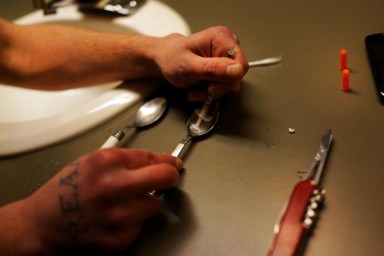
In 2014 more than 47,000 Americans died from a drug overdose. The CDC reports that drug-related death rates in Appalachia and the Southwest were especially high, but in almost every county in the country, the numbers are rising. Treatment programs are expensive, sometimes not easily accessible and often not successful. Political leaders of both parties have stressed the toll that drug addiction is taking on communities and, at times, in their own families. President Obama has pledged to step up support and so have many state and local officials. Please join us for an update on the rising drug addiction crisis and the new efforts to address it.
“New Efforts To Address America’s Growing Addiction Crisis”. Listen to a archive copy of the Diane Rehm Show discussing the addiction crisis.
16 Friday Aug 2019
Posted in creative arts therapy, Education, Research, Substance use
≈ Comments Off on MSU study finds surprises about drug use
Tags
Conducting an economic analysis of drug use is a particularly difficult endeavor, but for Michigan State University professor and economist Siddharth Chandra, it just meant taking a look at the history books.
“You can’t simply go to Wal-Mart and look at the sticker price, and people don’t want to talk to you because drugs are illegal and they think they’ll get in trouble, ” Chandra said. “Our study is the first time the subject of how populations of consumers switch between drugs is being studied with data considered reliable.”
To find reliable economic data on drug use, Chandra, also the director of the Asian Studies Center at MSU, had to look back to early 20th century India, when the region was still part of the British Empire.
“One hundred years ago these products were legal. In British India the government was actually selling these things to the public, and they kept meticulous records,” Chandra said.
In his study – the first of its kind – Chandra pored through stacks of 100-year-old ledgers, called Excise Administration Reports, kept by the governments of the various provinces of India. Interpreting these data, he found surprising results about the economics of drug use behaviors. Despite the stark differences in the effects of opium vs. cannabis on the human body, the study shows that users would switch between the two drugs when the price of one went up – in economics, a phenomenon called substitution.
“The time, place and context are different, but the phenomenon is there. You might think consumers would treat them differently,” Chandra said. “But just because the two drugs used are very different, doesn’t mean people won’t switch.”
Opium, used legally to make the pain medicine morphine and illegally to make the drug heroin, is a highly addictive and potent depressant with potentially lethal side effects. Cannabis, also known as marijuana, is a less potent drug that produces a sense of relaxation and euphoria when used, usually through smoking or ingestion. These differences only came into consideration when analyzing cannabis in its weakest form, a drug called bhang, which consumers would not substitute for the more potent opium.
“There are many policy implications for these results,” Chandra said. “Targeting a particular drug with policies and enforcement might backfire.”
Chandra pointed to the epidemic of heroin, a product of opium that is relatively inexpensive and is devastating some communities in the United States.
“Many people know someone who has been affected by heroin – it is a very dangerous drug,” Chandra said. “But prohibiting harmful drugs selectively can be ineffective. Consumers may switch.”
02 Friday Aug 2019
Posted in creative arts therapy, photo, quote
≈ Comments Off on patterns
Tags
Creativity involves breaking out of established patterns in order to look at things in a different way. – Edward de Bono

17 Wednesday Jul 2019
Posted in creative arts therapy, Therapy Photos
≈ Comments Off on Rough Road/Path photos
I have been involved in facilitating groups for decades. One of the tools I use for groups of adults, teens, or children are photos. I use photos as a way for folks to become familiar and used to talking and sharing in a group. As a way to indirectly share something of themselves by talking about an image/photo. As a way to begin a conversation about larger issues or deeper issues.
One set of photos I use are Rough Road/Path photos with alcohol addicts and heroin addicts in the beginning of recovery. I spread the photos out on a table and ask the group (usually 10 to 15 men) to pick out one photo that represents their journey in the week or weeks before they came into rehab. Once everyone has chosen a photo I ask them to (one at a time) hold up the photo, describe the photo and why they chose it. The descriptions and stories they tell come from them, their experiences and begin the process of revealing a bit about their lives.
11 Tuesday Jun 2019
Posted in creative arts therapy, mental health, music therapy
≈ Comments Off on When Meds Fail: A Case for Music Therapy: Tim Ringgold at TEDxYouth@BommerCanyon
 RichardbBrunner