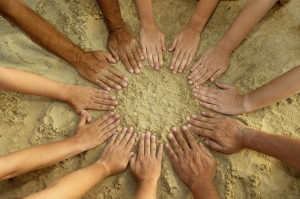
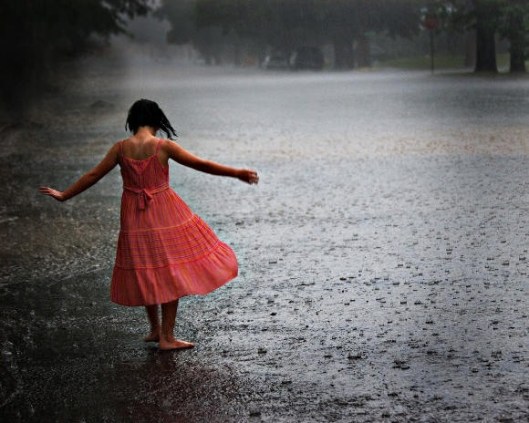
The truest expression of a people is in its dance and in its music. Bodies never lie. ~Agnes de Mille

01 Saturday Apr 2023
Posted in Dance Movement Therapy
≈ Comments Off on truest expression
16 Friday Dec 2022
Posted in creative arts therapy, Dance Movement Therapy, Preschoolers
≈ Comments Off on Kestenberg Movement Profile: Tension Flow Rhythms
KMP Movement Analysis is the comprehensive system for identifying psychological, developmental, emotional, cognitive and global health/imbalance through movement observation, notation and interpretation.
If the mind, emotions, and body are a closely integrated , mutually interacting system, then it is reasonable that we should be able to gain information about the mind by observing the body. The body and its manner of moving not only reveals aspects of current feelings and emotions, but can give us insight into an individual’s past. As Loman and Foley wrote in 1996, “…experiences get stored in the body and are reflected in body movement.” A person who feels rejected may develop a hollow, narrowed body attitude which expresses and reinforces such feelings throughout life. Because both physical and emotional experiences leave long term traces upon the way people hold themselves and move, the study of movement opens a door to the study of patterns of early development, coping strategies and personality configurations.
02 Thursday Jun 2022
Posted in creative arts therapy, Dance Movement Therapy
≈ Comments Off on We walk together
In my work with clients/patients I sometimes use the written word to help process what they are feeling and what I am feeling about working with them. I worked for years at a residential drug/alcohol rehab center and wrote a short poem about one experience.
1. We walk together
toe to heal
In the way we came here
Youngest to oldest – Male to female –
Opiate to alcohol – Forceps to stone
2. We all
Everyone of us
walk for a reason
3. Up the hill
breathlessly
we reach the top
4. around the pond and into the trees
A shelter – A holding
in the environment
5. Close your eyes
Notice your breath – As you inhale – as you exhale
Feel the wind – notice the smells – the scent of the earth
The sunlight and shadows sway back and forth to the rhythm of the branches moving in the wind
6. Don’t be afraid – shiver- cry out – weep – scream
We are all killers inside
We are all healers inside
Our blood runs through the veins of our ancestors
And is here to stay – an echo of times now gone
A dream of times yet to come
Interpretation
1. Today I took my clients outside to the park. We walked in a pecking order; the client with the most time were in front followed by the others in order of time, drug of choice, sex, finally by age. It was a metaphor for their life journey, of their choices and circumstances thrust on them from birth.
2. In the clients (and us all) our journey is a reflection of who and where we came from. Our personality and our history. Our wants and needs. Our understanding of these things. In this residential rehab clients have come because of an intersection of factors, both internal and external.
3. The walk with the clients took us up a sharp and steep hill, the last little leg of our walk before we reached the park and the pond. The walk of addiction is a mighty hard row to hoe in the discovery of the self
4. The clients were very happy to see the pond and dogs and people, and we headed for the trees to find some sanctuary. This little stand of trees I felt would be a good holding environment to do a movement meditation in a public space.
5. I led the group through a meditation in the environment, giving them a chance to be calm/passive and feel nature, with its enormous power. Like that higher power that 12 step teaches. Also nature has a rhythm that we, as earthlings cannot escape, it is deep inside us, with us since the womb.
6. In the mediation I encouraged the group to go to where it was safe and to go a little beyond safety, to a new place. Being different (clean/sober) in a setting (park) that is familiar is challenging. They will face that challenge when they leave the rehab. As addicts they must accept their dark side, and they must recognize their light side. This killer and healer is the story of being human, told by all cultures since we first lit a fire and huddled together. It is this story telling that teaches us to remember the mistakes so we know what to do if we make them and know how to avoid them.

25 Wednesday May 2022
Posted in Dance Movement Therapy
≈ Comments Off on Transference
In Dance Movement Therapy (D/MT) transference and counter transference play a crucial role in the therapy session. Understanding the differing theories of transference, where and how they take place, whether on an emotional, physical, cognitive, or neurological level is an important foundation for the effective treatment of a client. It is because transference is primarily an unconscious process that D/MT as an effective avenue into the subconscious can allow for transference actions to become consciously embodied. It is this embodiment of these subconscious processes that allows for the exploration and bringing to light transference and thus one part of ‘healing’ for the client.

In D/MT client(s) move, through posture and/or gesture in ways that can be less likely to be self-censored. For instance, a therapist asks a question and the client hesitates and chooses their words and answers, censoring (either consciously or not) their response. It’s a cognitive process that we all do generally with little thinking or effort. The therapist asks the same questions and directs the client to respond with the hands in a gesture or a posture with a fuller body expression. I’ve noticed over the years that people tend to respond/react to this type of direction with the same hesitation and then begin to move in ways that express something rarely captured by words. I believe this is because people are used to censoring their words but less so with their movement/gestures/postures.
A great example of this is the Stress-less classes I have taught over the years. Participants almost always identify the body as the way they know they are really stressed out. They report grinding their teeth, clenching their fists, clenching their butt muscles, as the primary resources of how they are feeling/thinking. It’s the bodies uncensored expression of what is happening internally that they notice most. In Dance Movement therapy it is what the body says that we notice most.

18 Wednesday May 2022
Posted in Dance Movement Therapy, Movement, YouTube
≈ Comments Off on Movement therapy helps young kids
Tags
health, kids, movement therapy, Psychotherapy, therapy, wellness
04 Wednesday May 2022
Posted in Community, Dance Movement Therapy, Ritual
≈ Comments Off on Wade on the water
Illness that is of a chronic nature has a huge impact on individuals separately, as well as within the context of family systems. Health care systems, being “systems”, have an inability to care for patients on an individual basis. While systems managed health care, impersonal by nature is promoted as cost effective, it increases costs in the long run by not holistically treating the client. Impersonal health care adds to the disassociation
patients often experience; for the ill body/mind and subsequent new family/life dynamic, the medical profession, and the possibilities of wellness.
In 1990 I worked with Bear, a 38 year old womyn who had a late stage mastectomy. She was dealing with issues of an altered body, of thoughts of death, her children being motherless, things left undone. During a 10 day group movement based expressive arts residential retreat, she took the opportunity to explore some of these issues. One of her expressions was in the form of a healing ritual. Most of the group stood on one side of a pond, singing the gospel hymn, “Wade on the water”. On the other side, Bear was carried down to the waters edge, wrapped in a blanket, and left there, standing, still wrapped. She slowly undid the blanket and waded into the water, slowly swimming to the other side, where, like a chorus of angels we waited, still singing.
Bear engaged in a method of emotional healing that falls, far, from the “systems” method of health care. Her methodology embraced her needs, hopes and fears in a manner that can only be facilitated in an open, accepting, creative and supportive atmosphere. The waves that she stirred that day in the pond are still going, still rippling outwards, deeply and profoundly on all those who witnessed her wade in the water.
20 Wednesday Apr 2022
Posted in Dance Movement Therapy, Mental illness, YouTube
≈ Comments Off on Dance/Movement Therapy & Mental Illness
Tags
18 Friday Feb 2022
Posted in creative arts therapy, Dance, Dance Movement Therapy, Movement, Psychotherapy, Wellness, YouTube
≈ Comments Off on Dancing with Parkinson’s: Discovering your movement expression
Tags
03 Thursday Feb 2022
Posted in autism, Dance Movement Therapy, YouTube
Tags
27 Thursday Jan 2022
Posted in Dance Movement Therapy
≈ Comments Off on Dancing
20 Thursday Jan 2022
Posted in Dance Movement Therapy
≈ Comments Off on Dancers
18 Tuesday Jan 2022
Posted in Dance Movement Therapy, YouTube
≈ Comments Off on Living with Depression: A Dance/Movement Therapy Moment
22 Wednesday Dec 2021
Posted in Dance Movement Therapy
≈ Comments Off on Authentic movement
Authentic Movement, a process of moving one’s feelings and thoughts was originally called Movement in Depth by Dance Movement Therapy pioneer Mary Starks Whitehouse. Authentic movement grew from Whitehouse’s roots in dance, Jungian studies, and work in dance/movement therapy. Building on Jung’s method of active imagination, she saw symbolic meaning in physical action.
Authentic movement enables a direct connection to the depths of the unconscious, accessing the rich resources of intuitive wisdom expressed through the embodied word, image, sensation and of course movement.
For me authentic movement is connecting with the deep internal well of the self, the sub-consciousness. Drawing slowly one bucket at a time, of feelings, thoughts, and sensations – than pouring them out, to the external, sometimes a few drops, sometimes a cup full, on occasion a whole bucket at a time, washed over the movement floor.
How does a feeling move me? What body part has an urge to move? What thought moves me and what body part has an urge to move from that thought? How does one sensation (physical, emotional, mental) and one body part moving form/transform into a pattern of movement and a pattern of sensation?

These questions are a part of the authentic movement experience for me and they don’t arise while moving but are answered nevertheless by the process.
I sit with my eyes closed, noticing my breath, noticing contractions and expansions in my body. Noticing discomfort and comfort, and then reconnecting with my breath. The mind/thinking creates images and thought patterns in response to the bodily sensations. The body begins to create movement in response to feelings and thought sensations. Letting it happen without censoring, without wondering why or where it is coming from. It just happens.
Moving with the eyes closed in my own internal space, bringing the interior to the exterior, the internal to the external. Using a minimum of sound/words (or none at all); connecting with the floor, walls, ceiling, and air; with the very molecules themselves.
Taking the internal to the external and taking that external even further by sensing others in the room, closer, further; the sound of their breath, of their movement. Perhaps even a touch, and more touch, and less touch. Trying effortlessly to maintain the self (the internal to the external) without being swayed by the connection with another. Trying effortlessly to maintain the self while connecting with the space, the walls, floor, air, molecules.
08 Wednesday Dec 2021
Posted in Dance Movement Therapy
≈ Comments Off on A Child’s View of Sensory Processing
01 Wednesday Dec 2021
Posted in creative arts therapy, Dance Movement Therapy, Embodied, Movement, Wellness, YouTube
≈ Comments Off on Moving into Being
17 Wednesday Nov 2021
Posted in creative arts therapy, Dance Movement Therapy, Embodied, Movement, YouTube
≈ Comments Off on Dance/Movement Therapy, Mindfulness & Substance Abuse Recovery
10 Wednesday Nov 2021
Posted in creative arts therapy, Dance, Dance Movement Therapy, Movement, Psychology, Psychotherapy, Wellness, YouTube
≈ Comments Off on Dance/Movement Therapy & Rena Kornblum
The University of Wisconsin-Madison, School of Social Work, presents a lecture by Rena Kornblum.
Dance/movement therapy is the psycho-therapeutic use of movement to further the emotional, cognitive, physical and social integration of the individual.
In this video, you will learn about the field of dance/movement therapy, and how non-verbal work can augment your practice.
Rena Kornblum, MCAT, ADTR, DTRL, is the Executive Director of Hancock Center for Dance/Movement Therapy & a Board Certified dance/movement therapist.
27 Wednesday Oct 2021
Posted in Body Image, body language, Dance Movement Therapy, Embodied, Movement, Psychology, Wellness, YouTube
≈ Comments Off on Amy Cuddy: Your body language shapes who you are
Body language affects how others see us, but it may also change how we see ourselves. Social psychologist Amy Cuddy shows how “power posing” — standing in a posture of confidence, even when we don’t feel confident — can affect testosterone and cortisol levels in the brain, and might even have an impact on our chances for success.
20 Wednesday Oct 2021
Posted in creative arts therapy, Dance Movement Therapy, Movement, Psychotherapy
≈ Comments Off on Assessment & evaluation
Tags
A friend commented that it might be hard to evaluate someone who could only move their hands/arms. Basically the same principles apply whether the movement is with legs through the space or being still with a posture, or moving the arms.
Arms and especially hands are the most common movement elements, feet and legs are next and of course not everybody can move everything so an assessment/evaluation is made with what you can get from a patient/client.
Of course an assessment is guided by the intention. If I want to know how someone is feeling and they are reluctant to share verbally I might ask them to express with their hands (which I often do at the hospital) if they are unclear how they are feeling and how to express that with their hands I might switch to a simple game with the intention of warming them up.
A warm up involving the hands could be tossing and catching a small stuffed animal and at some point adding words by answering easy questions like; my favorite food is “____”. If the person is nonverbal than you can interact with facial/postural/gestural expressions when tossing the animal and/or mirroring to interact and experience/create a response.
The assessment/evaluation happens when observing/witnessing the force and effort used to toss the cow and/or the facial, posture, gesture. Does the effort change during the session and how is that change related to the activity. For instance people will typically have smaller movements to start out with and as they become more comfortable their movements become larger. This happens whether the person is moving by feet/wheels through the space, or sitting tossing something or making gestures or changing their posture. I look at the whole body and don’t just observe/witness the active bits but also what the rest of the body is doing during the activity. For example is there a slight movement in the foot when tossing and is that from an old injury or a current muscle tightness or is it an emotional based issue.

If something comes up in a session that seems like it needs further exploration I might engage the client/patient in an activity that focuses on that “something”. If the left foot turns I might ask the person to focus on their feet when they toss or to make a sound. Or I might simply mention that I noticed you always turn your foot when you toss the stuffed animal and see what response the client/patient has.
The fun and useful part about being a Dance Movement Therapist is that you get to use verbal counseling skills and body counseling skills. The entire person is given a chance/opportunity to express with all of themselves, body and mind.
06 Wednesday Oct 2021
Posted in creative arts therapy, Dance Movement Therapy, Embodied, Evaluation, Movement, Research
≈ Comments Off on Dance/Movement Therapy: Analyzing “Body Language”