Tags
What Don’t You Do That You Should Be Doing?
28 Tuesday Apr 2020
Posted in Community, Health, Social Media, Wellness, youtube
≈ Comments Off on What Don’t You Do That You Should Be Doing?

28 Tuesday Apr 2020
Posted in Community, Health, Social Media, Wellness, youtube
≈ Comments Off on What Don’t You Do That You Should Be Doing?
Tags
16 Thursday Apr 2020
Posted in Handout, Health, Psychoeducation
≈ Comments Off on The Ten Rules For Being Human
1. You will receive a body.
2. You will be presented with lessons.
3. There are no mistakes, only lessons.
4. Lessons are repeated until learned.
5. Learning does not end.
6. “There” is no better than “here.”
7. Others are only mirrors of you.
8. What you make of your life is up to you.
9. All the answers lie inside of you.
10. You will forget all of this at birth.
09 Thursday Apr 2020
Do you know what the attributes of your right and left sides of your brain? Listed below are the common elements of left and right brain hemisphere’s. Plus go here to take the left/right side brain test to see which side may be dominant.
Left Hemisphere – Rational
Responds to verbal instructions
Problem solves by logically and sequentially looking at the parts of things
Looks at differences
Is planned and structured
Prefers established, certain information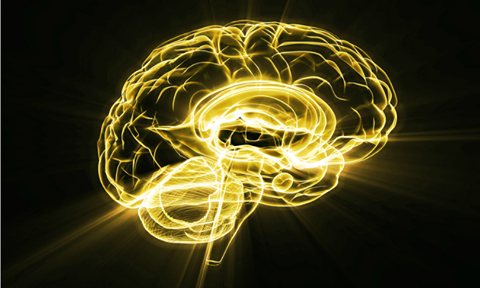
Prefers talking and writing
Prefers multiple choice tests
Controls feelings
Prefers ranked authority structures
Right Hemisphere – Intuitive
Responds to demonstrated instructions
Problem solves with hunches, looking for patterns and configurations
Looks at similarities
Is fluid and spontaneous
Prefers elusive, uncertain information
Prefers drawing and manipulating objects
Prefers open ended questions
Free with feelings
Prefers collegial authority structures
It seems that lots of folks have emailed me about all sorts of other left/right side brain tests/quizzes online. Here are the top 2 tests.
Hemispheric Dominance Inventory Test: This test has 18 questions and you choice between 2 answers. I like the questions they seem interesting and thought provoking.
Right Brain vs Left Brain Creativity Test: This test of 54 questions is multiple choice with 4 choices and all of the questions are on one page like the test above. Some repeating of questions, which is fairly standard in personality type tests.
02 Thursday Apr 2020
Posted in Health, Psychoeducation, research, Wellness
≈ Comments Off on Habits
Tags
DESPITE the best intentions for the new year, the reality is that by next month, gym memberships will lapse, chocolate will replace carrots and Candy Crush will edge out Moby Dick.
It’s not (only) that we’re undisciplined slugs. It’s that much of what we know — or think we know — about habits is wrong. Here’s a primer that might help keep you off the couch and on the treadmill.
MYTH 1 We fail to change our habits — or start good new ones — because we lack willpower.
Not really, said Wendy Wood, a professor of psychology and business at the University of Southern California. Willpower, she said, is more about looking at those yummy chocolate chip cookies and refusing them. A good habit ensures you’re rarely around those chocolate chip cookies in the first place.
To create or change a habit, you have to think much more about altering your environment and patterns of living than work on steeling your mind, Professor Wood said, because “behavior is very much a product of environment.”
Habits — at least good ones — exist so we don’t have to resist temptation all the time. Imagine if every morning you had a debate with yourself about eating cake or cereal for breakfast. Instead, most of us form the habit of eating something relatively healthy for breakfast, which bypasses the lure of the cake altogether.
That’s why it’s sometimes easiest to start or break a habit during a major transition. This may sound counterintuitive, but a new house, job or relationship breaks old patterns, said Gretchen Rubin, author of the forthcoming book, “Better Than Before: Mastering the Habits of Our Everyday Lives.”
“People say wait a few days to get settled, but don’t,” she said. “Start right away.”
MYTH 2 We fall back on bad habits when stressed. In fact, good habits persist even in times of high anxiety, Professor Wood said. A study of which Professor Wood was one of the co-authors found that students who already had unhealthy diets would eat junk food when stressed, but those who already had the habit of eating well — or of reading a newspaper or of going to the gym — were just as likely to do that.
MYTH 3 It takes about 21 days to break or make a habit.
That number seems to have cropped up in the 1960s and somehow became “fact” with no real proof. But in 2009, researchers in Britain decided to take a deeper look by studying how long it took participants to learn new habits, such as eating fruit daily or going jogging. The average was 66 days.
But individuals’ times varied greatly, from 18 days to 245 days, depending on temperament and, of course, the task involved. It will most likely take far less time to get into the habit of eating an apple every afternoon than of practicing the piano for an hour a day.
MYTH 4 You need positive thinking to break or make a habit.
“We find positive fantasy is not helpful and may even be hurtful when trying to reach a desired future or fulfill a wish,” said Gabriele Oettingen, a professor of psychology at New York University and the University of Hamburg.
Over years of research, she discovered that people need to pair optimistic daydreams about the future with identifying and imagining the obstacles that prevent them from reaching that goal — something she calls mental contrasting.
Say you want to stop being a procrastinator. The first step is easy. Imagine how it will feel if your work is completed with plenty of time to spare, if you can sleep instead of pulling an all-nighter, said Professor Oettingen, author of “Rethinking Positive Thinking.”
But don’t just resolve to stop procrastinating. The second step is to identify what holds you back from changing yourself. Is it fear that you won’t succeed? Is it the adrenaline rush of frantically working at the last minute? Is it because of negative feelings toward a boss or teacher?
The mental contrasting needs to be in the right order. It’s important to “experience our dreams, then switch gears and mentally face reality,” Professor Oettingen said.
Doing it the opposite way — imagining the obstacles and then fantasizing about changing habits — doesn’t seem to work as well, research shows.
MYTH 5 Doing things by rote, or habit, isn’t good in most cases. It’s better to be mindful of everything we do.
Research shows that most people repeat about 40 percent of their activities almost every day.
“We only have so much room in our brain,” said Ian Newby-Clark, an associate professor of psychology at the University of Guelph in Canada. “It would be incredibly taxing if we had to mindfully plan every step of our day.” Habits free us up so we can think about other things.
And while some habits are objectively bad — smoking, say, or being consistently late — most are subjective. “Habits are only good or bad to the extent they’re consistent or inconsistent with your goals,” Professor Wood of U.S.C. said. It’s a bad habit when “it starts interfering with other goals you have.”
For example, many people said their resolution this year was to cut down the time they spend online.
But why? Because it’s an inherently bad thing to do? Or is it an obstacle to spending more time reading books or riding a bike or learning to knit?
After thinking about it, you may choose to spend less time on your computer or phone. Or you might decide it’s not so terrible in limited doses and shed the habit of feeling guilty about it.
MYTH 6 Everything in moderation.
“There’s a real difference among people about how easily they adapt to habits,” Ms. Rubin said. Some see habits as liberating; some see them as a trap. Some prefer to make a huge change all at once; others proceed step by step.
“I’m in the small minority that loves habits,” Ms. Rubin said, adding that she tends to find it easier to abstain from certain things altogether. For example, she eats no carbohydrates.
“People said I was doomed to failure, but it’s not true,” she said. But, she noted, “it’s a mistake to think the abstainer is more disciplined. For me it’s easier to be an abstainer than have to deliberate each time whether I can eat something or not. Others would go nuts if they abstain.”
That’s why you shouldn’t listen to people who tell you you’re doing it wrong if it works for you, she said.
Also, people shouldn’t fear that their habit will dissolve if they don’t practice it daily.
“If you lapse once or twice, you’re not ruined,” Professor Wood said. “That’s a misconception.”
And that leads to …
MYTH 7 Shame and guilt keep you on track.
No. People need to be kinder to themselves, showing self-compassion if they lapse, Ms. Rubin said. But it’s a fine balance between treating yourself kindly and making endless rationalizations and excuses.
“I might mindfully make an exception,” she said, such as choosing to eat a traditional Christmas cake every year. “But I’m not making excuses in the moment: I’ll hurt the hostesses’ feelings. You only live once. It’s the holidays.”
One last piece of advice: If you want to be in better shape, get a dog. Professor Wood said studies show dog owners have lower body mass indexes. But here’s the catch: That’s only true if you walk the animal.
19 Thursday Mar 2020
Tags
10 Tuesday Mar 2020
Posted in Art Therapy, emotions, Health, Journaling, Self expression, Wellness
≈ Comments Off on How art aided Andrew Marr’s recovery
09 Sunday Feb 2020
Interesting news item from National Public Radio: Birds of a feather flock together. The age-old adage now carries scientific weight. A new study in the Proceedings of the National Academy of Sciences suggests genes may influence how people pick their friends. James Fowler, professor of medical genetics and political science at the University of California, San Diego, is the author of the study and he tells host Guy Raz there’s biology in social chemistry. Read or listen more here.
05 Wednesday Feb 2020
Posted in Health, Meditation, mindfulness, Relaxation, Wellness
≈ Comments Off on Meditation has Long-term Effects on the Brain

04 Tuesday Feb 2020
Americans eat 33 pounds of cheese and cheese products per year, per person, which is triple the consumption rate of the 1970s. Fans of Humboldt Fog and Cabot Clothbound Cheddar may hope this signals the return of the artisan producer, but Michael Moss gives all credit to mighty Kraft and the other food giants.
“In the hands of food manufacturers, cheese has become an ingredient,” Mr. Moss writes in his new book; Salt Sugar Fat: How the Food Giants Hooked Us. Thus we have cheese-injected pizza crusts and cheese-draped frozen entrees, cheesy chips and cheezy crackers. Cheese and its processed derivatives were deployed across a gazillion new products and line extensions during decades when Americans, as a fat-avoidance tactic, were actually cutting their milk consumption by 75 percent. From a fat-consumption point of view, he says, “trading cheese for milk has been a poor bargain indeed.”
30 Thursday Jan 2020
Posted in creative arts therapy, Dance Movement Therapy, Health, mental health, Relaxation, Stress
≈ Comments Off on Stress and movement
Tags
Stress can be indicated when a person becomes stuck/frozen or stopped in a bodily movement that can be described as either gestural, ( movements isolated to parts or part of the body) or postural ( movements carried constantly through the whole body). When there is a continuous flow of movement from gesture to posture and vice versa than the person is considered moving in balance and not not indicated to be in stress. one example of this is something that has come up in the last 20 years of leading stress reduction exercises with groups. I ask the participants how they know they are stressed out and the top answers are:
I notice I am gripping the steering wheel- I notice I am making a fist- I am clenching my teeth-I am clenching my butt.

Each one of these actions is a frozen gesture and they generally use the most “force”, muscle, blood flow of any other component of the body while they are active. Think about it, if you clench your fist the blood flow increases due to the sudden contraction of the muscles, a part of your attention is brought to the area because its being engaged, the rest of the body begins to respond to the clenched fist starting with the arm, shoulders, spine, abdominal muscles and so on ad so on. Suddenly your attention increases to the area dramatically and you realize; “oh I’m clenching my fist….”
The first step to releasing this body stress is the breath. When stressed we tend to hold our breath and/or it becomes shallow breathing. Taking a big breath in and a big breath out begins to increase the oxygen to the brain (and the rest if the body). That big breath also automatically signals to the body on a primal level that the stressor is less and the body begins to relax its muscular contractions. Also when we consciously are taking in a big breath we are exerting voluntary control over our bodies which is the opposite of the stress response which is a involuntary response. This voluntary and controlled breath also signals to the brain on a primal level that the stressor is lessen, resulting in the muscles lessening their contradiction.
Of course simply breathing does not seem like much of an answer for someone who experiences chronic stress/anxiety. But it is one more tool that one can use. Like mindfulness, visualizations, and other techniques, breathing is something that needs to be practiced and the more you practice the more effective it becomes.
29 Wednesday Jan 2020
Posted in brain, Health, Meditation, Relaxation, Wellness, Yoga
≈ Comments Off on Yoga may boost your brain power
Yogis may be enjoying a surprising benefit when they unroll their mats and strike a pose. A new study finds that just 20 minutes of hatha yoga stimulates brain function.
Researchers from the University of Illinois at Urbana-Champaign enlisted 30 subjects to take tests of working memory and inhibitory control, two measures of brain function associated with the ability to focus, retain, and use new information, the researchers said.
Subjects who took a single, 20-minute yoga session were significantly faster and more accurate on their tests than subjects who walked or jogged on a treadmill for 20 minutes.
Participants on the treadmill exercised with the goal of maintaining 60 to 70 percent of their maximum heart rate throughout the exercise session. “This range was chosen to replicate previous findings that have shown improved cognitive performance in response to this intensity,” the researchers said.

“Yoga is an ancient Indian science and way of life that includes not only physical movements and postures but also regulated breathing and meditation,” said study lead Neha Gothe. “The practice involves an active attentional or mindfulness component but its potential benefits have not been thoroughly explored.”
Subjects who practiced yoga performed a 20-minute sequence of seated, standing, and supine yoga postures, with the class ending in a meditative posture and deep breathing.
“It appears that following yoga practice, the participants were better able to focus their mental resources, process information quickly, more accurately and also learn, hold and update pieces of information more effectively than after performing an aerobic exercise bout,” Gothe said.
“The breathing and meditative exercises aim at calming the mind and body and keeping distracting thoughts away while you focus on your body, posture or breath,” she said. “Maybe these processes translate beyond yoga practice when you try to perform mental tasks or day-to-day activities.”
Findings, announced June 5, appear in the Journal of Physical Activity and Health.
A separate study published last month finds that twice-weekly yoga sessions can reduce high blood pressure. In the study, researchers led by Dr. Debbie Cohen of the University of Pennsylvania tracked 58 women and men, aged 38 to 62, for 24 weeks.
Another study published earlier this year in the journal Frontiers in Psychiatry found that the practice may soothe depression and help sleep problems.
Read more:A 20-minute yoga session may boost your brain power – The Denver Posthttp://www.denverpost.com/breakingnews/ci_23413802/20-minute-yoga-session-may-boost-your-brain#ixzz2VoCOdrUU
22 Wednesday Jan 2020
Posted in Health, Meditation, mindfulness, Relaxation, Wellness
≈ Comments Off on Relaxation

Currently, there is some scientific evidence that relaxation techniques may be an effective part of an overall treatment plan for some disorders, including:
Relaxation involves practice and willingness to fully engage in the process of relaxing. Stay tuned for some great relaxing tools.
14 Tuesday Jan 2020
Posted in Health, Meditation, mindfulness, Wellness, youtube
≈ Comments Off on Mindfulness with Jon Kabat-Zinn
Tags
02 Thursday Jan 2020

24 Tuesday Dec 2019
Posted in creative, Creativity, Health, Intuition
≈ Comments Off on The Creative Life and Well-Being

See more at: http://www.creativitypost.com/psychology/the_creative_life_and_well_being
19 Thursday Dec 2019
Posted in grounding, Handout, Health, mental health, Psychoeducation, Therapy
≈ Comments Off on Grounding
Grounding Techniques are activities you use when you feel overwhelmed by feelings, thoughts, sensations. These techniques help a person move their focus away from what is overwhelming them to something else. That something else is preferable healthy and supportive to their wellbeing. Below is a list that clients and patients have mentioned over the years of things they do that help them ground.
11 Wednesday Dec 2019
Finding happiness in the everyday and mundane is a challenge and really easy, at the same time. It has to do with how you see yourself and world around you. Below is a panel discussion by ‘experts’, which is funny in itself.
2013 Stanford University Roundtable: Are You Happy Now?
Streamed live on Oct 18, 2013
The talking starts at 13:00 minutes in. The science of happiness is a growing and intriguing field. Research about what truly makes people happy is not only surprising, but applicable no matter how much money we make or where we live. Join moderator Katie Couric and a panel of experts in psychology, business, neuroscience and design for a Roundtable discussion about the happiness and sense of wellbeing that elude so many, but are sought by all.
10 Tuesday Dec 2019
Posted in Health, heart, Uncategorized
≈ Comments Off on Testosterone Treatment Accelerates Plaque Build-Up
Tags
Older men may want to think twice before starting testosterone treatment, based on results of a clinical trial that found testosterone speeds up the development of plaque in the heart’s arteries.
 Published in the Journal of the American Medical Association, this study looked at the association between testosterone treatment and plaque build-up in older men. It was conducted in response to recent studies that have raised concerns about the impact of testosterone therapy on heart health.
Some studies have found that testosterone treatment may increase risk for heart events like heart attack and stroke, while others have found no relationship. With a ten-fold increase in testosterone sales in the United States from 2000–2011, experts worry about the potential impact of widespread testosterone use on heart health.
For this reason, researchers conducted the Testosterone Trials, which investigated the effects of testosterone treatment in elderly men with low testosterone. The studies looked at multiple outcomes, such as sexual function, brain function, vitality and cardiovascular risk.
The heart-related trial was conducted from 2010–2014 and included 170 men aged 65 years or older with low testosterone. For one year, half of participants were randomly assigned to active testosterone treatment—a topical gel applied to the arms and shoulders daily—while half received a placebo gel with no active ingredients.
At the start and end of the study, participants underwent a test called coronary computed tomographic angiography, which uses CT imaging to measure plaque build-up in the heart. Plaque build-up is dangerous because it narrows the heart’s arteries and is associated with increased risk for heart disease—the leading killer of Americans.
After analysis, researchers found that men taking testosterone had a greater increase in non-calcified plaque volume during the study period compared to men using the placebo gel. In fact, on average men taking testosterone had a 41mm3 greater increase in plaque volume than those taking the placebo, and this difference was considered statistically significant.
While findings suggest testosterone treatment accelerates plaque build-up in older men, authors do note certain limitations. The study only followed participants for one year, which is a relatively short time period. It also did not assess the impact of plaque build-up on outcomes like heart attack and death, so it’s unknown whether testosterone treatment impacts long-term health outcomes.
However, the study still raises concerns about the safety of testosterone treatment in older men with low testosterone. As a result, experts suggest that patients considering testosterone therapy discuss the risks and benefits with their doctor before making any decisions about testosterone treatment. They also encourage further research on the issue to better understand the association between testosterone treatment and heart health in older men.
04 Wednesday Dec 2019
Posted in grounding, Health, Relaxation, Wellness
≈ Comments Off on Relaxation
Tags

Currently, there is some scientific evidence that relaxation techniques may be an effective part of an overall treatment plan for some disorders, including:
Relaxation involves practice and willingness to fully engage in the process of relaxing. Stay tuned for some great relaxing tools.
02 Monday Dec 2019
Posted in emotions, Health, mindfulness, Self expression, Wellness
≈ Comments Off on Self-Affirmation Improves Problem-Solving


 RichardbBrunner