• Home
  • Music
  • About
  • Contact
  • CreativeTherapyTools.com

RichardbBrunner

~ creative arts therapist

RichardbBrunner

Category Archives: Wellness

How art aided Andrew Marr’s recovery

24 Wednesday Apr 2019

Posted by RichardB in art, Health, Journaling, lifestyle, Therapy, Wellness

≈ Comments Off on How art aided Andrew Marr’s recovery

Tags

health, recovery, wellness

“When I started to recover in hospital, one of my early frustrations was that I found I wanted to draw.

Drawing does for me what others find in meditation, prayer or gardening. It is my way of connecting to the world; it is not just making images but drinking in and praising what’s around me.

Returning to the world as I did after my stroke, you look at it with fresh eyes. You want to absorb all you see. That meant being able to draw again and art aided my recovery and charted it.” Read more: http://www.dailymail.co.uk/home/event/article-2442555/BBCs-Andrew-Marr-Knowing-I-able-draw-realise-I-going-OK.html#ixzz2gwenGqUy

Anxiety

23 Tuesday Apr 2019

Posted by RichardB in Anxiety, Wellness

≈ Comments Off on Anxiety

We all know the uncomfortable feeling of anxiety. Our hearts race, our fingers sweat, and our breathing gets shallow and labored. We experience racing thoughts about a perceived threat we fear will be too much to handle. That’s because our “fight or flight” response has kicked in, resulting in sympathetic arousal and a narrowing of attention and focus on avoiding the threat. We seem to be locked in that state, unable to focus on our daily chores or longer-term goals.  Below are six strategies that you can use to help relieve your everyday anxiety:
  • Reevaluate the probability of the threatening event actually happening.
Anxiety makes us feel that a threat is imminent, yet most of the time what we worry most about never happens. By recording our worries—and how few actually came true—we can notice how much we overestimate the prospect of negative events.
  • De-catastrophize.
Even if a bad event happened, we may still be able to handle it by using  coping skills and problem-solving abilities or by enlisting others to help. Although not pleasant, we could still survive encountering a spider, having a panic attack, or losing money. It’s important to realize that very few things are the end of the world.
  • Use deep breathing and relaxation.
By deliberately relaxing our muscles we begin to calm down so we can think clearly. If you practice this at first without a threat present, it can start to become automatic and will be easier to use in the moment when you face a threat. Deep breathing engages the parasympathetic nervous system to put the brakes on sympathetic arousal.
  • Become mindful of your own physical and mental reactions.
The skill of mindfulness involves calmly observing our own reactions, including fear, without panic or feeling compelled to act. It can be taught in therapy and improves with practice.
  • Accept fear and commit to living a life based on core values.
Acceptance and Commitment Therapy (ACT) is an approach that encourages people to accept the inevitability of negative thoughts and feelings and not try to repress or control them. By directing attention away from the fear and back onto life tasks and valued goals, we can live a full life despite the fear.
  • Exposure.
Exposure is the most powerful technique for anxiety and it involves facing what we fear and staying in the situation long enough for the fear to habituate or go down, as it naturally does. Fear makes us avoid or run away, so our minds and bodies never learn that much of what we fear is not truly dangerous.


Why We Get Fat: Diet Trends and Food Policy

17 Wednesday Apr 2019

Posted by RichardB in food, Health, lifestyle, Wellness, YouTube

≈ Comments Off on Why We Get Fat: Diet Trends and Food Policy

Tags

diet, fat, food, Policy, stanford medicine, trends

Asanas that chase away the blues

10 Wednesday Apr 2019

Posted by RichardB in Research, Wellness, Yoga

≈ Comments Off on Asanas that chase away the blues

Tags

depression, yoga

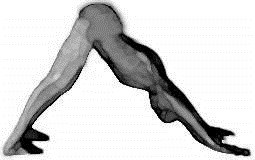
Nice article from the Times of India, citing research using Yoga Asanas: Among the many clinical researches being conducted at Nimhans , one involved patients of an old-age home who were exposed to six months of yoga therapy. MRI scans taken before and after showed an increase in the size of the hippocampus, the brain’s memory index. “It wasdog1larger than before because the grey matter had increased. The results will be published in a scientific journal shortly ,” adds Gangadhar. The hippocampus is vulnerable to stress and atrophy is seen in patients of schizophrenia, post-traumatic stress disorder (PTSD) and severe depression. “Yoga acts as an antidepressant ,” he says. Read the entire article here.

Hospital art therapy program helps children express themselves

09 Tuesday Apr 2019

Posted by RichardB in Art Therapy, creative arts therapy, Health, kids, Wellness

≈ Comments Off on Hospital art therapy program helps children express themselves

Nathan Allen loves the colour blue.

His T-shirt is blue, the blanket wrapped around his knees is blue, and his eyes, bright under his baseball cap, are blue.

But blue is also a feeling, and after spending months undergoing near-daily dialysis at the Hospital for Sick Children, who could blame an 11-year-old for feeling a bit down?

Nathan was referred to the hospital’s new on-staff art therapist to help him cope with his emotions. And when Jennifer Bassin came to visit recently week with her case of supplies, he chose the colour blue to start on a sculpture of a car.

“Shocking,” jokes his mom, Judy Chapman.e826d-creatiggggvity

Nathan was diagnosed with a bilateral Wilms’ tumour, a rare cancer of the kidneys mostly affecting children, at age 5. He started chemo and radiation and had a partial nephrectomy in both kidneys. His left kidney never worked properly again, and after almost five years of remission, cancer returned to his right kidney.

Now he undergoes chemo once every three weeks and dialysis five days a week. That’s a lot of poking and prodding for an 11-year-old who would prefer to be playing defence on the Georgina Blaze novice hockey team and cuddling his 3-year-old beagle, Daisy, at home in Keswick, Ont.

After three more chemo treatments, Nathan can go home. His parents are training to do at-home dialysis and counting down the days until Nathan can receive a new kidney. His mom is praying she can eventually donate one of her own.

Until then, he looks forward to his weekly sessions with Bassin. She visits during the two-and-a-half-hour dialysis process, and they paint or sculpt while the machine whirs in the background.

“It absorbs some of the time,” Nathan says. “I like to build stuff.”

Bassin has brought something called a 3Doodler — a cross between a hot glue gun and a tiny 3D printer, which can make plastic sculptures. This day, after he makes the car, she asks Nathan to make something that resembles his idea of cancer.

“A big, black, blob,” he says.

Nathan is an outpatient but most of Bassin’s patients are long-term in-patients at Sick Kids who have chronic illnesses, complex medical histories or have faced traumatic injuries.

Since the program started in May, she does art therapy just two days a week and sees between four and eight children aged 4 to 18. Psychiatric patients have benefited from art therapy at Sick Kids in the past, but this is the first year the new program, which is entirely funded by donations, has been extended to medical patients.

“Art therapy is taking the language children already speak and meeting them at that level,” Bassin said. “You don’t have to be good at art to participate in art therapy. It doesn’t have to be about the painting or about the drawing. It’s more about finding something they enjoy that we can use as a tool to explore how they’re feeling.”

One patient, who had recently been in a traumatic boat accident, sculpted a vessel out of clay — and then smashed it against the wall in a moment of catharsis. Some enjoy the physicality of painting big murals, and some like to rip up what they’ve drawn. Another drew a landscape so she could imagine herself outside the hospital, at a picnic.

“When you create something outside of you, you can really treat it like it’s at a distance, and it makes it safer for us to explore a little bit.”

Making art helps young patients take back some control in their lives, if only for an hour. Some patients are content with their creation, and others want to delve deeper into their feelings, Bassin says.

Nathan’s family hopes he can go home in late September, when he can rejoin his classmates in Grade 6 and go back to being an annoying older brother to his sister Emma, 7. He’s still quiet, but less withdrawn after a session, his mom says.

As he paints a mask green, with blue lips and black eyes, Bassin asks Nathan if he has a plan.

“Nope,” he says. “Just going step by step.”

The Hospital for Sick Children

Learning healthier ways to manage stress

03 Wednesday Apr 2019

Posted by RichardB in Anxiety, grounding, Handout, mental health, Psychoeducation, Relaxation, Stress, Wellness

≈ 2 Comments

Tags

handouts, Stress

If your methods of coping with stress aren’t contributing to your greater emotional and physical health, it’s time to find healthier ones. There are many healthy ways to manage and cope with stress, but they all require change. You can either change the situation or change your reaction. When deciding which option to choose, it’s helpful to think of the four As: avoid, alter, adapt, or accept.

Since everyone has a unique response to stress, there is no “one size fits all” solution to managing it. No single method works for everyone or in every situation, so experiment with different techniques and strategies. Focus on what makes you feel calm and in control.

Dealing with Stressful Situations: The Four A’s

Change the situation:

Avoid the stressor.

Alter the stressor.

Change your reaction:

Adapt to the stressor.

Accept the stressor.

1. Avoid unnecessary stress

Not all stress can be avoided, and it’s not healthy to avoid a situation that needs to be addressed.

Learn how to say “no” – Know your limits and stick to them.

Avoid people who stress you out –Limit the amount of time you spend with people that cause you stress.

Take control of your environment – If the evening news makes you anxious, turn the TV off.

Avoid hot-button topics –If you repeatedly argue about the same subject with the same people, stop bringing it up or excuse yourself when it’s the topic of discussion.

Pare down your to-do list –If you’ve got too much on your plate, distinguish between the “shoulds” and the “musts.”

2. Alter the situation

If you can’t avoid a stressful situation, try to alter it. Figure out what you can do to change things so the problem doesn’t present itself in the future.

Express your feelings instead of bottling them up. If something or someone is bothering you, communicate your concerns in an open and respectful way.
Be willing to compromise. When you ask someone to change their behavior, be willing to do the same.

Be more assertive. Deal with problems head on, doing your best to anticipate and prevent them.

Manage your time better. Plan ahead and make sure you don’t overextend yourself.

3. Adapt to the stressor

If you can’t change the stressor, change yourself. You can adapt to stressful situations and regain your sense of control by changing your expectations and attitude.

Reframe problems. Try to view stressful situations from a more positive perspective.

Look at the big picture. Will it matter in a month, or a year?

Adjust your standards. Set reasonable standards for yourself and others, and learn to be okay with “good enough.”

Focus on the positive. When stress is getting you down, take a moment to reflect on all the things you appreciate in your life, including your own positive qualities and gifts.

4. Accept what you can’t change

Some sources of stress are unavoidable, in such cases; the best way to cope with stress is to accept things as they are. Acceptance may be difficult, but in the long run, it’s easier than railing against a situation you can’t change.

Don’t try to control the uncontrollable. Focus on the things you can control such as the way you choose to react to problems.

Look for the upside. As the saying goes, “What doesn’t kill us makes us stronger.” When facing major challenges, try to look at them as opportunities for personal growth.

Share your feelings. Talk to a trusted friend or make an appointment with a therapist.

Learn to forgive. Accept the fact that we live in an imperfect world and that people make mistakes.

5. Make time for fun & relaxation

You can reduce stress in your life by nurturing yourself. If you regularly make time for healthy fun and relaxation, you’ll be in a better place to handle life’s stressors.

Healthy ways to relax and recharge

Go for a walk.

Spend time in nature.

Call a good friend.

Exercise.

Write in your journal.

Take a long bath.

Light scented candles

Play with a pet.

Work in your garden.

Get a massage.

Curl up with a good book.

Listen to music.

Watch a comedy

Nurturing yourself is a necessity, not a luxury.

Set aside relaxation time. Include rest and relaxation in your daily schedule..

Connect with others. Spend time with positive people who enhance your life.

Do something you enjoy every day. Make time for leisure activities that bring you joy, whether it be stargazing, playing the piano, or working on your bike.

Keep your sense of humor. This includes the ability to laugh at yourself.

6. Adopt a healthy lifestyle

You can increase your resistance to stress by strengthening your physical health.

Exercise regularly. Physical activity plays a key role in reducing and preventing the effects of stress.

Eat a healthy diet. Well-nourished bodies are better prepared to cope with stress, so be mindful of what you eat.

Reduce caffeine and sugar. The temporary “highs” caffeine and sugar provide often end in with a crash in mood and energy. By reducing the amount of coffee, soft drinks, chocolate, and sugar snacks in your diet, you’ll feel more relaxed and you’ll sleep better.

Avoid alcohol, cigarettes, and drugs. Self-medicating with alcohol or drugs may provide an easy escape from stress, but the relief is only temporary.

Get enough sleep. Adequate sleep fuels your mind, as well as your body. Feeling tired will increase your stress because it may cause you to think irrationally.

Emotional Intelligence

26 Tuesday Mar 2019

Posted by RichardB in emotions, Positive Self Talk, Wellness

≈ Comments Off on Emotional Intelligence

I often work with groups using lists. In movement therapy as well as psychotherapy, educational and process oriented groups lists are a great structure for groups to explore thoughts, and/or feelings. Here is a list that often comes up in groups ten suggestions about feelings.
1. Become emotionally literate. Label your feelings, rather than labeling people or situations.
Use three word sentences beginning with “I feel”.
Start labeling feelings; stop labeling people & situations Rough Road/Path photos
“I feel impatient.” vs “This is ridiculous.” I feel hurt and bitter”. vs. “You are an insensitive jerk.”
“I feel afraid.” vs. “You are driving like an idiot.”
2. Distinguish between thoughts and feelings.
Thoughts: I feel like…& I feel as if…. & I feel that
Feelings: I feel: (feeling word)
3. Take more responsibility for your feelings.
“I feel jealous.” vs. “You are making me jealous.”
Analyze your own feelings rather than the action or motives of other people. Let your feelings help you identify your unmet emotional needs.
4. Use your feelings to help make decisions
“How will I feel if I do this?” “How will I feel if I don’t?”
“How do I feel?” “What would help me feel better?”
Ask others “How do you feel?” and “What would help you feel better?”
5. Use feelings to set and achieve goals
– Set feeling goals. Think about how you want to feel or how you want others to feel. (your employees, your clients, your students, your children, your partner)
– Get feedback and track progress towards the feeling goals by periodically measuring feelings from 0-10. For example, ask clients, students, teenagers how much they feel respected from 0 to 10.
6. Feel energized, not angry.
Use what others call “anger” to help feel energized to take productive action.
7. Validate other people’s feelings.
Show empathy, understanding, and acceptance of other people’s feelings.
8. Use feelings to help show respect for others.
How will you feel if I do this? How will you feel if I don’t? Then listen and take their feelings into consideration.
9. Don’t advise, command, control, criticize, judge or lecture to others.
Instead, try to just listen with empathy and non-judgment.
10. Avoid people who invalidate you.
While this is not always possible, at least try to spend less time with them, or try not to let them have psychological power over you.

meditation and concentration

20 Wednesday Mar 2019

Posted by RichardB in Mental Health, mindfulness, Wellness

≈ Comments Off on meditation and concentration

Tags

concentration, mindfulness

A study of students in California universities showed that those who practiced a bit of meditation in their personal lives performed better on tests. This applied to students who practice the art of Zen, as well as those who simply meditate for a few minutes before class.

The research, published in the journal Mindfulness, showed that meditation worked best for first year students, which led researchers to speculate that younger students tend to struggle with concentration more.f-541

Professor Robert Youmans, of George Mason University in Virginia, co-lead the study with University of Illinois doctoral student Jared Ramsburg. According to Professor Youmans:

“One difficulty for researchers who study meditation is that the supposed benefits of meditation do not always replicate across different studies or populations, and so we have been trying to figure out why. This data from this study suggest that meditation may help students who might have trouble paying attention or focusing. Sadly, freshmen classes probably contain more of these types of students than senior courses because student populations who have difficulty self-regulating are also more likely to leave the university.”

The researchers said that coaching students on proper meditation could improve academic results. Ramsburg’s own personal experiences inspired him to undertake the study (he is a Buddhist).

“I think that if mindfulness can improve mental clarity, focus and self-discipline, then it might be useful in a variety of settings and for a variety of goals.”

For anyone uncomfortable with meditation (even though it is not necessarily a religious practice), Ramsburg says that taking long walks in the morning before you start your day could inspire the same outcome.

“Basically, becoming just a little bit more mindful about yourself and your place in the world might have a very important, practical benefit – in this case, doing better in college.”

5 steps to get you motivated to Exercise

13 Wednesday Mar 2019

Posted by RichardB in Exercise, Health, Wellness

≈ Comments Off on 5 steps to get you motivated to Exercise

Tags

Exercise. wellness, health

You know you should do it. And you know why: Exercising — simply put, moving instead of sitting — is critical for safeguarding your health and setting a good example for your kids. So why does it seem so hard to get yourself moving?

The truth is: You can. But knowing how and why to exercise isn’t enough. You need to develop the right mind-set to get and stay motivated.

“Change is hard!” says certified health behavior coach Shelly Hoefs, fitness supervisor at the Mutch Women’s Center for Health Enrichment in Sioux Falls, S.D. “When we try to start exercising, we think of all the excuses for not doing it and all the things that have gotten in the way before. Getting fit starts to seem overwhelming. And that makes it feel stressful. Before long, we don’t want to do it anymore.”

Here are five steps to get you moving in the right direction — and keep you going.

aid0117_760_427auto.jpg

  1. Find Personal Motivation to Exercise

What you need to get you up off the couch is a reason that’s important to you. At first, that may be some external factor, says Cal Hanson, director of the Sanford Wellness Center in Sioux Falls, S.D. It could be a number on the scale that surprises you or your doctor’s recommendation that you need to move more to stay healthy.

There are all kinds of benefits to getting fit. Which matters most to you? Something as simple as taking a walk after dinner every night helps to:

  • control your weight
  • strengthen your bones
  • enhance your muscles
  • reduce your risk for heart disease, type 2 diabetes, and some types of cancer

Plus, by becoming active, you’re being a good role model for your children.

These benefits may get you started, but they may not cut it when it comes to keeping you moving day after day, Hanson says. To keep up your motivation to exercise over time, you also need to find your internal motivators. Maybe taking a yoga class leaves you feeling more energized or less stressed. Maybe a run or walk every day helps you let go of stress. Hanson says these are the kind of rewards that are meaningful to you on a personal level and that can help keep you motivated.


  1. Set Realistic Goals to Get Fit

CDC guidelines call for adults to do 2 1/2 hours of moderate-intensity aerobic exercise a week. That’s a 30-minute walk five days a week. If you kick it up a notch — jogging or running, for example – it can be 15 minutes a day, five days a week.

You can aim for these exercise guidelines, but don’t try to meet them at the start. “People lose their motivation to exercise when they try to do too much too soon,” says Hanson.

So instead of walking for 30 minutes a day right off the bat, start out doing 15 minutes a day, two or three days a week.

Set weekly goals, gradually adding more time and intensity. At the end of each week, take a look at how you did. If you reached your goal, celebrate! “And if you didn’t reach your goal,” Hanson says, “think about what went wrong and how you’re going to respond differently next time.”


  1. Stop Thinking of It as Exercise — Do Something You Enjoy

You don’t have to go to the gym to get a good workout. It’s all about moving more — however you do it. For some people, going to the gym provides structure that helps them focus and a sense of accomplishment when they’re done. For others, it’s a chore — one they wind up avoiding as often as they can.

What else can you do? Almost anything that gets you — and your family — moving:

  • Walk the dog, or walk a neighbor’s dog. They’ll be grateful for the help!
  • Have dance contests with the kids instead of watching TV.
  • Go to the park and play hide-and-seek.
  • Shoot hoops with the kids.
  • Walk or bike to the store instead of driving, or park far away from the entrance.
  • Get off the train a stop early and walk the rest of the way to your office.

If you think about it, you’re surrounded by opportunities to get more active. Find the ones that you get excited about. You’re more likely to keep doing them if you’re having fun.

exercise-bike-foldable-stationary-528-1000.jpg

  1. Plan How to Fit Exercise Into a Hectic Schedule

For busy parents, a major obstacle to getting fit is lack of time. If you wait for time to open up, chances are you won’t be able to squeeze in a walk or a dance class very often. To avoid getting sidetracked by the daily demands of life, try these tips:

  • “Sit down with your schedule and really carve out blocks of time,” says psychologist Susan Bartell, PsyD, author of  Susan’s Fit and Fun Family Action Plan.Put it in your calendar like any other appointment.
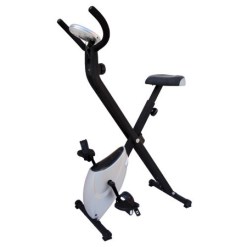
  • Add physical activity to things you already do. For example, pedal a stationary bike while reading or watching TV. Or take a walk with a friend to catch up instead of calling each other on the phone.
  • Plan activities you can do with your kids, such as going for bike rides or skating. Not only will you find more time for fitness, you’ll help inspire your kids to move more.

If you plan ahead for potholes on the road to fitness, you’re more likely to stay on course, Bartell says. “When you think through solutions to problems in advance, you’re less likely to give up when a pothole comes along.”


  1. Bounce Back from Setbacks

You’ve set a reasonable fitness goal. You’ve prepared for potential problems. Yet somehow you still didn’t make it to the gym today as you had planned. Don’t let that be your downfall.

“For many people, this is a slippery slope,” Hanson says. “It reminds them of times when they failed before, and they begin to think of themselves as exercise failures.”

When this happens, it’s time for an attitude adjustment so you don’t completely lose your motivation to exercise. If you miss the gym on Monday, that doesn’t mean your whole week is shot, Hanson says. It simply means you need to hit the gym on Tuesday or take the dog for an extra-long walk tonight.

Knowing how to exercise isn’t just a matter of learning how to use your body to hold a yoga pose or swing a racquet. It also involves learning how to use your mind to propel yourself into action and stick with a fitness routine.

“Start thinking of yourself as someone who exercises,” says Hoefs. “Eventually, that will become your identity”.

aid0117_760_427auto.jpg

Meditation can relieve pain

27 Wednesday Feb 2019

Posted by RichardB in Meditation, mindfulness, Self expression, Wellness

≈ Comments Off on Meditation can relieve pain

Meditation can relieve pain, and it does so by activating multiple brain areas, according to an April 2011 study in the Journal of Neuroscience. Fadel Zeidan of Wake Forest University and his colleagues scanned people’s brains as they received uncomfortably hot touches to the leg. When subjects practiced a mindful meditation technique that encourages detachment from experience while focusing on breathing, they reported less pain than when they simply paid attention to their breathing. Likewise, different patterns of brain activity emerged under the two conditions, with mindful meditating resulting in more activity not only in executive centers that evaluate experiences and regulate emotions but also in lower regions that control the signals coming from the body.
The volunteers learned the meditation technique in only four 20-minute sessions, which means this pill-free analgesia could be a feasible way to help real patients suffering from pain. “People can reap some of the benefits of meditation without extensive training,” Zeidan says.
When I work with patients using mindfulness I start by asking who has experience with any type of meditation, breathing techniques and/or relaxation exercises. We than have a  brief explanation and question and answer period and I focus on removing any doubt, fear, or skepticism. I usually than do a 10 to 12 minute body scan moving right into a mindful meditation that focuses on the breath.
With the co-occurring patients I work with this process seems to work the best. The chat in the beginning warms people up, the body scan relaxes which helps the meditators enter into a more meditative state.

feelings-40


Meditation has Long-term Effects on the Brain

25 Monday Feb 2019

Posted by RichardB in Health, Meditation, mindfulness, Relaxation, Wellness

≈ Comments Off on Meditation has Long-term Effects on the Brain

According to scientists from Harvard and Boston University, meditation produces enduring changes in emotional processing in the brain according to an article published in November of 2012 in the journal Frontiers in Human Neuroscience.
Researchers trained people with one of two different types of meditation, mindful meditation and compassionate meditation over an 8 week period. They measured activity in the brain using functional MRIs 3 weeks before the study and at 3 weeks after and noted what happened to areas of the brain related to compassion. They found the those people who learned compassionate meditation had a different and more loving response 3 weeks after the course even when not meditating.

Applying Mindfulness-Based Cognitive Therapy to Treatment

22 Friday Feb 2019

Posted by RichardB in brain, Creative Art Therapy, Meditation, mindfulness, Wellness, YouTube

≈ Comments Off on Applying Mindfulness-Based Cognitive Therapy to Treatment

Tags

Cognitive Therapy, mindfulness, treatment

Asanas that chase away the blues

20 Wednesday Feb 2019

Posted by RichardB in Wellness, Yoga

≈ Comments Off on Asanas that chase away the blues

Nice article from the Times of India, citing research using Yoga Asanas: Among the many clinical researches being conducted at Nimhans , one involved patients of an old-age home who were exposed to six months of yoga therapy. MRI scans taken before and after showed an increase in the size of the hippocampus, the brain’s memory index. “It was larger than before because the grey matter had increased. The results will be published in a scientific journal shortly ,” adds Gangadhar. The hippocampus is vulnerable to stress and atrophy is seen in patients of schizophrenia, post-traumatic stress disorder (PTSD) and severe depression. “Yoga acts as an antidepressant ,” he says. Read the entire article here.
grassyfeet

Wellness Recovery Action Plan

18 Monday Feb 2019

Posted by RichardB in recovery, Wellness, YouTube

≈ Comments Off on Wellness Recovery Action Plan

Tags

Action, Plan

The Wellness Recovery Action Plan®, or WRAP®, is an evidence based practice that is used world-wide by people who are dealing with mental health challenges as well as medical conditions. Diabetes, weight gain, pain management, addictions, smoking, and trauma are just some of the many life challenges that can benefit from WRAP. WRAP can also be used as a framework to guide relationships in peer support, recovery groups, agencies, and organizations.

WRAP is being used in schools, prisons, hospitals, and veterans’ facilities. It is used with people of all ages who want to attain the highest possible level of wellness. It was originally developed by a group of people who lived with mental health difficulties and were searching for ways to resolve their wellness issues. WRAP was their answer, and it can be used by anyone looking to develop a plan to manage a path to wellness.

WRAP involves listing your personal resources, your Wellness Tools, and then using those resources to develop an Action Plan to use in specific situations which you determine. WRAP is adaptable for any situation and can include a Crisis Plan or Advance Directive.

WRAP is for Life! – It is for everyone, anytime, and for any of life’s challenges.

Opportunities 4 mindfulness

11 Monday Feb 2019

Posted by RichardB in grounding, Handout, Meditation, mindfulness, Wellness

≈ 1 Comment

Tags

daily, meditation, mindfulness, schedule

For most of us, a typical day begins when we get out of bed, wash, and then start our activities. At some point, we get a bite to eat, walk somewhere, and talk to someone. Often, by the end of the day we find ourselves stressed out and physically exhausted. It doesn’t have to be that way!

Everyday activities can be an opportunity for a meditation moments; bringing mindfulness, clarity, and peace into your day while energizing yourself and reducing stress.

A study published in the journal Consciousness and Cognition found: “Brief meditation training reduced fatigue, anxiety, and increased mindfulness. Moreover, brief mindfulness training significantly improved visuo-spatial processing, working memory, and executive functioning.”

These brief mindfulness meditations can be done anywhere or anytime …well using common sense. Just like you should not text and drive I would not meditate and drive either. msclip-020

Here are two examples of how to add meditation without taking time out of your schedule.

  1. When you get up in the morning, you usually wash. Let’s use washing your face for our first meditation opportunity. Feel the temperature of the water on your hands. Focus on the temperature as you add a little soap. Notice how the suds feel on your hand. When a thought comes in, think of it as someone else’s phone ringing. You hear it, but you don’t have to answer it. Next, feel your soapy hands or the washcloth on your face. Focus on that sensation as you wash your face. Next, feel the rinse water on your face — how does it feel? Is it too cold? Too hot? Just right? If your mind wanders, there is no need to judge, just go back to focusing on the feeling of the water on your face. As you towel off, feel the sensation of the air on your face. It’s that simple, you just meditated.
  2. As you go about your day, you are most likely waiting in line or in traffic, so take a moment to breathe. Everyone has to breathe, and there is no way the person in front of you in the coffee line will know you are meditating! Sense the breath coming in and out of your nose or mouth. Don’t worry about thoughts; you know what to do, think of your thoughts as someone else’s cellphone ringing. Some people like to label their thoughts as “thought” and then let them go. The important thing is returning to sensing your breath coming in and out of your body. You will feel your shoulders relax and your patience returning.

Applying Mindfulness-Based Cognitive Therapy to Treatment

05 Tuesday Feb 2019

Posted by RichardB in brain, Creative Art Therapy, Meditation, mindfulness, Wellness, youtube

≈ Comments Off on Applying Mindfulness-Based Cognitive Therapy to Treatment

Tags

Cognitive Therapy, mindfulness, treatment

Habits

04 Monday Feb 2019

Posted by RichardB in Health, Psychoeducation, Research, Wellness

≈ Comments Off on Habits

Tags

habits

DESPITE the best intentions for the new year, the reality is that by next month, gym memberships will lapse, chocolate will replace carrots and Candy Crush will edge out Moby Dick.

It’s not (only) that we’re undisciplined slugs. It’s that much of what we know — or think we know — about habits is wrong. Here’s a primer that might help keep you off the couch and on the treadmill.

MYTH 1 We fail to change our habits — or start good new ones — because we lack willpower.

Not really, said Wendy Wood, a professor of psychology and business at the University of Southern California. Willpower, she said, is more about looking at those yummy chocolate chip cookies and refusing them. A good habit ensures you’re rarely around those chocolate chip cookies in the first place.

To create or change a habit, you have to think much more about altering your environment and patterns of living than work on steeling your mind, Professor Wood said, because “behavior is very much a product of environment.”

Habits — at least good ones — exist so we don’t have to resist temptation all the time. Imagine if every morning you had a debate with yourself about eating cake or cereal for breakfast. Instead, most of us form the habit of eating something relatively healthy for breakfast, which bypasses the lure of the cake altogether.

That’s why it’s sometimes easiest to start or break a habit during a major transition. This may sound counterintuitive, but a new house, job or relationship breaks old patterns, said Gretchen Rubin, author of the forthcoming book, “Better Than Before: Mastering the Habits of Our Everyday Lives.”

“People say wait a few days to get settled, but don’t,” she said. “Start right away.”

MYTH 2 We fall back on bad habits when stressed. In fact, good habits persist even in times of high anxiety, Professor Wood said. A study of which Professor Wood was one of the co-authors found that students who already had unhealthy diets would eat junk food when stressed, but those who already had the habit of eating well — or of reading a newspaper or of going to the gym — were just as likely to do that.

MYTH 3 It takes about 21 days to break or make a habit.

That number seems to have cropped up in the 1960s and somehow became “fact” with no real proof. But in 2009, researchers in Britain decided to take a deeper look by studying how long it took participants to learn new habits, such as eating fruit daily or going jogging. The average was 66 days.

But individuals’ times varied greatly, from 18 days to 245 days, depending on temperament and, of course, the task involved. It will most likely take far less time to get into the habit of eating an apple every afternoon than of practicing the piano for an hour a day.

MYTH 4 You need positive thinking to break or make a habit.

“We find positive fantasy is not helpful and may even be hurtful when trying to reach a desired future or fulfill a wish,” said Gabriele Oettingen, a professor of psychology at New York University and the University of Hamburg.

Over years of research, she discovered that people need to pair optimistic daydreams about the future with identifying and imagining the obstacles that prevent them from reaching that goal — something she calls mental contrasting.

Say you want to stop being a procrastinator. The first step is easy. Imagine how it will feel if your work is completed with plenty of time to spare, if you can sleep instead of pulling an all-nighter, said Professor Oettingen, author of “Rethinking Positive Thinking.”

But don’t just resolve to stop procrastinating. The second step is to identify what holds you back from changing yourself. Is it fear that you won’t succeed? Is it the adrenaline rush of frantically working at the last minute? Is it because of negative feelings toward a boss or teacher?

The mental contrasting needs to be in the right order. It’s important to “experience our dreams, then switch gears and mentally face reality,” Professor Oettingen said.

Doing it the opposite way — imagining the obstacles and then fantasizing about changing habits — doesn’t seem to work as well, research shows.

MYTH 5 Doing things by rote, or habit, isn’t good in most cases. It’s better to be mindful of everything we do.

Research shows that most people repeat about 40 percent of their activities almost every day.

“We only have so much room in our brain,” said Ian Newby-Clark, an associate professor of psychology at the University of Guelph in Canada. “It would be incredibly taxing if we had to mindfully plan every step of our day.” Habits free us up so we can think about other things.

And while some habits are objectively bad — smoking, say, or being consistently late — most are subjective. “Habits are only good or bad to the extent they’re consistent or inconsistent with your goals,” Professor Wood of U.S.C. said. It’s a bad habit when “it starts interfering with other goals you have.”

For example, many people said their resolution this year was to cut down the time they spend online.

But why? Because it’s an inherently bad thing to do? Or is it an obstacle to spending more time reading books or riding a bike or learning to knit?

After thinking about it, you may choose to spend less time on your computer or phone. Or you might decide it’s not so terrible in limited doses and shed the habit of feeling guilty about it.

MYTH 6 Everything in moderation.

“There’s a real difference among people about how easily they adapt to habits,” Ms. Rubin said. Some see habits as liberating; some see them as a trap. Some prefer to make a huge change all at once; others proceed step by step.

“I’m in the small minority that loves habits,” Ms. Rubin said, adding that she tends to find it easier to abstain from certain things altogether. For example, she eats no carbohydrates.

“People said I was doomed to failure, but it’s not true,” she said. But, she noted, “it’s a mistake to think the abstainer is more disciplined. For me it’s easier to be an abstainer than have to deliberate each time whether I can eat something or not. Others would go nuts if they abstain.”

That’s why you shouldn’t listen to people who tell you you’re doing it wrong if it works for you, she said.

Also, people shouldn’t fear that their habit will dissolve if they don’t practice it daily.

“If you lapse once or twice, you’re not ruined,” Professor Wood said. “That’s a misconception.”

And that leads to …

MYTH 7 Shame and guilt keep you on track.

No. People need to be kinder to themselves, showing self-compassion if they lapse, Ms. Rubin said. But it’s a fine balance between treating yourself kindly and making endless rationalizations and excuses.

“I might mindfully make an exception,” she said, such as choosing to eat a traditional Christmas cake every year. “But I’m not making excuses in the moment: I’ll hurt the hostesses’ feelings. You only live once. It’s the holidays.”

One last piece of advice: If you want to be in better shape, get a dog. Professor Wood said studies show dog owners have lower body mass indexes. But here’s the catch: That’s only true if you walk the animal.

Meditation and Pain management

09 Wednesday Jan 2019

Posted by RichardB in Meditation, mindfulness, pain management, research, Wellness

≈ Comments Off on Meditation and Pain management

According to a new study, mindfulness meditation exhibited even stronger physical pain reductions than morphine, says the study’s lead investigator
Open any magazine and you’ll find that mindfulness has gone mainstream. You’ll also notice there are studies that purport to show meditation’s benefits on just about everything, from kids’ math scores and migraine length to HIV management and bouncing back after a crisis. Now, an elaborate new forthcoming study looks at how the brains of meditators respond to pain, to be published in the Journal of Neuroscience.
f-202.jpgDr. Fadel Zeidan, assistant professor of neurobiology and anatomy at Wake Forest Baptist Medical Center, has studied mindfulness for 15 years and has observed improved health outcomes as a result. “But what if this is all just a placebo?” he wondered. “What if people are reporting improvements in health and reductions in pain just because of meditation’s reputation as a health-promoting practice?” He wanted to find out, so he designed a trials that included a placebo group.

Zeidan recruited 75 healthy, pain-free people and scanned their brains using an MRI while they experienced painful heat with a 120-degree thermal probe. Then, the researchers sorted them into four groups and gave them four days of training. Everyone thought they were getting the real intervention, but most of them were getting a sham treatment.
“I want to be restrained about the efficacy of mindfulness, and the way to be restrained about it is by making it harder and harder to demonstrate its effectiveness,” Zeidan says.
First, there was a placebo cream group that participants were told reduces pain over time, Zeidan says (it was really just petroleum jelly). For four days, they rubbed it on the back of their leg and tested it against that painfully hot thermal probe. Little did they know, the researchers cranked down the heat each day; the participants thought the cream was working.
Another group was taught a kind of fake mindfulness meditation—they were told to breathe deeply for 20 minutes but were given no instructions on how to do it mindfully. The control group was subjected to 20 minutes of a very boring book on tape: The Natural History and Antiquities of Selborne.996972_621934824532791_1132991476_n
For the real intervention, people sat for 20 minutes with straight posture, closed their eyes and listened to specific instructions about where to focus one’s attention and how to let thoughts and emotions pass without judgment. “Our subjects are taught to focus on the changing sensations of breath and to follow the breath with the mind’s eye as it goes down the chest and abdomen,” Zeidan says.
After four days, everyone re-entered the MRI machine and endured the same pain from the 120-degree probe. They were told to use their training—breathing deeply, mindfully meditating or the cream. They used a lever to indicate the physical intensity and emotional unpleasantness of the pain.
They found that people in all of the groups had greater pain reductions than the control group. The placebo cream reduced the sensation of pain by an average of 11% and emotional unpleasantness of pain by 13%. For the sham mindfulness group, those numbers were 9% and 24% respectively. But mindfulness meditation outperformed them all. In this group, pain intensity was cut by 27% and emotional pain reduced by 44%.
That shocked Zeidan. Past research has indicated that the opioid morphine reduces physical pain by 22%—and mindfulness had surpassed even that. But the MRI results, which showed how pain was registering in their brains, surprised him even more. People who had practiced mindfulness meditation seemed to be using different brain regions than the other groups to reduce pain.
“There was something more active, we believe, going on with the genuine mindfulness meditation group,” Zeidan says. This group had increased activation in higher-order brain regions associated with attention control and enhanced cognitive control, he says, while exhibiting a deactivation of the thalamus—a structure that acts as the gatekeeper for pain to enter the brain, he explains. “We haven’t seen that with any other technique before.”create
It’s an important preliminary study, Zeidan says, but exactly who will benefit from meditation’s impact on pain is still unknown. “We’re now at the stage, at least in my lab, where we have enough evidence that meditation reduces pain and it does it in a really unique fashion, different from any other technique we’ve seen,” he says.
And as for the questions left unanswered? “We don’t have the studies yet,” he says, “but we’re getting there.”

Anxiety

07 Monday Jan 2019

Posted by RichardB in Anxiety, Wellness

≈ Comments Off on Anxiety

Tags

Anxiety, wellness

We all know the uncomfortable feeling of anxiety. Our hearts race, our fingers sweat, and our breathing gets shallow and labored. We experience racing thoughts about a perceived threat we fear will be too much to handle. That’s because our “fight or flight” response has kicked in, resulting in sympathetic arousal and a narrowing of attention and focus on avoiding the threat. We seem to be locked in that state, unable to focus on our daily chores or longer-term goals.  Below are six strategies that you can use to help relieve your everyday anxiety:

  • Reevaluate the probability of the threatening event actually happening.

Anxiety makes us feel that a threat is imminent, yet most of the time what we worry most about never happens. By recording our worries—and how few actually came true—we can notice how much we overestimate the prospect of negative events.

  • De-catastrophize.

Even if a bad event happened, we may still be able to handle it by using  coping skills and problem-solving abilities or by enlisting others to help. Although not pleasant, we could still survive encountering a spider, having a panic attack, or losing money. It’s important to realize that very few things are the end of the world.feelings-54

  • Use deep breathing and relaxation.

By deliberately relaxing our muscles we begin to calm down so we can think clearly. If you practice this at first without a threat present, it can start to become automatic and will be easier to use in the moment when you face a threat. Deep breathing engages the parasympathetic nervous system to put the brakes on sympathetic arousal.

  • Become mindful of your own physical and mental reactions.

The skill of mindfulness involves calmly observing our own reactions, including fear, without panic or feeling compelled to act. It can be taught in therapy and improves with practice.

  • Accept fear and commit to living a life based on core values.

Acceptance and Commitment Therapy (ACT) is an approach that encourages people to accept the inevitability of negative thoughts and feelings and not try to repress or control them. By directing attention away from the fear and back onto life tasks and valued goals, we can live a full life despite the fear.

  • Exposure.

Exposure is the most powerful technique for anxiety and it involves facing what we fear and staying in the situation long enough for the fear to habituate or go down, as it naturally does. Fear makes us avoid or run away, so our minds and bodies never learn that much of what we fear is not truly dangerous.


emotion

05 Saturday Jan 2019

Posted by RichardB in emotions, Self expression, Wellness

≈ Comments Off on emotion

Art is the overflow of emotion into action.  ― Brian Raif


← Older posts
Newer posts →

instagram

Follow RichardbBrunner on WordPress.com
  • Tumblr
  • YouTube

Blog at WordPress.com.

Privacy & Cookies: This site uses cookies. By continuing to use this website, you agree to their use.
To find out more, including how to control cookies, see here: Cookie Policy
  • Subscribe Subscribed
    • RichardbBrunner
    • Join 492 other subscribers
    • Already have a WordPress.com account? Log in now.
    • RichardbBrunner
    • Subscribe Subscribed
    • Sign up
    • Log in
    • Report this content
    • View site in Reader
    • Manage subscriptions
    • Collapse this bar
 

Loading Comments...