
Do not wait for leaders; do it alone, person to person. Be faithful in small things because it is in them that your strength lies. Mother Teresa

27 Wednesday Feb 2019
Posted in Mother Teresa, Uncategorized
≈ Comments Off on small things
27 Wednesday Feb 2019
Posted in Meditation, mindfulness, Self expression, Wellness
≈ Comments Off on Meditation can relieve pain
Meditation can relieve pain, and it does so by activating multiple brain areas, according to an April 2011 study in the Journal of Neuroscience. Fadel Zeidan of Wake Forest University and his colleagues scanned people’s brains as they received uncomfortably hot touches to the leg. When subjects practiced a mindful meditation technique that encourages detachment from experience while focusing on breathing, they reported less pain than when they simply paid attention to their breathing. Likewise, different patterns of brain activity emerged under the two conditions, with mindful meditating resulting in more activity not only in executive centers that evaluate experiences and regulate emotions but also in lower regions that control the signals coming from the body.
The volunteers learned the meditation technique in only four 20-minute sessions, which means this pill-free analgesia could be a feasible way to help real patients suffering from pain. “People can reap some of the benefits of meditation without extensive training,” Zeidan says.
When I work with patients using mindfulness I start by asking who has experience with any type of meditation, breathing techniques and/or relaxation exercises. We than have a brief explanation and question and answer period and I focus on removing any doubt, fear, or skepticism. I usually than do a 10 to 12 minute body scan moving right into a mindful meditation that focuses on the breath.
With the co-occurring patients I work with this process seems to work the best. The chat in the beginning warms people up, the body scan relaxes which helps the meditators enter into a more meditative state.

26 Tuesday Feb 2019
Posted in Meditation, mindfulness
≈ Comments Off on Meditation for as short as 8 weeks can change your brain

25 Monday Feb 2019
25 Monday Feb 2019
Posted in Health, Meditation, mindfulness, Relaxation, Wellness
≈ Comments Off on Meditation has Long-term Effects on the Brain

24 Sunday Feb 2019
24 Sunday Feb 2019
23 Saturday Feb 2019
Posted in Environment, news, Organizations, water
Tags
Haphazard urbanization and political wrangling are seriously affecting people’s ability to realize their right to water in Nepal’s capital city. According to the Nepalese government’s Central Bureau of Statistics, one in every five Kathmandu households has no access to a domestic water source and two-thirds of its urban households live with an inadequate water supply. 
Estimates show that the city of 4 million has a severe water deficit. The demand is triple the current supply of 106m liters a day , which further reduces to 75m liters a day during the dry season [PDF] . Despite growing demand, little has been done to increase supply. Read the full article at the Guardian.
22 Friday Feb 2019
Posted in Uncategorized
≈ Comments Off on Art Therapist who also uses Therapy Dogs.

22 Friday Feb 2019
Posted in brain, Creative Art Therapy, Meditation, mindfulness, Wellness, YouTube
≈ Comments Off on Applying Mindfulness-Based Cognitive Therapy to Treatment
21 Thursday Feb 2019
Posted in Pets
≈ Comments Off on Cats are
20 Wednesday Feb 2019

20 Wednesday Feb 2019
Posted in quote
≈ Comments Off on make you
Tags
If I love you, I have to make you conscious of the things you don’t see. James Baldwin

19 Tuesday Feb 2019
Posted in brain, emotions, Self Esteem, Self-Care
≈ Comments Off on The Brain and Emotional Self-Control
Tags
Different brain areas are activated when we choose to suppress an emotion, compared to when we are instructed to inhibit an emotion, according a new study from the UCL Institute of Cognitive Neuroscience and Ghent University.
In this study, published in Brain Structure and Function, the researchers scanned the brains of healthy participants and found that key brain systems were activated when choosing for oneself to suppress an emotion. They had previously linked this brain area to deciding to inhibit movement.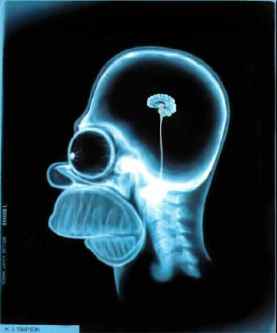
“This result shows that emotional self-control involves a quite different brain system from simply being told how to respond emotionally,” said lead author Dr Simone Kuhn (Ghent University).
In most previous studies, participants were instructed to feel or inhibit an emotional response. However, in everyday life we are rarely told to suppress our emotions, and usually have to decide ourselves whether to feel or control our emotions.
In this new study the researchers showed fifteen healthy women unpleasant or frightening pictures. The participants were given a choice to feel the emotion elicited by the image, or alternatively to inhibit the emotion, by distancing themselves through an act of self-control.

The researchers used functional magnetic resonance imaging (fMRI) to scan the brains of the participants. They compared this brain activity to another experiment where the participants were instructed to feel or inhibit their emotions, rather than choose for themselves.
Different parts of the brain were activated in the two situations. When participants decided for themselves to inhibit negative emotions, the scientists found activation in the dorso-medial prefrontal area of the brain. They had previously linked this brain area to deciding to inhibit movement.
In contrast, when participants were instructed by the experimenter to inhibit the emotion, a second, more lateral area was activated.
“We think controlling one’s emotions and controlling one’s behaviour involve overlapping mechanisms,” said Dr Kuhn.
“We should distinguish between voluntary and instructed control of emotions, in the same way as we can distinguish between making up our own mind about what do, versus following instructions.”
Regulating emotions is part of our daily life, and is important for our mental health. For example, many people have to conquer fear of speaking in public, while some professionals such as health-care workers and firemen have to maintain an emotional distance from unpleasant or distressing scenes that occur in their jobs.
Professor Patrick Haggard (UCL Institute of Cognitive Neuroscience) co-author of the paper said the brain mechanism identified in this study could be a potential target for therapies.
“The ability to manage one’s own emotions is affected in many mental health conditions, so identifying this mechanism opens interesting possibilities for future research.
“Most studies of emotion processing in the brain simply assume that people passively receive emotional stimuli, and automatically feel the corresponding emotion. In contrast, the area we have identified may contribute to some individuals’ ability to rise above particular emotional situations.
“This kind of self-control mechanism may have positive aspects, for example making people less vulnerable to excessive emotion. But altered function of this brain area could also potentially lead to difficulties in responding appropriately to emotional situations.”
18 Monday Feb 2019
Posted in Music
≈ Comments Off on SHEFITA – Broken
Tags
18 Monday Feb 2019
The Wellness Recovery Action Plan®, or WRAP®, is an evidence based practice that is used world-wide by people who are dealing with mental health challenges as well as medical conditions. Diabetes, weight gain, pain management, addictions, smoking, and trauma are just some of the many life challenges that can benefit from WRAP. WRAP can also be used as a framework to guide relationships in peer support, recovery groups, agencies, and organizations.
WRAP is being used in schools, prisons, hospitals, and veterans’ facilities. It is used with people of all ages who want to attain the highest possible level of wellness. It was originally developed by a group of people who lived with mental health difficulties and were searching for ways to resolve their wellness issues. WRAP was their answer, and it can be used by anyone looking to develop a plan to manage a path to wellness.
WRAP involves listing your personal resources, your Wellness Tools, and then using those resources to develop an Action Plan to use in specific situations which you determine. WRAP is adaptable for any situation and can include a Crisis Plan or Advance Directive.
WRAP is for Life! – It is for everyone, anytime, and for any of life’s challenges.
17 Sunday Feb 2019
17 Sunday Feb 2019
16 Saturday Feb 2019
Tags
A presentation at the United Nations North Lawn building presented statistics gathered by the Stockholm International Peace Research Institute (SIPRI) about spending on armaments and militarism. The report declared that in 2013 over 1,747 billion dollars were spent on armaments. SIPRI Director Sam Perlo Freeman pointed out that the overwhelming majority of military spending was being done by the US and its allies.
While military spending by the United States has slightly decreased, spending by strategic US aligned regimes around the world is dramatically rising. Kingdom of Saudi Arabia, which is a key US ally in the Middle East and a backer of insurgent groups in Syria, has increased its military spending by 14.8%, the largest increase of any country on earth. John Feffer of Institute for Policy Studies, one of the presenters, told Press TV, that the build-up of military spending by US aligned regimes around the world has dangerous implications and could lead to war. Presenters pointed out that military spending is rising most rapidly in the Middle East and the Pacific, and that despite recent cuts, the United States remains the main exporter of weapons and supplier of military aid. See video here.

Information from the Stockholm International Peace Research Institute.
15 Friday Feb 2019
Posted in brain, create, Creativity, YouTube
≈ Comments Off on Your brain’s creativity
Tags





 RichardbBrunner