Marijuana Addiction in the Age of Legal Weed

Tags

, ,

Generation X writer Neal Pollack thought he had it all: a good writing career, a strong marriage, even a lucrative 3-day run on “Jeopardy”! That brought him national attention. Like many in his generation, he also smoked a lot of marijuana. He had discovered that food, music and even his beloved yoga was much better when he smoked. In 2014, as several states in the country legalized pot, Pollack scored a writing gig for a marijuana site that provided free weed. He saw his drug use as harmless and joked about it often in his writing. But as more states, including California, began to legalize the drug, Pollack’s life began to fall apart, in part because of his drug use. Both of his parents died and he soon found himself spiraling out of control, sometimes in public. By 2018, Pollack admitted publicly he had a marijuana addiction and set about to conquer it, through honesty . . . and humor. Pollack’s new book, Pothead, is about coming to terms with his marijuana problems just as the country increased its recreational availability. The book is a cautionary and timely tale for those who think the drug isn’t dangerous and can’t cause serious addictive problems. Join us for a special evening program as Pollack discusses his story with Los Angeles novelist Bucky Sinister.

Transformation of the Ordinary

Tags

, , , , , , ,

Dance/movement therapy (DMT) can be an avenue for creating a symbolic transformation of individual, or community experience. DMT can use the same characteristics of weight, balance, and dynamics as do everyday actions such as walking, working, playing, or communication. Out of our everyday and ordinary motor activities, DMT can select, heighten or subdue, gestures/postures and body movement to achieve something which transcends the ordinary.

For instance as a teen I learned a West African Maize Dance from the Arthur Hall African American Dance company. This dance uses the movements of planting, tending, and harvesting of maize as the core elements of the dance. Taking these agrarian movements and enacting them outside of their usual context begins the process of symbolic transformation. As the movements are performed an element of artistic quality begins to emerge and becomes evident in the transitional movements that occur between planting, tending, and harvesting. This Maize Dance combines the ordinary with the extra ordinary; taking the everyday actions and ritualizing them in a way that expresses and celebrates an important aspect of West African culture.

Symbolic transformation can take place on an individual level as well. Once, working with a client an opportunity arose to explore the bodily expression of sadness; i.e. what are you doing/feeling physically when you are sad. The client took the ordinary movements/gestures/postures of their sadness and made them bigger and smaller, connecting, un-connecting and reconnecting them as they slowly evolved into a pattern. As this client continued with their exploration a transformation occurred and new movements, suggestive of another feeling emerged. Asking the client to add words to their exploration of the new movements provided a clearer understanding of sadness.

Enacting movements/postures/gestures outside of their usual context allows the possibility of experiencing in way that can be more; objective and subjective. Making bigger and smaller, connecting and reconnecting, movement and feelings emerge uncensored, allowing a different understanding of the original feeling and all that surrounds it. The therapeutic process of dance movement therapy can guide the mover as they explore, uncovering the extraordinary in the ordinary.

Movement and opening chanels

Tags

,

Heidi Fledderjohn MA, BC-DMT is a Board Certified Dance/movement Therapist with 20 years of experience supporting peoples’ desire to learn deeply, grow and feel good. Using play, movement and meditation Fledderjohn generates a solid, soulful and vibrant method for approaching life, change and the self.

Patterns of Self Talk

Tags

, , ,

Patterns of negative or positive self-talk often start in childhood. Usually, the self-talk habit is one that’s colored our thinking for years, and can affect us in many ways, influencing the experience of stress to our lives. However, any time can be a good time to change it! Here are some ways you can stop yourself from using negative self-talk and use your mind to boost your productivity and self-esteem, and relieve stress.
Notice Your Patterns:
The first step toward change is to become more aware of the problem. You probably don’twriting (940x752) realize how often you say negative things in your head, or how much it affects your experience. Here are two strategies that can help you become more conscious of your internal dialogue and its content.

Journal Writing: Whether you carry a journal around with you and jot down negative comments when you think them, write a general summary of your thoughts at the end of the day, or just start writing about your feelings on a certain topic and later go back to analyze it for content, journaling can be an effective tool for examining your inner process.

Thought-Stopping: As you notice yourself saying something negative in your mind, you can stop your thought mid-stream my saying to yourself “Stop”. Saying this aloud will be more powerful, and having to say it aloud will make you more aware of how many times you are stopping negative thoughts, and where.

Doggie MRI

Tags

, ,

By placing dogs in an MRI scanner, researchers from Hungary found that the canine brain reacts to voices in the same way that the human brain does. Emotionally charged sounds, such as crying or laughter, also prompted similar responses, perhaps explaining why dogs are attuned to human emotions.

clip_image001

The work is published in the journal Current Biology. The full article is @ BBC.

Eleven pet dogs took part in the study; training them took some time. “We used positive reinforcement strategies – lots of praise,” said Dr Andics. “There were 12 sessions of preparatory training, then seven sessions in the scanner room, then these dogs were able to lie motionless for as long as eight minutes. Once they were trained, they were so happy, I wouldn’t have believed it if I didn’t see it.”

Thinking influences

Tags

, ,

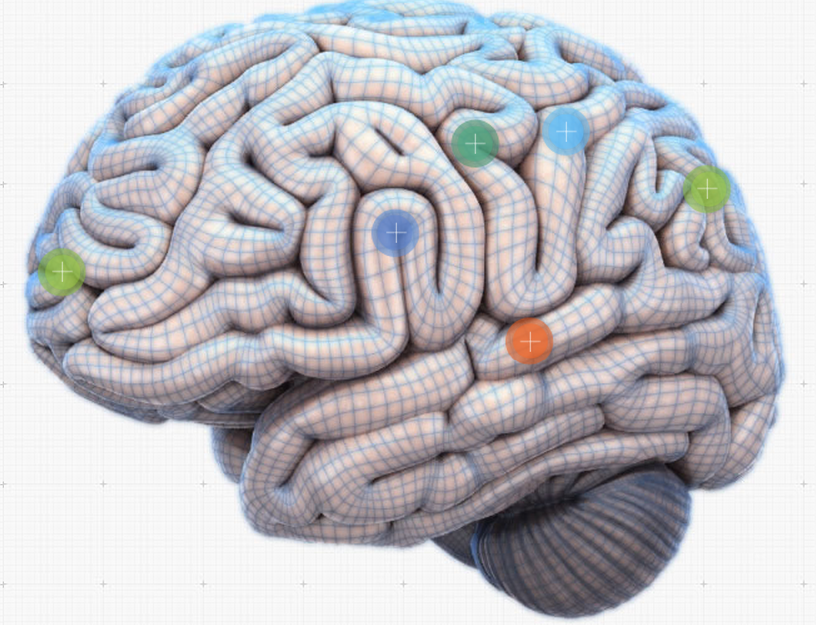
Thinking influences our feelings through the things that we say to ourselves. Unhelpful thoughts can add fuel to the fire and play a large role in keeping anger going after the event has passed. However, using helpful self-statements (or ‘cooling thoughts’) can be a good way to manage our anger and guide our behavior. brainmpExamples of these include:

  • Chill out
  • Calm down
  • Breathe away the anger
  • Don’t yell
  • Don’t give them the satisfaction of seeing you angry
  • It’s not worth it
  • Give them a chance to have a say

 To use this strategy we need to break anger into several stages:

  • Getting ready for provocation: when we know we are going to face something that will make us angry.
  • During the event: early signs of anger are cues to use coping strategies.
  • Coping with stress: early attempts at anger management may not be successful.
  • Reflecting on provocation: time to evaluate the effect of the experience on you, continue coping or give self praise.

feelings-07.jpg

Preparing for a provoking situations

  • This is going to upset me but I know how to deal with it
  • What is it that I have to do?
  • Stick to the issues and don’t take it personally
  • Try not to take this too seriously
  • Time for a few deep breaths of relaxation
  • Easy does it, remember to keep your sense of humor

During the event

  • Stay calm, just continue to relax
  • Think of what you want to get out of this
  • There is no point in getting mad
  • It’s really a shame that she has to act like this
  • If I start to get mad I’ll just be banging my head against the wall
  • What he says doesn’t matter. I’m on top of this situation and it’s under control

Coping with stress

  • My muscles are starting to feel tight, time to relax and slow things down
  • It’s just not worth it to get so angry
  • Time to take a deep breath
  • Try to reason it out. Treat each other with respect
  • He’d probably like me to get really angry. Well I’m going to disappoint him Leaving the anger and looking back
  • Try to shake it off. Don’t let it interfere with your job
  • Remember relaxation, it’s a lot better than anger
  • I handled that pretty well. It worked!
  • It could have been a lot worse
  • My pride can sure get me into trouble, but when I don’t take things too seriously, I’m better off

How meditation can change your life and mind | Sam Harris, Jon Kabat-Zinn & more | Big Think

Tags

,

There are a lot of misconceptions when it comes to what mindfulness is and what meditation can do for those who practice it. In this video, professors, neuroscientists, psychologists, composers, authors, and a former Buddhist monk share their experiences, explain the science behind meditation, and discuss the benefits of learning to be in the moment. “Mindfulness allows us to shift our relationship to our experience,” explains psychologist Daniel Goleman. The science shows that long-term meditators have higher levels of gamma waves in their brains even when they are not meditating. The effect of this altered response is yet unknown, though it shows that there are lasting cognitive effects. “I think we’re looking at meditation as the next big public health revolution,” says ABC News anchor Dan Harris. “Meditation is going to join the pantheon of no-brainers like exercise, brushing your teeth and taking the meds that your doctor prescribes to you.” Closing out the video is a guided meditation experience led by author Damien Echols that can be practiced anywhere and repeated as many times as you’d like.