
Posted by RichardB | Filed under Japanese Textile Designs
≈ Comments Off on Japanese Textile Designs 125

15 Saturday May 2021
Posted by RichardB | Filed under Japanese Textile Designs
≈ Comments Off on Japanese Textile Designs 125
13 Thursday May 2021
See the web site to walk a mile in a kitty’s paws.
http://hiroshima-welcome.jp/kanpai/catstreetview/index_2_on.html
12 Wednesday May 2021
London has the red double-decker bus, New York the yellow taxi, and the Philippines has the Jeepney.
The country’s most popular means of public transport zipping by adds a flash of vibrancy in the often frustrating, gridlocked streets of metropolitan Manila.
With names like Delilah and Rosa emblazoned across the front, each one is individually adorned with religious and nationalistic artwork – no two are identical.
For Ed Sarao, head of Sarao Motors – one of the first makers of Jeepneys – the vehicle represents the multi-cultural history of the Philippines.
“There is bit of Spanish, Mexican traits there; how they incorporate vivid colours, fiesta-like feelings. There is a little of the Americans because it evolved from the Jeep. There is a little Japan because of the Japanese engine. But it was built by Filipino hands,” he says.
But while it was once part of the Philippines’ image and identity, the Jeepney has now become something of a dinosaur – and newer, more economical vehicles are starting to take its place. Read the full story HERE.
08 Saturday May 2021

Posted by RichardB | Filed under Japanese Textile Designs
≈ Comments Off on Japanese Textile Designs 128
06 Thursday May 2021
Posted in creative arts therapy, discovery, Wellness
≈ Comments Off on Yoga can help girls who suffered childhood trauma
As a Creative Arts Therapist who specializes in the body and is a former Yoga teacher this article is not at all surprising. Most therapists who have worked with trauma survivors know that people have a tendency to have some level of dissociation with their bodies. Yoga can gently bring a new level of conscious feeling, movement and functionally of the body which can’t be processed with other modalities.
As a teenager, Rocsana Enriquez ran away from home frequently to escape fights with her mother and sexual abuse from her stepfather. She got involved with street gangs and cycled in and out of juvenile detention.
While she was incarcerated in Central California, she started to learn yoga. It became an outlet for her anger and an antidote to the deep insecurity she felt. Before she got into a fight, she reminded herself to take a deep breath. And she loved the way she felt when she stretched into “Warrior II” pose. “It made me feel very strong,” she said.
A new report by the Center on Poverty and Inequality at Georgetown Law School shows that yoga programs can be particularly effective at helping girls who are incarcerated cope with the effects of trauma that many have experienced. Research shows yoga and mindfulness can promote healthier relationships, increase concentration, and improve self esteem and physical health.
Such programs, if offered more broadly, would be a cost-effective way to help one of the country’s most vulnerable groups heal and improve their lives, the report says.

05 Wednesday May 2021
Posted in dogs
≈ Comments Off on Nonverbal communication with Pets
Nonverbal communication is a gift that all living beings share, one you’ll need to reawaken to better interact with and care for your animal companions. Most dog and cat lovers already understand canine and feline body language, which is one non-verbal technique. But you can use your other, natural, nonverbal communication skills, and actually begin to see things through your dog or cat’s eyes, and become his/her voice. 
You can learn animal communication by taking a class or reading some of the great books available today on the subject. But many of the basics are so simple that we can easily begin nonverbally communicating right away. Remember, long before humans had spoken language, we were able to communicate among ourselves and with the animals; it is a kind of heart to heart communication skill that we all possess.
Did you ever know a set of twins who said they each knew what the other was thinking, or you heard your mother say she had “woman’s intuition” or “just knew something was wrong.” Have you ever had an image of a friend come to mind and then received a phone call from that very person saying, “I was just thinking about you and wanted to say hello”? These are all examples of nonverbal communication.
03 Monday May 2021
Posted in Music
≈ Comments Off on Natalia Lafourcade – Hasta la Raíz
01 Saturday May 2021
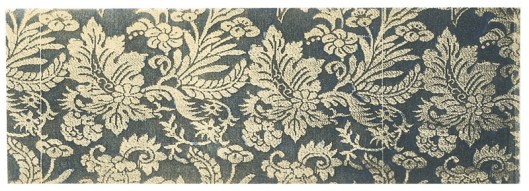
Posted by RichardB | Filed under Japanese Textile Designs
≈ Comments Off on Japanese Textile Designs 127
29 Thursday Apr 2021
From Scientific American: When we talk, we naturally gesture—we open our palms, we point, we chop the air for emphasis. Such movement may be more than superfluous hand flapping. It helps communicate ideas to listeners and even appears to help speakers think and learn.
A growing field of psychological research is exploring the potential of having students or teachers gesture as pupils learn. Studies have shown that people remember material better when they make spontaneous gestures, watch a teacher’s movements or use their hands and arms to imitate the instructor. More recent work suggests that telling learners to move in specific ways can help them learn—even when they are unaware of why they are making the motions.
Read the entire article: Students Who Gesture during Learning ‘Grasp’ Concepts Better – Scientific American
26 Monday Apr 2021
Posted in Music
≈ Comments Off on Top Songs I listened to in 2020: GLIM SPANKY – 「こんな夜更けは」
25 Sunday Apr 2021
Plants are able to “remember” and “react” to information contained in light, according to researchers.
Plants, scientists say, transmit information about light intensity and quality from leaf to leaf in a very similar way to our own nervous systems.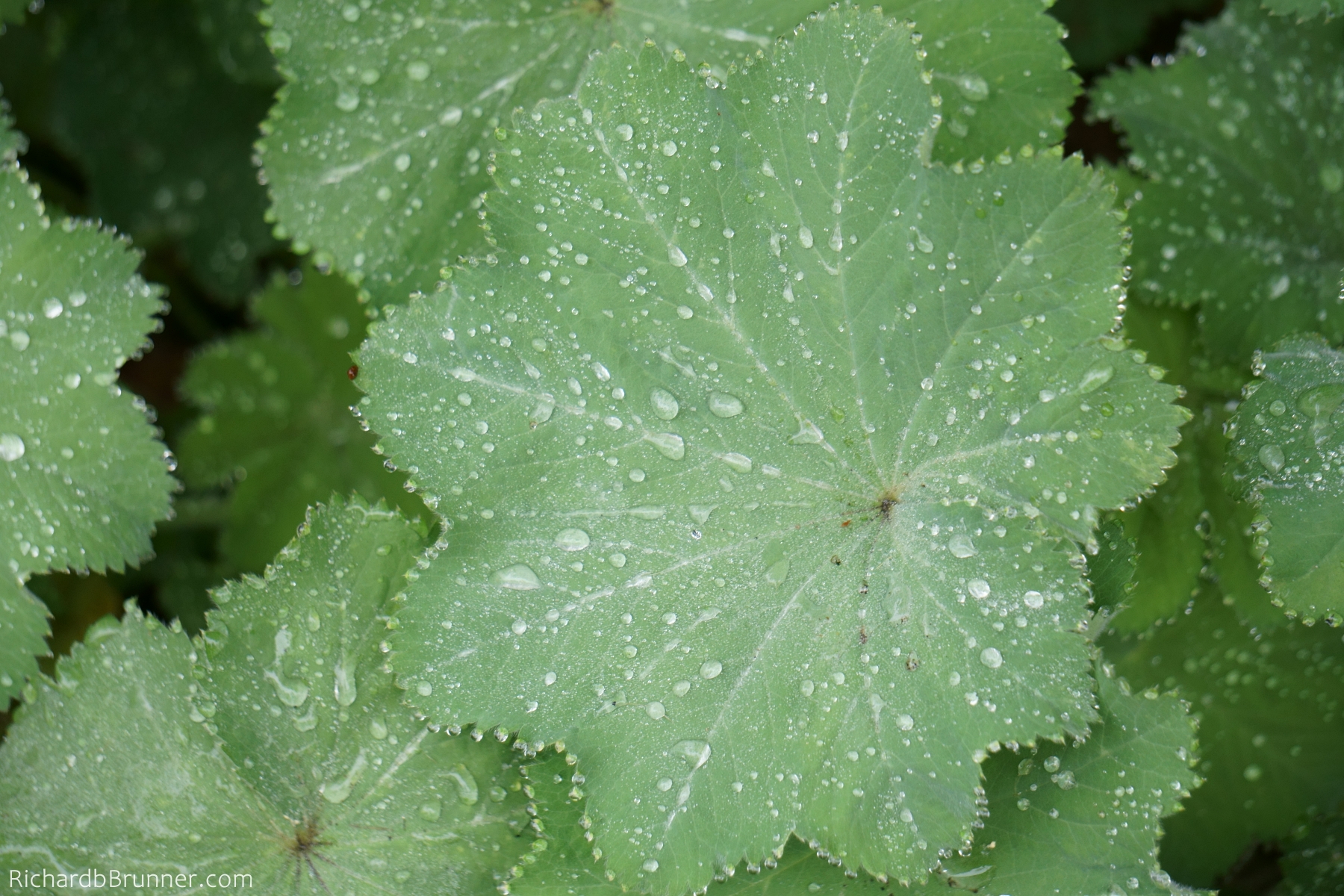
These “electro-chemical signals” are carried by cells that act as “nerves” of the plants.
In their experiment, the scientists showed that light shone on to one leaf caused the whole plant to respond.
And the response, which took the form of light-induced chemical reactions in the leaves, continued in the dark.
This showed, they said, that the plant “remembered” the information encoded in light.
“We shone the light only on the bottom of the plant and we observed changes in the upper part,” explained Professor Stanislaw Karpinski from the Warsaw University of Life Sciences in Poland, who led this research.
He presented the findings at the Society for Experimental Biology’s annual meeting in Prague, Czech Republic.
“And the changes proceeded when the light was off… This was a complete surprise.”
In previous work, Professor Karpinski found that chemical signals could be passed throughout whole plants – allowing them to respond to and survive changes and stresses in their environment.
But in this new study, he and his colleagues discovered that when light stimulated a chemical reaction in one leaf cell, this caused a “cascade” of events and that this was immediately signaled to the rest of the plant via a specific type of cell called a “bundle sheath cell”.
The scientists measured the electrical signals from these cells, which are present in every leaf. They likened the discovery to finding the plants’ “nervous system”.
What was even more peculiar, Professor Karpinski said, was that the plants’ responses changed depending on the colour of the light that was being shone on them. N
.
“There were characteristic [changes] for red, blue and white light,” he explained.
He suspected that the plants might use the information encoded in the light to stimulate protective chemical reactions. He and his colleagues examined this more closely by looking at the effect of different colors of light on the plants’ immunity to disease.
“When we shone the light for on the plant for one hour and then infected it [with a virus or with bacteria] 24 hours after that light exposure, it resisted the infection,” he explained.
“But when we infected the plant before shining the light, it could not build up resistance.
“[So the plant] has a specific memory for the light which builds its immunity against pathogens, and it can adjust to varying light conditions.”
He said that plants used information encrypted in the light to immunize themselves against seasonal pathogens.
“Every day or week of the season has… a characteristic light quality,” Professor Karpinski explained.
“So the plants perform a sort of biological light computation, using information contained in the light to immunize themselves against diseases that are prevalent during that season.”
Professor Christine Foyer, a plant scientist from the University of Leeds, said the study “took our thinking one step forward”.
“Plants have to survive stresses, such as drought or cold, and live through it and keep growing,” she told BBC News.
“This requires an appraisal of the situation and an appropriate response – that’s a form of intelligence.
“What this study has done is link two signaling pathways together… and the electrical signaling pathway is incredibly rapid, so the whole plant could respond immediately to high [levels of] light.
24 Saturday Apr 2021
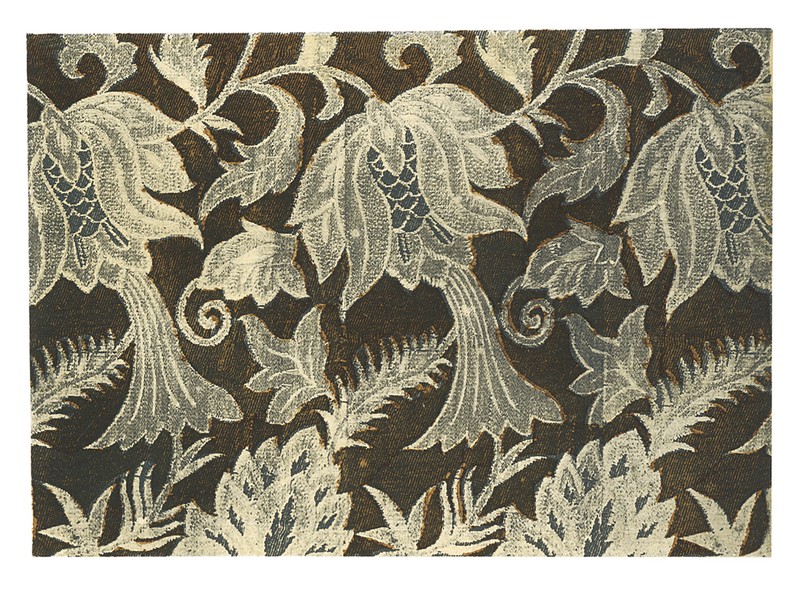
Posted by RichardB | Filed under Japanese Textile Designs
≈ Comments Off on Japanese Textile Designs 126
22 Thursday Apr 2021
Posted in Music
≈ Comments Off on Song: What’s on your mind, soldier? | О чём задумался, служивый
20 Tuesday Apr 2021
17 Saturday Apr 2021
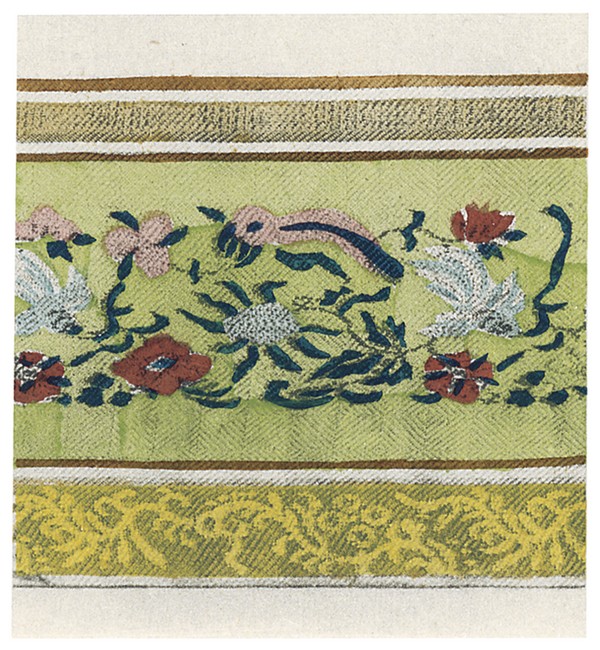
Posted by RichardB | Filed under Japanese Textile Designs
≈ Comments Off on Japanese Textile Designs 108
15 Thursday Apr 2021
Posted in news
≈ Comments Off on Bloomberg: Heroin’s Hidden Ingredient, Courtesy of a U.S. Company
10 Saturday Apr 2021
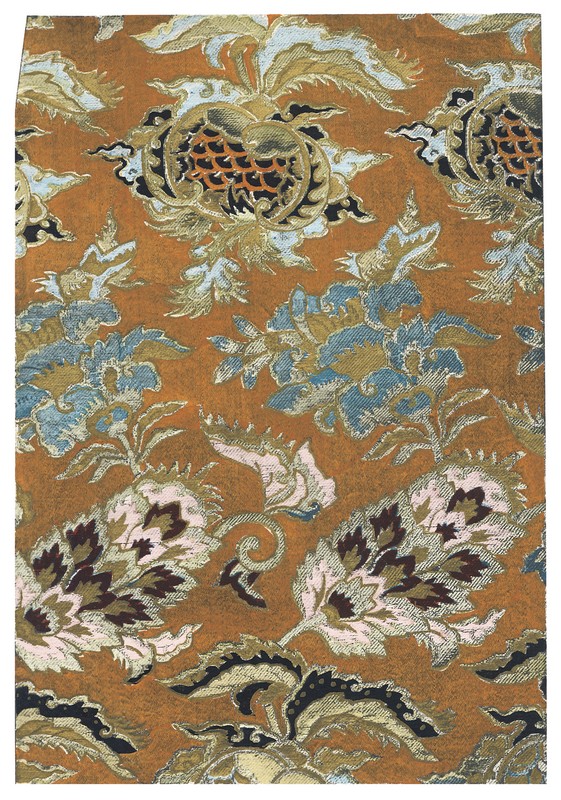
Posted by RichardB | Filed under Japanese Textile Designs
≈ Comments Off on Japanese Textile Designs 91
08 Thursday Apr 2021
Posted in news
≈ Comments Off on Bloomberg: The Drug War Over Calcium Chloride
Tags
03 Saturday Apr 2021

Posted by RichardB | Filed under Japanese Textile Designs
≈ Comments Off on Japanese Textile Designs 129
01 Thursday Apr 2021
Posted in Climate Change, Environment, news
≈ Comments Off on The Economist: How can business survive climate change?
Tags
 RichardbBrunner