• Home
  • Music
  • About
  • Contact
  • CreativeTherapyTools.com

RichardbBrunner

~ creative arts therapist

RichardbBrunner

Tag Archives: Creativity

Some creative people have “unique brain connectivity”

10 Wednesday Apr 2024

Posted by RichardB in Creativity, Uncategorized

≈ Comments Off on Some creative people have “unique brain connectivity”

Tags

brain, Creativity, study

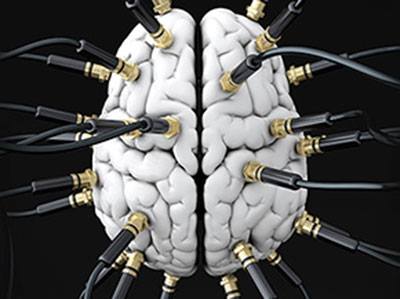
The latest research into creativity compares the brain function of exceptionally creative visual artists and scientists with a highly educated group.

Scientists used functional magnetic resonance imaging (fMRI) to scan participants’ brains while they performed tasks that tested creative thinking.

The researchers found that the brains of exceptionally creative people worked differently and had a unique brain connectivity pattern compared to the control group

The study was published in Psychology of Aesthetics, Creativity, and the Arts.

Being Creative & Meditation

20 Wednesday Mar 2024

Posted by RichardB in Creativity, grounding, Meditation, mindfulness

≈ Comments Off on Being Creative & Meditation

Tags

create, Creativity, meditation, mindfulness

Certain meditation techniques can promote creative thinking, even if you have never meditated before. This is the outcome of a study by cognitive psychologist Lorenza Colzato and Dominique Lippelt at Leiden University, published in Mindfulness.MP900309017

Long-lasting influence

The study is a clear indication that you don’t need to be an experienced meditator to profit more from meditation. The findings support the belief that meditation can have a long-lasting influence on human cognition, including how we conceive new ideas. Besides experienced meditators, also novices may profit from meditation.

Different techniques, different effects

But the results demonstrate that not all forms of meditation have the same effect on creativity. Test persons performed better in divergent thinking (= thinking up as many possible solutions for a given problem) after Open Monitoring meditation (= being receptive to every thought and sensation). The researchers did not see this effect on divergent thinking after Focused Attention meditation (=focusing on a particular thought or object.)

Setup of the study

Print40 individuals participated in this study, who had to meditate for 25 minutes before doing their thinking tasks. There were both experienced mediators and people who never meditated before. The study investigated the influences of different types of meditative techniques on the two main ingredients of creativity:

  • Divergent thinking Allows for many new ideas to be generated. It is measured using the so-called Alternate Uses Task method where participants are required to think up as many uses as possible for a particular object, such as a pen.
  • Convergent thinking Convergent thinking, on the other hand, is a process whereby one possible solution for a particular problem is generated. This is measured using the Remote Associates Task method, where three unrelated words are presented to the participants, words such as ‘time’, ‘hair’ and ‘stretch’. The participants are then asked to identify the common link: in this case, ‘long’.

Lorenza S. Colzato, Ayca Szapora, Dominique Lippelt, Bernhard Hommel. Prior Meditation Practice Modulates Performance and Strategy Use in Convergent- and Divergent-Thinking Problems. Mindfulness, 2014; DOI: 10.1007/s12671-014-0352-9

Watch “How Do Creative People Think?”

27 Friday Oct 2023

Posted by RichardB in Creativity

≈ Comments Off on Watch “How Do Creative People Think?”

Tags

Creativity, Thinking

Watch “The Neuroscience of Creativity, Perception, and Confirmation Bias | Beau Lotto | Big Think”

04 Friday Aug 2023

Posted by RichardB in Creativity

≈ Comments Off on Watch “The Neuroscience of Creativity, Perception, and Confirmation Bias | Beau Lotto | Big Think”

Tags

Creativity, Neuroscience, Perception

Intelligence, creativity and brain function

12 Wednesday Jul 2023

Posted by RichardB in brain, creative, Mental Health, Neuroscience, Research

≈ Comments Off on Intelligence, creativity and brain function

Tags

brain function, Creativity, Intelligence

Do you have to be intelligent to be creative? Can you learn to be more creative? In this episode, we speak with neuropsychologist Rex E. Jung, PhD, who studies intelligence, creativity and brain function. He discusses why – even if it sounds counterintuitive – intelligence and creativity may not have all that much in common.

Transcript of interview with Audrey and Rex Jung from the APA website.

Audrey Hamilton: Do you have to be intelligent to be creative? Can you really learn to be more creative? In this episode, we speak with one neuropsychologist who studies intelligence, creativity and brain function. He talks about why – even if it sounds counterintuitive – intelligence and creativity may not have all that much in common. I’m Audrey Hamilton and this is “Speaking of Psychology.”

Rex Jung is an assistant professor of neurosurgery at the University of New Mexico and a practicing clinical neuropsychologist in Albuquerque. He studies both brain disease and what the brain does well – a field of research known as positive neuroscience. His research is designed to relate behavioral measures, including intelligence, personality and creativity to brain function and structure. He has published research articles across a wide-range of topics including traumatic brain injury, lupus, schizophrenia, intelligence and creativity. Welcome, Dr. Jung.

Rex Jung: Thank you, Audrey.

Audrey Hamilton: Could you first of all explain neuroimaging and tell our listeners how it helps researchers understand how people think and act?

Rex Jung: Sure. So, neuroimaging is the tool that we use to measure the brain and there’s lots of different neuroimaging techniques. I use three main neuroimaging techniques – the first that I learned in graduate school was magnetic resonance microscopy, which sounds kind of complicated. But, it is a technique that basically looks at the chemicals in your brain. It’s in a standard MRI machine like you would go to get your knee scanned. But, using some sophisticated techniques you can look at certain chemicals in the brain. Some of those chemicals are very involved in important neuronal processes. And we’ve correlated those with behavior.

A different technique is called diffusion tensor imaging, which allows us to look at water movement in the brain. And this is important because there’s lots of tubes going through your brain like the wires that connect up your computer to the Internet. And these tubes, called axons, are connecting up different processing modules of your brain and those have to be healthy. So, we can look at the health of those axons, those myelinated axons, the fatty sheath like the insulation that surrounds those tubes.

The third technique that we use is just structural magnetic resonance imaging and that allows us to look at the processing modules of the brain – the cortical thickness – the computers that are on the surface of the brain and how much or little of that you have on the surface of the brain. Those are the three main techniques that I use. There’s functional imaging, fMRI, that most people have heard of where you’re looking a blood flow, as well. Those are ways that we measure brain structure and function and this gives us the ability to do scientific measures that then we can correlate to behavioral measures in psychology.

Audrey Hamilton: Does being highly creative mean you’re also more intelligent?

Rex Jung: Not necessarily. There’s a controversy about this in the psychological literature and some people have found correlations between creativity and intelligence. They’re usually pretty low, this association. And some people make a lot of that, this low association. But usually, because this association between creativity and intelligence is low, it means that you don’t necessarily have to be intelligent to be creative. So, I spent over a decade studying intelligence. It’s one of the reasons I started studying creativity because it seemed like something distinctly different and interesting than intelligence, which I have studied. I work with very highly intelligent people in academia and scientists and not all of them are creative. Why is that? If they do go together I would be working with all of the creative people in my city in Albuquerque, but that wasn’t the case so creativity seemed to be something different.

Audrey Hamilton: Can a person learn to become more creative or simply gain intelligence?

Rex Jung: There are some tools and techniques that can help people to be more creative. We’re starting to learn more about creativity and it’s one of the things that I’m excited about in terms of creativity is that there might be ways to increase your creative capacity.

Intelligence unfortunately seems to be much more under tight genetic control. The genetic correlates of intelligence are high, like .75. So, if you have twins – they’re going to be identical twins – their correlation of their intelligence with one another is going to be very, very high. So that implies that the genetic involvement of that capacity is under much more tight control than the environment would be.

With creativity, we don’t have that information and I’m hopeful that you can modulate or modify creative cognition much more than intelligence. There are studies out there that have shown increases in intelligence scores of two, maybe three points on a particular measure, which are not particularly high. But those are also controversial. Some have been replicated. Some haven’t been replicated. And we really don’t see that in terms of intelligence. With creativity, there’s a pitched effort to try to increase creativity scores on some of these measures and we’re seeing some good initial results and I’m very hopeful about that.

Audrey Hamilton: How does the way a person’s brain works and is structured influence how creative or intelligent he or she is?

Rex Jung: The research that we’ve done shows that the brain organization of intelligence and creativity are quite different. So, when you think about those measures that I talked about, those neuroimaging measures, the brain of someone who is intelligent – think of bigger, better, stronger, faster – all the measures are pointing to higher integrity of the brain of someone who has high intelligence. So, the cortical mantle is thicker, the white matter, the wires are more myelinated, the water can travel faster and in a coherent direction, you have more of these certain chemicals that I was talking about.

cr

Audrey Hamilton: It’s beefed up.

Rex Jung: It’s beefed up, yes. So you can have a better organized brain.

With creativity, the story was different. In different regions of the brain, we were seeing weaker connections, thinner cortex and different levels of these same biochemicals. So, it was really clear from these studies that intelligence and creativity were different because we were seeing different pictures in the measures we were taking of the brain. But I tend to look at creativity and intelligence as two different kinds of reasoning. That creativity is kind of reasoning without all of the information present. So, call it abductive reasoning. But, you have hypothesis testing about how the world could work without all of the information present. So, you have to use abstraction and metaphor and stuff like that about this might look like this or this might be this way.

With intelligence, you’re using deductive reasoning, where it’s rule-based reasoning where a equals b and that’s the way it goes. You have a rule for how this relationship works. So, creativity and intelligence are probably different types of reasoning. Both are very adaptive, but they’re just different for different types of problems that you have to solve out in the world.

Audrey Hamilton: Is real creativity rare? How about genius?

Rex Jung: So, creativity is common and genius is a lot more rare than we would believe. The term genius gets thrown around a lot. But, I think genius is rare because that combination of brain organization where you have high fidelity, beefed up brain in certain regions and then kind of down regulated brain in other regions is really going to be kind of rare where that is present in the same brain. So, to have that back and forth between intelligence and creativity, the ability to do both of those reasoning processes well, where you can do first approximations, hypothesis testing, abstraction and then create a rule, a novel and useful rule out of nothing before is rare and that is true genius.

Audrey Hamilton: Well great. Thank you so much for joining us, Dr. Jung. It’s been very, very interesting.

Rex Jung: Great. Thank you, Audrey.

Watch: Creativity and the brain: How the arts can shape well-being

27 Friday Jan 2023

Posted by RichardB in creative arts therapy, Uncategorized

≈ Comments Off on Watch: Creativity and the brain: How the arts can shape well-being

Tags

arts, brain, Creativity, well-being

Creativity: The science behind the madness

13 Thursday Aug 2020

Posted by RichardB in Creativity, Uncategorized

≈ Comments Off on Creativity: The science behind the madness

Tags

Creativity

Creativity: The science behind the madness

21 Tuesday Jul 2020

Posted by RichardB in Creative Therapy Tools, Creativity

≈ Comments Off on Creativity: The science behind the madness

Tags

Creativity

Intelligence, creativity and brain function

31 Tuesday Mar 2020

Posted by RichardB in brain, creative, mental health, Neuroscience, research

≈ Comments Off on Intelligence, creativity and brain function

Tags

brain function, Creativity, Intelligence

Do you have to be intelligent to be creative? Can you learn to be more creative? In this episode, we speak with neuropsychologist Rex E. Jung, PhD, who studies intelligence, creativity and brain function. He discusses why – even if it sounds counterintuitive – intelligence and creativity may not have all that much in common.

Transcript of interview with Audrey and Rex Jung from the APA website.

Audrey Hamilton: Do you have to be intelligent to be creative? Can you really learn to be more creative? In this episode, we speak with one neuropsychologist who studies intelligence, creativity and brain function. He talks about why – even if it sounds counterintuitive – intelligence and creativity may not have all that much in common. I’m Audrey Hamilton and this is “Speaking of Psychology.”

Rex Jung is an assistant professor of neurosurgery at the University of New Mexico and a practicing clinical neuropsychologist in Albuquerque. He studies both brain disease and what the brain does well – a field of research known as positive neuroscience. His research is designed to relate behavioral measures, including intelligence, personality and creativity to brain function and structure. He has published research articles across a wide-range of topics including traumatic brain injury, lupus, schizophrenia, intelligence and creativity. Welcome, Dr. Jung.creative-art-brain-300x300

Rex Jung: Thank you, Audrey.

Audrey Hamilton: Could you first of all explain neuroimaging and tell our listeners how it helps researchers understand how people think and act?

Rex Jung: Sure. So, neuroimaging is the tool that we use to measure the brain and there’s lots of different neuroimaging techniques. I use three main neuroimaging techniques – the first that I learned in graduate school was magnetic resonance microscopy, which sounds kind of complicated. But, it is a technique that basically looks at the chemicals in your brain. It’s in a standard MRI machine like you would go to get your knee scanned. But, using some sophisticated techniques you can look at certain chemicals in the brain. Some of those chemicals are very involved in important neuronal processes. And we’ve correlated those with behavior.

A different technique is called diffusion tensor imaging, which allows us to look at water movement in the brain. And this is important because there’s lots of tubes going through your brain like the wires that connect up your computer to the Internet. And these tubes, called axons, are connecting up different processing modules of your brain and those have to be healthy. So, we can look at the health of those axons, those myelinated axons, the fatty sheath like the insulation that surrounds those tubes.

The third technique that we use is just structural magnetic resonance imaging and that allows us to look at the processing modules of the brain – the cortical thickness – the computers that are on the surface of the brain and how much or little of that you have on the surface of the brain. Those are the three main techniques that I use. There’s functional imaging, fMRI, that most people have heard of where you’re looking a blood flow, as well. Those are ways that we measure brain structure and function and this gives us the ability to do scientific measures that then we can correlate to behavioral measures in psychology.

Audrey Hamilton: Does being highly creative mean you’re also more intelligent?

Rex Jung: Not necessarily. There’s a controversy about this in the psychological literature and some people have found correlations between creativity and intelligence. They’re usually pretty low, this association. And some people make a lot of that, this low association. But usually, because this association between creativity and intelligence is low, it means that you don’t necessarily have to be intelligent to be creative. So, I spent over a decade studying intelligence. It’s one of the reasons I started studying creativity because it seemed like something distinctly different and interesting than intelligence, which I have studied. I work with very highly intelligent people in academia and scientists and not all of them are creative. Why is that? If they do go together I would be working with all of the creative people in my city in Albuquerque, but that wasn’t the case so creativity seemed to be something different.

Audrey Hamilton: Can a person learn to become more creative or simply gain intelligence?

Rex Jung: There are some tools and techniques that can help people to be more creative. We’re starting to learn more about creativity and it’s one of the things that I’m excited about in terms of creativity is that there might be ways to increase your creative capacity.

Intelligence unfortunately seems to be much more under tight genetic control. The genetic correlates of intelligence are high, like .75. So, if you have twins – they’re going to be identical twins – their correlation of their intelligence with one another is going to be very, very high. So that implies that the genetic involvement of that capacity is under much more tight control than the environment would be.

With creativity, we don’t have that information and I’m hopeful that you can modulate or modify creative cognition much more than intelligence. There are studies out there that have shown increases in intelligence scores of two, maybe three points on a particular measure, which are not particularly high. But those are also controversial. Some have been replicated. Some haven’t been replicated. And we really don’t see that in terms of intelligence. With creativity, there’s a pitched effort to try to increase creativity scores on some of these measures and we’re seeing some good initial results and I’m very hopeful about that.

Audrey Hamilton: How does the way a person’s brain works and is structured influence how creative or intelligent he or she is?

Rex Jung: The research that we’ve done shows that the brain organization of intelligence and creativity are quite different. So, when you think about those measures that I talked about, those neuroimaging measures, the brain of someone who is intelligent – think of bigger, better, stronger, faster – all the measures are pointing to higher integrity of the brain of someone who has high intelligence. So, the cortical mantle is thicker, the white matter, the wires are more myelinated, the water can travel faster and in a coherent direction, you have more of these certain chemicals that I was talking about.

crAudrey Hamilton: It’s beefed up.

Rex Jung: It’s beefed up, yes. So you can have a better organized brain.

With creativity, the story was different. In different regions of the brain, we were seeing weaker connections, thinner cortex and different levels of these same biochemicals. So, it was really clear from these studies that intelligence and creativity were different because we were seeing different pictures in the measures we were taking of the brain. But I tend to look at creativity and intelligence as two different kinds of reasoning. That creativity is kind of reasoning without all of the information present. So, call it abductive reasoning. But, you have hypothesis testing about how the world could work without all of the information present. So, you have to use abstraction and metaphor and stuff like that about this might look like this or this might be this way.

With intelligence, you’re using deductive reasoning, where it’s rule-based reasoning where a equals b and that’s the way it goes. You have a rule for how this relationship works. So, creativity and intelligence are probably different types of reasoning. Both are very adaptive, but they’re just different for different types of problems that you have to solve out in the world.

Audrey Hamilton: Is real creativity rare? How about genius?

Rex Jung: So, creativity is common and genius is a lot more rare than we would believe. The term genius gets thrown around a lot. But, I think genius is rare because that combination of brain organization where you have high fidelity, beefed up brain in certain regions and then kind of down regulated brain in other regions is really going to be kind of rare where that is present in the same brain. So, to have that back and forth between intelligence and creativity, the ability to do both of those reasoning processes well, where you can do first approximations, hypothesis testing, abstraction and then create a rule, a novel and useful rule out of nothing before is rare and that is true genius.

Audrey Hamilton: Well great. Thank you so much for joining us, Dr. Jung. It’s been very, very interesting.

Rex Jung: Great. Thank you, Audrey.
Meditation for as short as 8 weeks can change your brain

24 Tuesday Mar 2020

Posted by RichardB in change, creative, Meditation

≈ Comments Off on Meditation for as short as 8 weeks can change your brain

Tags

change, Creativity

1378006_10151699852947169_1244682694_nParticipants in the study spent close to a half-hour every day meditating or practicing some other mindfulness exercise (notable because most people associate meditation with sitting and thinking quietly, and that’s not the only type of exercise done in the study) for about eight weeks. They got MRIs of their brains before and after the eight week exercise, and when the study was over, many of the study’s 16 participants showed significant changes in the areas of the brain associated with behavior, memory, and stress. For more click the link below.

http://lifehacker.com/5989078/how-meditating-for-eight-weeks-can-boost-your-brain

Creativity is akin to insanity

23 Thursday Jan 2020

Posted by RichardB in Research, Social Science

≈ Comments Off on Creativity is akin to insanity

Tags

Creativity

Creativity is akin to insanity, say scientists who have been studying how the mind works. Brain scans reveal striking similarities in the thought pathways of highly creative people and those with schizophrenia. Both groups lack important receptors used to filter and direct thought. It could be this uninhibited 394562_495612957133604_562232499_nprocessing that allows creative people to “think outside the box”, say experts from Sweden’s Karolinska Institute.  more here BBC News


the mistakes of others

20 Friday Dec 2019

Posted by RichardB in Addiction, changing

≈ Comments Off on the mistakes of others

Tags

Creativity

“You must learn from the mistakes of others. You can’t possibly live long enough to make them all yourself.”  Sam Levenson

nature-25.jpg

Julie Burstein: 4 lessons in creativity

07 Monday Oct 2019

Posted by RichardB in Creativity, learn, positive, YouTube

≈ Comments Off on Julie Burstein: 4 lessons in creativity

Tags

4 lesson, Creativity, ted talk

established patterns

04 Friday Oct 2019

Posted by RichardB in photo, quote

≈ Comments Off on established patterns

Tags

Creativity, recovery

Creativity involves breaking out of established patterns in order to look at things in a different way.  Edward de Bono

10418493_10152339607873046_1744722119002800596_n

Creativity requires the courage

13 Friday Sep 2019

Posted by RichardB in create, Creativity, quote, self talk, Wellness

≈ Comments Off on Creativity requires the courage

Tags

Courage, Creativity, faith, jump, leap, quote

Creativity requires the courage to let go of certainties. Erich Fromm divinggirl

Problem solving

10 Wednesday Jul 2019

Posted by RichardB in brain, create, Creativity

≈ Comments Off on Problem solving

Tags

brain, creative, Creativity

Characteristics that typically distinguish insight from “noninsight” solutions, people feel stuck before insight strikes; they can’t explain how they solved the problem and might say they were not even thinking about it; the solution appears suddenly and is immediately seen as correct. But are the neural processes involved in arriving at a solution through insight actually distinct from those related to more mundane problem-solving?

Recent findings suggest that people think about solutions, at an unconscious level, prior to solving insight problems, and that the right cerebral hemisphere (RH) appears to be preferentially involved. Jung-Beeman et al. predicted that a particular region of the RH, called the anterior superior temporal gyrus (aSTG), is likely involved in insight because it seems critical for tasks that require recognizing broad associative semantic relationships—exactly the type of process that could facilitate reinterpretation of problems and lead to insight.

260291_10151674843907518_1073142538_n.png

Problem-solving involves a complex cortical network to encode, retrieve, and evaluate information, but these results show that solving verbal problems with insight requires at least one additional component. Further, the fact that the effect occurred in RH aSTG suggests what that process may be: integration of distantly related information. Distinct neural processes, the authors conclude, underlie the sudden flash of insight that allows people to “see connections that previously eluded them.”

open to new

05 Wednesday Jun 2019

Posted by RichardB in create, Creativity

≈ Comments Off on open to new

Tags

Creativity, open to new

Our lives can be filled with creative moments, whatever we do, as long as we’re flexible and open to new possibilities—willing to push beyond routine. The everyday expression of creativity often takes the form of trying out a new approach to a familiar dilemma. Yet half the world still thinks of creativity as a mysterious quality that the other half has. Research suggests, however, that everyone is capable of tapping into his or her creative spirit. We don’t just mean getting better ideas; we’re talking about a kind of general awareness that leads to greater enjoyment of your work and the people in your life: a spirit that can improve collaboration and communication with others. 10592976_10152287749088297_8443236557500078382_n.jpg

Smoking Weed = less Creativity

20 Monday May 2019

Posted by RichardB in Creativity, Marijuana

≈ Comments Off on Smoking Weed = less Creativity

Tags

cannabis, Creativity, illusion, muse

People sometimes think that smoking cannabis makes them more creative. However, research by Leiden psychologists Lorenza Colzato and Mikael Kowal shows that the opposite is true.

Strong cannabis doesn’t work

The findings show that cannabis with a high concentration of the psychoactive ingredient THC does not improve creativity. Smokers who ingested a low dose of THC, or none at all (they were given a placebo), performed best in the thinking tasks that the test candidates had to carry out. A high dose of THC was actually shown to have a negative effect on the ability to quickly come up with as many solutions as possible to a given problem.

Increased creativity is an illusion18

The research findings contradict the claims of people who say that their thinking changes and becomes more original after smoking a joint. There’s no sign of any increased creativity in their actual performance, according to Colzato. ‘The improved creativity that they believe they experience is an illusion.’

Too much cannabis is counterproductive

Colzato said, ‘If you want to overcome writer’s block or any other creative gap, lighting up a joint isn’t the best solution. Smoking several joints one after the other can even be counterproductive to creative thinking.’

The research method

Colzato and her PhD candidate Kowal were the first researchers to study the effects of cannabis use on creative thinking. For ethical reasons, only cannabis users were selected for this study. The test candidates were divided into three groups of 18. One group was given cannabis with a high THC content (22 mg), the second group was given a low dose (5.5 mg) and the third group was given a placebo. The high dose was equivalent to three joints and the low dose was equal to a single joint. Obviously, none of the test candidates knew what they were being given; the cannabis was administered via a vaporizer. The test candidates then had to carry out cognitive tasks that were testing for two types of creative thinking:

  • Divergent thinking: generating rapid solutions for a given problem, such as: “Think of as many uses as you can for a pen?”
  • Convergent thinking: Finding the only right answer to a question, such as: “What is the link between the words ‘time’, ‘hair’ and ‘stretching’. (The answer is ‘long’.)

Mikael A. Kowal, Arno Hazekamp, Lorenza S. Colzato, Henk van Steenbergen, Nic J. A. van der Wee, Jeffrey Durieux, Meriem Manai, Bernhard Hommel. Cannabis and creativity: highly potent cannabis impairs divergent thinking in regular cannabis users. Psychopharmacology, 2014; DOI: 10.1007/s00213-014-3749-1

day dream answers

15 Wednesday May 2019

Posted by RichardB in create, Creativity

≈ Comments Off on day dream answers

Tags

Creativity, daydreaming

Intention (the problem), Resources, Daydream, Create.

Intention/Idea Paper pattern on canvas

Paper: Types of hand made paper, thickness, size, consistency of paper (smooth/coarse).

Canvas: Size, color, back ground, detail

Paper: design of shape, placement, pattern18.jpg

There are distinctive stages in creative problem-solving. The first stage is preparation,  gathering resources. Searching out any information that might be relevant. The key to this stage is open mindedness, letting your imagination roam free. Being receptive, being able to listen openly and well, to move beyond self censorship and judgment.

Once you have mulled over all the parts and pieces you have gathered let the problem simmer. This is the incubation stage, when you digest all you have gathered. It’s a stage when much of what goes on occurs outside your focused awareness, in the unconscious. As the saying goes, “You sleep on it.”

The unconscious mind is far more suited to creative insight than the conscious mind. Ideas are free to recombine with other ideas in novel patterns and unpredictable associations. It is also the storehouse of everything you know, including things you can’t readily call into awareness. Further, the unconscious speaks to us in ways that go beyond words, including the rich feelings and deep imagery of the senses.

We are more open to insights from the unconscious mind when we are not thinking of anything in particular. That is why daydreams are so useful in the quest for creativity. Anytime you can just daydream and relax is useful in the creative process: a shower, long drives, a quiet walk.

With time, immersion and daydreaming can lead to illumination, when all of a sudden the answer comes to you as if from nowhere

Kinesthetic Empathy: The Keystone of Dance/Movement Therapy

30 Tuesday Apr 2019

Posted by RichardB in creative arts therapy, Dance, Dance Movement Therapy, YouTube

≈ Comments Off on Kinesthetic Empathy: The Keystone of Dance/Movement Therapy

Tags

Creativity, Dance Movement Therapy

← Older posts

instagram

Follow RichardbBrunner on WordPress.com
  • Tumblr
  • YouTube

Create a free website or blog at WordPress.com.

Privacy & Cookies: This site uses cookies. By continuing to use this website, you agree to their use.
To find out more, including how to control cookies, see here: Cookie Policy
  • Subscribe Subscribed
    • RichardbBrunner
    • Join 491 other subscribers
    • Already have a WordPress.com account? Log in now.
    • RichardbBrunner
    • Subscribe Subscribed
    • Sign up
    • Log in
    • Report this content
    • View site in Reader
    • Manage subscriptions
    • Collapse this bar
 

Loading Comments...