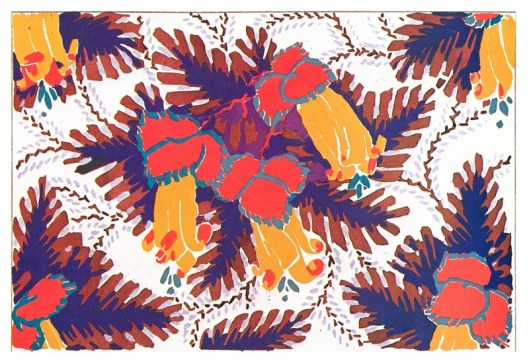
Posted by RichardB | Filed under Seguy Art Deco Designs
≈ Comments Off on Seguy Art Deco Designs 105

01 Saturday Aug 2020
Posted by RichardB | Filed under Seguy Art Deco Designs
≈ Comments Off on Seguy Art Deco Designs 105
01 Saturday Aug 2020
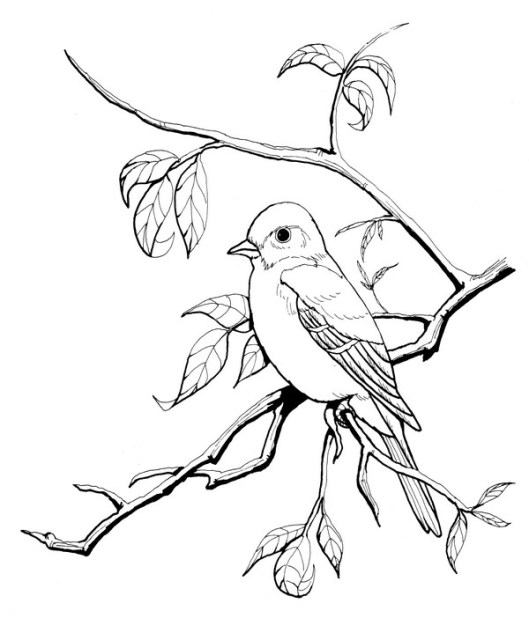
Posted by RichardB | Filed under Coloring Pages
≈ Comments Off on Eastern Wood Pewee Coloring Page
31 Friday Jul 2020
30 Thursday Jul 2020
Posted in art, discovery, library, photos, Social Science
≈ Comments Off on Images from NYPL
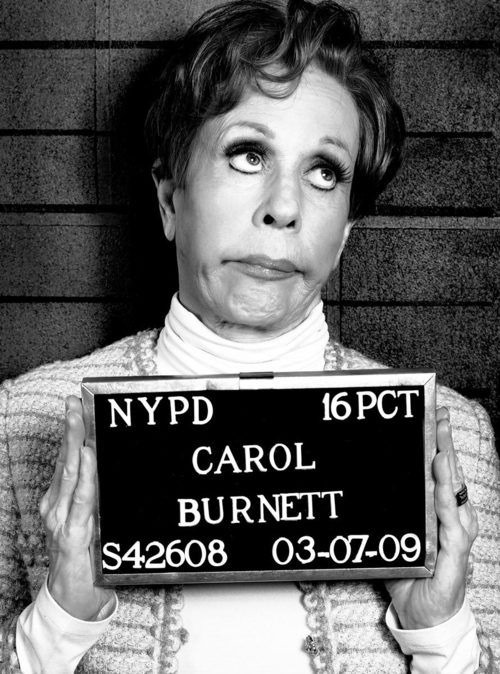 Want to do some research or just stumble across something interesting? Come and browse the digital stacks of one the worlds premier libraries. Here you will find a large image database which you can search and/or browse by subject or name.
The New York Public Library Digital Library Gallery-see it for yourself – online.
30 Thursday Jul 2020
Are dietary interventions effective for treating ADHD? For many parents and professionals, trying to parse through the different claims about the impact of diet on ADHD has been challenging and confusing. At this point, substantial research on how dietary interventions impact ADHD has accumulated and several meta-analyses of this work have been published. Recently, a review of several meta-analyses of dietary interventions for ADHD was published [Research review: The role of diet in the treatment of attention-deficit/hyperactivity disorder — an appraisal of the evidence on efficacy and recommendations on the design of future studies]. In this paper, the authors summarize findings across 6 different meta-analyses of the impact of diet on ADHD to provide a high level summary of the best available evidence to date.
Types of dietary interventions 
Three types of dietary interventions were reviewed — Restricted Elimination Diets (RED), Artificial food coloring exclusion (AFCE), and supplementation with free fatty acids (SFFA). Although other types of supplements beyond free fatty acids have been investigated, the authors felt there was not sufficient research on any single approach to include in their summary.
1. Restricted elimination diets (RED) — There are 2 different approaches to implementing this diet. In one approach, the child is placed on an extremely restricted diet, e.g., rice, turkey, a range of vegetables (lettuce, carrots, cauliflower, cabbage, beets), pears and water; this is sometimes referred to as the Few Food Diet. When a reduction in ADHD behaviors results — this would generally occur within 2–3 weeks if the diet is going to have a positive effect — new foods can be added back one at a time to see if they are well-tolerated or lead to an increase in problem behaviors. Alternatively, particular foods that are suspected to exacerbate a child’s symptoms may be removed one at a time to see if the child’s behavior improves.
2. Artificial food coloring exclusion (AFCE)- As the title indicates, this involves efforts to remove all artificial food colorings from a child’s diet, e.g.,Yellow #6, Yellow #5, Sodium Benzoate, Blue #2, etc., and observing whether this is associated with a reduction in ADHD behaviors. Carefully conducted trials have demonstrated that AFC’s – in amounts children could typically consume – can increase ADHD symptoms in many children.
3. Essential fatty acid supplementation — Certain fatty acids, e.g., Omega 3 and Omega 6, promote neural functioning. These fatty acids are called essential because they are not synthesized in the body and must be ingested. Children with ADHD may have lower levels of essential fatty acids relative to peers and several studies have demonstrated a link between low levels of EFAs and the severity of ADHD symptoms. Studies investigating the benefits of fatty acid supplementation for youth with ADHD raise fatty acid levels by administering capsules containing the fatty acids or sometimes by introducing diets rich in fish products. – See more at: http://www.creativitypost.com/science/3_dietary_interventions_that_can_help_children_with_adhd_especially_when_pr
29 Wednesday Jul 2020
Tags
For it is not light that is needed, but fire; it is not the gentle shower, but thunder. We need the storm, the whirlwind, and the earthquake. The feeling of the nation must be quickened; the conscience of the nation must be roused; the propriety of the nation must be startled; the hypocrisy of the nation must be exposed; and its crimes against God and man must be proclaimed and denounced. Frederick Douglass

28 Tuesday Jul 2020
28 Tuesday Jul 2020
Posted in Addiction, Creative Therapy Tools
≈ Comments Off on Addiction: Is Love All You Need?
If anything deserves to be called “the establishment view,” it is what Johann Hari — in his new book on addiction and the war on drugs, Chasing the Scream: The First and Last Days of the War on Drugs — calls the pharmaceutical model of addiction.
The pharmaceutical model says that addiction is about chemicals. Addiction is a chronic incurable disease of the brain. The brain’s pleasure centers are hijacked.
The pharmaceutical model may be the conventional wisdom, but it is certainly not without controversy. Researchers such as Gene Heyman and Bruce K. Alexander have long questioned whether the data support this picture. 
As Hari reminds us, heroin use was rampant among U.S. soldiers stationed in Vietnam during that conflict. According to one study he cites, 20 percent of these American servicemen were heroin users. Over 85 percent of these users gave up heroin when they got home, the book says; they simply stopped taking the drug.
How do we reconcile this fact with the idea that the drug hijacks the brain and takes over? If that’s true, you wouldn’t expect a change of scenery (coming home from Vietnam) all by itself to break the neuro-chemical stranglehold. Alternatively, you might speculate that perhaps these heroin users were not really addicted. That the fact that they stopped proves this. But then we face a new problem: If the addiction is a chemical effect of the drug, then why weren’t they addicted?
Indeed, as Heyman claims in his book, there is good evidence that most addicts in the general population, as a matter of fact, eventually stop using drugs. They stop because they get to a point where they want or need or find that they are able to stop. They decide to stop. Now, this doesn’t fit very well with the conventional wisdom. You can’t simply decide to give up other diseases like diabetes or heart disease!
Or consider the fact that, as Hari explains, actual chemical dependence seems to be only a small part of drug addiction. If addiction were just about chemicals, then you would expect that the availability of nicotine patches — which can deliver smokers every bit of the nicotine they would get from a cigarette — would, in one fell swoop, eliminate the feeling that one needs to smoke. But not so. Only 17.7 percent of smokers using nicotine patches, according to Hari, break their addiction to smoking.
Hari also describes a fascinating reverse case. At some point in the 70s, heroin interdiction in Vancouver was so effective that there was virtually no heroin on the streets. This didn’t stop dealers from selling white powder and calling it heroin, and it didn’t stop addicts from hustling to get their hands on this powder so that they could shoot up. If it is the chemical itself that drives addiction and controls the addict, then you would have expected that Vancouver’s junkies, deprived of real heroin, would have been weened of their dependence.
That this didn’t happen is striking evidence — assuming the anecdote, originally reported by Alexander, is true — that not only is the chemical itself not sufficient to explain addiction, it isn’t even necessary.
Data like these suggest that addictions, although they no doubt interact with neural chemistry, can’t adequately be understood alone in neuro-chemical terms. And this is because it is people, not brains, that get hooked. To understand the actions of addicts, you need to look at their lives as a whole. When doctors claim, as they do, that addiction is a disease of the brain, they are saying something that is either trivially true (that the brain plays a role in addiction) or something entirely false (that the brain is the whole story).
It is true, as the old commercial made vivid, that a rat in a cage will forego water to self-administer morphine every time — and will continue to do so until it is dead. But, maybe, it’s not the morphine that best explains this but, rather, the fact that the sorry rat is locked up exposed, in complete isolation from its fellows, in an otherwise empty cage.
This observation led Alexander to wonder: Would a rat in a richer environment — one including not only water and morphine, but also other rats and good food and interesting landscapes — take the same self-destructive course of action? Or, rather, would this other rat find itself so totally dominated by the rewards that the drug alone provides? To investigate this, Alexander designed “rat parks” that were much larger, interesting and hospitable environments in which communities of rats were placed. He found that happy rats in happy rat parks behaved more like casual human drinkers than liked crazed addicts, in that they limited themselves to small amounts of morphine.
This result is striking — and it certainly corresponds to my own personal experience of addiction. I have known addicts, but I have known many more drug users who were not addicted.
Now, Hari is convinced that Alexander has unlocked the true essence of addiction. Addiction is caused by isolation. And the cure for addiction, it follows, is love. We need to give the addict back his or her feeling of connection to others.
This is a beautiful idea — and I like beautiful ideas. I also think that it gets something right. Addicts are disconnected and isolated. But we need to be careful in drawing a too-speedy conclusion. The fact that being isolated is a cause of addiction doesn’t yet clarify how sociality, love, friendship, isolation, etc., function in the lives of addicts. In particular, it doesn’t mean that you can fix addiction with love.
One reason love might not be all you need is that it could be that the wounds that lead us to turn to drugs, to really give ourselves over to drugs, might have their roots in our early lives. It’s hard to simply “get over” early childhood trauma. (Hari also celebrates the work of Mate Gabor, a clinician who argues, in ways that some thinkers worry might be a bit reductive, that the sources of addiction lie in trauma.)
But there is a deeper reason to worry that love couldn’t suffice. Whatever its causes, addiction would seem to be — something like this is Heyman’s view — a disorder of one’s ability to connect to others and value the things that human beings tend usually to value (such as food, exercise, sex, family, work). The remarkable and striking thing about many addicts is that they opt for self-medication over encounter — they turn inward and shut out the world.
It might be right, as Hari claims, that we would fix addiction if we could restore in the addict a sense of connection with the world around him or her, and with other people. But that’s not a prescription as much as it is a statement of the problem. Addicts are shut off.
27 Monday Jul 2020
Tags
Glim Spanky is a Japanese rock band from Nagano Prefecture, consisting of vocalist and rhythm guitarist Remi Matsuo and lead guitarist Hiroki Kamemoto. Originally formed in 2007 as a quartet, the group became a duo in February 2010.
I have a 16,000 plus digital audio collection and I use Media Monkey to manage my files. One feature of Media Monkey is you can sort your collection based on the number of times played. This playlist is based on the top music and/or music video files I played/listened/streamed from my server in 2019. Complete 2019 Playlist HERE
26 Sunday Jul 2020
Tags
I’m a level 5 vegan, I don’t eat anything that casts a shadow. Matt Groening

26 Sunday Jul 2020
25 Saturday Jul 2020
25 Saturday Jul 2020

Posted by RichardB | Filed under Japanese Textile Designs
≈ Comments Off on Japanese Textile Designs 108
24 Friday Jul 2020
23 Thursday Jul 2020
Tags
For those suffering depression or anxiety, using cannabis for relief may not be the long-term answer.
That’s according to new research from a team at Colorado State University seeking scientific clarity on how cannabis — particularly chronic, heavy use — affects neurological activity, including the processing of emotions. 
Researchers led by Lucy Troup, assistant professor in the Department of Psychology, have published a study in PeerJ describing their findings from an in-depth, questionnaire-based analysis of 178 college-aged, legal users of cannabis. Recreational cannabis became legal in Colorado in 2014. Since then, seven other states have enacted legalization for recreational use, while many others allow medical use.
“One thing we wanted to focus on was the significance of Colorado, the first state to legalize recreational cannabis, and its own unique population and use that occurs here,” Troup said.
Through the study, which was based solely upon self-reported use of the drug, the researchers sought to draw correlations between depressive or anxious symptoms and cannabis consumption.
They found that those respondents categorized with subclinical depression, who reported using the drug to treat their depressive symptoms, scored lower on their anxiety symptoms than on their depressive symptoms – so, they were actually more depressed than they were anxious. The same was true for self-reported anxiety sufferers: they were found to be more anxious than they were depressed. MORE HERE
23 Thursday Jul 2020
London has the red double-decker bus, New York the yellow taxi, and the Philippines has the Jeepney.
The country’s most popular means of public transport zipping by adds a flash of vibrancy in the often frustrating, gridlocked streets of metropolitan Manila.
With names like Delilah and Rosa emblazoned across the front, each one is individually adorned with religious and nationalistic artwork – no two are identical.
For Ed Sarao, head of Sarao Motors – one of the first makers of Jeepneys – the vehicle represents the multi-cultural history of the Philippines.
“There is bit of Spanish, Mexican traits there; how they incorporate vivid colours, fiesta-like feelings. There is a little of the Americans because it evolved from the Jeep. There is a little Japan because of the Japanese engine. But it was built by Filipino hands,” he says.
But while it was once part of the Philippines’ image and identity, the Jeepney has now become something of a dinosaur – and newer, more economical vehicles are starting to take its place. Read the full story HERE.
22 Wednesday Jul 2020
Tags
Did St Francis preach to the birds? Whatever for? If he really liked birds he would have done better to preach to the cats. Rebecca West

21 Tuesday Jul 2020
Posted in Creative Therapy Tools, Creativity
≈ Comments Off on Creativity: The science behind the madness
Tags
20 Monday Jul 2020
Posted in Music
≈ Comments Off on Top songs I have listened too in 2019: Haim – Summer Girl
Haim is an American pop rock band from Los Angeles. The band consists of three sisters: Este Haim, Danielle Haim and Alana Haim. In addition to their primary instruments, each member is also proficient in several others. The group’s pop sound on their studio work stands in contrast to the more rock-based music of their live shows.
I have a 16,000 plus digital audio collection and I use Media Monkey to manage my files. One feature of Media Monkey is you can sort your collection based on the number of times played. This playlist is based on the top music and/or music video files I played/listened/streamed from my server in 2019. Complete 2019 Playlist HERE
19 Sunday Jul 2020
Posted in create, Creativity, quote
≈ Comments Off on Don’t think




 RichardbBrunner