My neighbor Jack likes to bury his ball in the snow, bark at it, dig it out, move a few feet and do it all over again. Photography with a Sony a6300, 18-05 F4 G lens.

29 Sunday Dec 2019
28 Saturday Dec 2019

Posted by RichardB | Filed under Japanese Textile Designs
≈ Comments Off on Japanese Textile Designs 127
28 Saturday Dec 2019

Posted by RichardB | Filed under Coloring Pages
≈ Comments Off on Red Admiral Coloring Page
27 Friday Dec 2019
Posted in Meditation, mindfulness, Wellness
≈ Comments Off on Breathe
27 Friday Dec 2019
Posted in Uncategorized
≈ Comments Off on devotion
26 Thursday Dec 2019
Posted in Self Esteem, Self-Care, Wellness
≈ Comments Off on Five Strengths
I used to think that mentally strong people had superhuman qualities. I thought that they were bestowed with some sort of cybernetic strength that they – and only they – had.
I thought I would never be like that. In fact, I thought most people would never be like that.
But then I tried something. I took on a challenge that to me seemed impossible. And while we all have things that seem impossible – completing a book, starting a business, passing state exams – mine happened to be running a hundred mile race.
It was the hardest thing I have ever done. But when I finished, I also realized something. The ONLY thing that had held me back was my perception. See, I thought the race would be harder than it really was. I thought it would be so hard that I couldn’t do it. And that is EXACTLY what had held me back.
What I realized was that mental toughness isn’t about being superhuman. It’s about cultivating a few strengths consistently.
Here they are:
Gratitude: You may not associate gratitude with mental toughness, but you probably do associate mental toughness with overcoming adversity. That’s where gratitude come in. Gratitude gives us the reserve we need when times get tough. I think of it like an extra energy source that I can reach into when I have nothing left. Because there are ALWAYS things to be grateful for. And sometimes when facing adversity, it is those things we need to find to get through. And mentally strong people know just how to direct this quality to counteract the chain of negative thoughts that we all face when things don’t go our way. It’s then that we need to remember when things did go well, the successes we have had, and the people along the way who have helped us.
Openness: Mentally tough people do not see the world as a set of predictable steps that lead to the promised-land. Life is just not like that, and mentally strong people know that the only thing we know for sure is that things will change. And sometimes, in ways that we don’t like. But the other thing that happens when life puts a roadblock in our path is that we find a new path. And sometimes a better one. What mentally strong people know is every adversity also bring opportunity. But in order to see it, we have to first be willing to change.
A Sense of Personal Strength: The belief that you are strong doesn’t happen because things went your way. Perception of strength is carved out through the setbacks, roadblocks, and difficulties you’ve faced. It happens because you earned it. And while mentally strong people won’t tell you that they enjoy battling adversity, they will say that life without adversity is like life not actualized. Because it’s in adversity that our strengths our realized. And it’s in then that we come to know how strong we really are.
Meaningful Relationships: The truth is no one can go it alone – not even mentally strong people. But mentally strong people also don’t need an entire army cheering for them. What they do need – and what all need – are a few close relationships where we can let ourselves be seen. We can let our guard down, say what we need to say, and be heard. Every person – even the strongest – has a need to be accepted. And not just for their strengths. Because what mentally strong people also know is thatstrength is nothing without the vulnerability to be seen as we are – faults and all. It is only then that we can make peace with our faults. And it is only then that we can also make peace with our losses and find the strength to move forward.
Faith: You don’t have to be a spiritual person. You don’t even have to believe in God. But what mentally strong people know is that in order to get through adversity you do have to have faith. You have to believe that somehow it is possible. It is possible for you to face adversity and make it through. It is possible for you to grow stronger from it. And it is possible for you to be mentally tough. It all starts with faith – in yourself, and in something larger than you. Because the minute you connect your experience to something larger, it isn’t about you anymore. And the adversity you face isn’t personal. Adversity becomes something that we all face – for the purpose of getting stronge
25 Wednesday Dec 2019
Posted in Depression, Uncategorized
Tags
Whether you’re a college student in the middle of a major slump, a new mom who can’t pinpoint why she’s feeling so glum, or a retiree grieving over the loss of a loved one, that question isn’t an easy one to answer.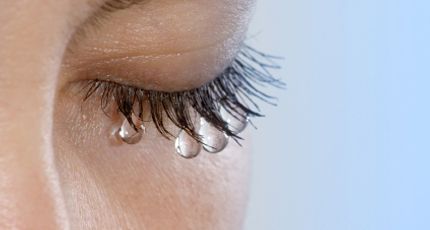
But there’s one thing for sure: “It is much more than just a sad mood,” said Angelos Halaris, MD, a professor of psychiatry and medical director of adult psychiatry at the Loyola University Medical Center in Chicago. Symptoms may include everything from hopelessness and fatigue to physical pain. And just as symptoms vary from person to person, so do the actual diagnoses. The word depression is actually just an umbrella term for a number of different forms, from major depression to atypical depression to dysthymia.
The most common form of depression? Major depression. In fact, about 7 percent of the adult U.S. population has this debilitating mental health condition at any given time, according to the National Institute of Mental Health (NIMH).
If you’re experiencing major depression, you may feel and see symptoms of extreme sadness, hopelessness, lack of energy, irritability, trouble concentrating, changes in sleep or eating habits, feelings of guilt, physical pain, and thoughts of death or suicide — and for an official diagnosis, your symptoms must last for more than two weeks. In some instances, a person might only experience one episode of major depression, but the condition tends to recur throughout a person’s life.
The best treatment is usually with antidepressant medications, explained Dr. Halaris, but talk therapy may also be used to treat depression. And there’s good news: An estimated 80 to 90 percent of people with major depression respond well to treatment.
About 2 percent of the American population has a form of depression that’s less severe than major depression, but is still very real — dysthymia.
Dysthymia is a type of depression that causes a low mood over a long period of time — perhaps for a year or more, explained Halaris. “People can function adequately, but not optimally.” Symptoms include sadness, trouble concentrating, fatigue, and changes in sleep habits and appetite.
This depression usually responds better to talk therapy than to medications, though some studies suggest that combining medication with talk therapy may lead to the greatest improvement. People with dysthymia may also be at risk for episodes of major depression.
A whopping 85 percent of new moms feel some sadness after their baby is born — but for up to 16 percent of women, that sadness is serious enough to be diagnosable.
Postpartum depression is characterized by feelings of extreme sadness, fatigue, loneliness, hopelessness, suicidal thoughts, fears about hurting the baby, and feelings of disconnect from the child. It can occur anywhere from weeks to months after childbirth, and Halaris explained it most always develops within a year after a woman has given birth.
“It needs prompt and experienced medical care,” he said — and that may include a combination of talk and drug therapy.
Would you prefer to hibernate during the winter than face those cold, dreary days? Do you tend to gain weight, feel blue, and withdraw socially during the season?
You could be one of 4 to 6 percent of people in the United States estimated to have seasonal affective disorder, or SAD. Though many people find themselves in winter funks, SAD is characterized by symptoms of anxiety, increased irritability, daytime fatigue, and weight gain. This form of depression typically occurs in winter climates, likely due to the lessening of natural sunlight. “We don’t really know why some people are more sensitive to this reduction in light,” said Halaris. “But symptoms are usually mild, though they can be severe.”
This depression usually starts in early winter and lifts in the spring, and it can be treated with light therapy or artificial light treatment.
Despite its name, atypical depression is not unusual. In fact, it may be one of the most common types of depression — and some doctors even believe it is underdiagnosed.
“This type of depression is less well understood than major depression,” explained Halaris. Unlike major depression, a common sign of atypical depression is a sense of heaviness in the arms and legs — like a form of paralysis. However, a study published in the Archives of General Psychiatry (now known as JAMA Psychiatry) found that oversleeping and overeating are the two most important symptoms for diagnosing atypical depression. People with the condition may also gain weight, be irritable, and have relationship problems.
Some studies show that talk therapy works well to treat this kind of depression.
Psychosis — a mental state characterized by false beliefs, known as delusions, or false sights or sounds, known as hallucinations — doesn’t typically get associated with depression. But according to the National Alliance on Mental Illness, about 20 percent of people with depression have episodes so severe that they see or hear things that are not really there.
“People with this psychotic depression may become catatonic, not speak, or not leave their bed,” explained Halaris. Treatment may require a combination of antidepressant and antipsychotic medications. A review of 10 studies concluded that it may be best to start with an antidepressant drug alone and then add an antipsychotic drug if needed. Another review, however, found the combination of medications was more effective than either drug alone in treating psychotic depression.
If your periods of extreme lows are followed by periods of extreme highs, you could have bipolar disorder (sometimes called manic depressive disorder because symptoms can alternate between mania and depression).
Symptoms of mania include high energy, excitement, racing thoughts, and poor judgment. “Symptoms may cycle between depression and mania a few times per year or much more rapidly,” Halaris said. “This disorder affects about 2 to 3 percent of the population and has one of the highest risks for suicide.” Bipolar disorder has four basic subtypes: bipolar I (characterized by at least one manic episode); bipolar II (characterized by hypomanic episodes — which are milder — along with depression); cyclothymic disorder; and other specified bipolar and related disorder.
People with bipolar disorder are typically treated with drugs called mood stabilizers.
Premenstrual dysphoric disorder, or PMDD, is a type of depression that affects women during the second half of their menstrual cycles. Symptoms include depression, anxiety, and mood swings. Unlike premenstrual syndrome (PMS), which affects up to 85 percent of women and has milder symptoms, PMDD affects about 5 percent of women and is much more severe.
“PMDD can be severe enough to affect a woman’s relationships and her ability to function normally when symptoms are active,” said Halaris. Treatment may include a combination of depression drugs as well as talk and nutrition therapies.
Also called adjustment disorder, situational depression is triggered by a stressful or life-changing event, such as job loss, the death of a loved one, trauma — even a bad breakup.
Situational depression is about three times more common than major depression, and medications are rarely needed — that’s because it tends to clear up over time once the event has ended. However, that doesn’t mean it should be ignored: Symptoms of situational depression may include excessive sadness, worry, or nervousness, and if they don’t go away, they may become warning signs of major depression.
25 Wednesday Dec 2019
24 Tuesday Dec 2019
Posted in creative, Creativity, Health, Intuition
≈ Comments Off on The Creative Life and Well-Being

See more at: http://www.creativitypost.com/psychology/the_creative_life_and_well_being
23 Monday Dec 2019
Posted in article, Meditation, mindfulness
≈ Comments Off on Gene expression changes with meditation
Tags
With evidence growing that meditation can have beneficial health effects, scientists have sought to understand how these practices physically affect the body.
A new study by researchers in Wisconsin, Spain, and France reports the first evidence of specific molecular changes in the body following a period of mindfulness meditation. The study investigated the effects of a day of intensive mindfulness practice in a group of experienced meditators, compared to a group of untrained control subjects who engaged in quiet non-meditative activities. After eight hours of mindfulness practice, the meditators showed a range of genetic and molecular differences, including altered levels of gene-regulating machinery and reduced levels of pro-inflammatory genes, which in turn correlated with faster physical recovery from a stressful situation.
“To the best of our knowledge, this is the first paper that shows rapid alterations in gene expression within subjects associated with mindfulness meditation practice,” says study author Richard J. Davidson, founder of the Center for Investigating Healthy Minds and the William James and Vilas Professor of Psychology and Psychiatry at the University of Wisconsin-Madison.
“Most interestingly, the changes were observed in genes that are the current targets of anti-inflammatory and analgesic drugs,” says Perla Kaliman, first author of the article and a researcher at the Institute of Biomedical Research of Barcelona, Spain (IIBB-CSIC-IDIBAPS), where the molecular analyses were conducted.
The study was published in the journal Psychoneuroendocrinology.
Mindfulness-based trainings have shown beneficial effects on inflammatory disorders in prior clinical studies. The new results provide a possible biological mechanism for therapeutic effects.
The results show a down-regulation of genes that have been implicated in inflammation. The affected genes include the pro-inflammatory genes RIPK2 and COX2 as well as several histone deacetylase (HDAC) genes, which regulate the activity of other genes epigenetically by removing a type of chemical tag. What’s more, the extent to which some of those genes were downregulated was associated with faster cortisol recovery to a social stress test involving an impromptu speech and tasks requiring mental calculations performed in front of an audience and video camera.
Perhaps surprisingly, the researchers say, there was no difference in the tested genes between the two groups of people at the start of the study. The observed effects were seen only in the meditators following mindfulness practice. In addition, several other DNA-modifying genes showed no differences between groups, suggesting that the mindfulness practice specifically affected certain regulatory pathways.
However, it is important to note that the study was not designed to distinguish any effects of long-term meditation training from those of a single day of practice. Instead, the key result is that meditators experienced genetic changes following mindfulness practice that were not seen in the non-meditating group after other quiet activities — an outcome providing proof of principle that mindfulness practice can lead to epigenetic alterations of the genome.
Previous studies in rodents and in people have shown dynamic epigenetic responses to physical stimuli such as stress, diet, or exercise within just a few hours.
“Our genes are quite dynamic in their expression and these results suggest that the calmness of our mind can actually have a potential influence on their expression,” Davidson says.
“The regulation of HDACs and inflammatory pathways may represent some of the mechanisms underlying the therapeutic potential of mindfulness-based interventions,” Kaliman says. “Our findings set the foundation for future studies to further assess meditation strategies for the treatment of chronic inflammatory conditions.”
Study funding came from National Center for Complementary and Alternative Medicine (grant number P01-AT004952) and grants from the Fetzer Institute, the John Templeton Foundation, and an anonymous donor to Davidson. The study was conducted at the Center for Investigating Healthy Minds at the UW-Madison Waisman Center.
Journal Reference:
Perla Kaliman, María Jesús Álvarez-López, Marta Cosín-Tomás, Melissa A. Rosenkranz, Antoine Lutz, Richard J. Davidson. Rapid changes in histone deacetylases and inflammatory gene expression in expert meditators.Psychoneuroendocrinology, 2014; 40: 96 DOI: 10.1016/j.psyneuen.2013.11.004
23 Monday Dec 2019
Tags
21 Saturday Dec 2019

Posted by RichardB | Filed under Seguy Art Deco Designs
≈ Comments Off on Seguy Art Deco Designs 115
21 Saturday Dec 2019

Posted by RichardB | Filed under Coloring Pages
≈ Comments Off on Cedar Waxwing Coloring Page
20 Friday Dec 2019
Tags
“You must learn from the mistakes of others. You can’t possibly live long enough to make them all yourself.” Sam Levenson

20 Friday Dec 2019
Posted in photo, quote, Richard Rohr
≈ Comments Off on ourselves
Tags
“We do not think ourselves into new ways of living, we live ourselves into new ways of thinking.” Richard Rohr

19 Thursday Dec 2019
Posted in grounding, Handout, Health, mental health, Psychoeducation, Therapy
≈ Comments Off on Grounding
Grounding Techniques are activities you use when you feel overwhelmed by feelings, thoughts, sensations. These techniques help a person move their focus away from what is overwhelming them to something else. That something else is preferable healthy and supportive to their wellbeing. Below is a list that clients and patients have mentioned over the years of things they do that help them ground.
18 Wednesday Dec 2019

researchers examined whether simply walking could temporarily improve some types of thinking, such as free-flowing thought compared to focused concentration. “Asking someone to take a 30-minute run to improve creativity at work would be an unpopular prescription for many people,” Schwartz said. “We wanted to see if a simple walk might lead to more free-flowing thoughts and more creativity.”

18 Wednesday Dec 2019
Posted in Depression, mindfulness, practice, YouTube
≈ Comments Off on The mindful way through depression
Tags
17 Tuesday Dec 2019
Posted in Uncategorized
≈ Comments Off on Research as a graphic novel
Research as a graphic novel or is it a graphic novel as research. Interesting article from The London School of Economics Impact of Social Sciences blog.
What would be a novel way of engaging people more people with research findings? Academics are wondering if traditional journal articles are still fit for purpose or if an injection of creativity is needed. Go to original post here.

16 Monday Dec 2019
Posted in Meditation, mindfulness, Wellness, YouTube
≈ Comments Off on TEDx:The Practice of Mindfulness
Tags
Former Buddhist nun Diana Winston is the director of Mindfulness Education at UCLA Mindful Awareness Center, and the author of several books on mindfulness and meditation. With more than 20 years in the study and practice of mindfulness, Diana explains how routinely taking the time to be in the moment can have a profound impact on our everyday lives and relationships.