• Home
  • Music
  • About
  • Contact
  • CreativeTherapyTools.com

RichardbBrunner

~ creative arts therapist

RichardbBrunner

Author Archives: RichardB

Dogs help regrow forests

13 Sunday Dec 2020

Posted by RichardB in dogs

≈ Comments Off on Dogs help regrow forests

Tags

dogs, forests, grow, pets

Francisca and Constanza Torres and their three dogs, are planting seeds in areas of Chile devastated by wildfires. The project, which uses dog backpacks, is done in their own time and has already gained international recognition. See the Short Video HERE at the BBC.

Image

Potato Beetle Coloring Page

12 Saturday Dec 2020

Tags

Coloring Page, Potato Beetle

CPIT-Potato Beetle-TR.jpg

Posted by RichardB | Filed under Coloring Pages

≈ Comments Off on Potato Beetle Coloring Page

Image

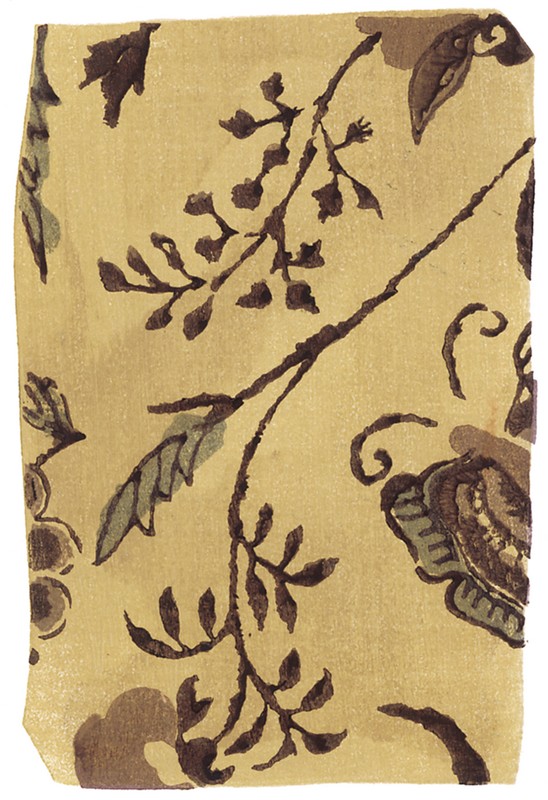
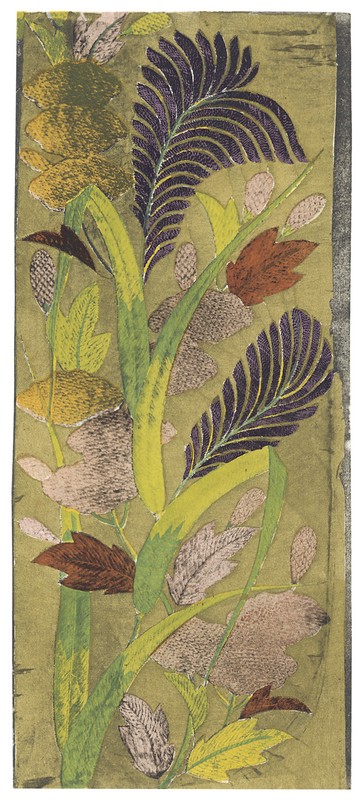
Seguy Art Deco Designs 94

12 Saturday Dec 2020

Tags

Seguy Art Deco Designs

SeguyTR-094.jpg

Posted by RichardB | Filed under Seguy Art Deco Designs

≈ Comments Off on Seguy Art Deco Designs 94

Yoga may boost your brain power

11 Friday Dec 2020

Posted by RichardB in brain, Health, Meditation, Relaxation, Wellness, Yoga

≈ Comments Off on Yoga may boost your brain power

Tags

balance, research, stress

Yogis may be enjoying a surprising benefit when they unroll their mats and strike a pose. A new study finds that just 20 minutes of hatha yoga stimulates brain function.

Researchers from the University of Illinois at Urbana-Champaign enlisted 30 subjects to take tests of working memory and inhibitory control, two measures of brain function associated with the ability to focus, retain, and use new information, the researchers said.

Subjects who took a single, 20-minute yoga session were significantly faster and more accurate on their tests than subjects who walked or jogged on a treadmill for 20 minutes.
Participants on the treadmill exercised with the goal of maintaining 60 to 70 percent of their maximum heart rate throughout the exercise session. “This range was chosen to replicate previous findings that have shown improved cognitive performance in response to this intensity,” the researchers said.yoga1

“Yoga is an ancient Indian science and way of life that includes not only physical movements and postures but also regulated breathing and meditation,” said study lead Neha Gothe. “The practice involves an active attentional or mindfulness component but its potential benefits have not been thoroughly explored.”

Subjects who practiced yoga performed a 20-minute sequence of seated, standing, and supine yoga postures, with the class ending in a meditative posture and deep breathing.

“It appears that following yoga practice, the participants were better able to focus their mental resources, process information quickly, more accurately and also learn, hold and update pieces of information more effectively than after performing an aerobic exercise bout,” Gothe said.

“The breathing and meditative exercises aim at calming the mind and body and keeping distracting thoughts away while you focus on your body, posture or breath,” she said. “Maybe these processes translate beyond yoga practice when you try to perform mental tasks or day-to-day activities.”

Findings, announced June 5, appear in the Journal of Physical Activity and Health.
A separate study published last month finds that twice-weekly yoga sessions can reduce high blood pressure. In the study, researchers led by Dr. Debbie Cohen of the University of Pennsylvania tracked 58 women and men, aged 38 to 62, for 24 weeks.

Another study published earlier this year in the journal Frontiers in Psychiatry found that the practice may soothe depression and help sleep problems.

Read more:A 20-minute yoga session may boost your brain power – The Denver Posthttp://www.denverpost.com/breakingnews/ci_23413802/20-minute-yoga-session-may-boost-your-brain#ixzz2VoCOdrUU

“I Won’t Give Up” – a Dance Performance by Donna Russo

10 Thursday Dec 2020

Posted by RichardB in Dance, YouTube

≈ 1 Comment

Tags

dance, Movement, performance, wellness

The body

10 Thursday Dec 2020

Posted by RichardB in photos, quote, Uncategorized

≈ Comments Off on The body

Tags

Nietzsche, photo

The body is a big sagacity, a plurality with one sense, a war and a peace, a flock and a shepherd. ~Friedrich Nietzsche

msclip-124.jpg


Addiction Hijacks the Brain

09 Wednesday Dec 2020

Posted by RichardB in Addiction

≈ Comments Off on Addiction Hijacks the Brain

Tags

Addiction

You’ve probably heard of the brain’s reward network. It’s activated by basic needs — including food, water and sex — and releases a surge of the feel-good neurotransmitter dopamine when those needs are met. But it can also be hijacked by drugs, which lead to a greater dopamine release than those basic needs. Brain-0020.jpg

But the reward network isn’t the only brain network altered by drug use. A new review concluded that drug addiction affects six main brain networks: the reward, habit, salience, executive, memory and self-directed networks.

In 2016, a total of 20.1 million people ages 12 and older in the U.S. had a substance-use disorder, according to the National Survey on Drug Use and Health, an annual survey on drug use. And drug addiction, regardless of the substance used, had surprisingly similar effects on the addicted brain, said the new review, published yesterday (June 6) in the journal Neuron.

The review looked at more than 100 studies and review papers on drug addiction, all of which studied a type of brain scan called functional magnetic resonance imaging (fMRI).

More than half of the studies out there look at the effects of drug use on the reward network, said Anna Zilverstand, lead author of the new review and an assistant professor of psychiatry at the Icahn School of Medicine at Mount Sinai in New York City. [7 Ways Alcohol Affects Your Health]

“Because we showed that the effects are very distributed across the six different networks … [we can conclude that] an approach that only looks at one of these networks isn’t really justified,” Zilverstand told Live Science. “This [finding] will hopefully lead other researchers to look beyond the reward network.”

For example, the memory network is pretty much ignored in research on substance-use disorders, Zilverstand said. This network allows humans to learn non-habit-based things, such as a new physics concept or a history lesson. Some research has suggested that in people with substance-use disorders, stress shifts the person’s learning and memory away from the memory network to the habit network, which drives automatic behavior, such as seeking and taking drugs.

Another less-studied network is the self-directed network, which is involved in self-awareness and self-reflection, the review said. In people with addictions, this network has been associated with increasing craving.

Two other networks are involved in substance-use disorders: The executive network is normally responsible for goal-maintaining and execution, but drugs can alter this network as well, reducing a person’s ability to inhibit their actions. The salience network picks up important cues in a person’s environment and redirects the individual’s attention to them. (In people with drug addiction, attention is redirected toward drugs, increasing craving and drug-seeking.)

Which comes first, the brain activity or the drug use?

“For me, the most surprising [finding] was how consistent the effects were across addictions,” Zilverstand said. What’s more, “the fact that the effects are quite independent of the specific drug use points to them being something general that might actually precede drug use rather than be a consequence of drug use.”

Zilverstand said she hopes that more studies will look at whether some people have abnormal brain activity in these six networks naturally and if that activity just gets exacerbated if they begin drug use. It’s important to know if some of these traits precede drug use; if that’s the case, it might be possible to identify people who are prone to addiction and intervene before an addiction begins, she said.

Some research has pointed toward this possibility already. For example, studies have shown that some people have “difficulties … inhibiting impulsiveness before drug use,” Zilverstand said. “Some of these impairments precede drug use, and they may become worse with more drug use, but they exist before the problem escalates.”

The good news, however, is that activity in four of these networks — executive, reward, memory and salience — moves back toward “normal” once drug use ends. “We know that four of the networks (partially — not fully) recover but not yet what happens to the other two networks,” Zilverstand said in an email.

Zilverstand added that she’s particularly excited about an ongoing study called the Adolescent Brain Cognitive Development (ABCD) Study, which is tracking 10,000 children across the U.S. from around ages 9 or 10 to age 20 (the children are now around 13). Some of these individuals will inevitably become addicted to drugs, most likely marijuana or alcohol, Zilverstand said.

“We’ll be able to see if the effects that we found [in the review] exist in youth who have not yet abused drugs,” she said, and she predicted that researchers will be able to find a lot of the effects identified in the review in the six brain networks.

The authors noted that because some regions of the brain are very small — for example, the amygdala, which is found toward the center of the brain — the studies can’t identify strong signals from those areas on brain scans. So, it’s possible that drugs affect additional networks in the brain that are hidden because of the limitations of our technologies, Zilverstand said.

“We don’t want to conclude that [those effects] don’t exist,” she said.

Mindfulness Minds

08 Tuesday Dec 2020

Posted by RichardB in Handout, Minfulness, Wellness

≈ Comments Off on Mindfulness Minds

Tags

mindfulness

I have been practicing meditation since the mid-70’s and started a mindfulness meditation practice in the mid-90’s. Mindfulness has to do with the quality of awareness that we bring to what we are doing and experiencing, to being in the here and now.  It has to do with learning to focus on being in the present, to focusing our attention on what we are doing and what is happening in the present.

Many of us are distracted by images, thoughts and feelings of the past, perhaps dissociating, worrying about the future, negative moods and anxieties about the present.   It’s hard to put these thing away and concentrate on the task at hand.

I started teaching mindfulness to patients/clients a few years ago and often used the following as a hand out:

Mindfulness has to do with states of mind. Reason Mind, Emotion Mind, and Wise Mind. Reason Mind is your rational, thinking, logical mind. It plans and evaluates things logically. It is your “cool” part. Reasonable Mind can be very beneficial. It is easier to be in Reasonable Mind when you feel good. It is much harder to be in Reasonable Mind when you don’t feel good.

You Would Use Your Reasonable Mind To:

Build a bridge

Figure out how to double a recipe

Balance your checkbook

Figure out the fastest way from point “A” to point “B”

SONY DSC

Emotion Mind describes times when emotions are what influence or control your thinking and behavior. Emotional Mind can also be very beneficial. Emotions are what motivate us to action. Emotions are what keep us attached to others and building relationships.

Emotion Mind can be aggravated by:

Illness, Lack Of Sleep, Tiredness, Drugs, Alcohol, Hungry, Overeating, Poor nutrition and/or lack of exercise, Environmental stress and threats, not taking your meds.

Both Emotion and Reasonable Mind Are Equally Important And Valuable

Reasonable mind gives you a way to solve your problems.

Emotion mind gives you a reason (motivation) to want to solve them.

Wise Mind is the integration of emotional and reasonable mind. Wise mind is that part of each person that can know and experience truth. It is where the person knows something to be true or valid. It is where the person knows something in a centered (balanced) way. It is almost always quiet and calm in this part of the mind.

Everyone Has A Wise Mind!

Some people have simply never experienced it.

No one is in Wise Mind all of the time.

Wise Mind – An Analogy for Wise Mind is like a deep well in the ground. The water is at the bottom of the well. The entire underground is an ocean called Wise Mind. But on the way down, there are often trap doors that stop progress. Sometimes the trap doors are so cleverly built that you actually believe that there is no water at the bottom of the well. The trap door may look like the bottom of the well. Perhaps it is locked and you need a key. Perhaps it is nailed shut and you need a hammer. Perhaps it is glued shut and you need a chisel.

Image

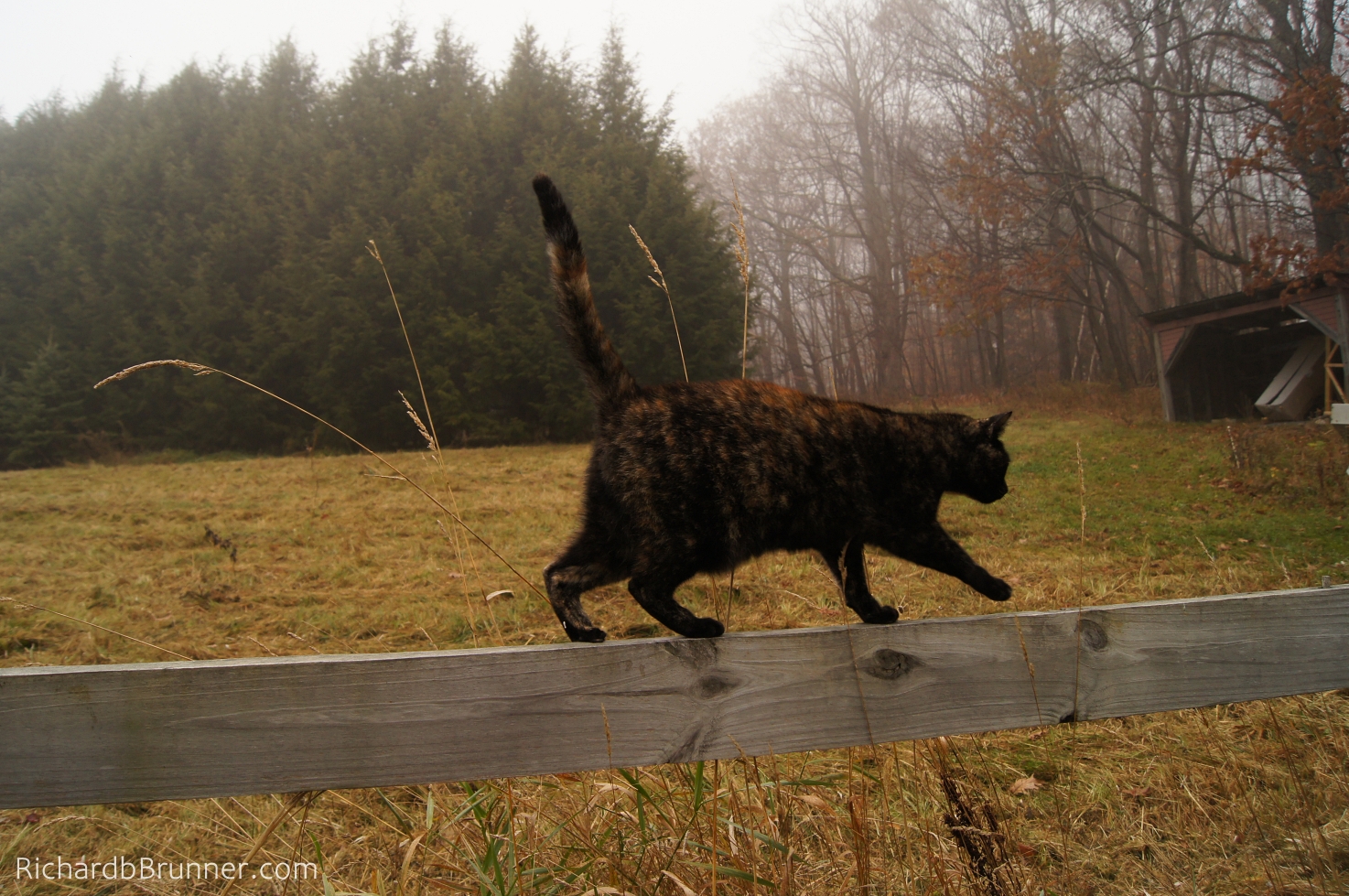
Looking and Listening

08 Tuesday Dec 2020

Tags

cat, fall, My Photos

Posted by RichardB | Filed under My Photos

≈ Comments Off on Looking and Listening

From the Play List Top songs I have listened to in 2012: The Long Ride – The Audreys

07 Monday Dec 2020

Posted by RichardB in Music, youtube

≈ Comments Off on From the Play List Top songs I have listened to in 2012: The Long Ride – The Audreys

Tags

music, The Audreys, youtube

Fall New Hampshire Look Around Colors

06 Sunday Dec 2020

Posted by RichardB in My Photos

≈ 1 Comment

Tags

fall, My Photos

Cats are

06 Sunday Dec 2020

Posted by RichardB in Pets

≈ Comments Off on Cats are

Tags

cats, pets, snow

Cats are smarter than dogs. You can’t get eight cats to pull a sled through snow. Jeff Valdez

catsnoww

Image

Aphrodite Coloring Page

05 Saturday Dec 2020

Tags

Aphrodite, Coloring Page

CPGD-Aphrodite-TR.jpg

Posted by RichardB | Filed under Coloring Pages

≈ Comments Off on Aphrodite Coloring Page

Image

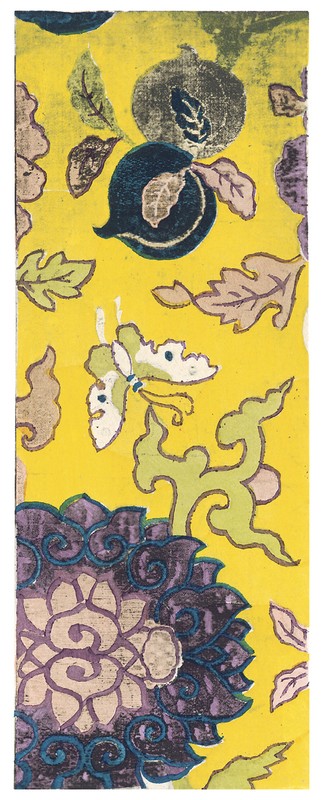
Japanese Textile Designs 97

05 Saturday Dec 2020

JapanTR-097.jpg

Posted by RichardB | Filed under Japanese Textile Designs

≈ Comments Off on Japanese Textile Designs 97

How Your Body Affects Your Happiness

03 Thursday Dec 2020

Posted by RichardB in Body Image, body language, Dance Movement Therapy, Movement, Neuroscience, Psychology, Psychotherapy, Wellness, YouTube

≈ 1 Comment

Tags

body, Body Image, dmt, Posture, therapy.wellness

Drugs and the Brain

03 Thursday Dec 2020

Posted by RichardB in brain, drugs, research, Uncategorized

≈ Comments Off on Drugs and the Brain

Tags

brain, drugs

The human brain is the most complex organ in the body. This three-pound mass of gray and white matter sits at the center of all human activity—you need it to drive a car, to enjoy a meal, to breathe, to create an artistic masterpiece, and to enjoy everyday activities. In brief, the brain regulates your body’s basic functions; enables you to interpret and respond to everything you experience; and shapes your thoughts, emotions, and behavior.

The brain is made up of many parts that all work together as a team. Different parts of the brain are responsible for coordinating and performing specific functions. Drugs can alter important brain areas that are necessary for life-sustaining functions and can drive the compulsive drug abuse that marks addiction. Brain areas affected by drug abuse include: 

  • The brain stem, which controls basic functions critical to life, such as heart rate, breathing, and sleeping.
  • The cerebral cortex, which is divided into areas that control specific functions. Different areas process information from our senses, enabling us to see, feel, hear, and taste. The front part of the cortex, the frontal cortex or forebrain, is the thinking center of the brain; it powers our ability to think, plan, solve problems, and make decisions.
  • The limbic system, which contains the brain’s reward circuit. It links together a number of brain structures that control and regulate our ability to feel pleasure. Feeling pleasure motivates us to repeat behaviors that are critical to our existence. The limbic system is activated by healthy, life-sustaining activities such as eating and socializing—but it is also activated by drugs of abuse. In addition, the limbic system is responsible for our perception of other emotions, both positive and negative, which explains the mood-altering properties of many drugs.

How do the parts of the brain communicate?

The brain is a communications center consisting of billions of neurons, or nerve cells. Networks of neurons pass messages back and forth among different structures within the brain, the spinal cord, and nerves in the rest of the body (the peripheral nervous system). These nerve networks coordinate and regulate everything we feel, think, and do.

  • Neuron to Neuron
    Each nerve cell in the brain sends and receives messages in the form of electrical and chemical signals. Once a cell receives and processes a message, it sends it on to other neurons.
  • Neurotransmitters – The Brain’s Chemical Messengers
    The messages are typically carried between neurons by chemicals called neurotransmitters.
  • Receptors – The Brain’s Chemical Receivers
    The neurotransmitter attaches to a specialized site on the receiving neuron called a receptor. A neurotransmitter and its receptor operate like a “key and lock,” an exquisitely specific mechanism that ensures that each receptor will forward the appropriate message only after interacting with the right kind of neurotransmitter.
  • Transporters – The Brain’s Chemical Recyclers
    Located on the neuron that releases the neurotransmitter, transporters recycle these neurotransmitters (that is, bring them back into the neuron that released them), thereby shutting off the signal between neurons. soa_013.gif

To send a message, a brain cell (neuron) releases a chemical (neurotransmitter) into the space (synapse) between it and the next cell. The neurotransmitter crosses the synapse and attaches to proteins (receptors) on the receiving brain cell. This causes changes in the receiving cell—the message is delivered.

How do drugs work in the brain?

Drugs are chemicals that affect the brain by tapping into its communication system and interfering with the way neurons normally send, receive, and process information. Some drugs, such as marijuana and heroin, can activate neurons because their chemical structure mimics that of a natural neurotransmitter. This similarity in structure “fools” receptors and allows the drugs to attach onto and activate the neurons. Although these drugs mimic the brain’s own chemicals, they don’t activate neurons in the same way as a natural neurotransmitter, and they lead to abnormal messages being transmitted through the network.

Other drugs, such as amphetamine or cocaine, can cause the neurons to release abnormally large amounts of natural neurotransmitters or prevent the normal recycling of these brain chemicals. This disruption produces a greatly amplified message, ultimately disrupting communication channels.

How do drugs work in the brain to produce pleasure?

Most drugs of abuse directly or indirectly target the brain’s reward system by flooding the circuit with dopamine. Dopamine is a neurotransmitter present in regions of the brain that regulate movement, emotion, motivation, and feelings of pleasure. When activated at normal levels, this system rewards our natural behaviors. Overstimulating the system with drugs, however, produces euphoric effects, which strongly reinforce the behavior of drug use—teaching the user to repeat it.

Most drugs of abuse target the brain’s reward system by flooding it with dopamine.

soa_014_large

How does stimulation of the brain’s pleasure circuit teach us to keep taking drugs?

Our brains are wired to ensure that we will repeat life-sustaining activities by associating those activities with pleasure or reward. Whenever this reward circuit is activated, the brain notes that something important is happening that needs to be remembered, and teaches us to do it again and again without thinking about it. Because drugs of abuse stimulate the same circuit, we learn to abuse drugs in the same way.

Why are drugs more addictive than natural rewards?

When some drugs of abuse are taken, they can release 2 to 10 times the amount of dopamine that natural rewards such as eating and sex do.15 In some cases, this occurs almost immediately (as when drugs are smoked or injected), and the effects can last much longer than those produced by natural rewards. The resulting effects on the brain’s pleasure circuit dwarf those produced by naturally rewarding behaviors.16,17The effect of such a powerful reward strongly motivates people to take drugs again and again. This is why scientists sometimes say that drug abuse is something we learn to do very, very well.

Long-term drug abuse impairs brain functioning.

What happens to your brain if you keep taking drugs?

For the brain, the difference between normal rewards and drug rewards can be described as the difference between someone whispering into your ear and someone shouting into a microphone. Just as we turn down the volume on a radio that is too loud, the brain adjusts to the overwhelming surges in dopamine (and other neurotransmitters) by producing less dopamine or by reducing the number of receptors that can receive signals. As a result, dopamine’s impact on the reward circuit of the brain of someone who abuses drugs can become abnormally low, and that person’s ability to experience anypleasure is reduced.

This is why a person who abuses drugs eventually feels flat, lifeless, and depressed, and is unable to enjoy things that were previously pleasurable. Now, the person needs to keep taking drugs again and again just to try and bring his or her dopamine function back up to normal—which only makes the problem worse, like a vicious cycle. Also, the person will often need to take larger amounts of the drug to produce the familiar dopamine high—an effect known as tolerance.

Decreased Dopamine Transporters in a Methamphetamine Abuser18

soa_015.gif

How does long-term drug taking affect brain circuits?

We know that the same sort of mechanisms involved in the development of tolerance can eventually lead to profound changes in neurons and brain circuits, with the potential to severely compromise the long-term health of the brain. For example, glutamate is another neurotransmitter that influences the reward circuit and the ability to learn. When the optimal concentration of glutamate is altered by drug abuse, the brain attempts to compensate for this change, which can cause impairment in cognitive function. Similarly, long-term drug abuse can trigger adaptations in habit or non-conscious memory systems. Conditioning is one example of this type of learning, in which cues in a person’s daily routine or environment become associated with the drug experience and can trigger uncontrollable cravings whenever the person is exposed to these cues, even if the drug itself is not available. This learned “reflex” is extremely durable and can affect a person who once used drugs even after many years of abstinence.

What other brain changes occur with abuse?

Chronic exposure to drugs of abuse disrupts the way critical brain structures interact to control and inhibit behaviors related to drug use. Just as continued abuse may lead to tolerance or the need for higher drug dosages to produce an effect, it may also lead to addiction, which can drive a user to seek out and take drugs compulsively. Drug addiction erodes a person’s self-control and ability to make sound decisions, while producing intense impulses to take drugs.

Reading the World

02 Wednesday Dec 2020

Posted by RichardB in Uncategorized

≈ Comments Off on Reading the World

Tags

bbc, reading, world

Interesting post from the BBC.

Writer Ann Morgan set herself a challenge – to read a book from every country in the world in one year. She describes the experience and what she learned.

http://www.bbc.com/culture/story/20130715-reading-the-world-in-365-days

Ann Morgan’s reading list can be found here: http://ayearofreadingtheworld.com/thelist/

18-books.jpg

Image

Clear fall to winter day

01 Tuesday Dec 2020

Tags

fall, My Photos, winter

Posted by RichardB | Filed under My Photos

≈ Comments Off on Clear fall to winter day

From the Play List Top songs I have listened to in 2011: JARABE DE PALO – ¿Y AHORA QUÉ HACEMOS?

30 Monday Nov 2020

Posted by RichardB in Music, YouTube

≈ Comments Off on From the Play List Top songs I have listened to in 2011: JARABE DE PALO – ¿Y AHORA QUÉ HACEMOS?

Tags

Jarabe De Palo, music

Science proves that you love your dog like a baby

29 Sunday Nov 2020

Posted by RichardB in dogs, Pets, Science

≈ Comments Off on Science proves that you love your dog like a baby

Tags

dogs, pets, science

Interesting article about pets and how humans react/respond to them. From the abstract:

Neural substrates underlying the human-pet relationship are largely unknown. We examined fMRI brain activation patterns as mothers viewed images of their own child and dog and an unfamiliar child and dog. There was a common network of brain regions involved in emotion, reward, affiliation, visual processing and social cognition when mothers viewed images of both their child and dog. Viewing images of their child resulted in brain

clip_image001

activity in the midbrain (ventral tegmental area/substantia nigra involved in reward/affiliation), while a more posterior cortical brain activation pattern involving fusiform gyrus (visual processing of faces and social cognition) characterized a mother’s response to her dog. Mothers also rated images of their child and dog as eliciting similar levels of excitement (arousal) and pleasantness (valence), although the difference in the own vs. unfamiliar child comparison was larger than the own vs. unfamiliar dog comparison for arousal. Valence ratings of their dog were also positively correlated with ratings of the attachment to their dog. Although there are similarities in the perceived emotional experience and brain function associated with the mother-child and mother-dog bond, there are also key differences that may reflect variance in the evolutionary course and function of these relationships.

Stoeckel LE, Palley LS, Gollub RL, Niemi SM, Evins AE (2014) Patterns of Brain Activation when Mothers View Their Own Child and Dog: An fMRI Study. PLoS ONE 9(10): e107205. doi:10.1371/journal.pone.0107205

http://www.plosone.org/article/info%253Adoi%252F10.1371%252Fjournal.pone.0107205

← Older posts
Newer posts →

instagram

Follow RichardbBrunner on WordPress.com
  • Tumblr
  • YouTube

Blog at WordPress.com.

Privacy & Cookies: This site uses cookies. By continuing to use this website, you agree to their use.
To find out more, including how to control cookies, see here: Cookie Policy
  • Subscribe Subscribed
    • RichardbBrunner
    • Join 492 other subscribers
    • Already have a WordPress.com account? Log in now.
    • RichardbBrunner
    • Subscribe Subscribed
    • Sign up
    • Log in
    • Report this content
    • View site in Reader
    • Manage subscriptions
    • Collapse this bar

Loading Comments...