• Home
  • Music
  • About
  • Contact
  • CreativeTherapyTools.com

RichardbBrunner

~ creative arts therapist

RichardbBrunner

Category Archives: research

Study shows gene expression changes with meditation

18 Thursday Mar 2021

Posted by RichardB in Health, Meditation, mental health, mindfulness, Relaxation, research, Wellness

≈ 1 Comment

Tags

genes, Meditation, mindfulness, research

1378006_10151699852947169_1244682694_nWith evidence growing that meditation can have beneficial health effects, scientists have sought to understand how these practices physically affect the body.

A new study by researchers in Wisconsin, Spain, and France reports the first evidence of specific molecular changes in the body following a period of mindfulness meditation. The study investigated the effects of a day of intensive mindfulness practice in a group of experienced meditators, compared to a group of untrained control subjects who engaged in quiet non-meditative activities. After eight hours of mindfulness practice, the meditators showed a range of genetic and molecular differences, including altered levels of gene-regulating machinery and reduced levels of pro-inflammatory genes, which in turn correlated with faster physical recovery from a stressful situation.

“To the best of our knowledge, this is the first paper that shows rapid alterations in gene expression within subjects associated with mindfulness meditation practice,” says study author Richard J. Davidson, founder of the Center for Investigating Healthy Minds and the William James and Vilas Professor of Psychology and Psychiatry at the University of Wisconsin-Madison.

“Most interestingly, the changes were observed in genes that are the current targets of anti-inflammatory and analgesic drugs,” says Perla Kaliman, first author of the article and a researcher at the Institute of Biomedical Research of Barcelona, Spain (IIBB-CSIC-IDIBAPS), where the molecular analyses were conducted.

The study was published in the journal Psychoneuroendocrinology.

Mindfulness-based trainings have shown beneficial effects on inflammatory disorders in prior clinical studies. The new results provide a possible biological mechanism for therapeutic effects.

The results show a down-regulation of genes that have been implicated in inflammation. The affected genes include the pro-inflammatory genes RIPK2 and COX2 as well as several histone deacetylase (HDAC) genes, which regulate the activity of other genes epigenetically by removing a type of chemical tag. What’s more, the extent to which some of those genes were downregulated was associated with faster cortisol recovery to a social stress test involving an impromptu speech and tasks requiring mental calculations performed in front of an audience and video camera.

Perhaps surprisingly, the researchers say, there was no difference in the tested genes between the two groups of people at the start of the study. The observed effects were seen only in the meditators following mindfulness practice. In addition, several other DNA-modifying genes showed no differences between groups, suggesting that the mindfulness practice specifically affected certain regulatory pathways.

However, it is important to note that the study was not designed to distinguish any effects of long-term meditation training from those of a single day of practice. Instead, the key result is that meditators experienced genetic changes following mindfulness practice that were not seen in the non-meditating group after other quiet activities — an outcome providing proof of principle that mindfulness practice can lead to epigenetic alterations of the genome.

Previous studies in rodents and in people have shown dynamic epigenetic responses to physical stimuli such as stress, diet, or exercise within just a few hours.

“Our genes are quite dynamic in their expression and these results suggest that the calmness of our mind can actually have a potential influence on their expression,” Davidson says.

“The regulation of HDACs and inflammatory pathways may represent some of the mechanisms underlying the therapeutic potential of mindfulness-based interventions,” Kaliman says. “Our findings set the foundation for future studies to further assess meditation strategies for the treatment of chronic inflammatory conditions.”

Study funding came from National Center for Complementary and Alternative Medicine (grant number P01-AT004952) and grants from the Fetzer Institute, the John Templeton Foundation, and an anonymous donor to Davidson. The study was conducted at the Center for Investigating Healthy Minds at the UW-Madison Waisman Center.

Journal Reference:

Perla Kaliman, María Jesús Álvarez-López, Marta Cosín-Tomás, Melissa A. Rosenkranz, Antoine Lutz, Richard J. Davidson. Rapid changes in histone deacetylases and inflammatory gene expression in expert meditators.Psychoneuroendocrinology, 2014; 40: 96 DOI: 10.1016/j.psyneuen.2013.11.004

Drugs and the Brain

03 Thursday Dec 2020

Posted by RichardB in brain, drugs, research, Uncategorized

≈ Comments Off on Drugs and the Brain

Tags

brain, drugs

The human brain is the most complex organ in the body. This three-pound mass of gray and white matter sits at the center of all human activity—you need it to drive a car, to enjoy a meal, to breathe, to create an artistic masterpiece, and to enjoy everyday activities. In brief, the brain regulates your body’s basic functions; enables you to interpret and respond to everything you experience; and shapes your thoughts, emotions, and behavior.

The brain is made up of many parts that all work together as a team. Different parts of the brain are responsible for coordinating and performing specific functions. Drugs can alter important brain areas that are necessary for life-sustaining functions and can drive the compulsive drug abuse that marks addiction. Brain areas affected by drug abuse include: 

  • The brain stem, which controls basic functions critical to life, such as heart rate, breathing, and sleeping.
  • The cerebral cortex, which is divided into areas that control specific functions. Different areas process information from our senses, enabling us to see, feel, hear, and taste. The front part of the cortex, the frontal cortex or forebrain, is the thinking center of the brain; it powers our ability to think, plan, solve problems, and make decisions.
  • The limbic system, which contains the brain’s reward circuit. It links together a number of brain structures that control and regulate our ability to feel pleasure. Feeling pleasure motivates us to repeat behaviors that are critical to our existence. The limbic system is activated by healthy, life-sustaining activities such as eating and socializing—but it is also activated by drugs of abuse. In addition, the limbic system is responsible for our perception of other emotions, both positive and negative, which explains the mood-altering properties of many drugs.

How do the parts of the brain communicate?

The brain is a communications center consisting of billions of neurons, or nerve cells. Networks of neurons pass messages back and forth among different structures within the brain, the spinal cord, and nerves in the rest of the body (the peripheral nervous system). These nerve networks coordinate and regulate everything we feel, think, and do.

  • Neuron to Neuron
    Each nerve cell in the brain sends and receives messages in the form of electrical and chemical signals. Once a cell receives and processes a message, it sends it on to other neurons.
  • Neurotransmitters – The Brain’s Chemical Messengers
    The messages are typically carried between neurons by chemicals called neurotransmitters.
  • Receptors – The Brain’s Chemical Receivers
    The neurotransmitter attaches to a specialized site on the receiving neuron called a receptor. A neurotransmitter and its receptor operate like a “key and lock,” an exquisitely specific mechanism that ensures that each receptor will forward the appropriate message only after interacting with the right kind of neurotransmitter.
  • Transporters – The Brain’s Chemical Recyclers
    Located on the neuron that releases the neurotransmitter, transporters recycle these neurotransmitters (that is, bring them back into the neuron that released them), thereby shutting off the signal between neurons. soa_013.gif

To send a message, a brain cell (neuron) releases a chemical (neurotransmitter) into the space (synapse) between it and the next cell. The neurotransmitter crosses the synapse and attaches to proteins (receptors) on the receiving brain cell. This causes changes in the receiving cell—the message is delivered.

How do drugs work in the brain?

Drugs are chemicals that affect the brain by tapping into its communication system and interfering with the way neurons normally send, receive, and process information. Some drugs, such as marijuana and heroin, can activate neurons because their chemical structure mimics that of a natural neurotransmitter. This similarity in structure “fools” receptors and allows the drugs to attach onto and activate the neurons. Although these drugs mimic the brain’s own chemicals, they don’t activate neurons in the same way as a natural neurotransmitter, and they lead to abnormal messages being transmitted through the network.

Other drugs, such as amphetamine or cocaine, can cause the neurons to release abnormally large amounts of natural neurotransmitters or prevent the normal recycling of these brain chemicals. This disruption produces a greatly amplified message, ultimately disrupting communication channels.

How do drugs work in the brain to produce pleasure?

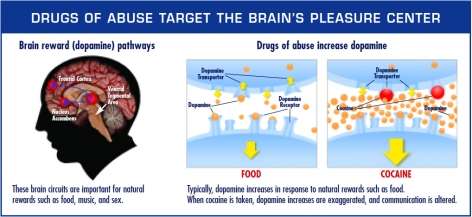
Most drugs of abuse directly or indirectly target the brain’s reward system by flooding the circuit with dopamine. Dopamine is a neurotransmitter present in regions of the brain that regulate movement, emotion, motivation, and feelings of pleasure. When activated at normal levels, this system rewards our natural behaviors. Overstimulating the system with drugs, however, produces euphoric effects, which strongly reinforce the behavior of drug use—teaching the user to repeat it.

Most drugs of abuse target the brain’s reward system by flooding it with dopamine.

soa_014_large

How does stimulation of the brain’s pleasure circuit teach us to keep taking drugs?

Our brains are wired to ensure that we will repeat life-sustaining activities by associating those activities with pleasure or reward. Whenever this reward circuit is activated, the brain notes that something important is happening that needs to be remembered, and teaches us to do it again and again without thinking about it. Because drugs of abuse stimulate the same circuit, we learn to abuse drugs in the same way.

Why are drugs more addictive than natural rewards?

When some drugs of abuse are taken, they can release 2 to 10 times the amount of dopamine that natural rewards such as eating and sex do.15 In some cases, this occurs almost immediately (as when drugs are smoked or injected), and the effects can last much longer than those produced by natural rewards. The resulting effects on the brain’s pleasure circuit dwarf those produced by naturally rewarding behaviors.16,17The effect of such a powerful reward strongly motivates people to take drugs again and again. This is why scientists sometimes say that drug abuse is something we learn to do very, very well.

Long-term drug abuse impairs brain functioning.

What happens to your brain if you keep taking drugs?

For the brain, the difference between normal rewards and drug rewards can be described as the difference between someone whispering into your ear and someone shouting into a microphone. Just as we turn down the volume on a radio that is too loud, the brain adjusts to the overwhelming surges in dopamine (and other neurotransmitters) by producing less dopamine or by reducing the number of receptors that can receive signals. As a result, dopamine’s impact on the reward circuit of the brain of someone who abuses drugs can become abnormally low, and that person’s ability to experience anypleasure is reduced.

This is why a person who abuses drugs eventually feels flat, lifeless, and depressed, and is unable to enjoy things that were previously pleasurable. Now, the person needs to keep taking drugs again and again just to try and bring his or her dopamine function back up to normal—which only makes the problem worse, like a vicious cycle. Also, the person will often need to take larger amounts of the drug to produce the familiar dopamine high—an effect known as tolerance.

Decreased Dopamine Transporters in a Methamphetamine Abuser18

soa_015.gif

How does long-term drug taking affect brain circuits?

We know that the same sort of mechanisms involved in the development of tolerance can eventually lead to profound changes in neurons and brain circuits, with the potential to severely compromise the long-term health of the brain. For example, glutamate is another neurotransmitter that influences the reward circuit and the ability to learn. When the optimal concentration of glutamate is altered by drug abuse, the brain attempts to compensate for this change, which can cause impairment in cognitive function. Similarly, long-term drug abuse can trigger adaptations in habit or non-conscious memory systems. Conditioning is one example of this type of learning, in which cues in a person’s daily routine or environment become associated with the drug experience and can trigger uncontrollable cravings whenever the person is exposed to these cues, even if the drug itself is not available. This learned “reflex” is extremely durable and can affect a person who once used drugs even after many years of abstinence.

What other brain changes occur with abuse?

Chronic exposure to drugs of abuse disrupts the way critical brain structures interact to control and inhibit behaviors related to drug use. Just as continued abuse may lead to tolerance or the need for higher drug dosages to produce an effect, it may also lead to addiction, which can drive a user to seek out and take drugs compulsively. Drug addiction erodes a person’s self-control and ability to make sound decisions, while producing intense impulses to take drugs.

Brain Map

28 Thursday May 2020

Posted by RichardB in brain, mental health, research

≈ 1 Comment

Tags

brain, learn, map

See the interactive Brain Map here.

brainmapy.png


Women and Men react differently

21 Tuesday Apr 2020

Posted by RichardB in emotions, mental health, research

≈ Comments Off on Women and Men react differently

Tags

men, Neuroscience, research, women

Women react more intensely to negative images than men, a difference that can be seen even when looking at their brains, a new study finds.

Researchers from University of Basel, whose study will be published in an issue of the Journal of Neuroscience, found that women rated positive and negative images as more emotionally stimulating than men did, and that their brains were more active than men’s when viewing negative pictures.5241352878_f53a343088

Such findings seem to support a common perception that women are more emotionally sensitive than men “and provides evidence for gender differences on the neural level,” said lead author Annette Milnik of the University of Basel. Read More Here.

Habits

02 Thursday Apr 2020

Posted by RichardB in Health, Psychoeducation, research, Wellness

≈ Comments Off on Habits

Tags

habits

DESPITE the best intentions for the new year, the reality is that by next month, gym memberships will lapse, chocolate will replace carrots and Candy Crush will edge out Moby Dick.

It’s not (only) that we’re undisciplined slugs. It’s that much of what we know — or think we know — about habits is wrong. Here’s a primer that might help keep you off the couch and on the treadmill.

MYTH 1 We fail to change our habits — or start good new ones — because we lack willpower.

Not really, said Wendy Wood, a professor of psychology and business at the University of Southern California. Willpower, she said, is more about looking at those yummy chocolate chip cookies and refusing them. A good habit ensures you’re rarely around those chocolate chip cookies in the first place.

To create or change a habit, you have to think much more about altering your environment and patterns of living than work on steeling your mind, Professor Wood said, because “behavior is very much a product of environment.”

Habits — at least good ones — exist so we don’t have to resist temptation all the time. Imagine if every morning you had a debate with yourself about eating cake or cereal for breakfast. Instead, most of us form the habit of eating something relatively healthy for breakfast, which bypasses the lure of the cake altogether.

That’s why it’s sometimes easiest to start or break a habit during a major transition. This may sound counterintuitive, but a new house, job or relationship breaks old patterns, said Gretchen Rubin, author of the forthcoming book, “Better Than Before: Mastering the Habits of Our Everyday Lives.”

“People say wait a few days to get settled, but don’t,” she said. “Start right away.”

MYTH 2 We fall back on bad habits when stressed. In fact, good habits persist even in times of high anxiety, Professor Wood said. A study of which Professor Wood was one of the co-authors found that students who already had unhealthy diets would eat junk food when stressed, but those who already had the habit of eating well — or of reading a newspaper or of going to the gym — were just as likely to do that.

MYTH 3 It takes about 21 days to break or make a habit.

That number seems to have cropped up in the 1960s and somehow became “fact” with no real proof. But in 2009, researchers in Britain decided to take a deeper look by studying how long it took participants to learn new habits, such as eating fruit daily or going jogging. The average was 66 days.

But individuals’ times varied greatly, from 18 days to 245 days, depending on temperament and, of course, the task involved. It will most likely take far less time to get into the habit of eating an apple every afternoon than of practicing the piano for an hour a day.

MYTH 4 You need positive thinking to break or make a habit.

“We find positive fantasy is not helpful and may even be hurtful when trying to reach a desired future or fulfill a wish,” said Gabriele Oettingen, a professor of psychology at New York University and the University of Hamburg.

Over years of research, she discovered that people need to pair optimistic daydreams about the future with identifying and imagining the obstacles that prevent them from reaching that goal — something she calls mental contrasting.

Say you want to stop being a procrastinator. The first step is easy. Imagine how it will feel if your work is completed with plenty of time to spare, if you can sleep instead of pulling an all-nighter, said Professor Oettingen, author of “Rethinking Positive Thinking.”

But don’t just resolve to stop procrastinating. The second step is to identify what holds you back from changing yourself. Is it fear that you won’t succeed? Is it the adrenaline rush of frantically working at the last minute? Is it because of negative feelings toward a boss or teacher?

The mental contrasting needs to be in the right order. It’s important to “experience our dreams, then switch gears and mentally face reality,” Professor Oettingen said.

Doing it the opposite way — imagining the obstacles and then fantasizing about changing habits — doesn’t seem to work as well, research shows.

MYTH 5 Doing things by rote, or habit, isn’t good in most cases. It’s better to be mindful of everything we do.

Research shows that most people repeat about 40 percent of their activities almost every day.

“We only have so much room in our brain,” said Ian Newby-Clark, an associate professor of psychology at the University of Guelph in Canada. “It would be incredibly taxing if we had to mindfully plan every step of our day.” Habits free us up so we can think about other things.

And while some habits are objectively bad — smoking, say, or being consistently late — most are subjective. “Habits are only good or bad to the extent they’re consistent or inconsistent with your goals,” Professor Wood of U.S.C. said. It’s a bad habit when “it starts interfering with other goals you have.”

For example, many people said their resolution this year was to cut down the time they spend online.

But why? Because it’s an inherently bad thing to do? Or is it an obstacle to spending more time reading books or riding a bike or learning to knit?

After thinking about it, you may choose to spend less time on your computer or phone. Or you might decide it’s not so terrible in limited doses and shed the habit of feeling guilty about it.

MYTH 6 Everything in moderation.

“There’s a real difference among people about how easily they adapt to habits,” Ms. Rubin said. Some see habits as liberating; some see them as a trap. Some prefer to make a huge change all at once; others proceed step by step.

“I’m in the small minority that loves habits,” Ms. Rubin said, adding that she tends to find it easier to abstain from certain things altogether. For example, she eats no carbohydrates.

“People said I was doomed to failure, but it’s not true,” she said. But, she noted, “it’s a mistake to think the abstainer is more disciplined. For me it’s easier to be an abstainer than have to deliberate each time whether I can eat something or not. Others would go nuts if they abstain.”

That’s why you shouldn’t listen to people who tell you you’re doing it wrong if it works for you, she said.

Also, people shouldn’t fear that their habit will dissolve if they don’t practice it daily.

“If you lapse once or twice, you’re not ruined,” Professor Wood said. “That’s a misconception.”

And that leads to …

MYTH 7 Shame and guilt keep you on track.

No. People need to be kinder to themselves, showing self-compassion if they lapse, Ms. Rubin said. But it’s a fine balance between treating yourself kindly and making endless rationalizations and excuses.

“I might mindfully make an exception,” she said, such as choosing to eat a traditional Christmas cake every year. “But I’m not making excuses in the moment: I’ll hurt the hostesses’ feelings. You only live once. It’s the holidays.”

One last piece of advice: If you want to be in better shape, get a dog. Professor Wood said studies show dog owners have lower body mass indexes. But here’s the catch: That’s only true if you walk the animal.

Intelligence, creativity and brain function

31 Tuesday Mar 2020

Posted by RichardB in brain, creative, mental health, Neuroscience, research

≈ Comments Off on Intelligence, creativity and brain function

Tags

brain function, Creativity, Intelligence

Do you have to be intelligent to be creative? Can you learn to be more creative? In this episode, we speak with neuropsychologist Rex E. Jung, PhD, who studies intelligence, creativity and brain function. He discusses why – even if it sounds counterintuitive – intelligence and creativity may not have all that much in common.

Transcript of interview with Audrey and Rex Jung from the APA website.

Audrey Hamilton: Do you have to be intelligent to be creative? Can you really learn to be more creative? In this episode, we speak with one neuropsychologist who studies intelligence, creativity and brain function. He talks about why – even if it sounds counterintuitive – intelligence and creativity may not have all that much in common. I’m Audrey Hamilton and this is “Speaking of Psychology.”

Rex Jung is an assistant professor of neurosurgery at the University of New Mexico and a practicing clinical neuropsychologist in Albuquerque. He studies both brain disease and what the brain does well – a field of research known as positive neuroscience. His research is designed to relate behavioral measures, including intelligence, personality and creativity to brain function and structure. He has published research articles across a wide-range of topics including traumatic brain injury, lupus, schizophrenia, intelligence and creativity. Welcome, Dr. Jung.creative-art-brain-300x300

Rex Jung: Thank you, Audrey.

Audrey Hamilton: Could you first of all explain neuroimaging and tell our listeners how it helps researchers understand how people think and act?

Rex Jung: Sure. So, neuroimaging is the tool that we use to measure the brain and there’s lots of different neuroimaging techniques. I use three main neuroimaging techniques – the first that I learned in graduate school was magnetic resonance microscopy, which sounds kind of complicated. But, it is a technique that basically looks at the chemicals in your brain. It’s in a standard MRI machine like you would go to get your knee scanned. But, using some sophisticated techniques you can look at certain chemicals in the brain. Some of those chemicals are very involved in important neuronal processes. And we’ve correlated those with behavior.

A different technique is called diffusion tensor imaging, which allows us to look at water movement in the brain. And this is important because there’s lots of tubes going through your brain like the wires that connect up your computer to the Internet. And these tubes, called axons, are connecting up different processing modules of your brain and those have to be healthy. So, we can look at the health of those axons, those myelinated axons, the fatty sheath like the insulation that surrounds those tubes.

The third technique that we use is just structural magnetic resonance imaging and that allows us to look at the processing modules of the brain – the cortical thickness – the computers that are on the surface of the brain and how much or little of that you have on the surface of the brain. Those are the three main techniques that I use. There’s functional imaging, fMRI, that most people have heard of where you’re looking a blood flow, as well. Those are ways that we measure brain structure and function and this gives us the ability to do scientific measures that then we can correlate to behavioral measures in psychology.

Audrey Hamilton: Does being highly creative mean you’re also more intelligent?

Rex Jung: Not necessarily. There’s a controversy about this in the psychological literature and some people have found correlations between creativity and intelligence. They’re usually pretty low, this association. And some people make a lot of that, this low association. But usually, because this association between creativity and intelligence is low, it means that you don’t necessarily have to be intelligent to be creative. So, I spent over a decade studying intelligence. It’s one of the reasons I started studying creativity because it seemed like something distinctly different and interesting than intelligence, which I have studied. I work with very highly intelligent people in academia and scientists and not all of them are creative. Why is that? If they do go together I would be working with all of the creative people in my city in Albuquerque, but that wasn’t the case so creativity seemed to be something different.

Audrey Hamilton: Can a person learn to become more creative or simply gain intelligence?

Rex Jung: There are some tools and techniques that can help people to be more creative. We’re starting to learn more about creativity and it’s one of the things that I’m excited about in terms of creativity is that there might be ways to increase your creative capacity.

Intelligence unfortunately seems to be much more under tight genetic control. The genetic correlates of intelligence are high, like .75. So, if you have twins – they’re going to be identical twins – their correlation of their intelligence with one another is going to be very, very high. So that implies that the genetic involvement of that capacity is under much more tight control than the environment would be.

With creativity, we don’t have that information and I’m hopeful that you can modulate or modify creative cognition much more than intelligence. There are studies out there that have shown increases in intelligence scores of two, maybe three points on a particular measure, which are not particularly high. But those are also controversial. Some have been replicated. Some haven’t been replicated. And we really don’t see that in terms of intelligence. With creativity, there’s a pitched effort to try to increase creativity scores on some of these measures and we’re seeing some good initial results and I’m very hopeful about that.

Audrey Hamilton: How does the way a person’s brain works and is structured influence how creative or intelligent he or she is?

Rex Jung: The research that we’ve done shows that the brain organization of intelligence and creativity are quite different. So, when you think about those measures that I talked about, those neuroimaging measures, the brain of someone who is intelligent – think of bigger, better, stronger, faster – all the measures are pointing to higher integrity of the brain of someone who has high intelligence. So, the cortical mantle is thicker, the white matter, the wires are more myelinated, the water can travel faster and in a coherent direction, you have more of these certain chemicals that I was talking about.

crAudrey Hamilton: It’s beefed up.

Rex Jung: It’s beefed up, yes. So you can have a better organized brain.

With creativity, the story was different. In different regions of the brain, we were seeing weaker connections, thinner cortex and different levels of these same biochemicals. So, it was really clear from these studies that intelligence and creativity were different because we were seeing different pictures in the measures we were taking of the brain. But I tend to look at creativity and intelligence as two different kinds of reasoning. That creativity is kind of reasoning without all of the information present. So, call it abductive reasoning. But, you have hypothesis testing about how the world could work without all of the information present. So, you have to use abstraction and metaphor and stuff like that about this might look like this or this might be this way.

With intelligence, you’re using deductive reasoning, where it’s rule-based reasoning where a equals b and that’s the way it goes. You have a rule for how this relationship works. So, creativity and intelligence are probably different types of reasoning. Both are very adaptive, but they’re just different for different types of problems that you have to solve out in the world.

Audrey Hamilton: Is real creativity rare? How about genius?

Rex Jung: So, creativity is common and genius is a lot more rare than we would believe. The term genius gets thrown around a lot. But, I think genius is rare because that combination of brain organization where you have high fidelity, beefed up brain in certain regions and then kind of down regulated brain in other regions is really going to be kind of rare where that is present in the same brain. So, to have that back and forth between intelligence and creativity, the ability to do both of those reasoning processes well, where you can do first approximations, hypothesis testing, abstraction and then create a rule, a novel and useful rule out of nothing before is rare and that is true genius.

Audrey Hamilton: Well great. Thank you so much for joining us, Dr. Jung. It’s been very, very interesting.

Rex Jung: Great. Thank you, Audrey.

How racial stereotypes impact communication

25 Tuesday Feb 2020

Posted by RichardB in Communication, Expectations, Racial stereotypes, research

≈ Comments Off on How racial stereotypes impact communication

Tags

research

Racial stereotypes and expectations can impact the way we communicate and understand others, according to UBC research.

The new study, published in the Journal of the Acoustical Society of America, highlights how non-verbal “social cues” – such as photographs of Chinese Canadians – can affect how we comprehend speech.

“This research brings to light our internal, biases, and the role of experience and stereotypes, in how we listen to and hear each other,” says Molly Babel, the paper’s lead author and an assistant professor with UBC’s Department of Linguistics.

One of the study’s tasks involved participants from the UBC community transcribing pre-recorded sentences amid background static. The sentences were recorded by 12 native speakers of Canadian English. Half of the speakers self-identified as White, and the other half self-identified as Chinese. All speakers were born and raised in Richmond, B.C., which is south of Vancouver.

The pre-recorded sentences were accompanied by either black and white photos of the speakers, or by an image of three crosses. Overall, listeners found the Chinese Canadians more difficult to understand than the White Canadians – but only when they were made aware that the speaker was Chinese Canadian due to the photo prompt.

Participants were also asked to rate the strength of the accents of the speakers. They were asked to listen to two sentences from each speaker – one accompanied by the speaker’s photo, the other by an image of crosses. “Once participants were aware that they were listening to a White Canadian, suddenly the candidate was perceived as having less of a foreign accent and sounding more like a native speaker of Canadian English,” says Babel.

“It tells us as listeners that we need to be sensitive about the stereotypes that we carry,” notes Jamie Russell, the study’s co-author who was an undergraduate honours student in UBC’s Department of Linguistics during the project.

Background

The study, “Expectations and Speech Intelligibility,” is published in the Journal of the Acoustical Society of America. The authors are Molly Babel and Jamie Russell, both of UBC’s Department of Linguistics.

The study involved five tasks: speech perception in noise, accentedness rating, an implicit measure of ethnic bias, an explicit measure of ethnic bias and a social network self-assessment.

Stanford Medicine: Mood Disorders Across the Lifespan

12 Wednesday Feb 2020

Posted by RichardB in mental health, Psychoeducation, research, youtube

≈ Comments Off on Stanford Medicine: Mood Disorders Across the Lifespan

Tags

Lifespan, Mood Disorders, Stanford

Dr. Katherine Williams, Director of Stanford’s Women’s Wellness Clinic, addresses Women’s Health Forum attendees on mood disorders in women.

Kestenberg Movement Profile: Tension Flow Rhythms

11 Wednesday Dec 2019

Posted by RichardB in creative arts therapy, Dance Movement Therapy, research, youtube

≈ Comments Off on Kestenberg Movement Profile: Tension Flow Rhythms

Tags

youtube

KMP Movement Analysis is the comprehensive system for identifying psychological, developmental, emotional, cognitive and global health/imbalance through movement observation, notation and interpretation.
If the mind, emotions, and body are a closely integrated , mutually interacting system, then it is reasonable that we should be able to gain information about the mind by observing the body. The body and its manner of moving not only reveals aspects of current feelings and emotions, but can give us insight into an individual’s past. As Loman and Foley wrote in 1996, “…experiences get stored in the body and are reflected in body movement.” A person who feels rejected may develop a hollow, narrowed body attitude which expresses and reinforces such feelings throughout life. Because both physical and emotional experiences leave long term traces upon the way people hold themselves and move, the study of movement opens a door to the study of patterns of early development, coping strategies and personality configurations.

Mood Disorders Across the Lifespan

20 Wednesday Nov 2019

Posted by RichardB in research, Therapy, youtube

≈ Comments Off on Mood Disorders Across the Lifespan

Tags

Mood Disorders, therapy, youtube

The impact of weight based bullying on LGBTQ Youth

08 Friday Nov 2019

Posted by RichardB in adversity, behavior, bullying, LGBTQ, research

≈ Comments Off on The impact of weight based bullying on LGBTQ Youth

Tags

bullying, LGBTQ, weight, youth

Weight-based victimization (WBV) is a common form of bullying associated with maladaptive eating, and poor weight-related health. Although sexual and gender minority (SGM) youth experience a number of eating and weight-related health disparities, the link between WBV and these outcomes has not been investigated in this
vulnerable population.

Data came from the LGBTQ Teen Study, a national survey of SGM adolescents.
Participants provided data to assess body mass index (BMI), WBV, sexual identity, gender identity, dieting, binge eating, eating to cope with stress, weight control behaviors, exercise, and stress (N = 9679). The sample was 66% White, with a mean age of 15.6 years; 58.5% had healthy weight, and 37.2% had overweight or obesity.

Over half of participants reported WBV from family members and peers. WBV from family members was associated with maladaptive eating (i.e., binge-eating, unhealthy weight-control behaviors), dieting, and poor weight-related health (i.e., stress, exercise avoidance, less physical activity and poorer sleep); relationships remained significant after accounting for participants’ age, BMI percentile for age and sex, race, gender identity, and sexual identity. Higher frequency of WBV at school, but not history of peer weight-based victimization, was associated with more maladaptive eating, dieting, and poorer weight-related health on all outcomes except physical activity. This is the first large-scale study that examined links between WBV, maladaptive eating behaviors, and weight-related health in SGM adolescents. These results suggest the need for increased awareness that WBV may play a role in maladaptive eating, and weight-related health of SGM youth, and may contribute to both elevated levels of eating disorders and obesity in this population. Read More at The Rudd Center For Food Policy & Obesity. (opens a PDF)

Food-0228

Weight stigma associated with harmful #health consequences

01 Friday Nov 2019

Posted by RichardB in behavior, diet, eat, emotions, Health and wellness, men, research

≈ 1 Comment

Tags

diet, health, men, research, stigma

Men’s health may be compromised by weight stigma, finds the latest research from the University of Connecticut.

As many as 40% of men report experiencing weight stigma, but little is known about how this stigma affects their health. This study found that men experiencing weight stigma have more depressive symptoms, are more likely to binge eat, and have lower self-rated health.  Read More at Science Daily

mid section view of a man sitting on a bench in a park


Scientist Seeks Neural And Biological Basis For Creativity, Beauty And Love

02 Tuesday Jul 2019

Posted by RichardB in brain, research

≈ Comments Off on Scientist Seeks Neural And Biological Basis For Creativity, Beauty And Love

One of the world’s leading neuroscientists is to search for the neural and biological basis for creativity, beauty and love after receiving over £1 million from the Wellcome Trust, the UK’s largest medical research charity. The research will bring together science, the arts and philosophy to answer fundamental questions about what it means to be human. 

Professor Semir Zeki from University College London (UCL) has received a Wellcome Trust Strategic Award to establish a programme of research in the new field of “neuroaesthetics”. The research will build on his previous work into the neural mechanisms behind beauty and love. 

Together with Professor Ray Dolan, Director of the Wellcome Trust Centre for Neuroimaging at UCL, Professor Zeki will look at questions that have been debated for millennia by writers, artists and philosophers and yet have been little studied by neurobiologists: Can we measure beauty objectively” How are beauty and love related” What does it mean to be happy” 

“All human societies place a high premium on art and the pursuit of beauty,” says Professor Zeki. “We all value and reward creativity. We all want to pursue happiness. But what do these entities mean in concrete, neurobiological terms” We hope to address these issues experimentally. The results will not only increase our knowledge about the workings of the human brain but will also give deep insights into human nature and how we view ourselves.” 

Neuroesthetics aims to illuminate the brain’s workings through its cultural products in a similar way to how neuroscientists study the brain through malfunctions caused by disease. However, Professor Zeki believes its impact may be much wider. 

“The new field of neuroaesthetics will teach biologists to use the products of the brain in art, music, literature and mathematics to better understand how the brain functions,” he says. “Success will encourage an interdisciplinary approach to other fields, such as the study of economics or jurisprudence in terms of brain activity. This will have a deep impact on social issues.” 

Using Wellcome Trust funding, Professor Zeki hopes to attract students and researchers from the sciences, arts and humanities in truly interdisciplinary research. Their work will be overseen by an Advisory Board that will include author AS Byatt, physician, opera producer and broadcaster Sir Jonathan Miller and Dr. Deborah Swallow, Director of the Courtauld Institute of Art, London. 

“Professor Zeki is a Renaissance Man for the twenty-first century,” says Professor Richard Morris, Head of Neurosciences and Mental Health at the Wellcome Trust. “His research sees no boundaries between science and the arts and humanities and will provide an exciting insight in issues that strike at the heart of what it is to be human.” 

Exercise reorganizes the brain to be more resilient to stress

19 Wednesday Jun 2019

Posted by RichardB in brain, Exercise, mental health, research

≈ Comments Off on Exercise reorganizes the brain to be more resilient to stress

Tags

brain, exercise, mouse, Stress

Physical activity reorganizes the brain so that its response to stress is reduced and anxiety is less likely to interfere with normal brain function, according to a research team based at Princeton University.


The researchers report in the Journal of Neuroscience that when mice allowed to exercise regularly experienced a stressor — exposure to cold water — their brains exhibited a spike in the activity of neurons that shut off excitement in the ventral hippocampus, a brain region shown to regulate anxiety.

These findings potentially resolve a discrepancy in research related to the effect of exercise on the brain — namely that exercise reduces anxiety while also promoting the growth of new neurons in the ventral hippocampus. Because these young neurons are typically more excitable than their more mature counterparts, exercise should result in more anxiety, not less. The Princeton-led researchers, however, found that exercise also strengthens the mechanisms that prevent these brain cells from firing.


Different Cultures Enhances Creativity

25 Saturday May 2019

Posted by RichardB in creative, mental health, Mood, research, Uncategorized

≈ Comments Off on Different Cultures Enhances Creativity

Tags

Cultures, wellness

Creativity can be enhanced by experiencing cultures different from one’s own, according to a study in Personality and Social Psychology Bulletin (published by SAGE).

Three studies looked at students who had lived abroad and those who hadn’t, testing them on different aspects of creativity. Relative to a control group, which hadn’t experienced a different culture, participants in the different culture group provided more evidence of creativity in various standard tests of the trait. Those results suggest that multicultural learning is a critical component of the adaptation process, acting as a creativity catalyst.

msclip-155

The researchers believe that the key to the enhanced creativity was related to the students’ open-minded approach in adapting to the new culture. In a global world, where more people are able to acquire multicultural experiences than ever before, this research indicates that living abroad can be even more beneficial than previously thought.

“Given the literature on structural changes in the brain that occur during intensive learning experiences, it would be worthwhile to explore whether neurological changes occur within the creative process during intensive foreign culture experiences,” write the authors, William W. Maddux, Hajo Adam, and Adam D. Galinsky. “That can help paint a more nuanced picture of how foreign culture experiences may not only enhance creativity but also, perhaps literally, as well as figuratively, broaden the mind.

The article “When in Rome… Learn Why the Romans Do What They Do: How Multicultural Learning Experiences Facilitate Creativity” in the June 2010 issue of Personality and Social Psychology Bulletin.

Depression and the inflammatory process

27 Wednesday Mar 2019

Posted by RichardB in Depression, mental health, research, Uncategorized

≈ Comments Off on Depression and the inflammatory process

Tags

depression, inflammation, research

Most people feel down, tired and inactive when they’re injured or ill. This “sickness behavior” is caused by the activation of the body’s immune response. It’s the brain’s way of conserving energy so the body can heal.

This immune response can also occur in people with depression. This has prompted some researchers and clinicians to hypothesise that depression is actually a side effect of the inflammatory process.

But while there may be a connection between inflammation and depression, one doesn’t necessarily lead to the other. So it’s too simplistic to say depression is a physical, rather than a psychiatric, illness.

The inflammation hypothesis

University of California clinical psychologist and researcher George Slavich is one of the key recent proponents of depression as a physical illness. He hypothesises that social threats and adversity trigger the production of pro-inflammatory “cytokines”. These are messenger molecules of the immune system that play a critical role in orchestrating the host’s response to injury and infection.

This inflammatory process, Slavich argues, can initiate profound behavioral changes, including the induction of depression.5241352878_f53a343088.jpg

The idea that the activation of the immune response may trigger depression in some people is by no means a new one. Early descriptions of post-influenza depression appeared in the 19th century in the writings of English physician Daniel Tuke.

But it was not until the 1988 seminal paper, published by veterinarian Benjamin Hart, that the phenomenon of acute “sickness behavior” caught the interest of the scientific community.

Hart described his detailed observations of the “behavior of sick animals”. During acute infection, and in response to fever, the animals sought sleep, lost their appetite, showed a reduction in activity, grooming and social interactions, as well as showing signs of “depression”.

Just like the immune response itself, these changes reflect an evolved survival strategy that shifts priorities toward energy conservation and recovery.

Putting the theory into practice

Cytokine-induced sickness behavior has subsequently been studied as an example of communication between the immune system and the brain.

The behavioral changes during sickness resemble those associated with depression, so it didn’t take long for researchers to make a connection between the phenomenon of sickness behavior and mental disorders.

Such speculation was strengthened by research showing that depressive states can be experimentally induced by administering cytokines and other immunogenic agents (such as vaccines) that cause an inflammatory response.

Depression is frequently associated with inflammatory illnesses such as heart disease and rheumatoid arthritis. It’s also a side effect of treatment with cytokines to enhance the immune system.

Over recent decades, researchers have made progress in understanding how inflammation may impact on the activity of signalling pathways to and from the brain, as well as on the functioning of key neural systems involved in mood regulation.

But there’s not always a link

From the available evidence it’s clear, however, that not everyone who suffers from depression has evidence of inflammation. And not all people with high levels of inflammation develop depression.

brain-anatomy-colored.jpgTrajectories of depression depend on a complex interplay of a spectrum of additional risk and resilience factors, which may be present to varying degrees and in a different combination in any individual at different times. These factors include the person’s:

  • genetic vulnerabilities affecting the intensity of our inflammatory response
  • other medical conditions
  • acquired hyper-vigilance in the stress response systems due to early life trauma, current adversities, or physical stressors
  • coping strategies, including social support
  • health behaviors, such as sleep, diet and exercise.

Implications for treatment

In line with the notion that inflammation drives depression, some researchers have already trialled the effectiveness of anti-inflammatory therapy as a treatment for depression.

While some recipients (such as those with high levels of inflammation) showed benefit from the treatment, others without increased inflammation did not. This supports the general hypothesis.

However, in our desire to find more effective treatments for depression, we should not forget that the immune response, including inflammation, has a specific purpose. It protects us from infection, disease and injury.

Cytokines act at many different levels, and often in subtle ways, to fulfill their numerous roles in the orchestration of the immune response. Undermining their vital role could have negative consequences.

Mind versus body

The recent enthusiasm to embrace inflammation as the major culprit in psychiatric conditions ignores the reality that “depression” is not a single condition. Some depressive states, such as melancholia, are diseases; some are reactions to the environment; some are existential; and some normal.

Such separate states have differing contributions of biological, social and psychological causes. So any attempt to invoke a single all-explanatory “cause” should be rejected. Where living organisms are concerned it is almost never that simple.

In the end, we cannot escape the reality that changes must occur at the level of the brain, in regions responsible for mood regulation, for “depression” to be experienced.


Researchers pinpoint brain’s happiness region

15 Tuesday Jan 2019

Posted by RichardB in emotions, Happiness, research

≈ Comments Off on Researchers pinpoint brain’s happiness region

Tags

Happiness, wellness

creativity1.jpg Happiness is the meaning and the purpose of life, the whole aim and end of human existence,” the ancient Greek philosopher Aristotle once said. But how does one reach this goal? According to a new study by researchers from Japan, a person’s happiness may depend on the size of a specific brain region.

Researchers found people who were happier had larger gray matter volume in the precuneus region of the brain.

Study leader Dr. Wataru Sato, of Kyoto University in Japan, and colleagues publish their findings in the journal Scientific Reports.

The definition of happiness has been debated for centuries. In recent years, psychologists have suggested that happiness is a combination of life satisfaction and the experience of more positive than negative emotions – collectively deemed “subjective well-being.”

But according to Dr. Sato and his colleagues, the neurological mechanisms behind a person’s happiness were unclear.

“To date, no structural magnetic resonance imaging (MRI) investigation of the construct has been conducted,” they note.

“Identification of the neural substrates underlying subjective happiness may provide a complementary objective measure for this subjective construct and insight into its information-processing mechanism.”


Meditation may boost happiness by targeting precuneus brain region

To address this research gap, the team used MRI to scan the brains of 51 study participants.

After the scans, subjects were asked to complete three short questionnaires that asked them how satisfied they are with their lives, how happy they are and how intensely they feel positive and negative emotions.

The researchers found that individuals who had higher happiness scores had larger gray matter volume in the precuneus of the brain – a region in the medial parietal lobe that plays a role in self-reflection and certain aspects of consciousness – than their unhappy counterparts.YMen.jpg

What is more, the researchers found that one’s happiness may be driven by a combination of greater life satisfaction and intensity of positive emotion – supporting the theory of subjective well-being.

“These results indicate that the widely accepted psychological model postulating emotional and cognitive components of subjective happiness may be applicable at the level of neural structure,” they add.

These findings, the researchers say, indicate that individuals may be able to boost their happiness through practices that target the precuneus, such as meditation:

“Previous structural neuroimaging studies have shown that training in psychological activities, such as meditation, changed the structure of the precuneus gray matter.

Together with these findings, our results suggest that psychological training that effectively increases gray matter volume in the precuneus may enhance subjective happiness.”

Dr. Sato adds that, while further research is required, these current findings may be useful for developing psychological programs that boost a person’s happiness.

Meditation and Pain management

09 Wednesday Jan 2019

Posted by RichardB in Meditation, mindfulness, pain management, research, Wellness

≈ Comments Off on Meditation and Pain management

According to a new study, mindfulness meditation exhibited even stronger physical pain reductions than morphine, says the study’s lead investigator
Open any magazine and you’ll find that mindfulness has gone mainstream. You’ll also notice there are studies that purport to show meditation’s benefits on just about everything, from kids’ math scores and migraine length to HIV management and bouncing back after a crisis. Now, an elaborate new forthcoming study looks at how the brains of meditators respond to pain, to be published in the Journal of Neuroscience.
f-202.jpgDr. Fadel Zeidan, assistant professor of neurobiology and anatomy at Wake Forest Baptist Medical Center, has studied mindfulness for 15 years and has observed improved health outcomes as a result. “But what if this is all just a placebo?” he wondered. “What if people are reporting improvements in health and reductions in pain just because of meditation’s reputation as a health-promoting practice?” He wanted to find out, so he designed a trials that included a placebo group.

Zeidan recruited 75 healthy, pain-free people and scanned their brains using an MRI while they experienced painful heat with a 120-degree thermal probe. Then, the researchers sorted them into four groups and gave them four days of training. Everyone thought they were getting the real intervention, but most of them were getting a sham treatment.
“I want to be restrained about the efficacy of mindfulness, and the way to be restrained about it is by making it harder and harder to demonstrate its effectiveness,” Zeidan says.
First, there was a placebo cream group that participants were told reduces pain over time, Zeidan says (it was really just petroleum jelly). For four days, they rubbed it on the back of their leg and tested it against that painfully hot thermal probe. Little did they know, the researchers cranked down the heat each day; the participants thought the cream was working.
Another group was taught a kind of fake mindfulness meditation—they were told to breathe deeply for 20 minutes but were given no instructions on how to do it mindfully. The control group was subjected to 20 minutes of a very boring book on tape: The Natural History and Antiquities of Selborne.996972_621934824532791_1132991476_n
For the real intervention, people sat for 20 minutes with straight posture, closed their eyes and listened to specific instructions about where to focus one’s attention and how to let thoughts and emotions pass without judgment. “Our subjects are taught to focus on the changing sensations of breath and to follow the breath with the mind’s eye as it goes down the chest and abdomen,” Zeidan says.
After four days, everyone re-entered the MRI machine and endured the same pain from the 120-degree probe. They were told to use their training—breathing deeply, mindfully meditating or the cream. They used a lever to indicate the physical intensity and emotional unpleasantness of the pain.
They found that people in all of the groups had greater pain reductions than the control group. The placebo cream reduced the sensation of pain by an average of 11% and emotional unpleasantness of pain by 13%. For the sham mindfulness group, those numbers were 9% and 24% respectively. But mindfulness meditation outperformed them all. In this group, pain intensity was cut by 27% and emotional pain reduced by 44%.
That shocked Zeidan. Past research has indicated that the opioid morphine reduces physical pain by 22%—and mindfulness had surpassed even that. But the MRI results, which showed how pain was registering in their brains, surprised him even more. People who had practiced mindfulness meditation seemed to be using different brain regions than the other groups to reduce pain.
“There was something more active, we believe, going on with the genuine mindfulness meditation group,” Zeidan says. This group had increased activation in higher-order brain regions associated with attention control and enhanced cognitive control, he says, while exhibiting a deactivation of the thalamus—a structure that acts as the gatekeeper for pain to enter the brain, he explains. “We haven’t seen that with any other technique before.”create
It’s an important preliminary study, Zeidan says, but exactly who will benefit from meditation’s impact on pain is still unknown. “We’re now at the stage, at least in my lab, where we have enough evidence that meditation reduces pain and it does it in a really unique fashion, different from any other technique we’ve seen,” he says.
And as for the questions left unanswered? “We don’t have the studies yet,” he says, “but we’re getting there.”

Dance Movement Therapy and Children

18 Tuesday Dec 2018

Posted by RichardB in creative arts therapy, Dance Movement Therapy, research

≈ Comments Off on Dance Movement Therapy and Children

Dance Movement Therapist (DMT) practice in a wide variety of settings. One example is DMT’s who work with children and their care givers (such as parents) in a safe, structured and creative environment. In this type of setting DMT’s observe interactions such as how and when a child moves toward and away from their care giver. A DMT might use the Kestenberg Movement Profile (KMP) to observe the natural developmental based rhythms, attunements and clashes of the child and care giver as they play and interact. For instance, a child may have a gradual rhythm and moves slowly into activities and the care giver may have a more aggressive/biting rhythm. A cash of rhythms occurs when the care giver pushes the child into activities at the care giver’s rhythm and not the child’s. The result is the child will often resist the care giver and the more the care giver pushes the more the child resists.
One successful outcome of this situation is to teach the care giver how to attune to the natural physical, mental and emotional rhythms of the child. When the care giver attunes to the child, the child begins to attune to the care giver and instead if resisting each other’s rhythms they begin to “move” together.

Social Connections & Human Relations: Dr. Jennifer Golbeck

14 Monday Jul 2014

Posted by RichardB in mental health, research, Social Media, youtube

≈ Comments Off on Social Connections & Human Relations: Dr. Jennifer Golbeck

Tags

media, research, social, youtube

instagram

Follow RichardbBrunner on WordPress.com
  • Tumblr
  • YouTube

Create a free website or blog at WordPress.com.

Privacy & Cookies: This site uses cookies. By continuing to use this website, you agree to their use.
To find out more, including how to control cookies, see here: Cookie Policy
  • Subscribe Subscribed
    • RichardbBrunner
    • Join 491 other subscribers
    • Already have a WordPress.com account? Log in now.
    • RichardbBrunner
    • Subscribe Subscribed
    • Sign up
    • Log in
    • Report this content
    • View site in Reader
    • Manage subscriptions
    • Collapse this bar
 

Loading Comments...