Tags

Another word for creativity is courage. George Prince

25 Saturday May 2019
Tags
Another word for creativity is courage. George Prince
25 Saturday May 2019
Posted in creative, mental health, Mood, research, Uncategorized
≈ Comments Off on Different Cultures Enhances Creativity
Creativity can be enhanced by experiencing cultures different from one’s own, according to a study in Personality and Social Psychology Bulletin (published by SAGE).
Three studies looked at students who had lived abroad and those who hadn’t, testing them on different aspects of creativity. Relative to a control group, which hadn’t experienced a different culture, participants in the different culture group provided more evidence of creativity in various standard tests of the trait. Those results suggest that multicultural learning is a critical component of the adaptation process, acting as a creativity catalyst.

The researchers believe that the key to the enhanced creativity was related to the students’ open-minded approach in adapting to the new culture. In a global world, where more people are able to acquire multicultural experiences than ever before, this research indicates that living abroad can be even more beneficial than previously thought.
“Given the literature on structural changes in the brain that occur during intensive learning experiences, it would be worthwhile to explore whether neurological changes occur within the creative process during intensive foreign culture experiences,” write the authors, William W. Maddux, Hajo Adam, and Adam D. Galinsky. “That can help paint a more nuanced picture of how foreign culture experiences may not only enhance creativity but also, perhaps literally, as well as figuratively, broaden the mind.
The article “When in Rome… Learn Why the Romans Do What They Do: How Multicultural Learning Experiences Facilitate Creativity” in the June 2010 issue of Personality and Social Psychology Bulletin.
24 Friday May 2019
Posted in grounding, Handout, mindfulness, Psychoeducation, Wellness
≈ Comments Off on Wise, Reason, Emotional Mind
I have been practicing meditation since the mid-70’s and started a mindfulness meditation practice in the mid-90’s. Mindfulness has to do with the quality of awareness that we bring to what we are doing and experiencing, to being in the here and now. It has to do with learning to focus on being in the present, to focusing our attention on what we are doing and what is happening in the present.
Many of us are distracted by images, thoughts and feelings of the past, perhaps dissociating, worrying about the future, negative moods and anxieties about the present. It’s hard to put these thing away and concentrate on the task at hand.
I started teaching mindfulness to patients a few years ago and often used the following as a hand out:
Mindfulness has to do with states of mind. Reason Mind, Emotion Mind, and Wise Mind. Reason Mind is your rational, thinking, logical mind. It plans and evaluates things logically. It is your “cool” part. Reasonable Mind can be very beneficial. It is easier to be in Reasonable Mind when you feel good. It is much harder to be in Reasonable Mind when you don’t feel good.
You Would Use Your Reasonable Mind To:
Build a bridge
Figure out how to double a recipe
Balance your checkbook
Figure out the fastest way from point “A” to point “B”
Emotion Mind describes times when emotions are what influence or control your thinking and behavior. Emotional Mind can also be very beneficial. Emotions are what motivate us to action. Emotions are what keep us attached to others and building relationships.
Emotion Mind can be aggravated by:
Illness, Lack Of Sleep, Tiredness, Drugs, Alcohol, Hungry, Overeating, Poor nutrition and/or lack of exercise, Environmental stress and threats, not taking your meds.
Both Emotion and Reasonable Mind Are Equally Important And Valuable
Reasonable mind gives you a way to solve your problems.
Emotion mind gives you a reason (motivation) to want to solve them.
Wise Mind is the integration of emotional and reasonable mind. Wise mind is that part of each person that can know and experience truth. It is where the person knows something to be true or valid. It is where the person knows something in a centered (balanced) way. It is almost always quiet and calm in this part of the mind.
Everyone Has A Wise Mind!
Some people have simply never experienced it.
No one is in Wise Mind all of the time.
Wise Mind – An Analogy for Wise Mind is like a deep well in the ground. The water is at the bottom of the well. The entire underground is an ocean called Wise Mind. But on the way down, there are often trap doors that stop progress. Sometimes the trap doors are so cleverly built that you actually believe that there is no water at the bottom of the well. The trap door may look like the bottom of the well. Perhaps it is locked and you need a key. Perhaps it is nailed shut and you need a hammer. Perhaps it is glued shut and you need a chisel.
24 Friday May 2019
Ever wondered what your cat spends its time doing when you’re not around? Where do our purring pets go when they disappear through the cat flap? Armed with GPS tracking devices and micro-cameras, a team from BBC Two’s Horizon programme in collaboration with the Royal Veterinary Collegeset off to a Surrey village to find out. Discover more by clicking this link and selecting a cat. 
23 Thursday May 2019
Posted in photo
≈ Comments Off on courage
21 Tuesday May 2019
Posted in Awareness, creative arts therapy, Dance, Research
≈ Comments Off on Groups in process
When I work with groups I am constantly observing and evaluating. I use evaluations to guide and direct; to ascertain the problems and needs of the group, and program. According to Cruz, Berrol, (2004), “…quantitative methods explore measurable observable phenomena related to human experience, and seeks to explain and predict behavior.”
For instance, in one particular workshop assisting Dr. Rutkowski, I observed a client clench her hands, contract, and stand in a posture that would be difficult to move from whenever she used the phrase, “moving forward.” My hypothesis was she did not truly believe and embrace what she was saying, and had some physical tension around this phrase based on her body language.


I have observed countless times before, the relationship between words and phrases and stances and postures (known behavioral phenomenon). Further, I have witnessed how one could change one part, stances/postures for instance (known variable), which would change the manner of the spoken words/phrases and thus their meaning for the client (predicted state). Based on this data, I suggested the client consciously take a stance/posture that was physically non-contracting (opening), and begin a movement process that was opening and flowing. Her body stance/posture changed and the manner in which she said her words changed as she experienced the concept of ‘moving forward.’
Afterwards, she shared that she began to truly believe both physically and emotionally that she could ‘move forward.’ My assertion that she did not fully embrace what she was saying was confirmed by the client.
In my process of leading groups I rely on my Halprin Method/Motional Processing/Life Art Process knowledge, my experience with many great teachers over the years, my intuition, and how I would want a workshop to be if I were the participant. I observe the dynamics of the individual and group, whether it is elders or preschoolers, and adjust accordingly. For instance, while leading the preschoolers in a creative movement exercise, they got out of control and ran about wildly ignoring my directions. I changed the quality of my voice and directed them to move like wooly worms. Naturally, it’s difficult to move wildly about when you’re lying on the floor wiggling.
Each group presents itself based on not just the dynamic of the individual and the collective, but also on the culture that the group is a part of. With the church group, there seemed to be a polite non-cooperative nature in their response to my direction of movement while reading a psalm. Having them close their eyes and adding more direction to the exercise seemed to open up the movement quality and quantity.
It gives me the giggles when I think of how terrified I was as a child to get up in front of a group and read a book report, or engage in some sort of activity. Today when I teach/lead a group, I actually feel more balanced, whole and in harmony than when I am not teaching/leading.
Cruz, R,F. & Berrol, C.F. (2004). Dance/Movement therapists in action: A working guide to research options. Springfield, Ill.: C.C. Thomas.
Rutkowski, A. (1984). Thesis: Development, definition and demonstration of the Halprin Life/Art Process in Dance Education. Unpublished doctorial dissertation, John F. Kennedy University.
Winter, R. (2001). Handbook for action research in health and social care. New York: Routledge.
Hervey, L.W. (2000). Artistic inquiry in dance/movement therapy:
Creative Research Alternatives. Springfield, Ill: Charles C Thomas.
Reprinted from my unpublished manuscript: Renewal and Rediscovery of the Self in the Life Art Process: 20 years as participant, assistant and facilitator. By Richard Brunner MA, R-DMT. Copy write 2006.
20 Monday May 2019
Posted in Creativity, Marijuana
≈ Comments Off on Smoking Weed = less Creativity
Tags
People sometimes think that smoking cannabis makes them more creative. However, research by Leiden psychologists Lorenza Colzato and Mikael Kowal shows that the opposite is true.
Strong cannabis doesn’t work
The findings show that cannabis with a high concentration of the psychoactive ingredient THC does not improve creativity. Smokers who ingested a low dose of THC, or none at all (they were given a placebo), performed best in the thinking tasks that the test candidates had to carry out. A high dose of THC was actually shown to have a negative effect on the ability to quickly come up with as many solutions as possible to a given problem.
Increased creativity is an illusion
The research findings contradict the claims of people who say that their thinking changes and becomes more original after smoking a joint. There’s no sign of any increased creativity in their actual performance, according to Colzato. ‘The improved creativity that they believe they experience is an illusion.’
Too much cannabis is counterproductive
Colzato said, ‘If you want to overcome writer’s block or any other creative gap, lighting up a joint isn’t the best solution. Smoking several joints one after the other can even be counterproductive to creative thinking.’
The research method
Colzato and her PhD candidate Kowal were the first researchers to study the effects of cannabis use on creative thinking. For ethical reasons, only cannabis users were selected for this study. The test candidates were divided into three groups of 18. One group was given cannabis with a high THC content (22 mg), the second group was given a low dose (5.5 mg) and the third group was given a placebo. The high dose was equivalent to three joints and the low dose was equal to a single joint. Obviously, none of the test candidates knew what they were being given; the cannabis was administered via a vaporizer. The test candidates then had to carry out cognitive tasks that were testing for two types of creative thinking:
Mikael A. Kowal, Arno Hazekamp, Lorenza S. Colzato, Henk van Steenbergen, Nic J. A. van der Wee, Jeffrey Durieux, Meriem Manai, Bernhard Hommel. Cannabis and creativity: highly potent cannabis impairs divergent thinking in regular cannabis users. Psychopharmacology, 2014; DOI: 10.1007/s00213-014-3749-1
20 Monday May 2019
19 Sunday May 2019
18 Saturday May 2019
Posted in Economics, Environment, History, news, Research
≈ Comments Off on Afghanistan:the Saudi Arabia of lithium
Tags
The New York Times has reported that U.S. officials and American geologists have found an estimated $1 trillion worth of mineral deposits that have yet to be exploited in the country. The paper said a Pentagon report called Afghanistan potentially “the Saudi Arabia of lithium,” a key component in batteries for cellphones, laptop computers and eventually, a plug-in fleet of electric cars.
In December, 2007, China’s state-owned China Metallurgical Group Corp. (MCC) signed a $2.9 billion agreement with the Kabul government to extract copper from the Aynak deposit, one of the world’s largest unexploited copper deposits with an estimated 240 million tons of ore. When MCC entered into negotiations with the government of Afghan President Hamid Karzai, it offered substantial aid for resource development as part of the package.
Of course in order to move the ore Afghanistan needs a rail system. Afghanistan ‘s mining  minister appointed China Metallurgical Group Corp. to carry out technical studies for two proposed rail lines in the country from Kabul to Turkam in the east, and Kabul to Mazar-e-Sharif in the north. The rail lines are seen as essential to help Afghanistan develop a mining industry that could bring in billions of sorely needed dollars to the impoverished nation.
Naturally China really wants gas and oil and once again Afghanistan’s government signed a deal with China’s state-owned National Petroleum Corporation, allowing it to become the first foreign company to exploit the country’s oil and natural gas reserves.The ministry listed the initial value of the project with CNPC as $700 million. But the total could be ten times greater if more reserves are found and developed.
The government of Afghanistan also granted key gold and cooper licenses to a consortium backed by City of London banker Ian Hannam, former BHP Billiton CEO Chip Goodyear and Poland’s multibillionaire Jan Kulczyk. In addiation Afghan Gold and Minerals, Afghan Minerals Group, and Turkish-Afghan Mining Co. had been picked from a shortlist of 25 bidders to explore and start developing the Balkhab, Shaida and Badakhshan projects respectively. Afghan Gold and Minerals (owned by Sadat Mansoor Naderi) will have copper explorations rights over the Balkhab, northwest of the capital Kabul. Not sure who owns the Turkish-Afghan Mining Co. Also, Afghan Minerals Group was granted Thursday a license to explore the Shaida copper deposit, in the province of Herat, in western Afghanistan.
Meanwhile, Turkish-Afghan Mining obtained the license for the Badakhshan gold and copper deposit, in the Badakhshan province, in north-eastern Afghanistan.
Afghanistan’s government granted an Indian steel company the right to exploit the Hajigak iron ore deposit which is considered one of the largest iron deposits in the world at 1.8 billion tonnes. The Indian company wants to ship the ore through Pakistan to India, which might seem a bit of a problem but the amount of money to be make by trucking firm and Government fee’s means that the green light will be given.
They are a lot of other businesses (and NGO’s) looking to profit from the Afganie war as well.
China, Not U.S., Likely to Benefit from Afghanistan’s Mineral Riches
China mining giant tapped for Afghan rail project
17 Friday May 2019
Posted in art, Art Therapy, YouTube
≈ Comments Off on How Does Art Therapy Heal
Tags
17 Friday May 2019
Posted in Wellness
≈ Comments Off on Animal-Assisted Therapy
Tags
Can animal-assisted therapy can help adolescents who are in hospital because of an acute psychiatric crisis? A randomized controlled trial investigates.
The study, conducted by a team of researchers led by M.C. Stefanini of the University of Florence, randomly allocated patients to either an animal-assisted therapy intervention or no intervention. Both groups continued to receive psychiatric treatment as usual, and those treating them did not know which group they were in. The results are very promising.
The intervention group had better school attendance, higher levels of global functioning, and spent less time in the hospital compared to the control group. “One possible explanation for this success is the role of the animal as a catalyst in the therapeutic process,” the researchers write. “Animals may represent a valid help in therapeutic contexts thanks to their ability to catalyze social interactions and to create a more relaxed environment.” READ MORE HERE
16 Thursday May 2019
Posted in photo
≈ Comments Off on one
Tags
I am only one, but still I am one. I cannot do everything, but still I can do something; and because I cannot do everything, I will not refuse to do something I can do. Edward Everett Hale

15 Wednesday May 2019
Posted in create, Creativity
≈ Comments Off on day dream answers
Tags
Intention (the problem), Resources, Daydream, Create.
Intention/Idea Paper pattern on canvas
Paper: Types of hand made paper, thickness, size, consistency of paper (smooth/coarse).
Canvas: Size, color, back ground, detail
Paper: design of shape, placement, pattern
There are distinctive stages in creative problem-solving. The first stage is preparation, gathering resources. Searching out any information that might be relevant. The key to this stage is open mindedness, letting your imagination roam free. Being receptive, being able to listen openly and well, to move beyond self censorship and judgment.
Once you have mulled over all the parts and pieces you have gathered let the problem simmer. This is the incubation stage, when you digest all you have gathered. It’s a stage when much of what goes on occurs outside your focused awareness, in the unconscious. As the saying goes, “You sleep on it.”
The unconscious mind is far more suited to creative insight than the conscious mind. Ideas are free to recombine with other ideas in novel patterns and unpredictable associations. It is also the storehouse of everything you know, including things you can’t readily call into awareness. Further, the unconscious speaks to us in ways that go beyond words, including the rich feelings and deep imagery of the senses.
We are more open to insights from the unconscious mind when we are not thinking of anything in particular. That is why daydreams are so useful in the quest for creativity. Anytime you can just daydream and relax is useful in the creative process: a shower, long drives, a quiet walk.
With time, immersion and daydreaming can lead to illumination, when all of a sudden the answer comes to you as if from nowhere
15 Wednesday May 2019
Posted in Meditation, mindfulness, Wellness, youtube
≈ Comments Off on TEDx:The Practice of Mindfulness
Tags
Former Buddhist nun Diana Winston is the director of Mindfulness Education at UCLA Mindful Awareness Center, and the author of several books on mindfulness and meditation. With more than 20 years in the study and practice of mindfulness, Diana explains how routinely taking the time to be in the moment can have a profound impact on our everyday lives and relationships.
14 Tuesday May 2019
Posted in Art Therapy, kids
≈ Comments Off on Syrian kids adapt to new life in Canada through art therapy
An unconventional Saskatoon program is helping six-year-old Syrian refugee Mahmud Alcheikh heal from the trauma of the Syrian civil war.
Once a week, he sits around a large table in a small room at Queen Elizabeth School with his siblings Zeina, 9, Janna, 10, Abdulwhab, 12, and Mohamed Alcheikh, 13. The children draw the new contours of their lives away from war, coloured pens in hand.

13 Monday May 2019
Tags
13 Monday May 2019
Posted in Meditation, mindfulness, Wellness, YouTube
≈ Comments Off on Meditation and Psychotherapy
Tags
12 Sunday May 2019
11 Saturday May 2019
During the Great Depression, photographers created riveting images chronicling the desperation of those times. Pictures helped mold the nation’s collective memory and conscience. Seventy years later, the plight and potential of the least fortunate members of our communities is mostly unseen and ignored, and photographers are once again poised to jump-start a national conversation about the issue of poverty.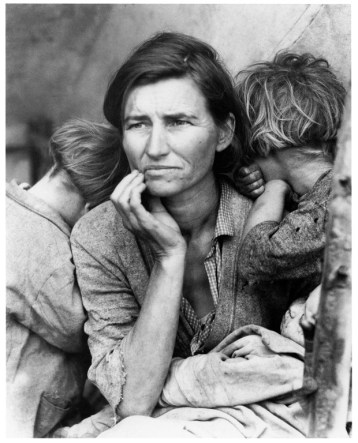
AmericanPoverty.org is a non-profit alliance of photojournalists using visual storytelling to raise awareness about “how the other half lives.” Joining us are renowned American writers, filmmakers and educators, all of whom seek to alleviate poverty and make it a national priority. Together we are working to dispel stereotypes and encourage actions that can create lasting impact in the lives of disadvantaged people.
The photo “Migrant Mother” was one of thousands of pictures Dorothea Lange took on assignment for the federal government, documenting the poverty of the Dust Bowl. Before it had that iconic title, the 1936 photo was captioned “Destitute peapickers in California.” For more about Dorothea Lange and this image check out Studio 360.

 RichardbBrunner